
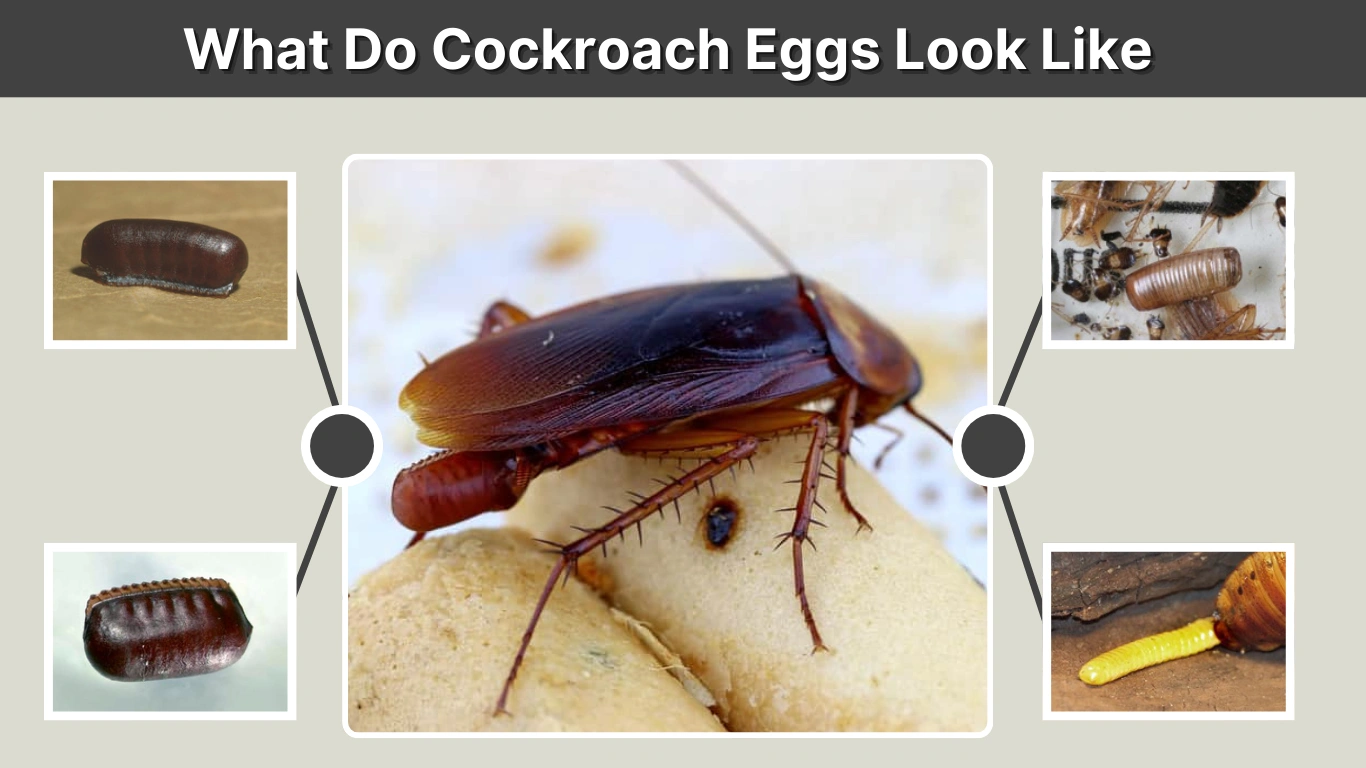
Cockroaches are among the most persistent household pests, and their ability to reproduce quickly is one reason infestations spread so fast. One egg case can contain dozens of developing cockroaches, making early identification critical. Homeowners often ask: What do cockroach eggs look like? The answer depends on the species, but knowing general traits and hiding places helps spot them before they hatch.
General Appearance of Cockroach Eggs
Cockroach eggs are not usually laid individually. Instead, they are enclosed in protective capsules called oothecae. These cases are oblong, capsule-like, and vary in color from light tan to dark reddish-brown depending on the species. Most egg cases measure between 6–12 millimeters in length.
Inside each ootheca are multiple eggs—ranging from 16 to 50 embryos depending on the cockroach species. The casing protects them from environmental damage and predators until hatching occurs. Once the eggs mature, tiny nymphs emerge, resembling small, wingless versions of adult cockroaches.
Cockroach Egg Casings vs. Egg Sacs
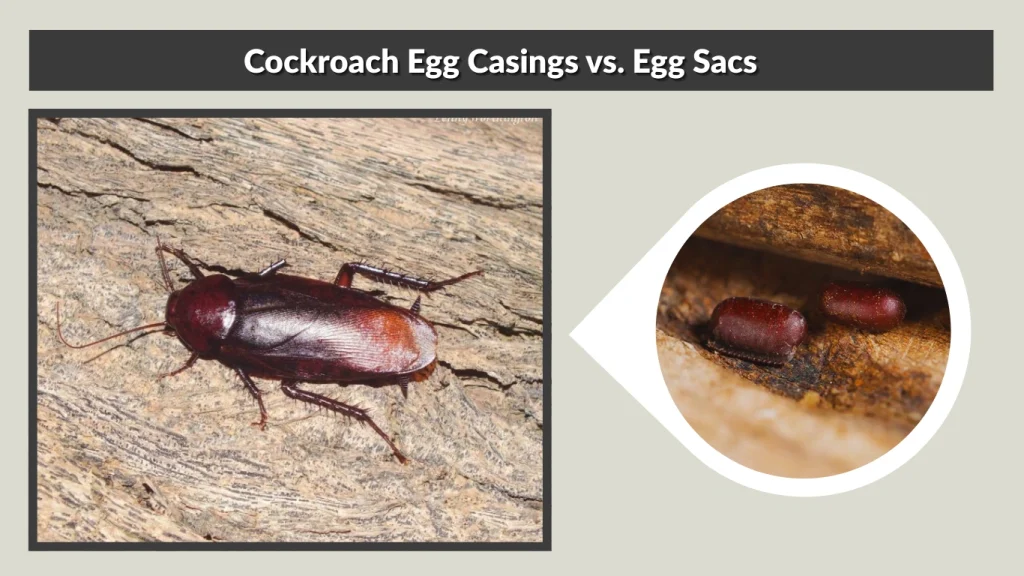
The terms “egg casing,” “egg sac,” and “ootheca” all describe the same structure, though some differences exist in how people use them.
- Egg casing/egg case: Refers to the hardened, protective shell containing the eggs.
- Egg sac: A more casual term, describing the same capsule but emphasizing its role as a container.
Oothecae usually have a ridged or segmented appearance and are shaped like small, dark capsules. Some species carry the casing until hatching, while others glue them to surfaces, making them harder to spot.
Where Cockroach Eggs Are Found Indoors
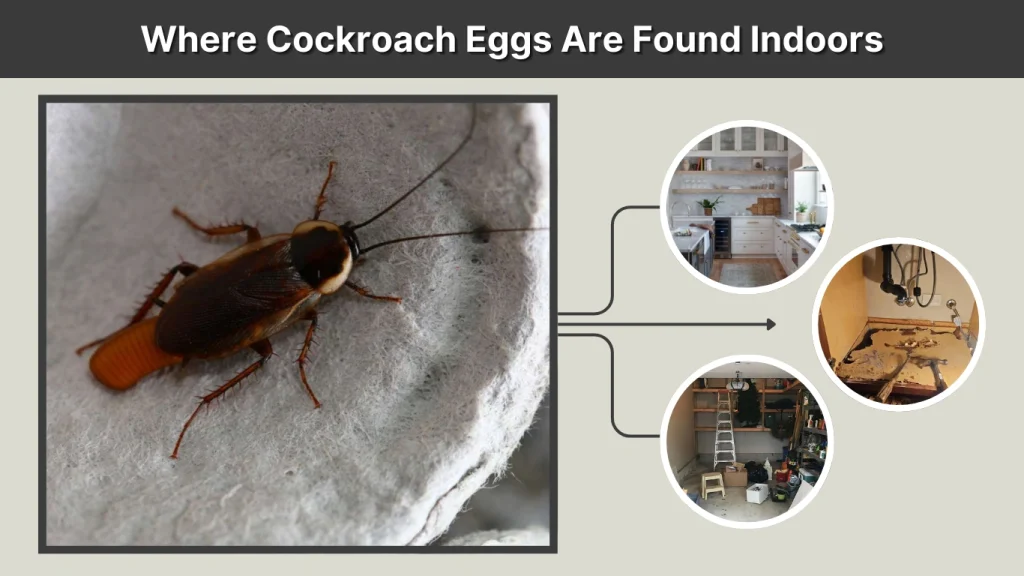
Cockroach eggs are rarely out in the open. Instead, they are tucked away in dark, moist, and hidden locations. Indoors, you might find them:
- In kitchen cabinets, behind appliances, or inside cracks near sinks.
- In bathrooms, especially around drains, pipes, and under flooring.
- In basements, garages, or storage areas with clutter and humidity.
Some cockroach species cement their oothecae to walls, furniture, or wooden surfaces, ensuring they remain hidden and protected. These “cemented cockroach eggs” can be particularly tricky to detect until they hatch.
Species-Specific Identification
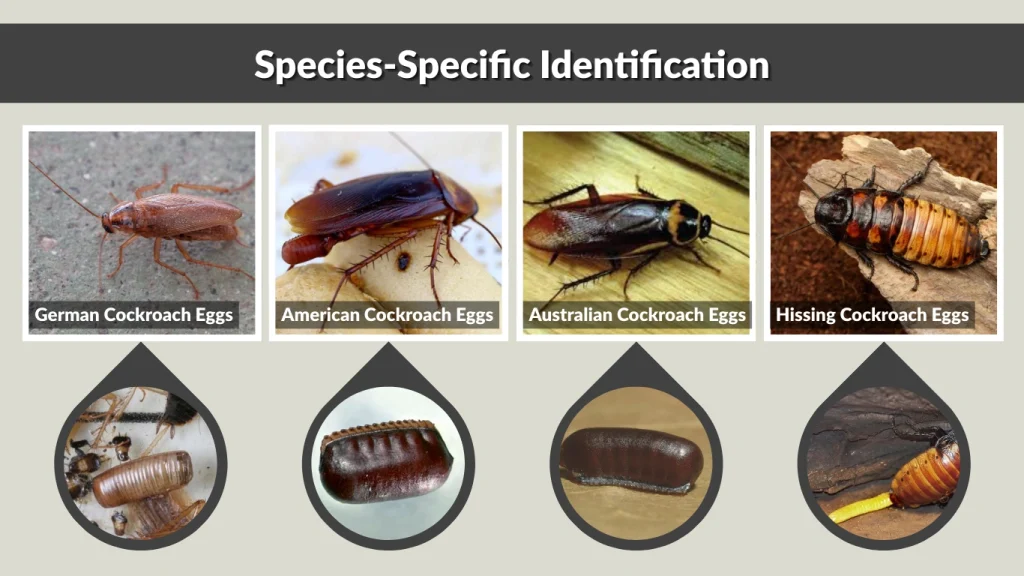
German Cockroach Eggs
German cockroach eggs are among the smallest but most problematic in homes. Each casing is 6–9 mm long, light brown, and slightly curved. A single ootheca can contain 30–40 eggs. Unlike some species, the female often carries the egg case until it is nearly ready to hatch, making infestations difficult to control.
German cockroach eggs are most commonly found near food and water sources, such as kitchens and bathrooms. Because they hatch quickly—often within a few weeks—they are a leading cause of rapid infestations indoors.
American Cockroach Eggs
American cockroach eggs are larger, measuring about 8–10 mm long, with a darker reddish-brown appearance. Each case usually contains 14–16 eggs. Unlike German cockroaches, American cockroaches typically deposit their oothecae in hidden, moist areas, often gluing them to surfaces.
You might find American cockroach egg cases behind refrigerators, under sinks, or in dark corners of basements and crawl spaces. Their larger size makes them more visible if discovered early.
Australian Cockroach Eggs
Australian cockroach eggs closely resemble those of the American cockroach but tend to be slightly smaller and darker. Measuring around 7–9 mm, these egg cases are usually found in warm, humid areas. In countries like Australia, they are a common sign of infestation in outdoor sheds, woodpiles, and even garden mulch near homes.
Hissing Cockroach Eggs
Unlike the species above, hissing cockroaches carry their eggs internally. Females develop the ootheca inside their bodies until the young hatch, meaning you rarely see their egg cases outside laboratory or pet-breeding environments. This difference makes them less of a household concern but interesting from a biological perspective.
Baby Cockroach Eggs (Nymph Emergence)
When cockroach eggs hatch, the young are called nymphs. They are not eggs themselves but newly emerged cockroaches. Freshly hatched nymphs are usually white or translucent, gradually darkening to brown as their exoskeleton hardens. People sometimes mistake these pale nymphs for “baby cockroach eggs.”
Identification Process Step-by-Step
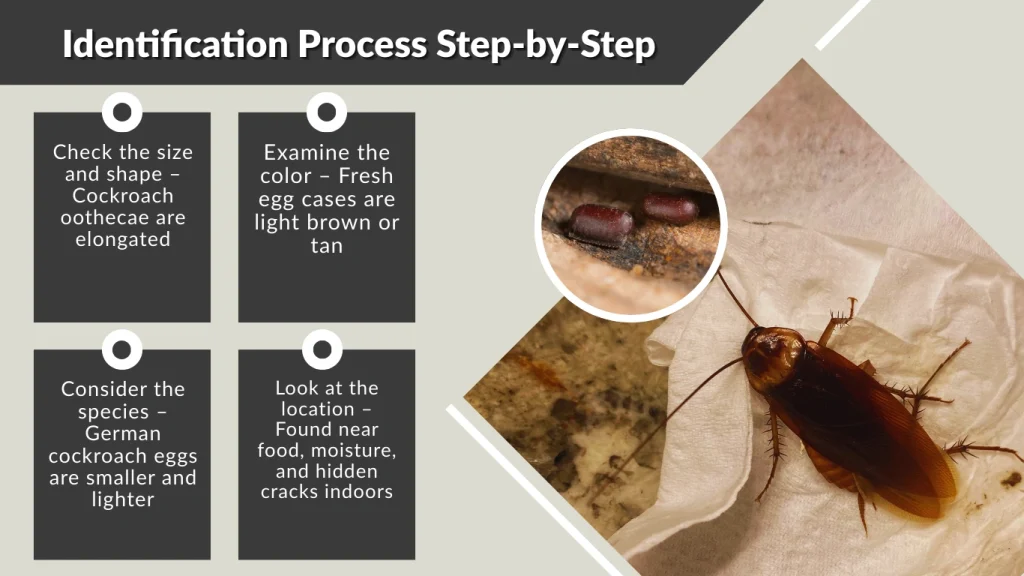
Identifying cockroach eggs can feel overwhelming at first, especially because they often resemble small pellets or capsules. By following a systematic process, you can distinguish them from other household debris.
- Check the size and shape – Cockroach oothecae are elongated, capsule-like, and usually 6–12 mm long. They may appear slightly curved with visible ridges.
- Examine the color – Fresh egg cases are light brown or tan, but they darken to reddish-brown or nearly black as they mature.
- Consider the species – German cockroach eggs are smaller and lighter; American and Australian are darker and larger.
- Look at the location – Found near food, moisture, and hidden cracks indoors; outdoors they appear in mulch, woodpiles, and sheds.
- Check for attachment – Some are glued to surfaces, while others are carried by females until hatching.
By using these indicators, you can confirm whether the capsule-like object you’ve spotted is truly a cockroach egg case.
Risks and Why Early Identification Matters
Cockroach eggs pose more of a future problem than an immediate one. One casing can release dozens of nymphs, multiplying the infestation within weeks. If left untreated, this cycle continues, making elimination harder.
The risks include:
- Rapid population growth – A single female German cockroach can produce hundreds of offspring within a year.
- Allergic reactions – Egg casings, droppings, and shed skins contribute to allergens that trigger asthma and skin irritation.
- Contamination potential – While cockroach eggs themselves do not carry disease, newly hatched nymphs move into food storage areas, spreading bacteria.
Spotting and removing egg cases before they hatch is one of the most effective ways to keep cockroach numbers under control.
Prevention and Control
Environmental Control
- Reduce moisture: Fix leaky pipes, improve ventilation, and use dehumidifiers.
- Remove clutter: Cockroaches thrive in stacks of cardboard, paper, or unused boxes.
- Seal entry points: Caulk cracks, gaps, and crevices in walls, baseboards, and around plumbing.
Specific Egg Removal
- Vacuuming: Use a high-powered vacuum to collect egg cases from hidden corners.
- Disposal: Seal vacuum bags or collected casings in plastic before discarding.
- Cleaning: Apply soap and water or disinfectant to areas where egg cases were found to remove scent trails.
Professional Pest Control
In cases of recurring egg sightings, professional exterminators can apply targeted insect growth regulators (IGRs) that disrupt cockroach reproduction. These treatments prevent nymphs from maturing, cutting the cycle of infestation.
FAQs
What do cockroach eggs look like to the naked eye?
They look like small, brownish capsules, usually between 6–12 mm long, with a ridged or segmented appearance.
How many babies hatch from one cockroach egg case?
Depending on the species, each case may contain 16–50 embryos, with German cockroach eggs producing the highest numbers.
Can cockroach eggs survive without the mother?
Yes, once deposited or cemented, the egg case develops independently and can hatch without the mother present.
Do all cockroach species lay visible egg cases?
No. Some, like hissing cockroaches, carry eggs internally until the nymphs hatch, so their egg cases are rarely seen.
How do I safely get rid of cockroach egg casings in my house?
Vacuum them up, seal them in a plastic bag, and discard immediately. Clean the surrounding area and consider pest control if you find multiple cases.