
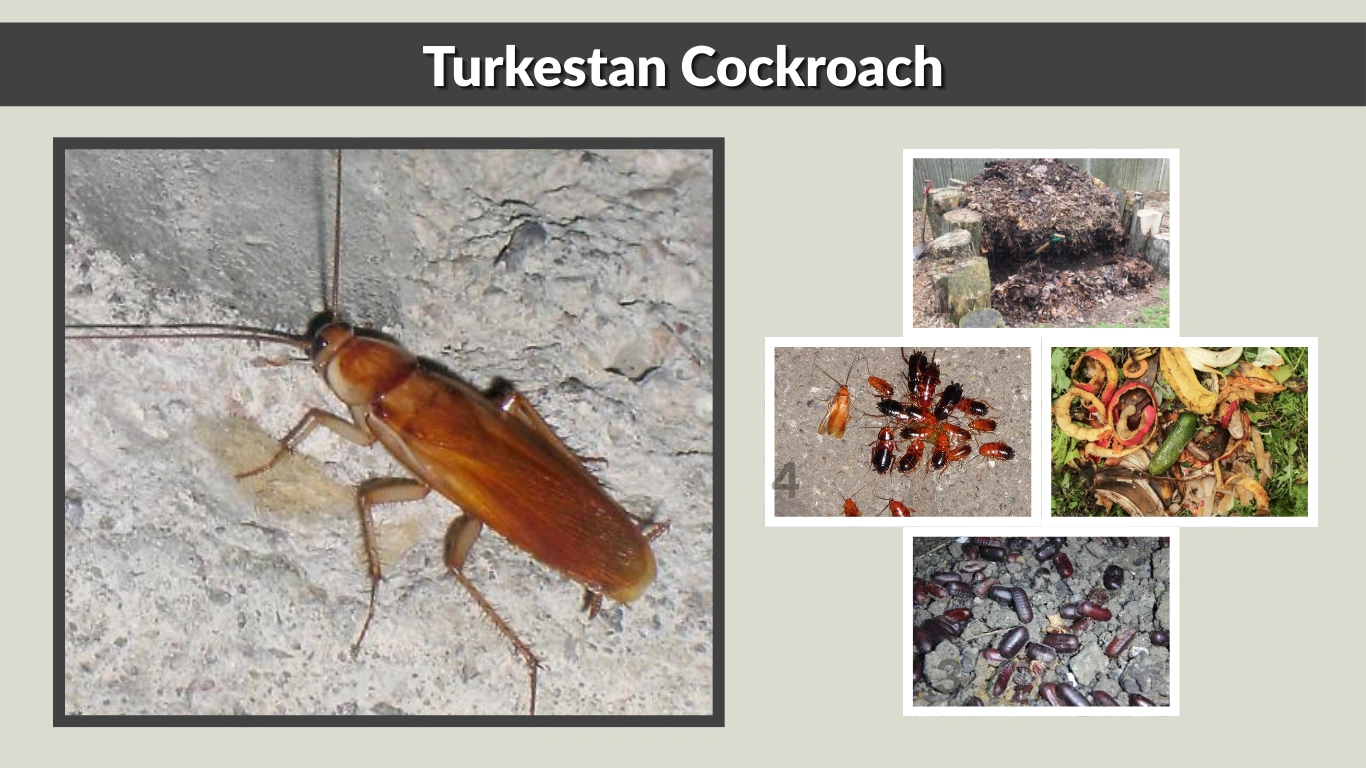
The Turkestan cockroach (Blatta lateralis) is a fast-spreading cockroach species that has gained attention as a household and urban pest. Originally native to Central Asia and the Middle East, it has now established populations in many parts of the United States, particularly in the Southwest. Because of its adaptability and rapid reproduction, it is often considered more invasive than other common cockroach species. Understanding its physical traits, nesting habits, and behaviors helps with proper identification and effective pest management.
What is Turkestan Cockroach?
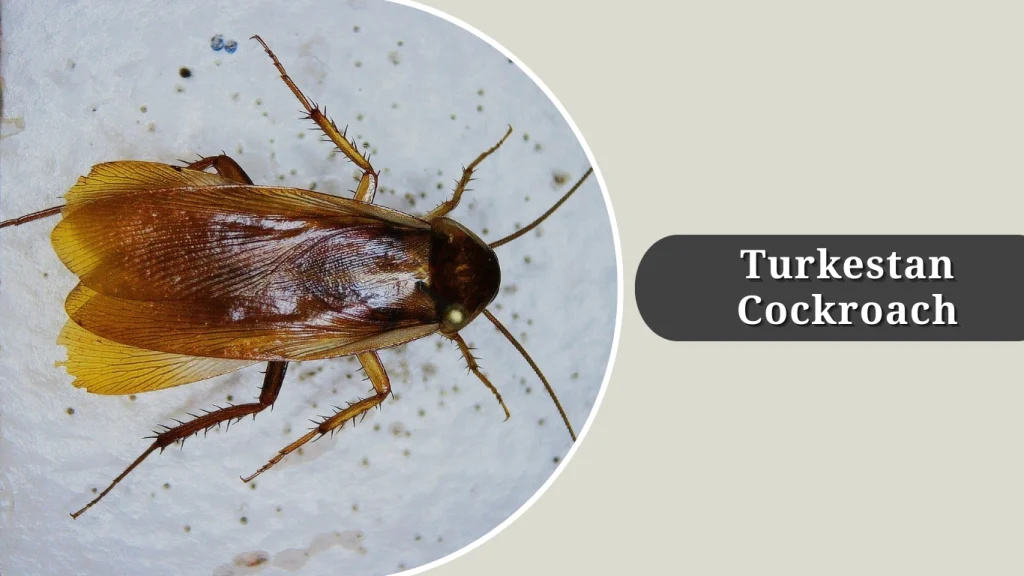
The Turkestan cockroach is sometimes called the “red runner” or “rusty red cockroach” due to its coloration. It is frequently mistaken for the American cockroach or Oriental cockroach, but its size and appearance make it distinct.
This species has become a nuisance in urban environments because it thrives in both outdoor and indoor spaces. Unlike some cockroaches that prefer exclusively damp environments, Turkestan cockroaches can adapt to a wide range of conditions. Their ability to reproduce quickly means infestations can grow rapidly if left unchecked.
Size and Physical Characteristics
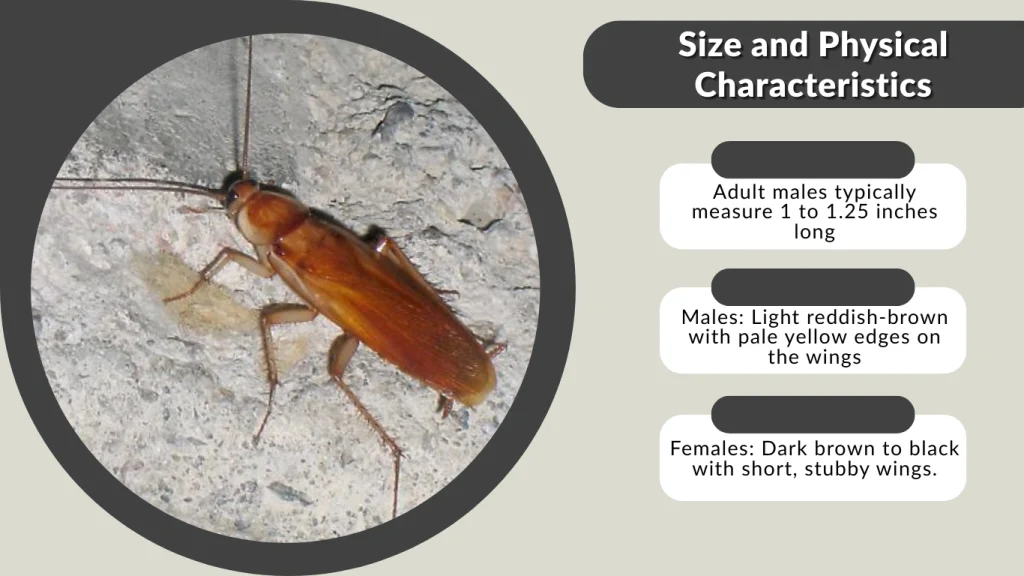
Turkestan cockroaches are medium-sized cockroaches compared to other species. Adult males typically measure 1 to 1.25 inches long, with slender bodies and long wings that extend past the tip of the abdomen. Females are slightly shorter, with a broader build and shorter wings that do not cover the entire abdomen.
Both males and females have long antennae that help them navigate in the dark. Their bodies are flat, allowing them to squeeze into tight cracks and crevices. Because males can glide or fly short distances, they are often spotted indoors more frequently than females.
Color and Appearance
Coloration is one of the most reliable ways to identify a Turkestan cockroach.
- Males: Light reddish-brown with pale yellow edges on the wings. Their wings are longer than their bodies, giving them a streamlined look.
- Females: Dark brown to black with short, stubby wings. Their heavier appearance makes them resemble Oriental cockroaches, though they are more agile.
Juvenile nymphs are smaller, darker, and wingless. As they mature, they gradually develop the coloration and wing differences seen in adults.
Identification: Male vs. Female
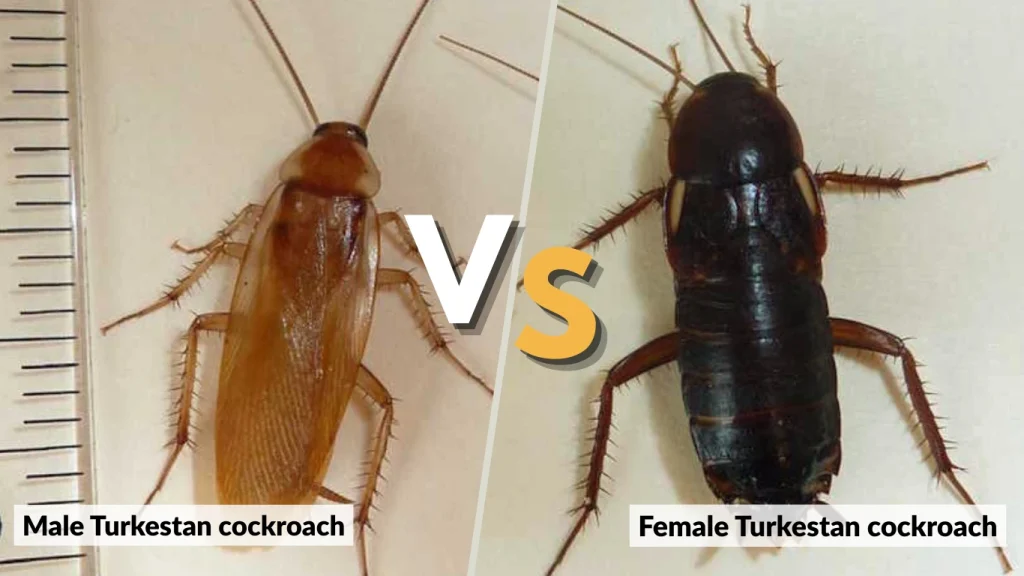
Proper identification is crucial because Turkestan cockroaches are often confused with other species. Here’s how to tell them apart:
- Male Turkestan cockroach: Slender body, wings extending beyond the abdomen, reddish-brown in color, capable of gliding.
- Female Turkestan cockroach: Shorter, broader body, wings that cover less than half the abdomen, dark brown or black in color, cannot fly.
When compared to American cockroaches, Turkestan cockroaches are smaller and lighter in color. They also reproduce faster than Oriental cockroaches, making them more problematic in infested areas.
Nesting Habits and Hiding Spots
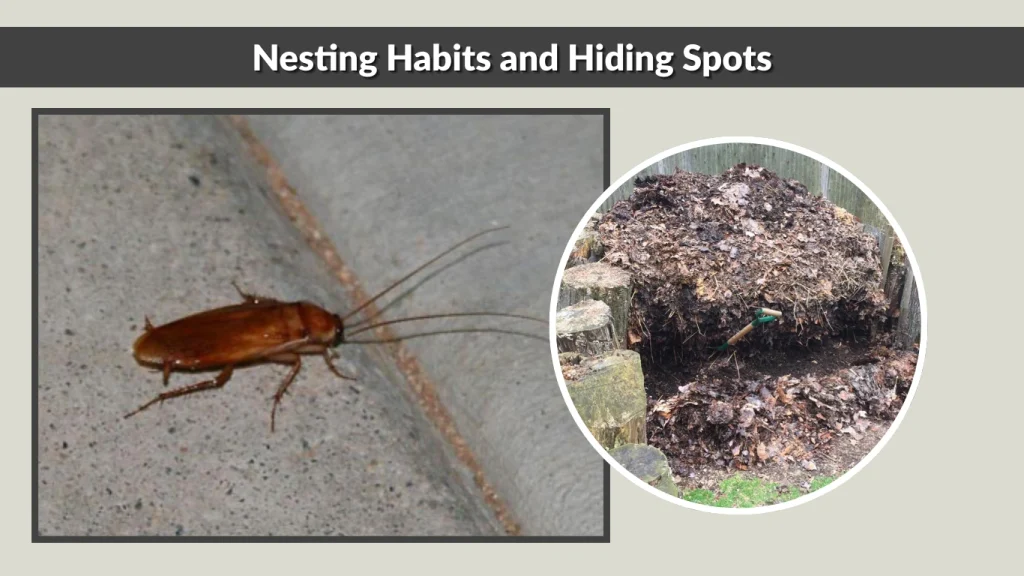
Like other cockroach species, Turkestan cockroaches prefer dark, moist, and hidden areas to build their nests. Outdoors, they are commonly found in sewers, drains, compost piles, and garden mulch. Indoors, they seek out basements, crawl spaces, garages, and storage rooms where food and shelter are available.
Females deposit egg cases, known as oothecae, in sheltered areas such as cracks in walls, behind appliances, or inside cluttered storage boxes. These egg cases hatch into multiple nymphs, allowing infestations to grow quickly. Because they reproduce in large numbers, a single female can contribute to significant infestations within months.
Regular inspection of these nesting areas is essential for early detection. Since males are drawn to light, they are often the first visible sign of a growing infestation, even when females and eggs remain hidden.
6. Natural Habitat and Distribution
The Turkestan cockroach is native to Central Asia and the Middle East, but it has spread worldwide through trade, shipping, and urban development. In the United States, it is especially common in the Southwest and southern states such as Texas, Arizona, New Mexico, and California.
Outdoors, these cockroaches thrive in warm, dry climates. They hide in sewers, storm drains, compost heaps, and mulch beds. They also live under rocks, leaf litter, and debris. Indoors, they are often found in basements, crawl spaces, and garages, where they take advantage of food crumbs and moisture. Their adaptability allows them to survive in both residential and commercial settings.
Behaviors and Activity Patterns
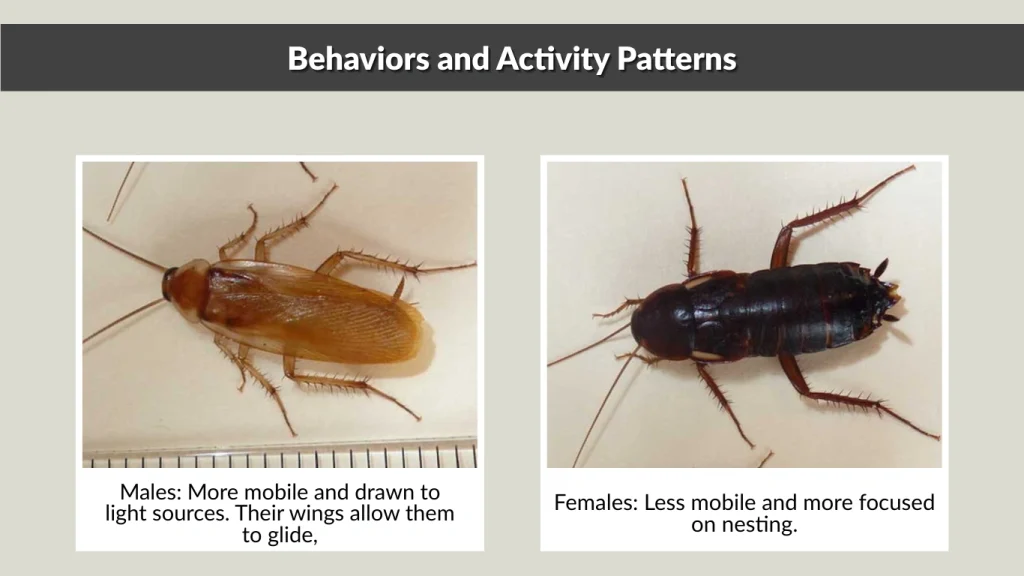
Turkestan cockroaches are primarily nocturnal, becoming most active at night. They prefer dark environments but can sometimes be seen scurrying in the open when disturbed.
- Males: More mobile and drawn to light sources. Their wings allow them to glide, making them more visible indoors.
- Females: Less mobile and more focused on nesting. They typically remain near sheltered areas where eggs are laid.
These cockroaches are highly opportunistic. They forage for food wherever it is available, from trash bins and compost to leftover pet food. Their activity peaks in warmer months, but in heated buildings, they can remain active year-round.
Diet and Feeding Preferences
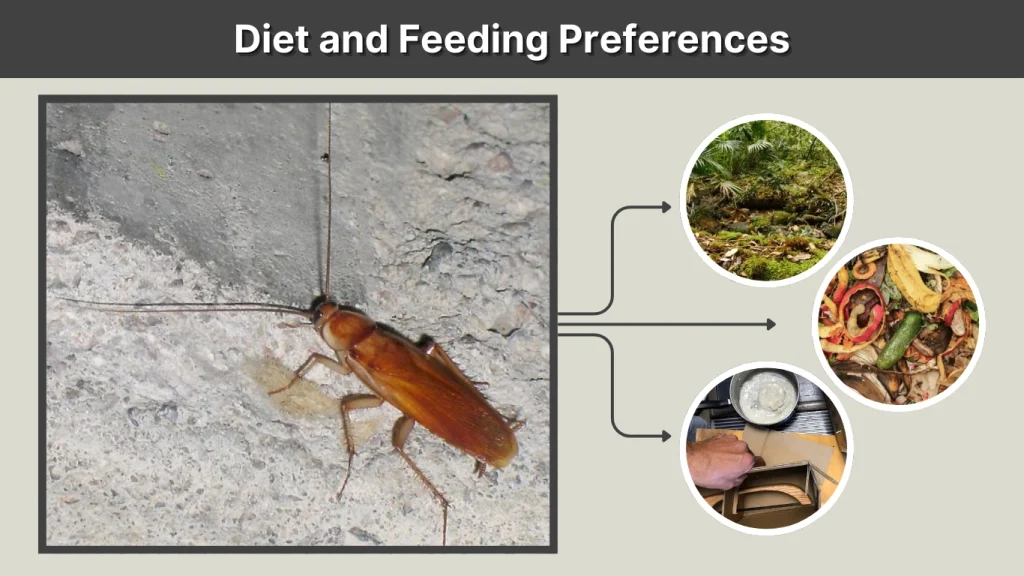
Like most cockroaches, Turkestan cockroaches are omnivorous scavengers. They feed on a wide range of organic material, including:
- Decaying leaves and plant matter outdoors.
- Food scraps, crumbs, and waste inside homes.
- Starches, sugars, and grease from kitchens.
- Paper, fabric, and organic glue when food is scarce.
Their ability to survive on minimal and non-traditional food sources makes them resilient pests. This adaptability ensures they thrive even in environments with limited food availability.
Lifecycle and Development
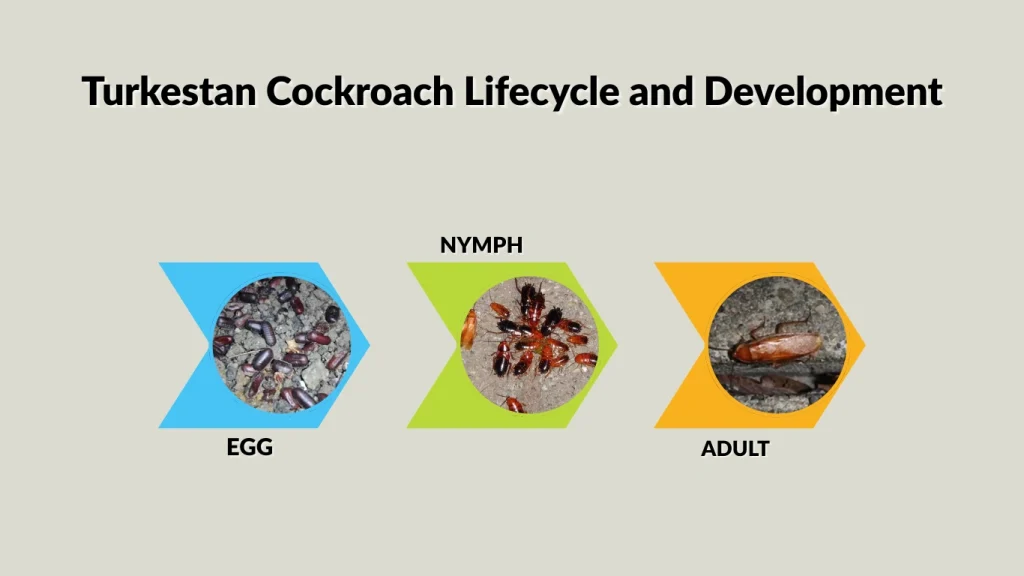
The life cycle of a Turkestan cockroach includes egg, nymph, and adult stages.
- Eggs (oothecae): Females produce egg cases containing up to 18 eggs. These are deposited in dark, protected areas such as cracks or clutter.
- Nymphs: Young cockroaches hatch from the ootheca and undergo multiple molts. Nymphs are wingless, dark, and smaller versions of adults. As they grow, they gradually develop coloration and wing characteristics.
- Adults: Reproductive adults emerge after several molts. Males are lighter, more active, and capable of gliding. Females are darker, larger-bodied, and primarily focused on reproduction.
The lifespan of a Turkestan cockroach is typically 6 to 12 months, though it can vary based on environmental conditions and food supply. With rapid reproduction, infestations can escalate within a few months if not controlled.
Pest Status and Control Measures
Turkestan cockroaches are considered serious pests in both residential and commercial environments. They contaminate food, spread bacteria, and cause unpleasant odors when infestations grow. Their rapid reproductive cycle makes them harder to control than Oriental or American cockroaches.
Effective control methods include:
- Sanitation – Regular cleaning to remove food crumbs and waste.
- Exclusion – Sealing cracks, repairing screens, and closing gaps around doors and windows.
- Chemical control – Using insecticide sprays, baits, and dusts in infested areas.
- Professional pest control – Recommended for large infestations that are difficult to manage alone.
Consistent monitoring and prevention strategies are the best ways to keep Turkestan cockroach populations under control.
FAQs
How big are Turkestan cockroaches?
Adult males are about 1 to 1.25 inches long, while females are slightly shorter and wider, with a heavier build.
What color are Turkestan cockroaches?
Males are light reddish-brown with yellowish wing edges, while females are dark brown to black with short wings.
Where do Turkestan cockroaches usually nest?
They nest in dark, moist areas such as sewers, drains, compost piles, basements, and crawl spaces.
How long is the lifespan of a Turkestan cockroach?
Their lifespan ranges from 6 to 12 months, depending on food availability and living conditions.
Are Turkestan cockroaches harmful to humans?
They do not bite, but they contaminate food and surfaces with bacteria, which can cause health risks in infested homes.