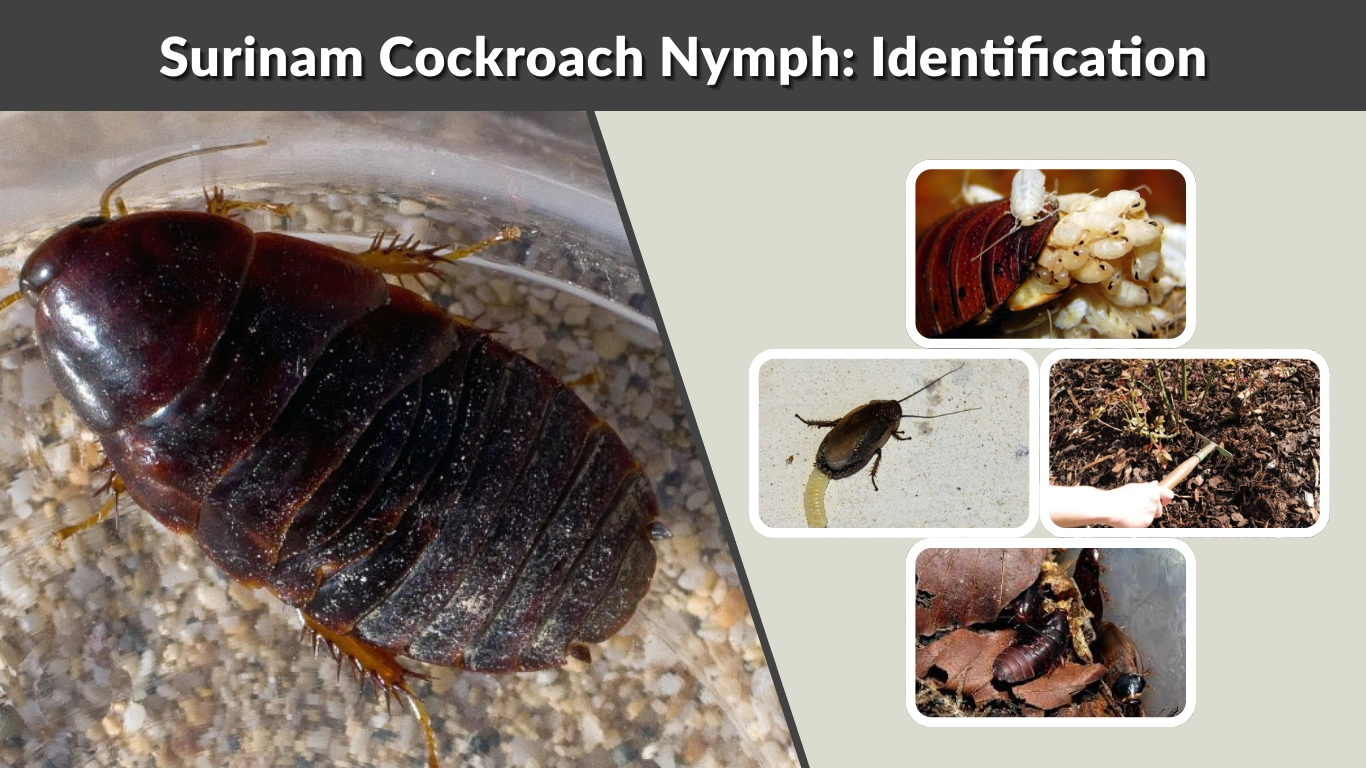
The Surinam cockroach (Pycnoscelus surinamensis) is a soil-dwelling species commonly found in warm, humid regions such as Florida and other subtropical areas. While adult Surinam cockroaches often get the most attention, understanding the nymph stage is just as important for effective identification and control. These immature cockroaches live underground, feed on organic matter and plant roots, and can quietly multiply in lawns, gardens, and greenhouses.
In this article, we’ll explore what Surinam cockroach nymphs look like, how they develop, where they hide, and how to manage them effectively.
What Is a Surinam Cockroach Nymph?
A Surinam cockroach nymph is the immature stage of the insect’s life cycle. Like other cockroaches, Surinam cockroaches undergo incomplete metamorphosis, meaning they do not have a pupal stage. Instead, they hatch from eggs as small versions of adults and gradually grow larger through a series of molts.
Unlike some cockroach species that lay egg cases externally, Surinam cockroaches are ovoviviparous. This means the female carries the egg case internally until the eggs hatch, and she gives birth to live young. In many regions, including the United States, populations consist almost entirely of females that reproduce without mating through parthenogenesis.
This unique reproductive ability allows nymph populations to increase rapidly when environmental conditions are favorable.
What Do Surinam Cockroach Nymphs Look Like?
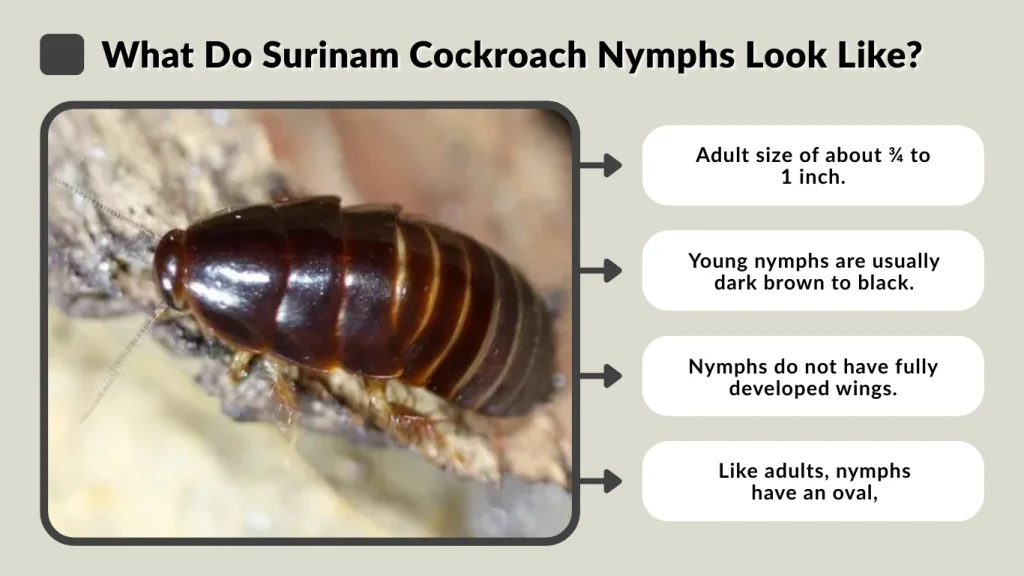
Correct identification is key to managing infestations. Surinam cockroach nymphs share similarities with adults but have a few distinguishing characteristics.
Size
Newly born nymphs are very small—typically just a few millimeters long. As they grow through multiple molts, they gradually reach the adult size of about ¾ to 1 inch.
Color
Young nymphs are usually dark brown to black. They often appear slightly lighter or more matte than adults. As they mature, their coloration deepens and becomes glossier.
Wings
Nymphs do not have fully developed wings. Instead, they have small wing pads that become more noticeable in later stages. Full wings develop only when they reach adulthood.
Body Shape
Like adults, nymphs have an oval, flattened body that allows them to move easily through soil and tight spaces.
Because they live underground, nymphs are rarely seen unless soil is disturbed or heavy rainfall forces them to the surface.
Life Cycle of the Surinam Cockroach
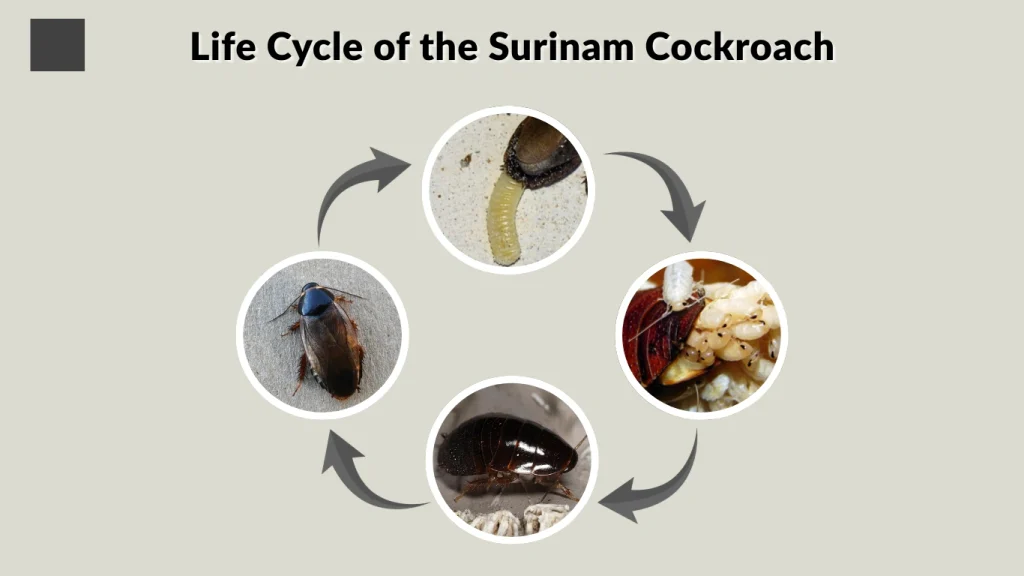
Understanding the life cycle helps explain why nymph control is so important.
1. Egg Development
The female produces an egg capsule (ootheca) but keeps it inside her body. The eggs develop internally, protected from predators and environmental hazards.
2. Live Birth
After the eggs hatch inside her body, the female gives birth to live nymphs. A single female can produce multiple broods during her lifetime.
3. Nymph Stages
Nymphs go through several molts—usually 7 to 10 instars—before becoming adults. Each molt allows them to grow larger and develop more adult-like features.
4. Adult Stage
Once fully mature, they develop wings and begin reproducing, continuing the cycle.
In warm climates, the entire life cycle can be completed in just a few months, allowing populations to grow quickly.
Where Do Surinam Cockroach Nymphs Live?
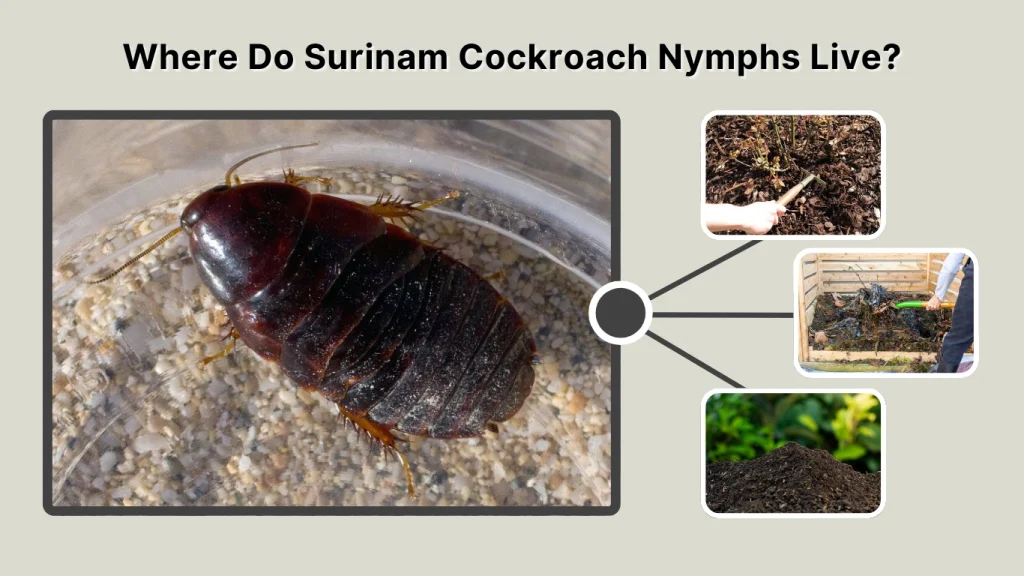
Surinam cockroach nymphs are primarily soil dwellers. They thrive in:
- Mulch beds
- Lawns with thick thatch
- Compost piles
- Garden soil
- Potted plants
- Greenhouses
- Under leaf litter
They prefer moist, loose soil rich in organic material. Irrigated lawns and heavily mulched landscaping provide ideal conditions for survival and growth.
Because they burrow, infestations often go unnoticed until plant damage appears or adults begin emerging.
What Do Surinam Cockroach Nymphs Eat?
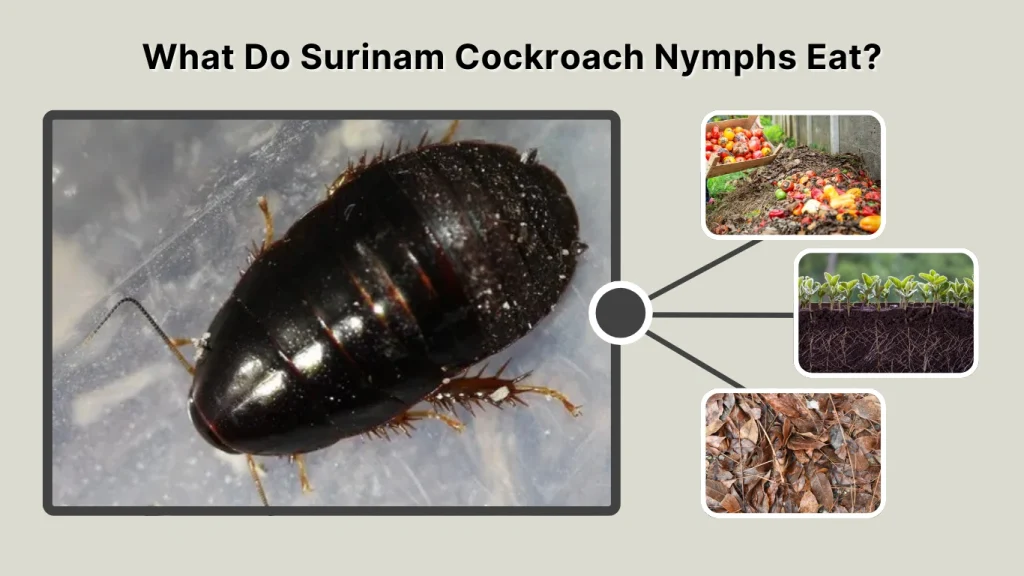
Nymphs feed on:
- Decaying organic matter
- Plant roots
- Seedlings
- Compost materials
- Leaf litter
While they mainly consume decomposing material, they may also damage healthy plant roots when populations are high. In greenhouses and nurseries, this can result in weakened or stunted plants.
Signs of a Surinam Cockroach Nymph Infestation
Since nymphs remain hidden underground, signs are often indirect. Common indicators include:
1. Roaches Emerging After Rain
Heavy rainfall can flood their tunnels, forcing nymphs and adults to the surface.
2. Plant Damage
Wilting, yellowing, or stunted growth may indicate root feeding.
3. Soil Disturbance
Small tunnels or loose soil in garden beds can suggest activity.
4. Infestation in Potted Plants
Cockroaches sometimes spread through transported nursery plants.
Early detection can help prevent large populations from developing.
Are Surinam Cockroach Nymphs Dangerous?
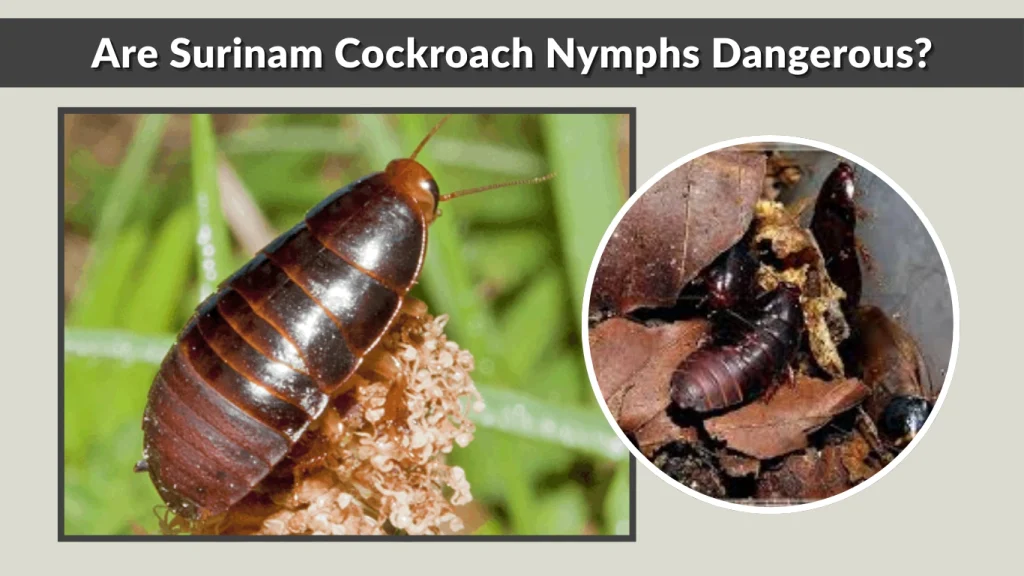
Surinam cockroach nymphs are not considered dangerous to humans. They do not bite or sting, and they are not typically associated with indoor disease transmission like German cockroaches.
However, they can become problematic by:
- Damaging plant roots
- Contaminating greenhouse soil
- Becoming a nuisance when entering homes
Their primary impact is on landscaping and ornamental plants rather than human health.
Why Florida and Warm Regions Are Ideal for Nymphs
Warm temperatures accelerate development. High humidity prevents desiccation, which is critical for soil-dwelling insects. Frequent irrigation and rainfall create consistent moisture levels that allow nymphs to survive year-round in subtropical areas.
In cooler climates, they are usually limited to heated greenhouses.
How to Control Surinam Cockroach Nymphs
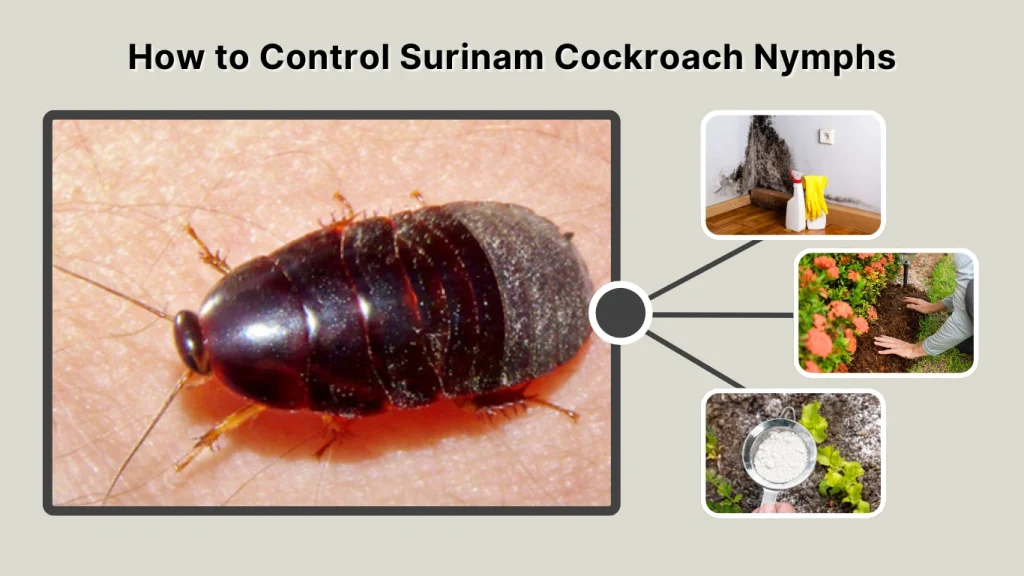
Effective control focuses on habitat modification and soil treatment.
1. Reduce Moisture
Overwatering encourages survival. Adjust irrigation schedules to allow soil to dry between waterings.
2. Limit Mulch Depth
Keep mulch layers around 2–3 inches. Thick mulch provides hiding places and retains excess moisture.
3. Improve Drainage
Ensure proper yard grading to prevent standing water.
4. Inspect New Plants
Check potted plants before introducing them into gardens or homes.
5. Use Beneficial Nematodes
Certain nematodes target soil-dwelling insects and can reduce nymph populations naturally.
6. Apply Soil Insecticides
In severe infestations, professional-grade soil treatments may be necessary. Surface sprays alone are usually ineffective because nymphs remain underground.
Integrated Pest Management (IPM) Approach
An integrated pest management strategy combines:
- Monitoring
- Habitat modification
- Biological controls
- Targeted chemical treatments
This approach minimizes environmental impact while effectively managing populations.
Because Surinam cockroach nymphs live below the surface, long-term management is often more realistic than complete eradication.
Surinam Cockroach Nymph vs. Other Cockroach Nymphs
It is important not to confuse them with indoor pest species.
| Feature | Surinam Nymph | German Nymph |
| Habitat | Soil and mulch | Indoors |
| Color | Dark brown/black | Light brown with stripes |
| Behavior | Burrowing | Hiding in kitchens/bathrooms |
| Risk | Plant damage | Household infestation |
Correct identification ensures proper treatment methods.
When to Call a Professional
Professional pest control may be needed if:
- Populations are large
- Plant damage is extensive
- Roaches repeatedly enter structures
- Infestations occur in commercial nurseries
Experts can apply targeted soil treatments that are difficult to achieve with DIY methods.
Long-Term Prevention Tips
Maintaining a balanced landscape is the best defense. Key prevention strategies include:
- Avoid overwatering
- Remove excess organic debris
- Maintain proper lawn care
- Monitor mulch regularly
- Conduct seasonal inspections
Routine yard maintenance significantly reduces suitable habitats for nymph development.
FAQs
What does a Surinam cockroach nymph look like?
A Surinam cockroach nymph is a small, dark brown to black, wingless version of the adult. It has an oval, flattened body and gradually develops wing pads as it matures through multiple molts.
How long does it take for a nymph to become an adult?
In warm climates, development can take a few months. Nymphs go through several molts before reaching full size and developing wings, with temperature and moisture influencing growth speed.
Do Surinam cockroach nymphs live indoors?
They prefer outdoor soil environments. However, they may enter homes during heavy rain or extreme weather. Unlike indoor species, they rarely establish permanent indoor infestations.
Are Surinam cockroach nymphs harmful to plants?
Yes, in large numbers they can damage roots and seedlings. While they mainly feed on decaying organic matter, high populations may weaken ornamental plants and greenhouse crops.
What is the best way to control nymphs?
Reducing moisture, limiting mulch depth, improving drainage, and using targeted soil treatments are the most effective strategies. Severe infestations may require professional pest management services.