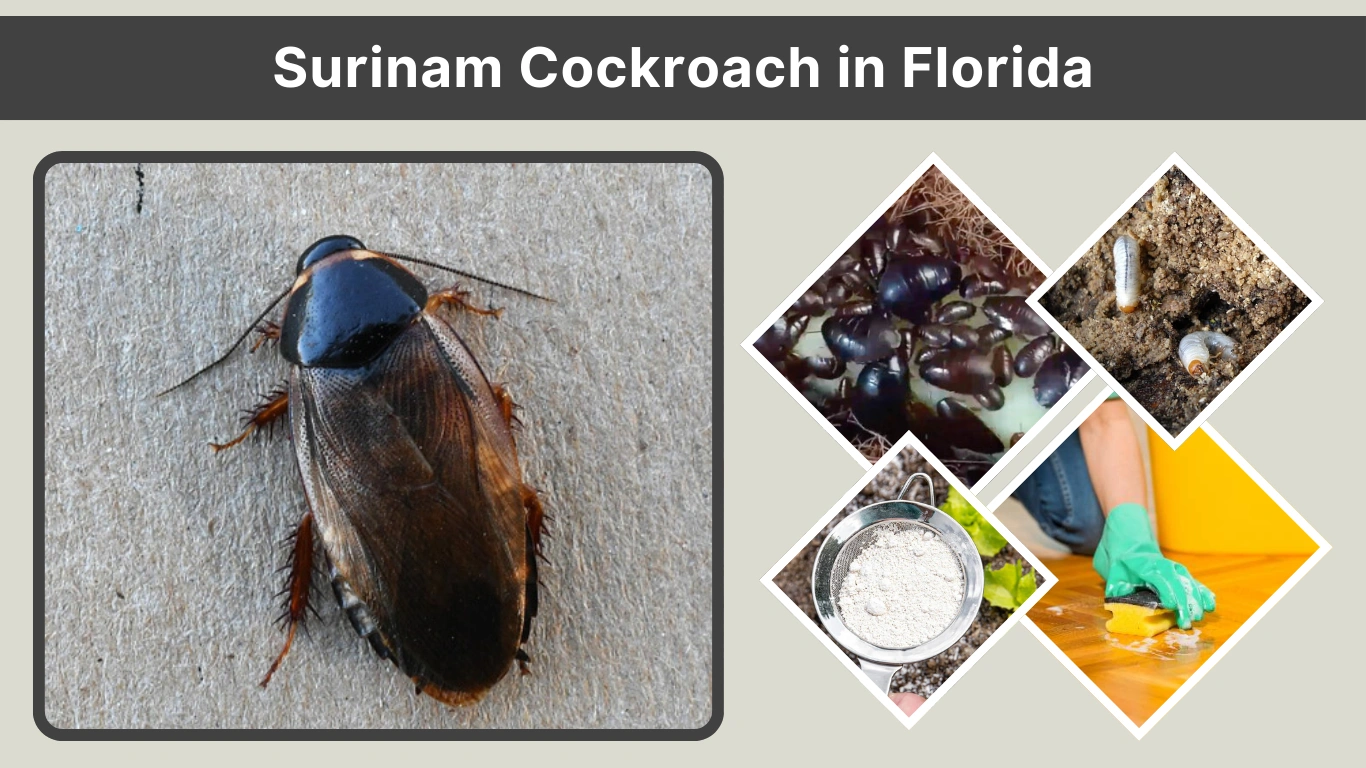
Florida’s warm, humid climate creates the perfect environment for many tropical insects, including the Surinam cockroach. While not as notorious as the American or German cockroach, this burrowing species has quietly spread throughout lawns, gardens, greenhouses, and landscaped areas across the state. Homeowners are often surprised to discover these shiny brown roaches hiding beneath mulch or popping up in potted plants after heavy rain. Understanding how to identify, prevent, and control Surinam cockroaches can help Florida residents protect their landscapes and avoid indoor infestations.
What Is the Surinam Cockroach?
The Surinam cockroach (Pycnoscelus surinamensis) is a tropical species originally native to Southeast Asia but now widely distributed in warm regions around the world. It is sometimes called the “greenhouse cockroach” because it commonly thrives in plant nurseries and greenhouses.
Unlike many other cockroach species, the Surinam cockroach is primarily an outdoor, soil-dwelling insect. It burrows into moist soil and feeds on decaying organic matter and plant roots. In Florida, it is especially common in landscaped yards, garden beds, compost piles, and mulch-heavy areas.
How to Identify a Surinam Cockroach
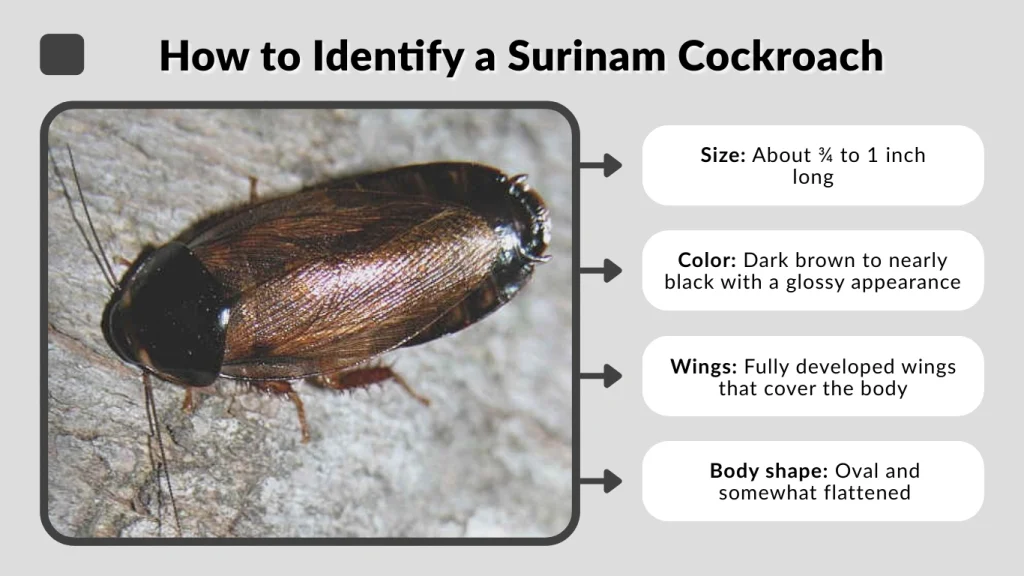
Correct identification is important before beginning any control efforts. Surinam cockroaches have several distinctive features:
- Size: About ¾ to 1 inch long
- Color: Dark brown to nearly black with a glossy appearance
- Wings: Fully developed wings that cover the body
- Body shape: Oval and somewhat flattened
- Behavior: Quick burrowers that hide in soil during the day
One unusual characteristic of this species is that populations in Florida consist almost entirely of females. Surinam cockroaches reproduce through a process called parthenogenesis, meaning females can produce offspring without mating. This allows them to multiply rapidly under favorable conditions.
They are most often noticed after heavy rainfall when saturated soil forces them above ground.
Where Are Surinam Cockroaches Found in Florida?
Florida’s subtropical climate makes it an ideal habitat for Surinam cockroaches. They are especially common in:
- South Florida and coastal regions
- Central Florida lawns and gardens
- Greenhouses and plant nurseries
- Landscaped yards with thick mulch
- Potted plants and decorative planters
They prefer warm, moist environments with loose soil. Areas with frequent irrigation, heavy mulch layers, or decaying organic material are particularly attractive.
Because they live underground, infestations may go unnoticed until populations grow large.
Are Surinam Cockroaches Dangerous?
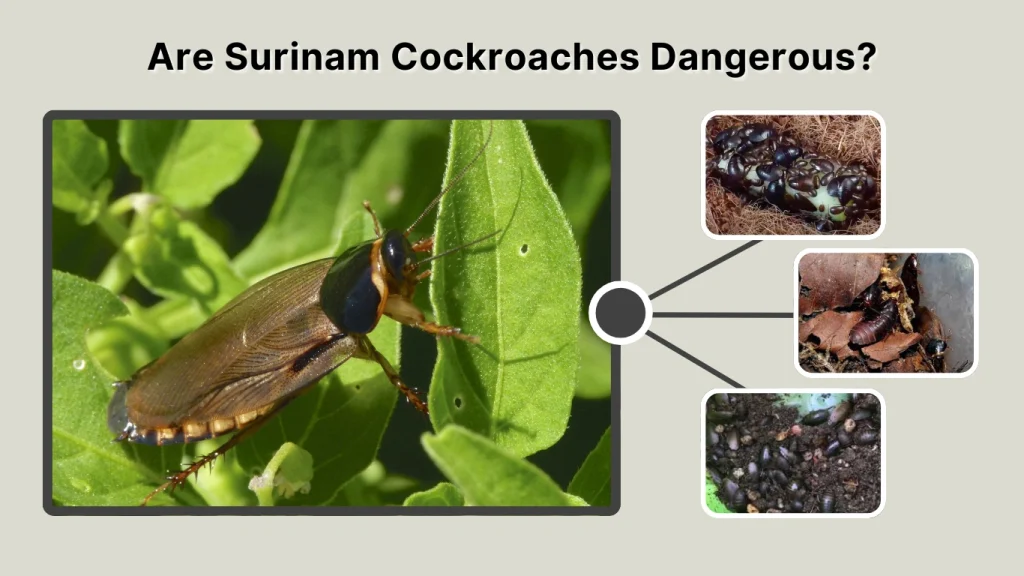
Surinam cockroaches are not considered aggressive or directly harmful to humans. They do not bite, sting, or spread disease in the same way that indoor pest cockroaches might.
However, they can still cause problems:
1. Lawn and Garden Damage
These cockroaches feed on plant roots, seedlings, and organic debris. In high numbers, they may damage ornamental plants, turfgrass, and young garden crops.
2. Indoor Nuisance
Although they prefer to stay outdoors, they may wander indoors during heavy rain, drought, or extreme heat. Once inside, they typically do not establish permanent infestations but can become a nuisance.
3. Greenhouse Problems
In commercial greenhouses and nurseries, Surinam cockroaches can damage young plants and contaminate soil.
Why Surinam Cockroaches Thrive in Florida
Several environmental factors contribute to their success in Florida:
- Warm temperatures year-round
- High humidity levels
- Frequent rainfall
- Irrigated lawns and gardens
- Abundant organic mulch
Florida’s landscaping trends—such as thick decorative mulch layers—create ideal hiding and breeding conditions.
Additionally, because they reproduce without males, a single introduced female can establish a new population.
Signs of a Surinam Cockroach Infestation
Because they are burrowing insects, infestations are not always obvious. Common signs include:
- Roaches emerging after heavy rain
- Cockroaches found in potted plants
- Damaged roots or wilted plants
- Increased insect activity in mulch beds
- Roaches entering garages or patios
Gardeners may notice soil disturbances or weakened plants without immediately realizing cockroaches are the cause.
How to Prevent Surinam Cockroaches
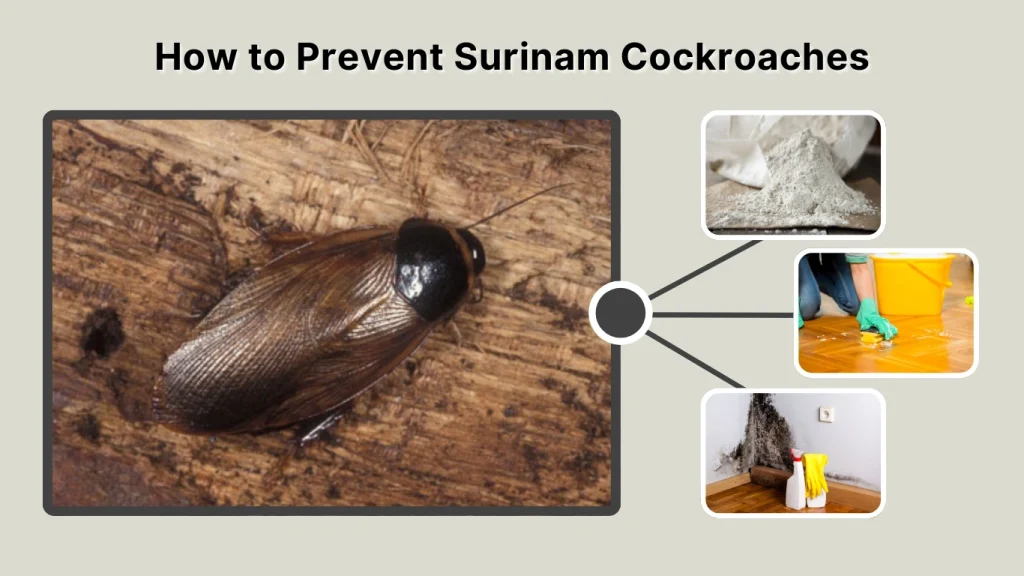
Prevention focuses primarily on moisture management and habitat reduction.
1. Reduce Excess Moisture
Overwatering lawns and garden beds creates ideal conditions. Adjust irrigation systems to prevent constantly damp soil.
2. Limit Mulch Thickness
Keep mulch layers to 2–3 inches. Thick mulch provides perfect hiding spots and moisture retention.
3. Improve Drainage
Ensure proper yard grading to prevent water pooling after rainstorms.
4. Seal Entry Points
To prevent indoor entry:
- Seal cracks in foundations
- Install door sweeps
- Repair window screens
- Close gaps around plumbing
5. Inspect Potted Plants
Surinam cockroaches are often transported in potted plants. Check soil before bringing plants indoors.
Natural Control Methods
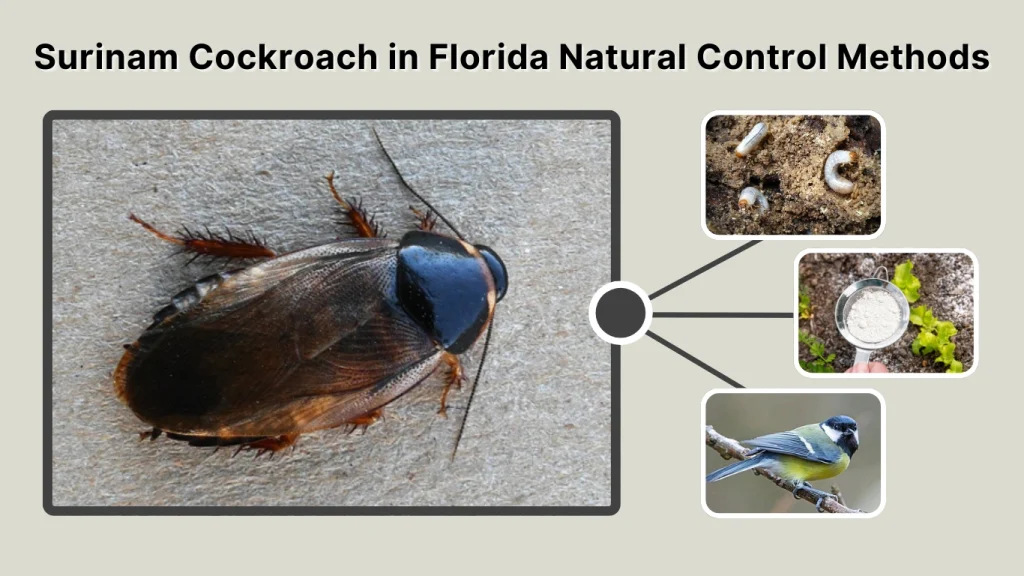
If populations are small, natural control strategies may be sufficient.
Beneficial Nematodes
These microscopic organisms attack soil-dwelling pests and can help reduce cockroach larvae.
Diatomaceous Earth
When applied to dry areas, this natural powder damages the insect’s outer shell, causing dehydration.
Encourage Natural Predators
Birds, lizards, and certain insects help keep cockroach populations under control.
Chemical Treatment Options
In severe infestations, professional pest control may be necessary.
Soil Insecticides
Targeted treatments applied to mulch beds and soil can reduce burrowing populations.
Granular Baits
Some baits designed for outdoor cockroaches can help lower numbers.
Perimeter Treatments
Applying insecticide barriers around the foundation can prevent indoor intrusion.
Because Surinam cockroaches live underground, surface sprays alone are usually ineffective.
Surinam Cockroach vs. Other Florida Cockroaches
Florida is home to several cockroach species. It is helpful to distinguish Surinam cockroaches from others:
| Species | Habitat | Key Difference |
| American Cockroach | Indoors & outdoors | Larger, reddish-brown |
| German Cockroach | Indoors | Smaller, light brown with stripes |
| Smokybrown Cockroach | Outdoors | Uniform dark color, strong flier |
| Surinam Cockroach | Soil & mulch | Burrowing behavior, mostly female |
Correct identification ensures appropriate treatment.
When to Call a Professional
You may need professional pest control if:
- Roaches repeatedly enter your home
- Garden damage becomes significant
- Populations continue increasing despite prevention
- Infestation affects commercial nursery operations
Licensed pest control professionals in Florida understand soil-based treatment strategies specific to this species.
Long-Term Management Strategies
Complete eradication of Surinam cockroaches outdoors is often unrealistic due to Florida’s climate. Instead, focus on long-term population management:
- Maintain dry soil conditions when possible
- Rotate mulch materials
- Monitor plant health
- Conduct seasonal inspections
- Use integrated pest management (IPM) techniques
Consistency is key in preventing recurring issues.
FAQs
What attracts Surinam cockroaches to Florida yards?
Moist soil, thick mulch, decaying organic matter, and warm temperatures attract Surinam cockroaches. Overwatered lawns and heavily landscaped gardens create ideal living conditions for these burrowing insects.
Do Surinam cockroaches infest homes?
They prefer living outdoors in soil and mulch. However, they may enter homes during heavy rain or extreme heat. Unlike German cockroaches, they rarely establish long-term indoor infestations.
How do Surinam cockroaches reproduce?
Surinam cockroaches reproduce through parthenogenesis, meaning females produce offspring without males. This unique ability allows populations to grow quickly in favorable conditions.
Are Surinam cockroaches harmful to plants?
Yes, in large numbers they can damage plant roots and seedlings. While they mainly feed on decaying matter, they may also attack healthy roots, especially in greenhouses or nurseries.
What is the best way to get rid of them?
The most effective strategy combines moisture control, mulch reduction, soil treatments, and sealing entry points. Severe infestations may require professional pest control services.