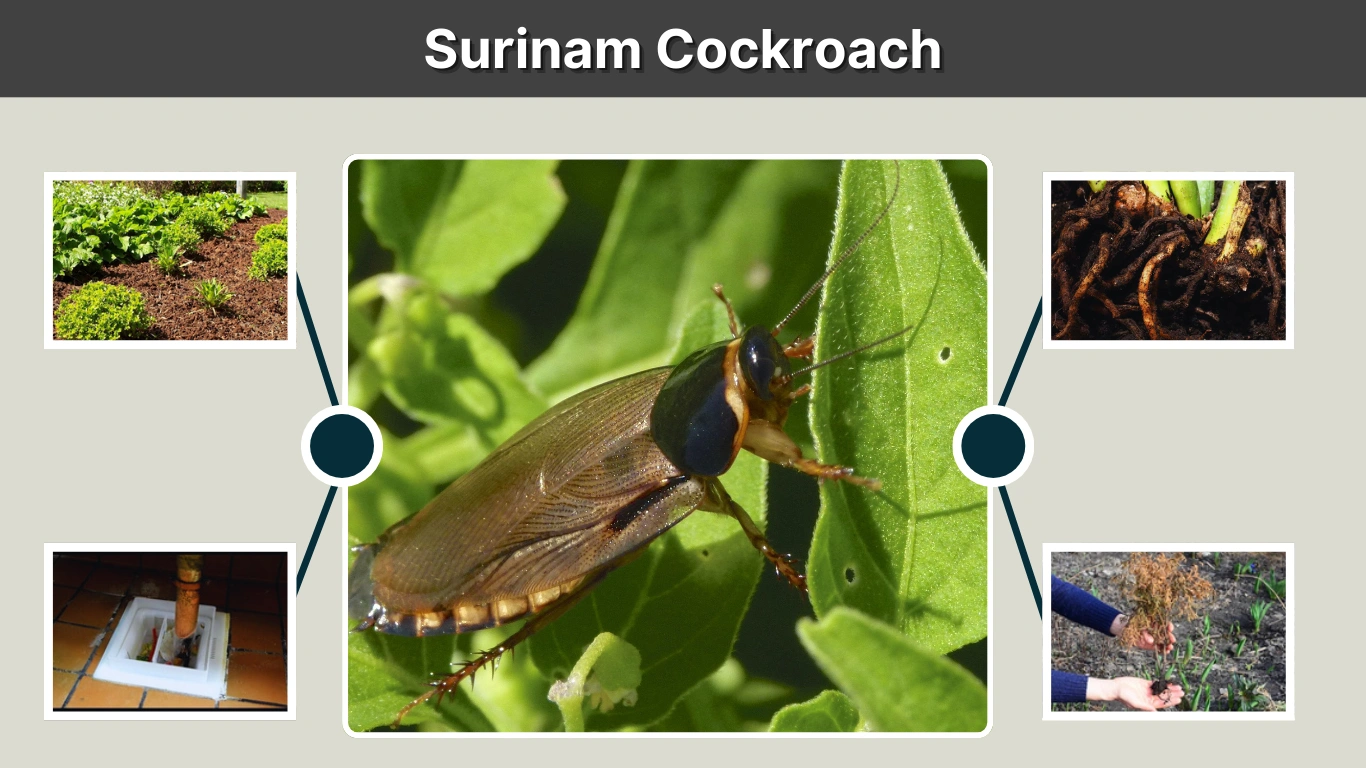
The Surinam cockroach (Pycnoscelus surinamensis) is a unique species often overlooked compared to household pests like the German cockroach. Unlike other roaches, it thrives outdoors and is strongly associated with soil, drains, and potted plants. While it rarely invades kitchens in the same way as German cockroaches, infestations can be problematic in homes, greenhouses, and gardens. These cockroaches are now found across warm regions in the United States, including Florida, Texas, Arizona, and Hawaii, as well as many tropical and subtropical countries.
Identification & Characteristics
Scientific Name and Classification
- Scientific name: Pycnoscelus surinamensis
- Family: Blaberidae
- Common names: Surinam cockroach, greenhouse cockroach
This species is easily recognized once you know its traits.
Size and Appearance
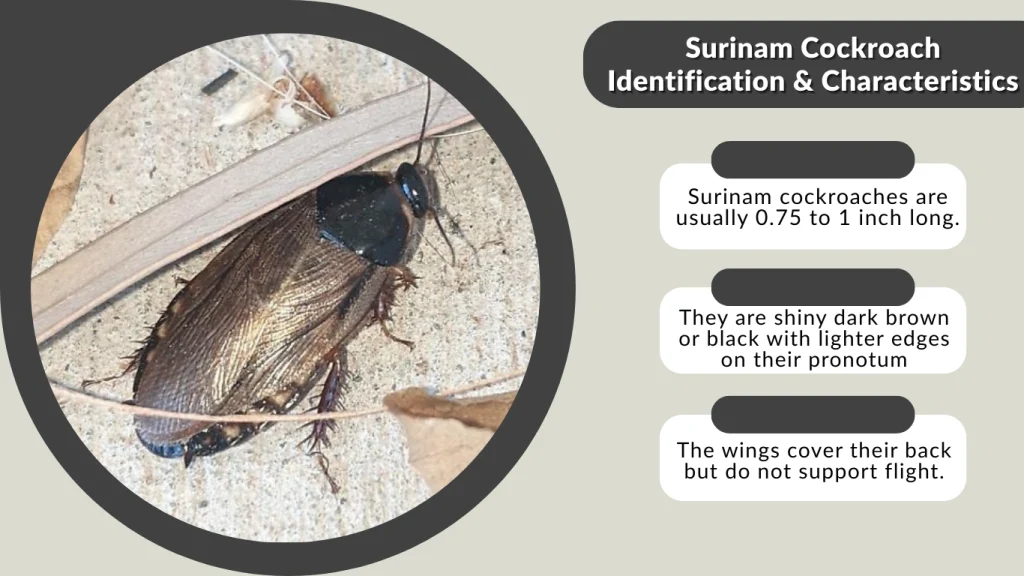
Adult Surinam cockroaches are usually 0.75 to 1 inch long. They are shiny dark brown or black with lighter edges on their pronotum (the shield-like plate behind the head). The wings cover their back but do not support flight.
Nymphs and Juveniles
The nymphs, or juveniles, are wingless and lighter in color. They remain close to soil or moist areas until maturity, feeding and developing through several molts.
Females and Reproduction
One of the most unusual aspects of Surinam cockroaches is that only females exist in established populations. They reproduce through parthenogenesis, meaning females produce offspring without mating. This allows infestations to grow quickly since every individual is capable of reproducing.
Comparison: Surinam vs. German Cockroach
- Surinam cockroaches: Prefer soil, drains, and plants; reproduce only through females.
- German cockroaches: Common in kitchens and food storage; spread through indoor infestations.
Both species are pests, but Surinam cockroaches are particularly linked to plant damage.
Habitat & Distribution
Preferred Environments
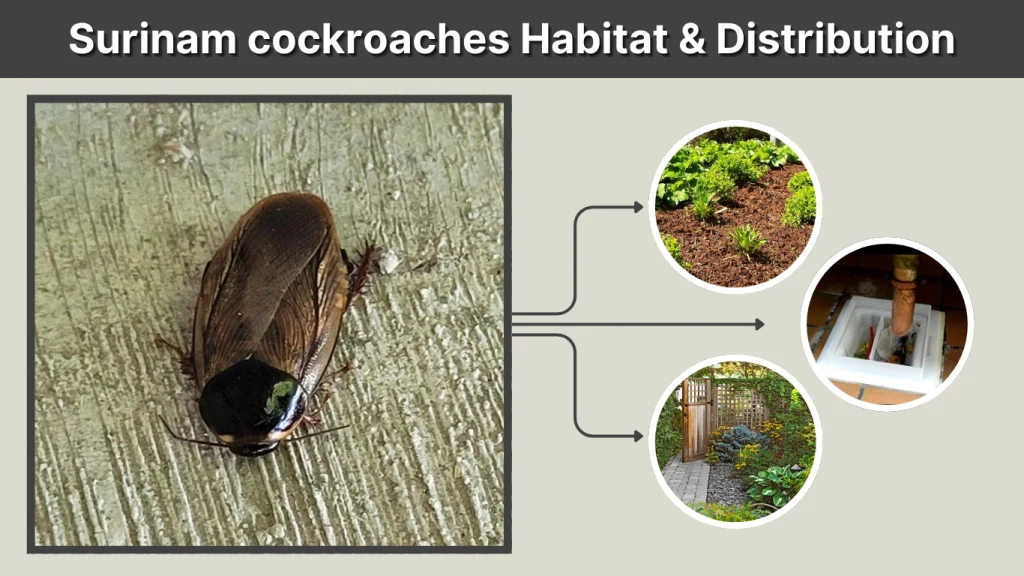
Surinam cockroaches favor warm, humid, and moist environments. They are commonly found:
- In soil and mulch around homes.
- Inside sink and floor drains.
- Around garden beds, decks, and fences.
- Inside greenhouses and potted plants, where they feed on roots.
U.S. Distribution
They are most common in Florida, but infestations are also reported in Texas, Arizona, Hawaii, and North Carolina. Urban centers like Houston often report recurring cases.
Global Spread
Outside the U.S., these cockroaches are found in Singapore, Suriname, and other tropical regions. Their ability to survive in warm climates makes them a global pest of greenhouses and gardens.
Behavior & Diet
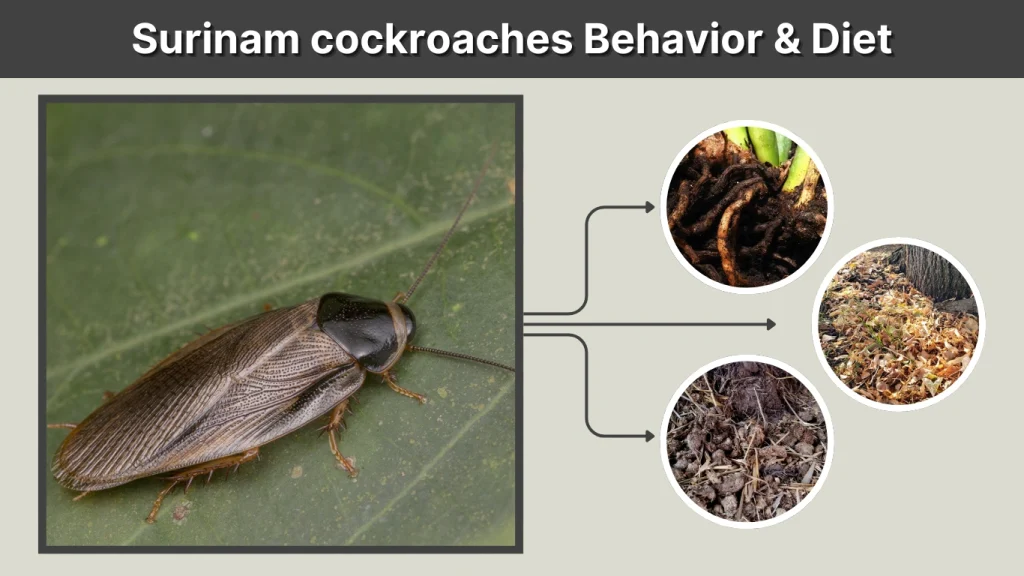
Nocturnal Activity
Surinam cockroaches are nocturnal, hiding in soil or drains during the day. At night, they emerge to feed and search for moist hiding places.
Diet
They primarily consume organic matter and plant material. This includes:
- Plant roots (often damaging potted plants and garden beds).
- Decaying leaves and mulch.
- General organic debris found in soil.
Infestation Signs
Signs of a Surinam cockroach infestation include:
- Sightings in sink or floor drains.
- Damaged or unhealthy potted plants, often with chewed roots.
- Increased nighttime insect activity near gardens or decks.
Life Cycle & Reproduction
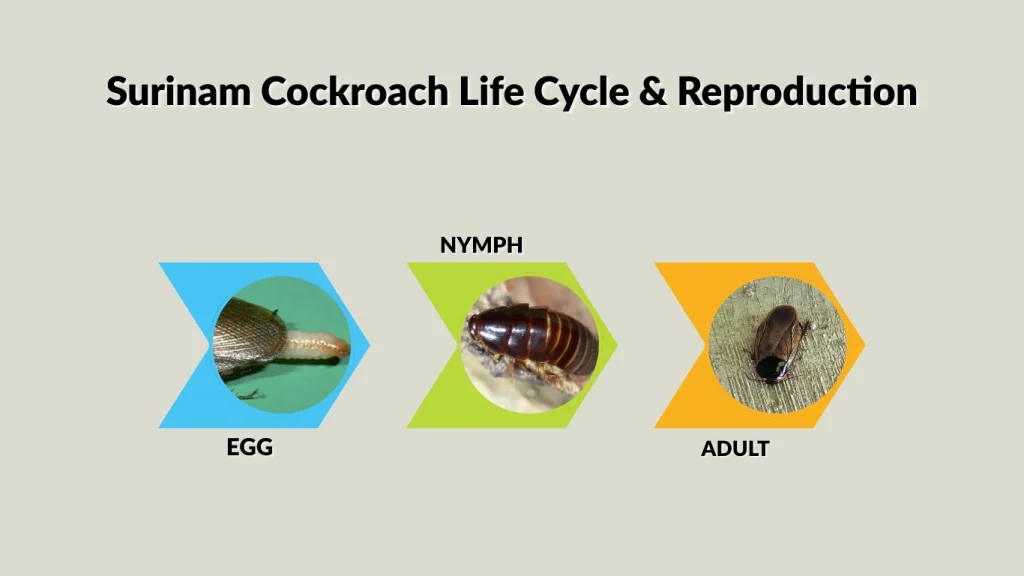
Egg Sacks and Development
Unlike many roaches that drop egg sacks (oothecae), Surinam cockroaches are ovoviviparous. This means the egg case remains inside the female until the young hatch. Once developed, the mother releases live nymphs directly into the environment.
Nymph Stage
The nymphs resemble smaller, wingless versions of the adults. They stay hidden in soil or moist crevices and gradually molt into adults. Development can take a few months, depending on conditions.
Female-Only Breeding
All Surinam cockroaches are females in established populations. Each one can produce dozens of offspring without males. This unusual reproductive method explains how a single introduction can lead to a fast-spreading infestation.
Reproductive Cycle
- Egg development inside female: Several weeks.
- Nymph growth: Multiple molts until adulthood.
- Adult lifespan: Several months, with continuous reproduction.
This rapid cycle allows infestations to expand quickly, especially in warm climates like Florida and Hawaii.
Risks & Impact
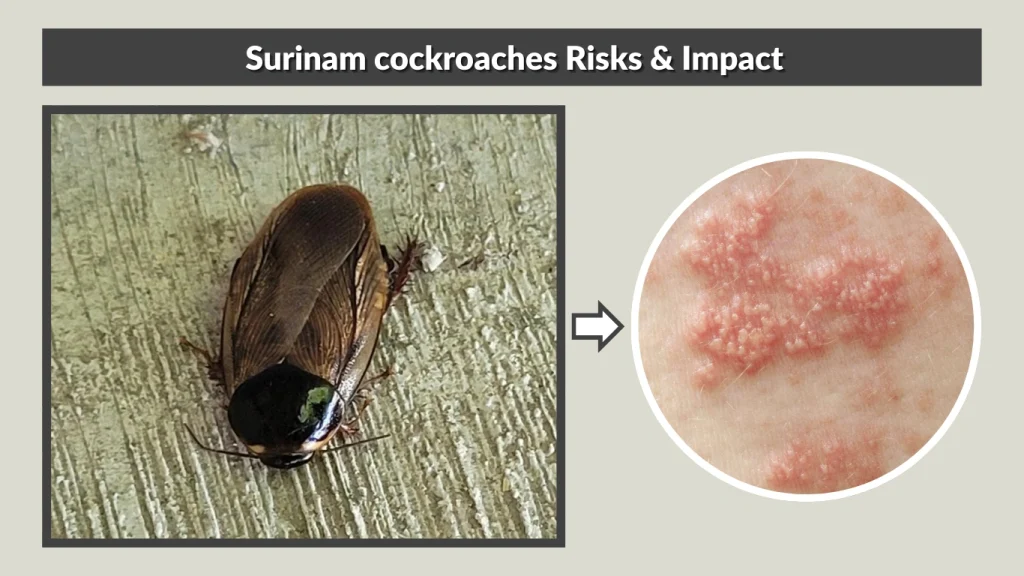
Are Surinam Cockroaches Dangerous?
Surinam cockroaches are not considered dangerous to humans. They do not bite or sting, and they are not known to spread serious diseases like some other cockroach species. However, they can still cause problems due to their habits and numbers.
Plant Damage
Their most significant impact is on plants and gardens. Since they feed on roots and organic matter, large populations can weaken or even kill potted plants. Greenhouses, nurseries, and home gardens are particularly vulnerable.
Infestations in Homes
Although less likely to infest kitchens compared to German cockroaches, Surinam cockroaches frequently appear in drains, sinks, and bathrooms. Homeowners may notice them emerging from pipes or soil-filled areas indoors.
Human Interaction
- Do they bite? No, Surinam cockroaches do not bite humans.
- Are they poisonous? No, they are not toxic or venomous.
- Do they fly? Adults have wings but are unable to fly.
While they are not a direct health hazard, their presence is unpleasant, and plant damage can become costly.
Infestations & Control
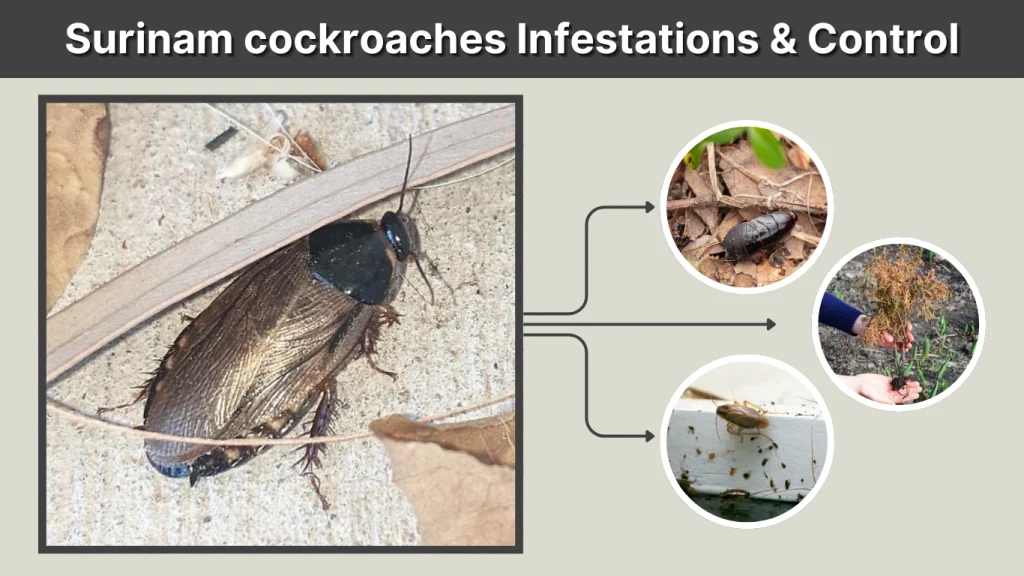
How They Enter Homes
Surinam cockroaches often enter houses through:
- Drains and sink pipes.
- Soil in potted plants brought indoors.
- Cracks in decks, patios, and siding.
Once inside, they establish small colonies in moist areas.
Signs of Infestation
- Regular sightings in bathroom sinks or floor drains.
- Plant roots damaged or plants wilting despite care.
- Multiple small roaches appearing in soil or mulch beds.
Control Methods
Chemical Solutions
- Advion gel bait and other professional-grade baits work well for cockroach infestations.
- Sprays and poisons (targeted around drains and soil) can provide quick knockdown.
- Residual insecticides help prevent re-infestation.
Natural & Preventive Methods
- Keep soil dry when possible, since moisture attracts them.
- Use sticky traps around drains and gardens to monitor activity.
- Seal cracks and gaps around decks and siding.
Professional Pest Control
For severe infestations, professional services may be required, especially in greenhouses or large gardens where populations can quickly overwhelm natural defenses.
Caring for Surinam Cockroaches (Pets & Feeders)
Interestingly, Surinam cockroaches are also kept in captivity as feeder insects for reptiles and amphibians.
Care Requirements
- Housing: Plastic bins or terrariums with soil substrate.
- Diet: Vegetables, organic scraps, and grains.
- Moisture: Lightly damp soil to mimic their natural habitat.
- Reproduction: Since all individuals are female, colonies grow quickly without breeding pairs.
For reptile keepers, this makes them a self-sustaining feeder colony. However, strict care should be taken to prevent escapes that could lead to infestations.
FAQs
1. Can Surinam cockroaches fly?
No, Surinam cockroaches cannot fly. Although adults have wings, they are purely decorative and cover the body without providing lift. Instead, these insects rely on crawling through soil, drains, and cracks to move. This trait makes them easier to contain than other flying cockroach species.
2. Do Surinam cockroaches bite?
Surinam cockroaches do not bite or sting humans. They are not aggressive and pose no direct harm to people or pets. Their main impact is damaging plant roots and creating infestations in soil, drains, or potted plants, which can become a serious nuisance if left uncontrolled.
3. Are Surinam cockroaches harmful to humans?
These cockroaches are not directly harmful to humans. They do not spread disease as effectively as German cockroaches, nor do they bite. However, infestations may be stressful, and their activity can damage houseplants or garden crops. Managing moisture and sealing entry points helps reduce human contact significantly.
4. What do Surinam cockroaches eat?
They feed mostly on roots, decaying vegetation, and soil-based organic matter. Outdoors, they attack potted plants, gardens, and mulch beds. Indoors, they may settle near drains and damp areas where organic debris accumulates. Their diet makes them particularly troublesome for gardeners and greenhouse operators facing root damage.
5. How to get rid of Surinam cockroaches in a house?
Start by reducing moisture and sealing cracks around sinks, decks, and foundations. Use professional baits such as Advion for fast results. Treat drains with insecticide sprays, and monitor soil in potted plants. For severe infestations, especially in greenhouses, hiring pest control services ensures long-term effectiveness and prevention.