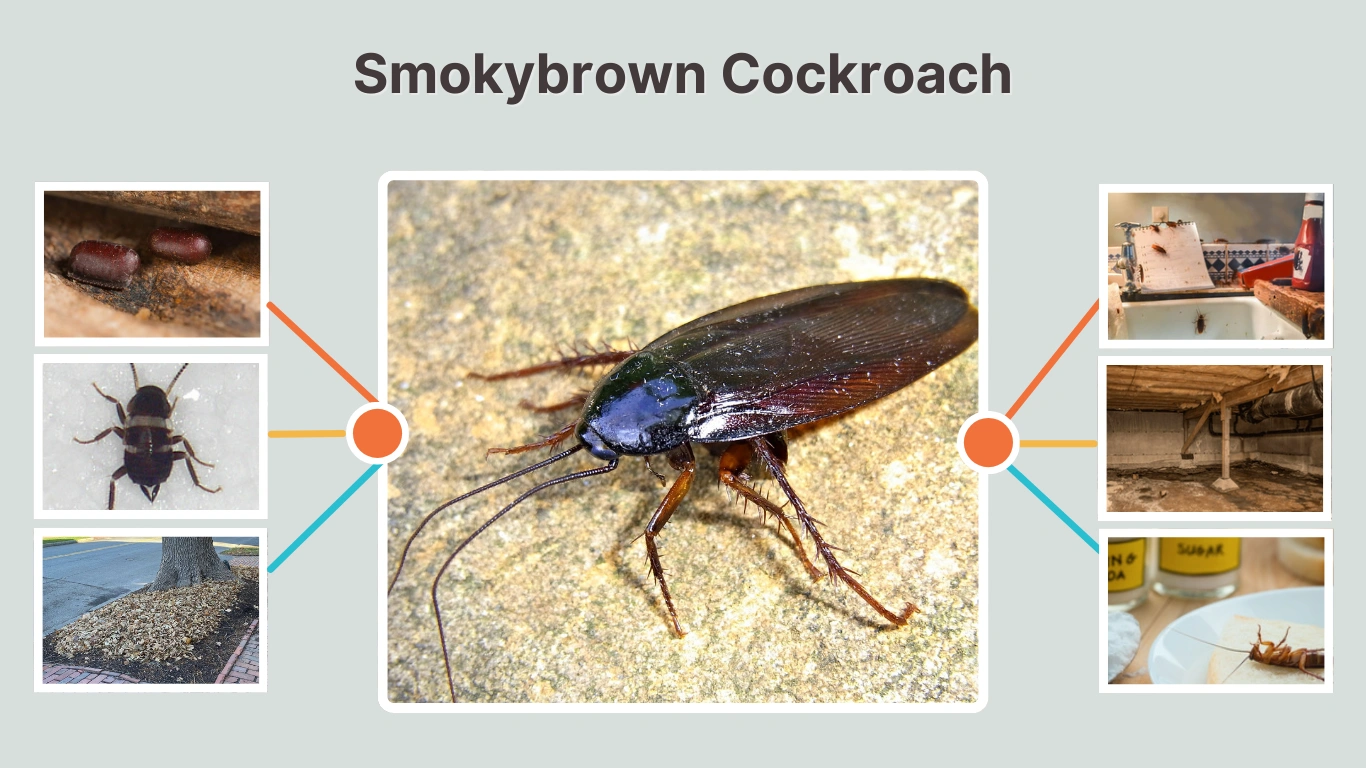
Cockroaches are among the most common household pests, but not all species behave the same way. One species that often causes concern in the southern United States is the Smokybrown Cockroach (Periplaneta fuliginosa). Known for its glossy dark-brown appearance and ability to thrive both indoors and outdoors, this cockroach has become a frequent nuisance in warm, humid regions. Understanding its behavior, life cycle, and the risks it brings is essential for proper control and prevention.
What is a Smokybrown Cockroach?
The Smokybrown Cockroach is a large species of cockroach that belongs to the Blattidae family. Unlike the common German cockroach, which usually stays indoors, Smokybrown cockroaches are typically outdoor pests that invade homes in search of food and shelter.
They are often confused with American cockroaches because of their size and coloration, but Smokybrowns have distinct traits. They are more dependent on humidity and tend to be active at night, making them a hidden but persistent problem for homeowners.
Smokybrown Cockroach Identification
Appearance
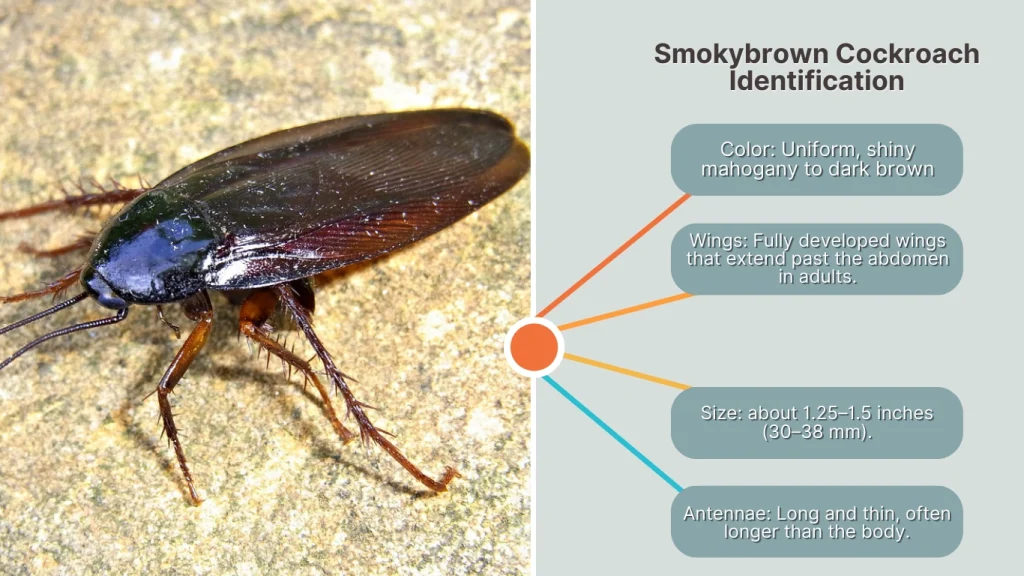
- Color: Uniform, shiny mahogany to dark brown, unlike the reddish hue of the American cockroach.
- Wings: Fully developed wings that extend past the abdomen in adults.
- Size: Adults typically measure about 1.25–1.5 inches (30–38 mm).
- Antennae: Long and thin, often longer than the body.
- Nymphs/Babies: Juveniles are wingless and darker in color. They can be mistaken for small beetles.
Flying Ability
One key characteristic is that Smokybrown cockroaches can fly, unlike many other household roaches. Their strong wings allow them to glide toward light sources, making them more likely to enter homes at night through open doors and windows.
Side View Recognition
Seen from the side, their glossy exoskeleton and smooth body shape stand out. This shiny texture helps differentiate them from drier-looking cockroach species like Oriental roaches.
Smokybrown Cockroach Life Cycle & Lifespan
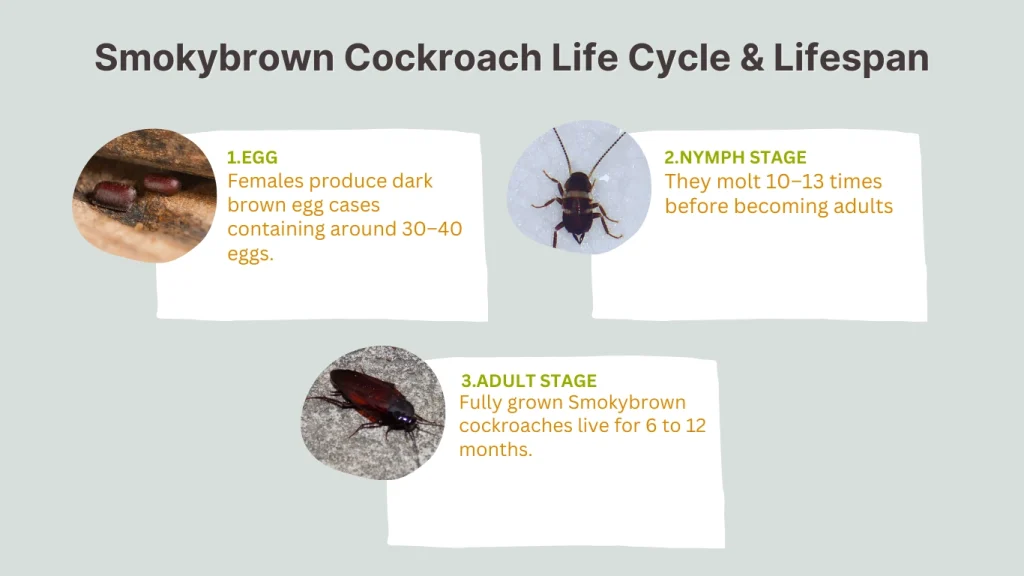
Like other cockroach species, Smokybrown cockroaches undergo incomplete metamorphosis, which consists of three main stages:
- Eggs (Ootheca)
- Females produce dark brown egg cases containing around 30–40 eggs.
- These oothecae are usually hidden in cracks, moist areas, or near food sources.
- Females produce dark brown egg cases containing around 30–40 eggs.
- Nymphs
- After hatching, nymphs resemble smaller versions of adults but lack wings.
- They molt 10–13 times before becoming adults, which can take several months depending on temperature and food availability.
- After hatching, nymphs resemble smaller versions of adults but lack wings.
- Adults
- Fully grown Smokybrown cockroaches live for 6 to 12 months.
- Females can produce several oothecae during this period, resulting in hundreds of offspring.
- Fully grown Smokybrown cockroaches live for 6 to 12 months.
The total lifespan of a Smokybrown cockroach varies but typically lasts up to one year under favorable conditions.
Smokybrown Cockroach Diet
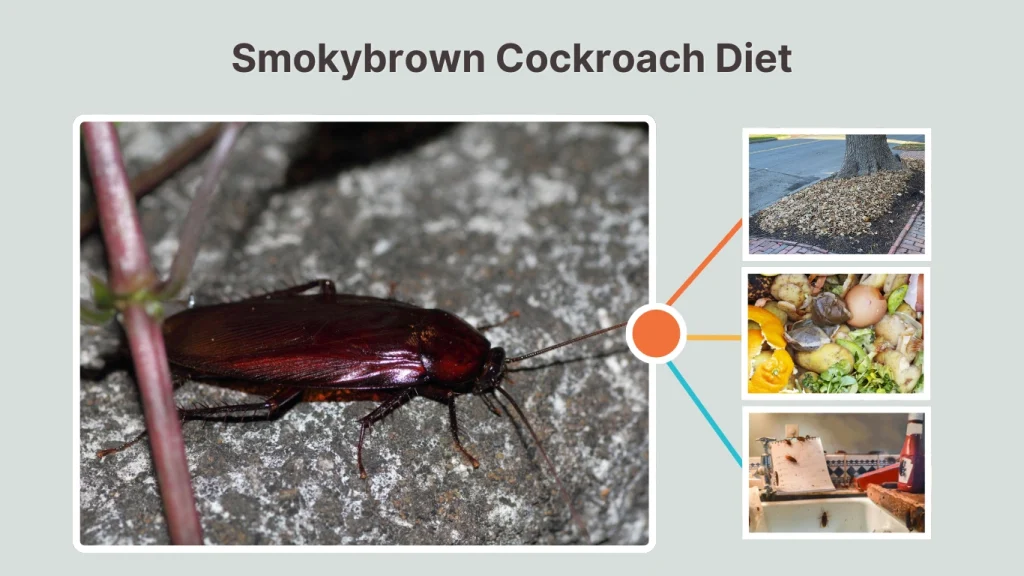
Smokybrown cockroaches are omnivorous scavengers, feeding on almost anything organic. Their diet explains why they thrive in both outdoor and indoor environments.
- Outdoors: They consume leaf litter, decaying plants, bark, mulch, and bird droppings.
- Indoors: They feed on food scraps, grease, pet food, and even paper products.
- Moisture Dependence: Unlike some cockroaches, Smokybrowns require water daily. This dependency on moisture often drives them into kitchens, bathrooms, and basements.
Their wide-ranging diet makes them adaptable and difficult to eliminate once established.
Habitat and Regions (Where They Live)
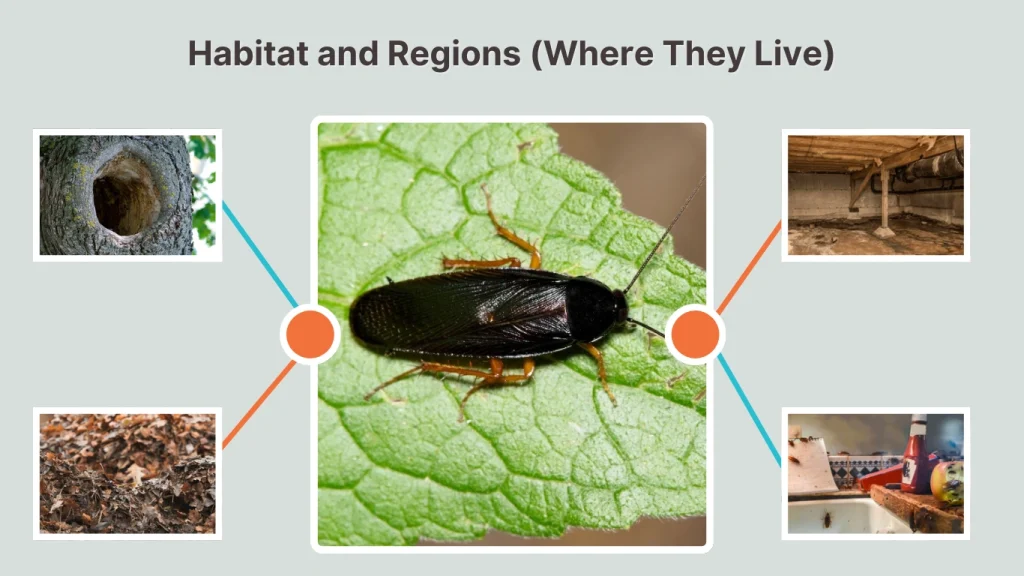
Smokybrown cockroaches thrive in warm, humid climates, which is why they are commonly found in the southern United States and parts of Asia. They are especially abundant in coastal states and urban environments with high moisture levels.
Outdoor Habitats
- Tree holes and bark
- Mulch piles and leaf litter
- Clogged gutters and drains
- Woodpiles and compost heaps
Indoor Habitats
- Attics, basements, and crawl spaces
- Kitchens and bathrooms with moisture
- Fireplaces and chimney flues (chimney flue smokybrown cockroach)
Regional Distribution (U.S. Focused)
- Southeast & Gulf Coast: Georgia, Florida, Louisiana, Mississippi, Alabama, and South Carolina
- Mid-South: Arkansas, Tennessee, and North Carolina
- West Coast: Southern California and Texas (especially in humid urban areas)
- Other States: Occasionally found in Ohio, Montana, and other regions through accidental transport
This wide spread highlights their ability to adapt, though they remain most problematic in states with consistently high humidity.
Smokybrown Cockroach in Houses
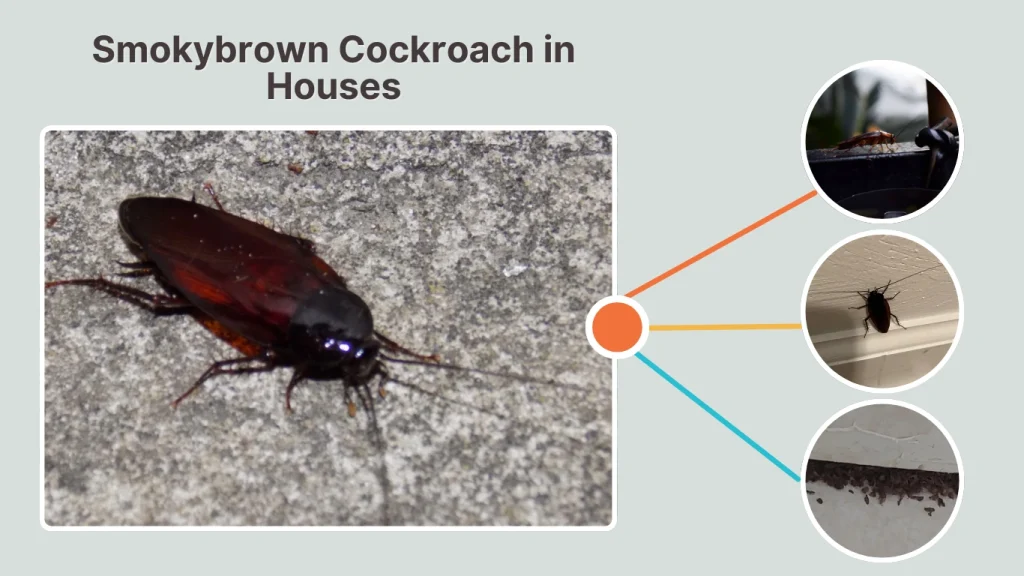
Although they prefer outdoor environments, Smokybrown cockroaches frequently enter homes, especially during hot summers or dry spells when they seek water and shelter.
How They Enter
- Flying through open windows and doors at night
- Crawling through vents, cracks, and gaps in siding
- Using drains, chimney flues, and plumbing openings
Signs of Smokybrown Cockroaches Indoors
- Droppings: Resembling coffee grounds or black pepper, often found in cabinets or pantries.
- Egg cases: Small dark-brown capsules hidden in damp areas.
- Odor: A musty smell in areas with heavy infestations.
- Sightings at night: They are nocturnal and scatter when lights are turned on.
Because they can live both indoors and outdoors, infestations can be harder to control compared to German cockroaches, which usually remain inside once established.
Are Smokybrown Cockroaches Dangerous?
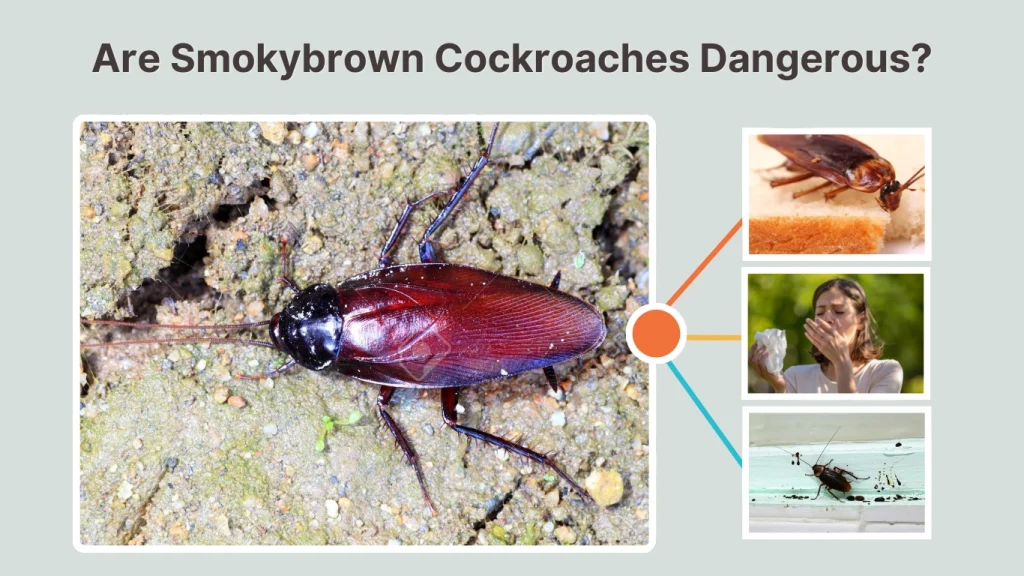
Many homeowners wonder if Smokybrown cockroaches pose a direct threat. While they rarely bite humans, they are still considered dangerous because of the diseases and allergens they can spread.
- Health Risks: These cockroaches carry bacteria such as E. coli and Salmonella on their bodies, contaminating food, dishes, and surfaces.
- Allergens: Their droppings, shed skins, and saliva can trigger asthma and allergies, especially in children and sensitive individuals.
- Cockroach Poop: Smokybrown droppings are small, dark, and resemble coffee grounds. Spotting these near food storage or along baseboards is a clear warning sign.
While they don’t inject venom or attack humans, the indirect health impact makes them a serious household pest.
Smokybrown Cockroach Infestation
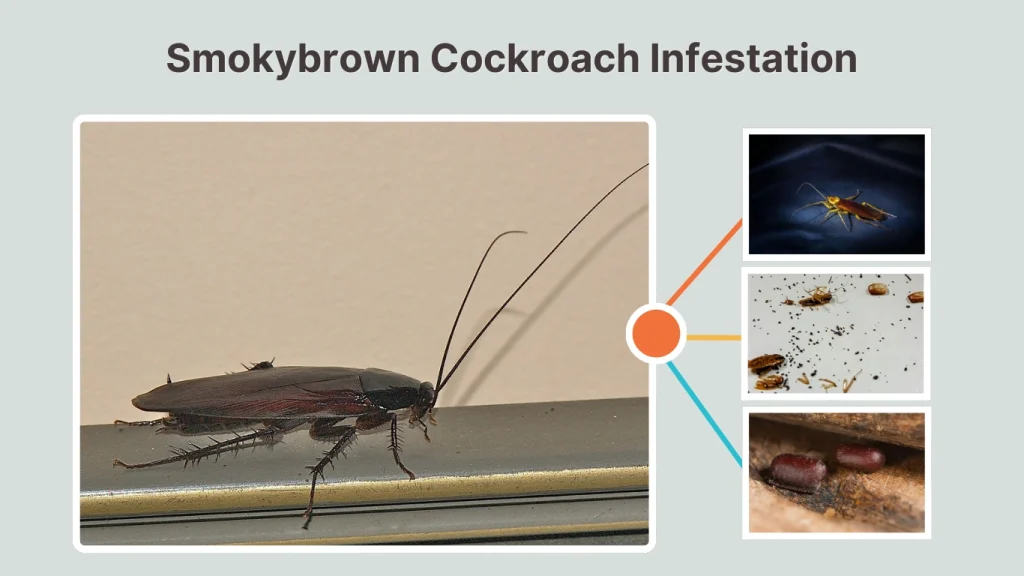
An infestation usually starts outdoors but can quickly spread indoors if conditions are favorable. Because Smokybrowns fly, they can easily move between yards and houses, making them a neighborhood-wide issue.
Signs of Infestation
- Frequent sightings at night, especially near lights
- Multiple droppings in cabinets or under sinks
- Egg cases in damp areas
- Musty odors from concentrated populations
Spread and Reproduction
A single female can produce hundreds of offspring in her lifetime. Once established, populations grow rapidly. Unlike German cockroaches that cluster in kitchens, Smokybrown infestations may extend to attics, basements, garages, and even outdoor sheds.
How to Control Smokybrown Cockroaches
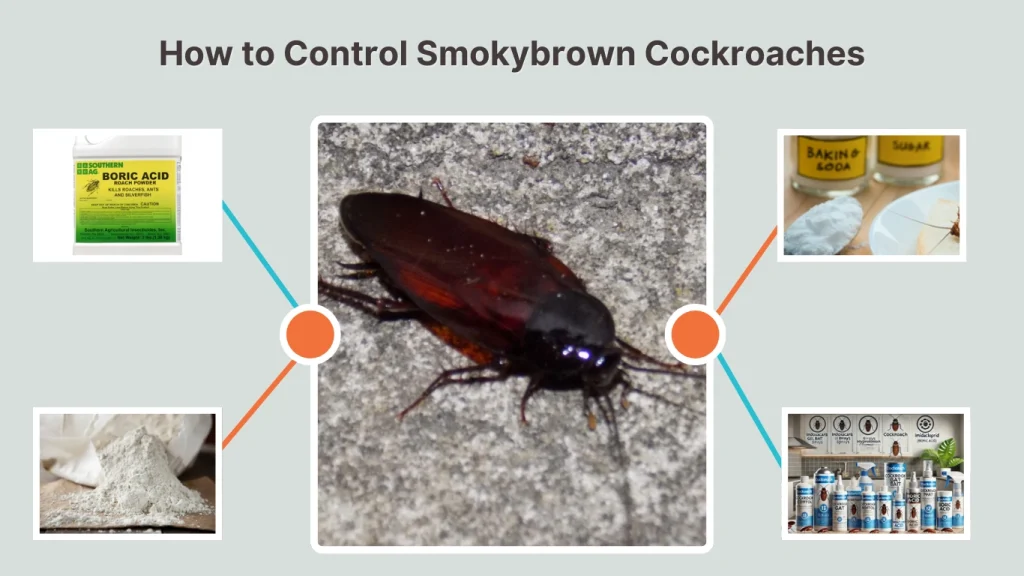
Getting rid of Smokybrown cockroaches requires a mix of elimination, sanitation, and prevention.
Natural and DIY Methods (What kills Smokybrown cockroach)
- Boric Acid: Applied in cracks and crevices, it dehydrates and kills roaches.
- Diatomaceous Earth (DE): A natural powder that damages their exoskeleton.
- Baking Soda & Sugar: A simple homemade bait that attracts and kills them.
Professional Pest Control
- Gel Baits: Effective for reducing populations in kitchens and bathrooms.
- Insect Growth Regulators (IGRs): Prevent nymphs from maturing.
- Sprays & Dusts: Used by professionals to treat attics, crawl spaces, and exterior walls.
Long-Term Solutions
- Treat both inside and outside the home.
- Address sources like mulch piles, gutters, and leaky pipes.
- Use perimeter sprays around foundations to block entry.
Prevention Tips
Since Smokybrown cockroaches are attracted to moisture, food, and shelter, prevention focuses on removing these conditions.
Indoors
- Seal cracks around doors, windows, and utility lines.
- Store food in airtight containers.
- Keep sinks and counters free from crumbs and grease.
- Fix plumbing leaks to reduce water sources.
Outdoors
- Clean gutters and downspouts regularly.
- Remove leaf litter, mulch, and woodpiles near the house.
- Trim overhanging trees that give roaches easy access to roofs.
- Cover vents and chimneys with fine mesh screens.
By combining indoor hygiene with outdoor maintenance, homeowners can greatly reduce the risk of Smokybrown cockroach infestations.
FAQs
Can Smokybrown Cockroaches infest your house?
Yes. While they prefer outdoor environments, Smokybrowns fly into homes through open windows or doors and often settle in attics, kitchens, and bathrooms if conditions are damp.
Where do Smokybrown Cockroaches come from?
They are believed to have originated in Asia but are now widespread in the southern United States, especially in warm, humid regions like Florida, Georgia, and Texas.
Are Smokybrown Cockroaches common in California and Georgia?
Yes. They are abundant in Georgia and the southeastern U.S., while also appearing in Southern California, particularly in areas with high humidity.
Do Smokybrown Cockroaches fly into homes at night?
Yes. Adults are strong fliers and are attracted to lights, making them more likely to enter homes during summer evenings.
What is the fastest way to kill a Smokybrown Cockroach?
The quickest method is to use roach sprays or gel baits designed for cockroaches. For long-term elimination, professional pest control combined with sealing entry points is most effective.