
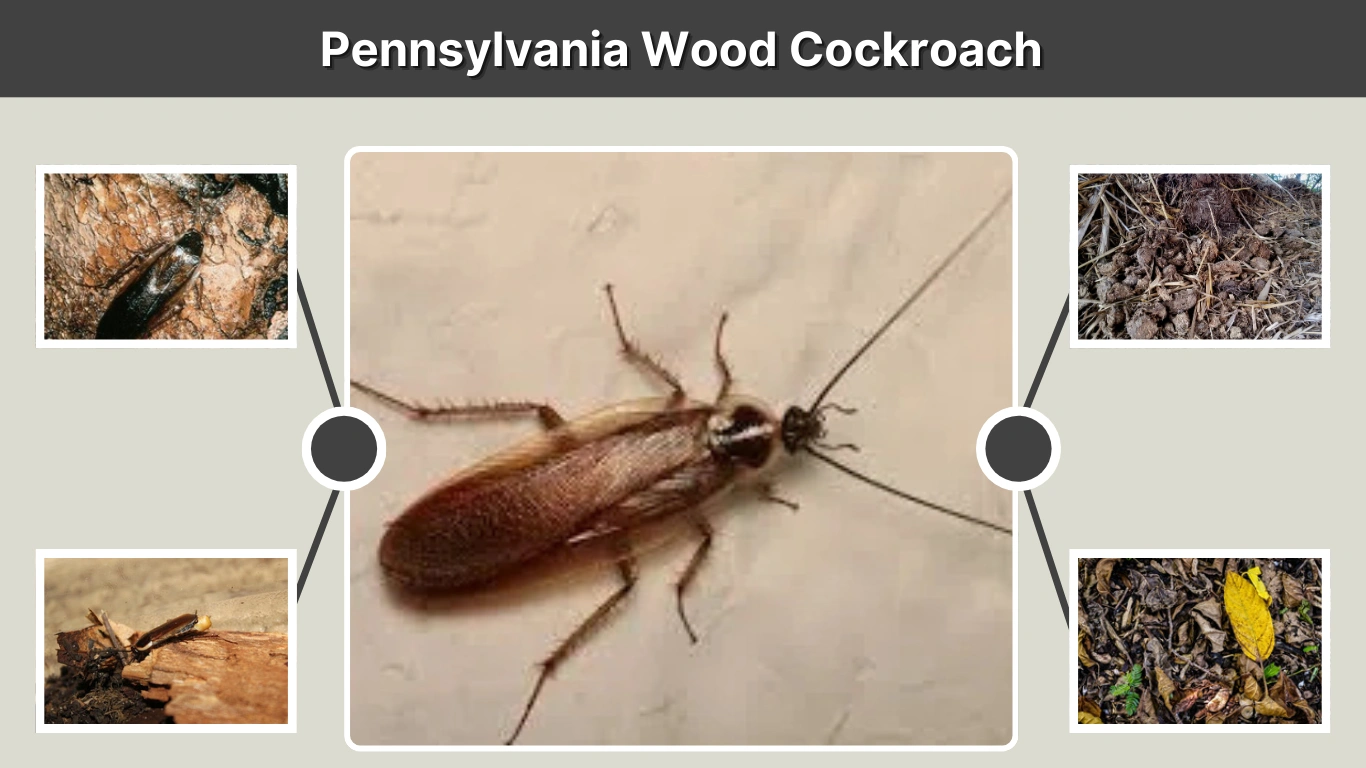
The Pennsylvania wood cockroach (Parcoblatta pensylvanica) is a species often misunderstood and mistaken for more notorious cockroach pests. Unlike its household relatives that raise concerns about hygiene and infestations, this species plays a very different role in the environment. Primarily found in wooded regions of North America, it thrives in natural outdoor habitats rather than indoors. Understanding its size, habitat, and behavior not only helps distinguish it from harmful species but also highlights its role in forest ecosystems. This article explores the Pennsylvania wood cockroach in depth, focusing on its physical traits, preferred environments, and the factors that set it apart from invasive cockroach varieties.
General Overview of the Species
The Pennsylvania wood cockroach belongs to the order Blattodea, which encompasses cockroaches and termites, and falls within the family Blattellidae. It is native to North America, with a distribution that extends across Pennsylvania and much of the northeastern and midwestern United States. While its name links it strongly to Pennsylvania, this insect is not limited to one state and is commonly encountered in nearby regions.
Physical Characteristics and Size
Average Size
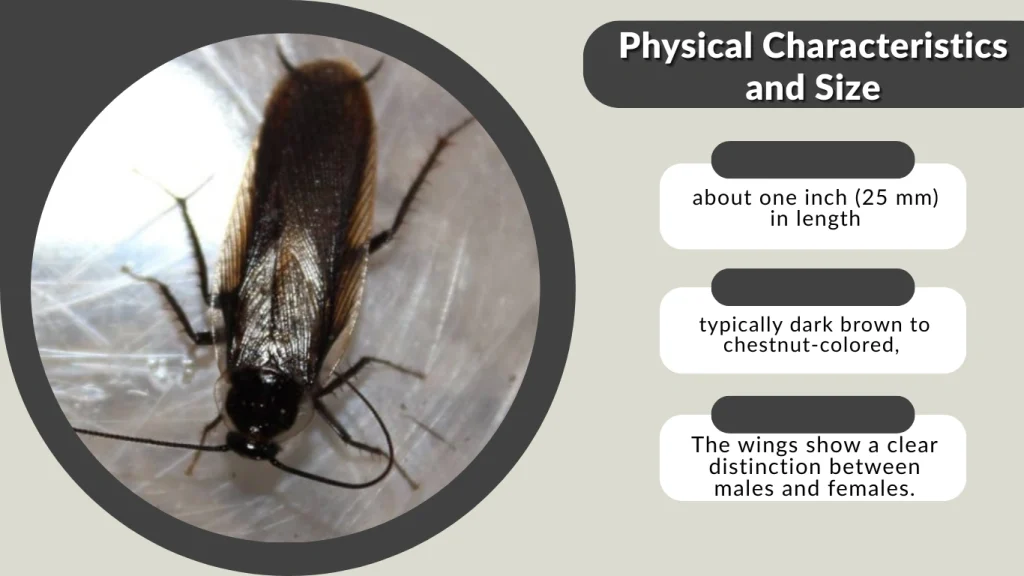
The Pennsylvania wood cockroach exhibits noticeable size differences between males and females. Adult males generally measure about one inch (25 mm) in length, while females are slightly smaller, averaging three-quarters of an inch (18–20 mm). Nymphs, or immature cockroaches, are significantly smaller and pass through several molts before reaching adulthood. These variations in size can make identification challenging, but careful observation of additional features helps separate them from pest species.
Body Structure
In terms of appearance, Pennsylvania wood cockroaches are typically dark brown to chestnut-colored, with a distinct pale or whitish edging along the thorax and wing margins. This subtle feature is often the first clue in identifying them. Their antennae are long and threadlike, giving them enhanced sensory abilities for navigating their environment.
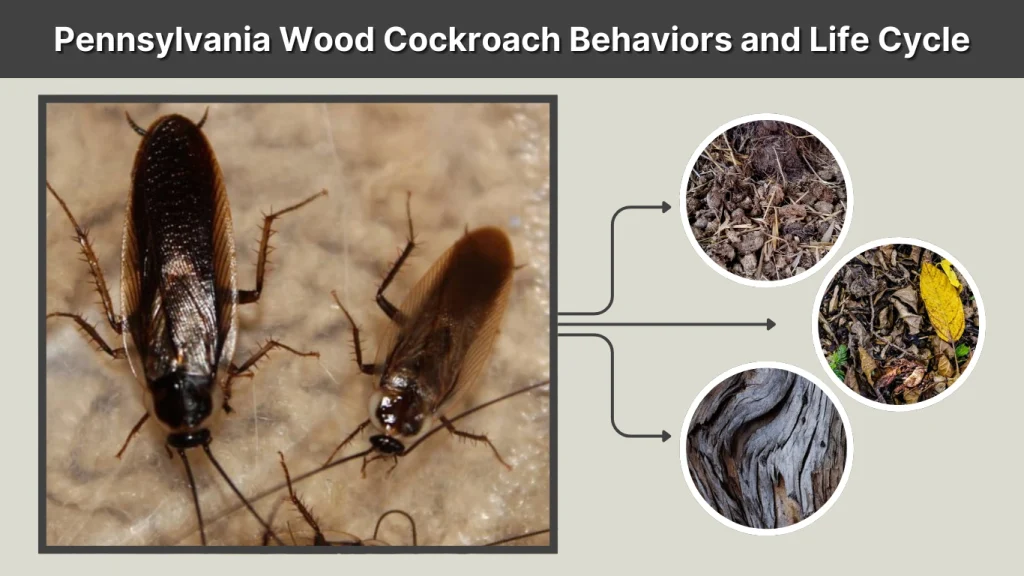
The wings show a clear distinction between males and females. Males possess long, fully developed wings that extend beyond the body and allow them to fly actively, particularly at night. Females, however, have much shorter wings that only cover part of the body, leaving them flightless. This sexual dimorphism is a defining characteristic of the species.
Sexual Dimorphism
The difference in wing structure reflects broader distinctions between the sexes. Males are slimmer and more mobile, often seen flying toward lights in spring and summer evenings. Their aerodynamic build makes them highly active outdoors. In contrast, females are more robust and sedentary, remaining close to the ground or within wood debris. These differences not only aid in identification but also explain variations in their behavior and visibility.
Habitat and Environment
Natural Habitat
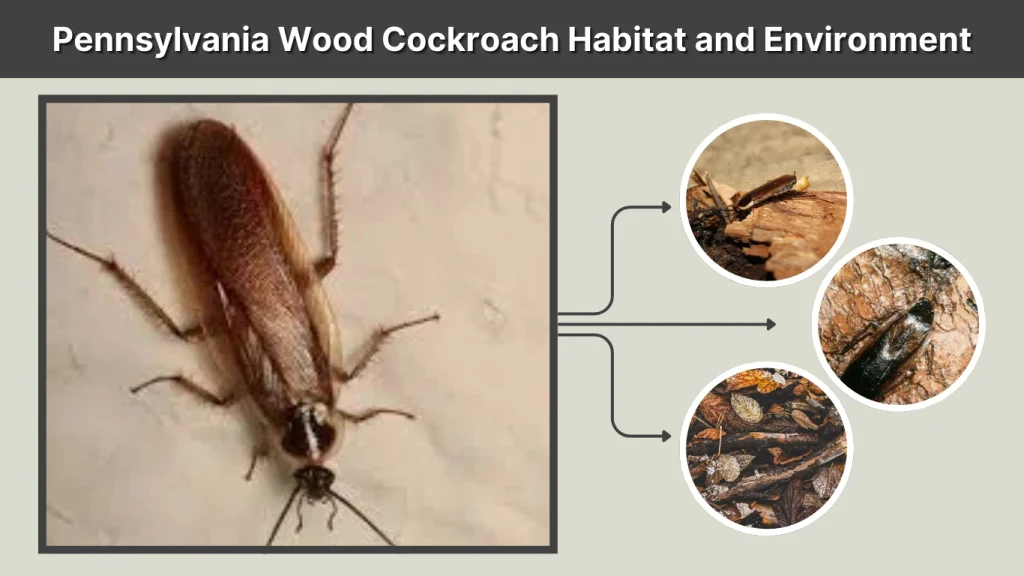
True to its name, the Pennsylvania wood cockroach is strongly associated with wooded environments. It is commonly found beneath decaying logs, under loose bark, or within piles of leaf litter. Moisture-rich habitats provide the conditions it needs to thrive, as decaying organic matter forms both food and shelter. Forest floors, old tree stumps, and shaded areas with high humidity are prime habitats where populations can grow naturally without human disturbance.
The presence of this cockroach is particularly strong in areas with abundant hardwood forests. Unlike invasive species that rely heavily on human environments, the Pennsylvania wood cockroach remains closely tied to its natural habitat, rarely venturing far unless drawn by artificial factors.
Seasonal Activity
Seasonal patterns play a significant role in its visibility. Adults become most active in late spring through early summer, with a peak in May and June. During these months, males are especially noticeable because of their flight activity and attraction to lights. The heightened activity during warm months is part of their reproductive cycle, which ensures that eggs and nymphs develop in favorable conditions.
As temperatures drop in autumn, adult activity decreases, though eggs and nymphs may persist in sheltered outdoor habitats. The seasonal presence of adults around homes is one of the main reasons people encounter them unexpectedly.
Human Proximity
Though not naturally inclined to invade homes, the Pennsylvania wood cockroach occasionally crosses paths with people. This usually happens in one of two ways. First, outdoor lighting draws flying males toward houses, where they may cluster near windows, porches, or garage doors. Their strong attraction to light sets them apart from most cockroach species, which generally avoid well-lit areas.
Second, firewood storage can lead to accidental indoor introductions. Wood brought in from outside may harbor females or nymphs hidden beneath bark or inside cracks. Once indoors, however, these cockroaches fail to establish colonies, since the environment does not provide the moisture, food, or shelter they require.
In this respect, the Pennsylvania wood cockroach is more of a seasonal nuisance than a genuine pest. Its presence inside homes is temporary and does not indicate unsanitary conditions or risk of infestation.
Behaviors and Life Cycle
Daily Behaviors
Unlike most cockroach species that shun bright areas, the Pennsylvania wood cockroach is photophilic, meaning it is attracted to light. This unusual trait makes them highly visible around porch lamps, streetlights, and illuminated windows at night. They are primarily nocturnal, spending daytime hidden under bark or debris, and becoming active after dusk.
Males are far more mobile than females, using their wings to fly in search of mates. Their erratic flight patterns toward artificial lights often alarm homeowners, though their presence is harmless. Females, being wingless, remain near ground-level habitats and are rarely observed unless disturbed.
Feeding Habits
The Pennsylvania wood cockroach plays an important role in the natural decomposition process. Its diet consists mainly of decaying organic matter, including rotting leaves, tree bark, and decomposing wood. Occasionally, it may feed on fungi or plant material found within its environment.
This diet is vastly different from pest cockroaches, which scavenge in kitchens and garbage bins. As a result, they pose no health risks to humans. Instead, their feeding helps recycle nutrients back into the soil, supporting forest ecosystems.
Reproductive Cycle
The reproductive habits of the Pennsylvania wood cockroach follow the typical pattern of the order Blattodea but with notable species-specific traits. Females produce oothecae (egg cases) that are brown, elongated, and protective. Each case contains multiple embryos, ensuring survival even in variable conditions.
From eggs hatch nymphs, which resemble smaller, wingless versions of adults. They undergo gradual metamorphosis, molting multiple times before reaching maturity. This process may take several months to over a year, depending on climate and food availability. Adults live only for a short season, but the cycle continues annually.
Identification in the Field
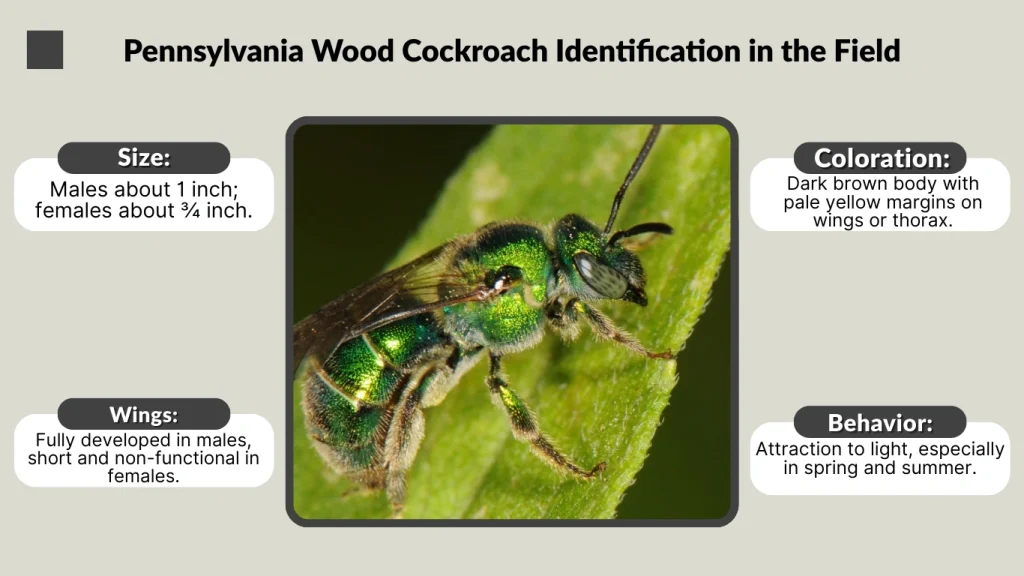
Key Features for Identification
Identifying the Pennsylvania wood cockroach requires careful observation of several traits:
- Size: Males about 1 inch; females about ¾ inch.
- Coloration: Dark brown body with pale yellow margins on wings or thorax.
- Wings: Fully developed in males, short and non-functional in females.
- Behavior: Attraction to light, especially in spring and summer.
These features, when combined, separate them from pest cockroaches. For example, the German cockroach is smaller (½ inch), light brown, and commonly found indoors, while the American cockroach is much larger (1.5–2 inches) and reddish-brown.
Seasonal Signs
One of the easiest ways to identify this species is by noting the season and setting. Swarms of males flying around lights in May and June are almost always Pennsylvania wood cockroaches. This seasonal phenomenon is rarely mistaken for other species, making timing a useful clue for identification.
Behavior as a Clue
Beyond appearance, behavior is equally telling. Pest cockroaches prefer dark, humid areas inside homes, avoiding humans when possible. In contrast, Pennsylvania wood cockroaches are boldly visible, flying directly toward light sources and often appearing in groups. Their inability to reproduce indoors further confirms their identity.
Ecological Role and Impact
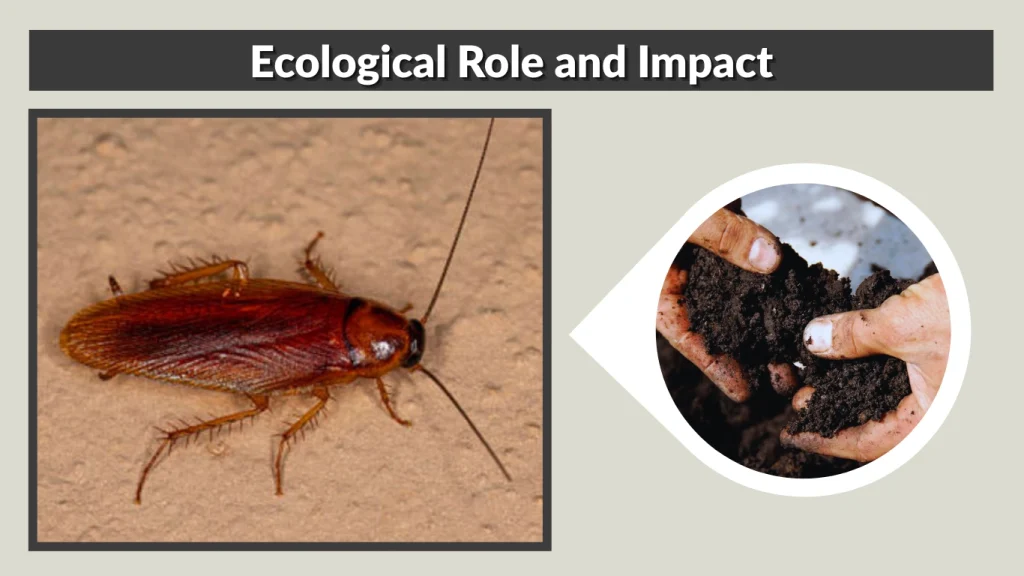
The Pennsylvania wood cockroach is not a pest but rather an ecological contributor. By consuming decaying matter, it accelerates decomposition and helps recycle nutrients. This process maintains soil fertility and supports plant growth. In forests, their activity complements that of fungi, beetles, and other decomposers.
They are also a food source for many animals. Birds, small mammals, amphibians, and reptiles feed on them, making them part of a balanced food web. Their seasonal abundance ensures that predators have sufficient food during breeding seasons.
From a human perspective, their impact is minimal. They do not spread disease, damage food supplies, or infest homes. At most, they are a temporary nuisance when males swarm near outdoor lights or accidentally enter living spaces. Their harmless nature makes extermination unnecessary, and in many cases, learning to distinguish them from pest species prevents unnecessary alarm.
Management and Prevention
Outdoor Management
The simplest way to reduce encounters is to limit outdoor lighting during peak seasons. Replacing bright white bulbs with yellow “bug lights” can significantly reduce attraction. Keeping woodpiles and leaf litter away from buildings also discourages their presence near homes.
Indoor Prevention
For those concerned about occasional indoor appearances, prevention is straightforward. Seal gaps and cracks around windows, doors, and siding. Ensure firewood is inspected before bringing it indoors. If one does enter the home, it can be removed manually or with a vacuum, as infestations do not occur indoors.
Why Control Measures Are Usually Unnecessary
Unlike German or American cockroaches, which require active control measures, the Pennsylvania wood cockroach does not. Pest control companies rarely recommend treatments for them because they do not pose risks to human health or property. Education and prevention are usually sufficient to manage their presence.
Conclusion
The Pennsylvania wood cockroach is a fascinating species that demonstrates how not all cockroaches deserve the negative reputation often associated with the group. With its modest size, unique attraction to light, and preference for wooded environments, it stands apart from household pests. Its ecological role as a decomposer adds to its value in natural ecosystems, while its harmless nature makes extermination unnecessary. By learning to identify and understand this species, we gain not only peace of mind but also a deep
FAQs
What is the average size of a Pennsylvania wood cockroach?
Adult males grow to about 1 inch, while females average around ¾ inch. Nymphs are smaller and wingless, gradually molting until maturity.
Do Pennsylvania wood cockroaches infest homes?
No. They may enter homes accidentally through firewood or open windows, but they do not reproduce indoors or create infestations.
How can you tell males and females apart?
Males have long wings and can fly, while females have short wings and remain flightless. Males are slimmer, whereas females are more robust.
Why are they often found around lights?
Unlike most cockroaches, males are strongly attracted to light. During mating season, especially in May and June, they often swarm around porch or street lights.
Are Pennsylvania wood cockroaches harmful to humans?
No. They do not carry diseases, infest food, or damage property. Their presence indoors is accidental and temporary, making them more of a nuisance than a threat.