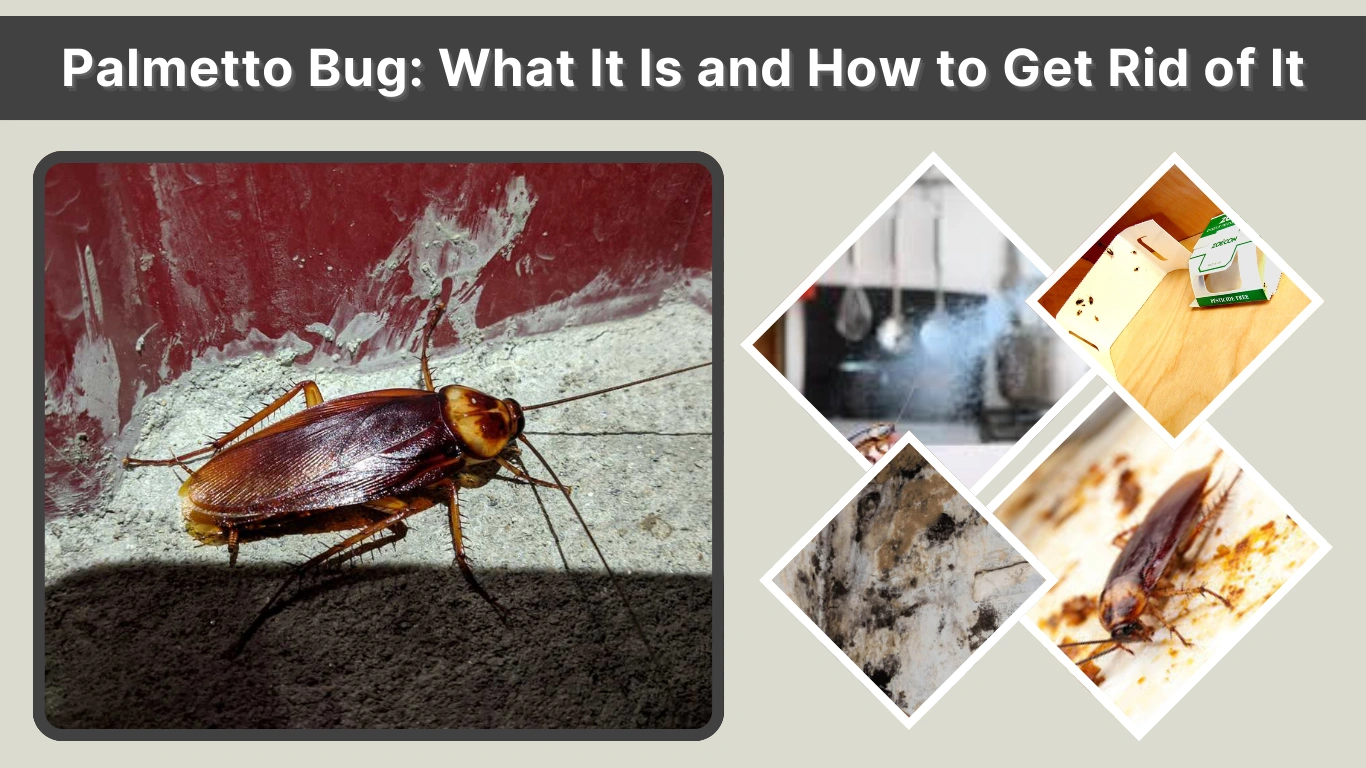
If you live in Florida or the southern United States, chances are you’ve heard the term palmetto bug. The name may sound less alarming than “cockroach,” but many people are surprised to learn they’re closely related. These large, fast-moving insects often appear after heavy rain or during humid weather, sometimes startling homeowners when they scurry across floors or even fly short distances. In this guide, you’ll learn exactly what a palmetto bug is, how to identify it, and why it may be entering your home.
What Is a Palmetto Bug?
A palmetto bug is a common nickname used in the southeastern United States for large species of cockroaches. Most often, the term refers to the American cockroach (Periplaneta americana) or sometimes the smokybrown cockroach. These species thrive in warm, humid climates, which is why they are especially common in Florida and other coastal states.
Despite the softer-sounding name, a palmetto bug is not a different insect. It belongs to the cockroach family and shares many of the same behaviors and characteristics.
Is a Palmetto Bug Just a Cockroach?
Yes. In most cases, when someone says “palmetto bug,” they are referring to a large cockroach species. The American cockroach is the most common example. It can grow up to two inches long, making it one of the largest roaches found in homes.
The term is largely regional. In many Southern states, people prefer saying “palmetto bug” instead of “cockroach,” possibly because it sounds less unpleasant. However, scientifically speaking, there is no difference — it is still a cockroach.
Why the Name “Palmetto Bug” Is Used
The nickname comes from the palmetto tree, which is common in Florida and other warm coastal regions. These roaches are often found outdoors near trees, mulch, and damp vegetation, including palmetto plants.
Over time, the name stuck as a cultural label. Some believe it was also used to make the insect seem less associated with unsanitary conditions, since large outdoor roaches are different from the smaller German cockroaches typically linked to indoor infestations.
What Does a Palmetto Bug Look Like?
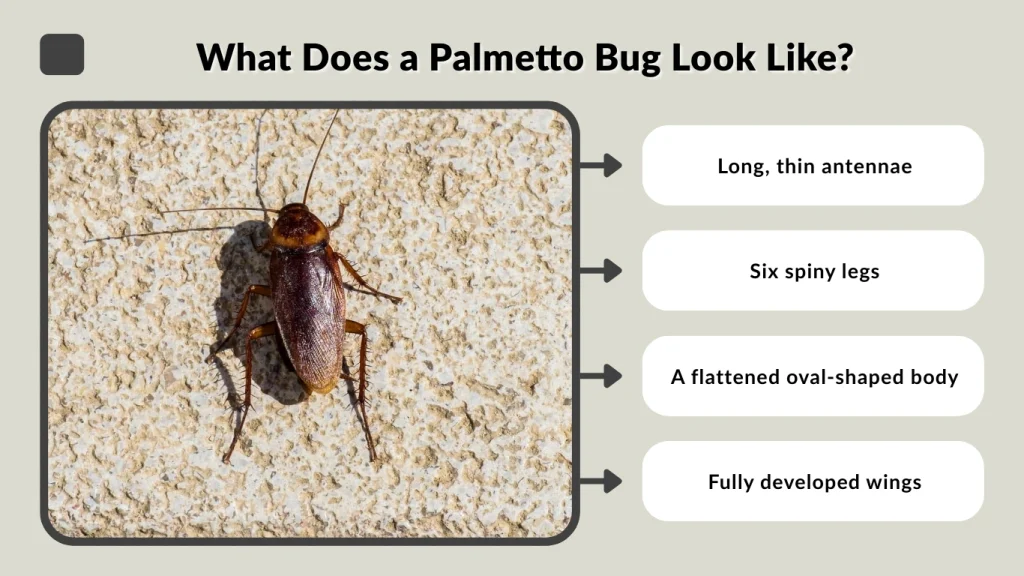
Palmetto bugs are large and easy to recognize once you know what to look for. Adult American cockroaches typically measure between 1.5 to 2 inches long. They have a reddish-brown body and a distinctive yellowish marking on the shield-like area behind their head.
Other key features include:
- Long, thin antennae
- Six spiny legs
- A flattened oval-shaped body
- Fully developed wings
Because of their size, they can appear intimidating. Their glossy body and rapid movements often make them more frightening than smaller roach species.
Can Palmetto Bugs Fly?
Yes, palmetto bugs can fly — but not in the way many people imagine. They are capable of short bursts of flight or gliding, especially in warm temperatures. However, they do not continuously buzz around like flies or mosquitoes.
They are more likely to fly when:
- Temperatures are high
- They feel threatened
- They are trying to reach a light source
- During mating activity
Sometimes it may seem like they are flying directly at you. In reality, they are usually gliding toward light or reacting defensively. Because they are not strong fliers, their movement can appear clumsy and unpredictable.
Why Do Palmetto Bugs Enter Homes?
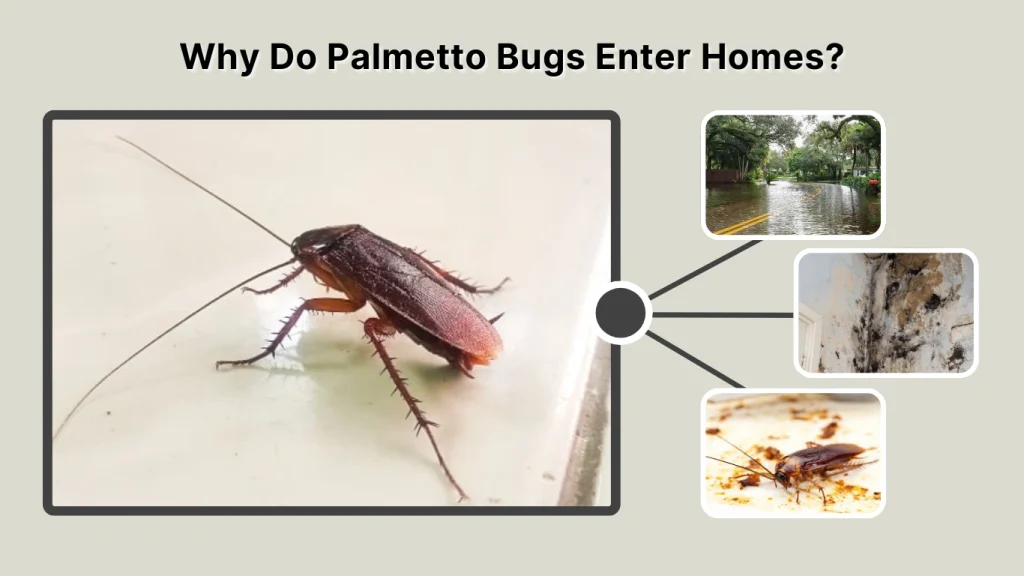
Palmetto bugs primarily live outdoors. They thrive in damp, shaded areas such as mulch beds, leaf piles, sewer systems, and tree bases. However, certain conditions can drive them indoors.
Common reasons they enter homes include:
- Heavy rain flooding their outdoor habitat
- Searching for moisture during dry periods
- Looking for food sources
- Sudden temperature changes
Unlike German cockroaches, which prefer living indoors, palmetto bugs usually wander inside accidentally or temporarily.
Common Entry Points
These insects can squeeze through surprisingly small openings. Typical entry points include:
- Cracks in foundations or walls
- Gaps around doors and windows
- Openings around plumbing pipes
- Dryer vents and attic vents
- Floor drains
Because they are larger than many other roaches, gaps must be sealed properly to prevent entry. Even small structural weaknesses can provide easy access.
Are Palmetto Bugs Dangerous?
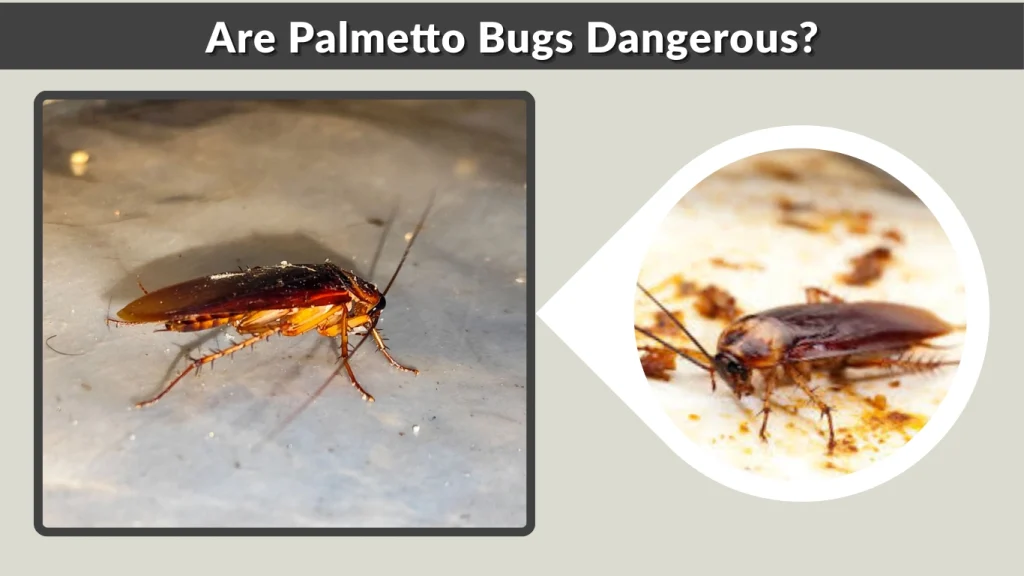
Although they look alarming, palmetto bugs are not aggressive insects. However, like other cockroaches, they can pose certain health concerns.
They are known to carry bacteria from unsanitary environments such as sewers or drains. If they walk across kitchen counters, food preparation surfaces, or stored food, they may transfer germs. Additionally, their shed skins and droppings can trigger allergies in sensitive individuals.
That said, they are not considered highly dangerous. They do not typically infest homes in massive numbers like German cockroaches, and they are less likely to breed rapidly indoors.
Do Palmetto Bugs Bite?
Palmetto bug bites are extremely rare. These insects do not seek out humans for feeding. In unusual cases, a bite may occur if the insect feels trapped or threatened, but this is uncommon.
Many reported “bites” are actually skin irritations or reactions to other insects. In most situations, palmetto bugs are more interested in escaping than interacting with people.
Signs of a Palmetto Bug Infestation
Seeing a single palmetto bug indoors does not always mean you have an infestation. Because they typically live outdoors, occasional sightings can happen after storms or during hot weather. However, repeated encounters may signal a larger issue.
Common signs include:
- Frequent nighttime sightings – Palmetto bugs are nocturnal and most active after dark.
- Droppings – Their droppings resemble small, dark pellets or ground pepper.
- Egg cases (oothecae) – These brown, capsule-shaped cases may be found in hidden corners.
- Musty odor – A strong infestation can produce an unpleasant, oily smell.
- Shed skins – As they grow, they molt and leave behind exoskeletons.
If you notice multiple signs at once, it’s likely more than just a wandering outdoor roach.
How to Get Rid of Palmetto Bugs
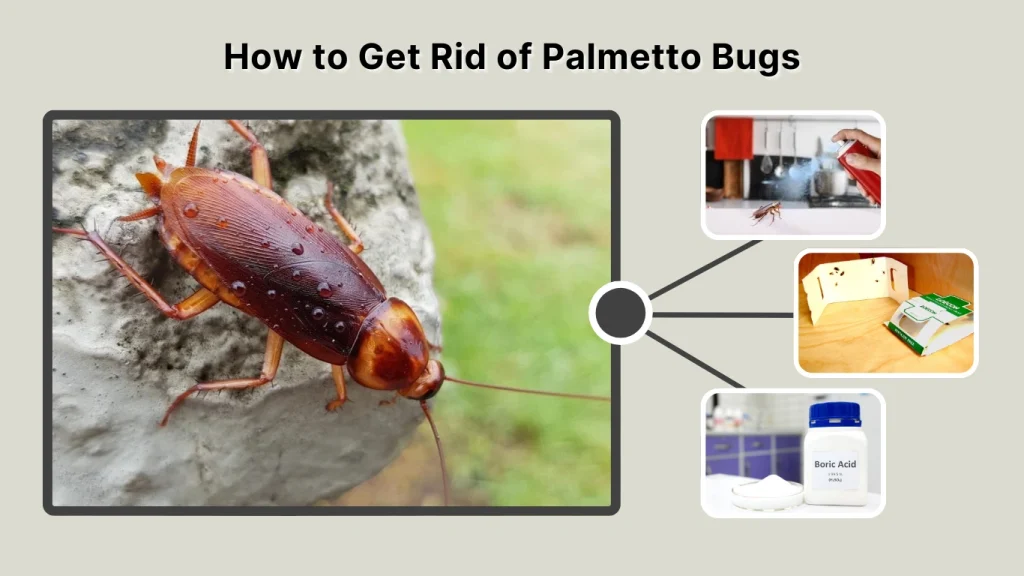
Eliminating palmetto bugs requires a combination of removal, treatment, and prevention. Because they often enter from outside, long-term control depends on addressing both indoor and outdoor conditions.
Immediate Removal Methods
If you spot a palmetto bug indoors, quick action can prevent it from hiding and laying eggs.
Effective options include:
- Insecticide sprays designed for cockroaches
- Bait stations placed along baseboards and dark corners
- Sticky traps to monitor activity
- Vacuum removal for visible insects
Baits are particularly useful because they allow the insect to carry poison back to hiding areas. Always follow product instructions carefully, especially if you have pets or children.
Natural Remedies
For homeowners who prefer low-toxicity solutions, several natural methods may help reduce activity:
- Boric acid – A fine powder that damages the insect’s digestive system
- Diatomaceous earth – A natural dust that dehydrates insects
- Essential oils like peppermint or eucalyptus as deterrents
While natural options can be helpful, they often work best for mild problems rather than heavy infestations.
When to Call a Professional
If you see palmetto bugs regularly or notice egg cases, professional pest control may be the most effective solution. Exterminators can:
- Identify nesting areas
- Apply stronger perimeter treatments
- Treat sewer and drainage systems
- Provide recurring preventative services
Professional treatment is especially helpful in humid climates where these roaches thrive year-round.
How to Prevent Palmetto Bugs
Prevention is the most reliable way to keep palmetto bugs out of your home. Because they are attracted to moisture and shelter, controlling these factors significantly reduces the risk of entry.
Key prevention steps include:
- Seal cracks and gaps around doors, windows, and foundations
- Install weather stripping and door sweeps
- Fix plumbing leaks and reduce excess humidity
- Store food in airtight containers
- Take out trash regularly
- Keep mulch and firewood away from the house
- Trim bushes and vegetation away from exterior walls
Improving drainage around your home is particularly important in rainy regions. Standing water creates ideal breeding conditions.
FAQs
Is a palmetto bug different from a cockroach?
No. A palmetto bug is simply a regional nickname for large cockroach species, most commonly the American cockroach. The name is widely used in the southeastern United States but does not refer to a separate insect species.
Why are palmetto bugs common in Florida?
Florida’s warm, humid climate provides ideal conditions for large cockroach species. Frequent rainfall, abundant vegetation, and mild winters allow palmetto bugs to remain active throughout most of the year.
Do palmetto bugs fly at night?
Yes, they are primarily nocturnal and may glide or fly short distances at night, especially in warm weather. They are often attracted to light sources, which can make their flight seem sudden or directed at people.
How long do palmetto bugs live?
American cockroaches can live up to one year, depending on environmental conditions. They go through several molting stages before reaching adulthood, and females can produce multiple egg cases during their lifespan.
Conclusion
Palmetto bugs may sound less alarming than cockroaches, but they are essentially the same insect. While they typically live outdoors, moisture, weather changes, and easy entry points can bring them inside. Fortunately, they are manageable with proper sealing, sanitation, and targeted treatments. By reducing humidity and blocking access points, you can significantly lower the chances of repeated encounters and keep your home more comfortable year-round.