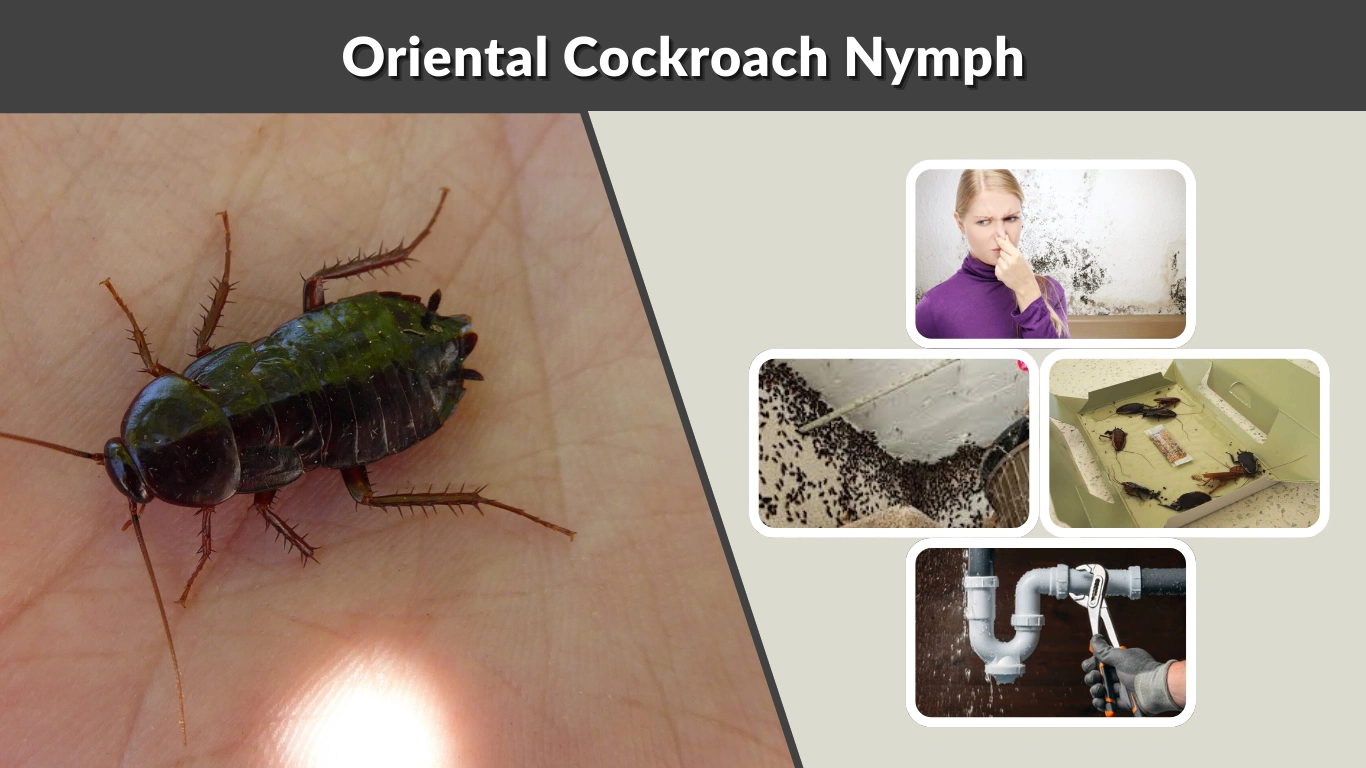
Oriental cockroach nymphs are the immature stage of the oriental cockroach (Blatta orientalis), a species often called a “water bug” because of its preference for damp environments. While adult oriental cockroaches are large, dark, and easy to spot, nymphs are smaller and sometimes mistaken for other species. Understanding what an oriental cockroach nymph looks like, where it hides, and how to eliminate it is essential for preventing a full-blown infestation.
This guide covers identification, behavior, life cycle, health risks, and the most effective ways to control oriental cockroach nymphs.
What Is an Oriental Cockroach Nymph?
A nymph is a juvenile cockroach that has hatched from an egg but has not yet reached adulthood. Unlike larvae in some insects, cockroach nymphs look like smaller versions of adults. They go through multiple growth stages (called instars) before becoming fully developed.
Oriental cockroach nymphs are:
- Dark brown to nearly black
- Shiny in appearance
- Wingless
- Smaller than adults (starting very tiny and growing up to about 1 inch before adulthood)
They gradually molt several times, shedding their exoskeleton as they grow. Each molt brings them closer to adult size.
Life Cycle of the Oriental Cockroach
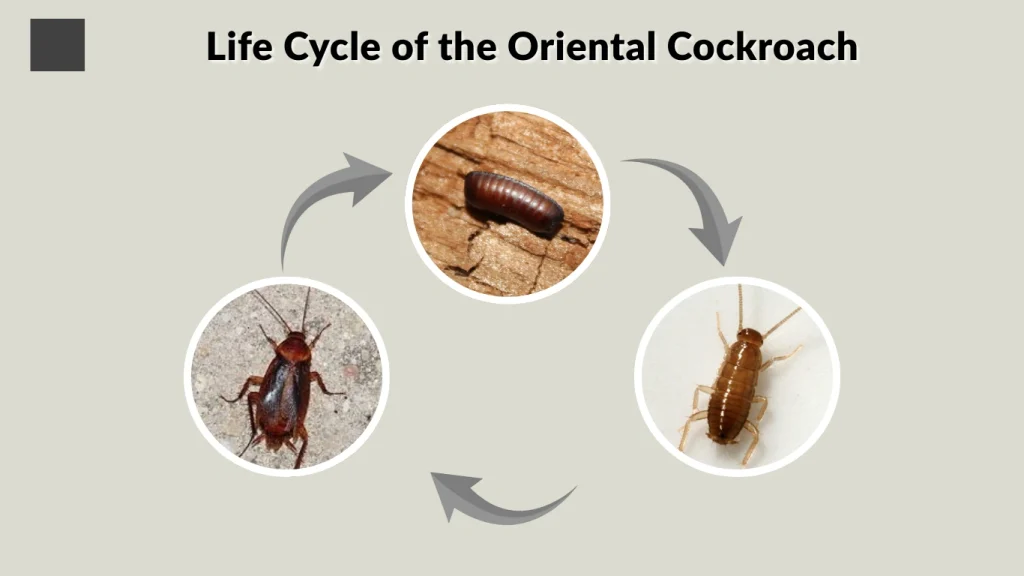
Understanding the life cycle helps explain why early detection is important.
Egg Stage
Female oriental cockroaches produce egg cases known as oothecae. Each ootheca contains multiple eggs and is typically deposited in a protected, damp area.
The egg case is dark and capsule-shaped. After a period of development, the eggs hatch into nymphs.
Nymph Stage
Once hatched, nymphs begin searching for food and water. They resemble small, wingless adults. During this stage, they molt several times over a period that can last several months, depending on temperature and environmental conditions.
Cooler environments, which oriental cockroaches prefer, can slow development. In some cases, it may take close to a year for a nymph to reach adulthood.
Adult Stage
After completing multiple molts, the cockroach becomes an adult. Adult males have short wings covering most of their abdomen, while females have very small wing pads. Neither can fly effectively.
Because the nymph stage can last months, spotting nymphs indoors often indicates that breeding is already occurring nearby.
Where Do Oriental Cockroach Nymphs Hide?
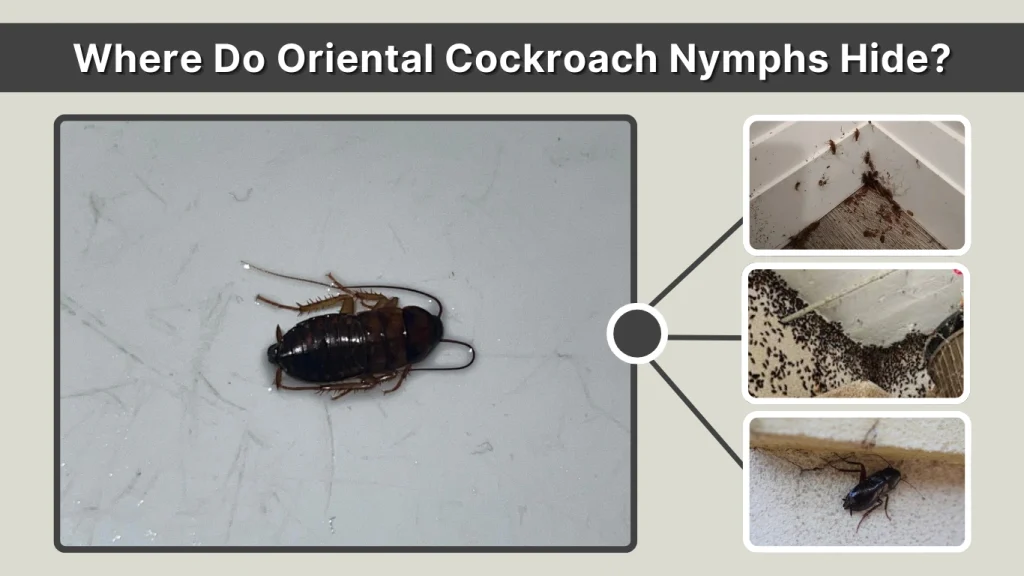
Like adults, nymphs prefer cool, damp environments. However, because they are smaller, they can hide in even tighter spaces.
Common hiding spots include:
- Basements
- Crawl spaces
- Under sinks
- Around leaking pipes
- Near floor drains
- Behind appliances
- Inside wall voids
- Under debris outdoors
They are nocturnal and typically emerge at night to search for food and water.
If you see nymphs during the day, it may indicate overcrowding or a significant infestation.
Why Are Oriental Cockroach Nymphs in Your Home?
The primary reason oriental cockroach nymphs appear indoors is moisture.
They are strongly attracted to:
- Plumbing leaks
- Damp basements
- Condensation
- Standing water
- Poor ventilation
Unlike some other cockroach species that prefer kitchens for food, oriental cockroaches are more dependent on water. Even a clean home can develop an infestation if moisture problems exist.
They may also enter from outdoors, especially after heavy rainfall, through:
- Foundation cracks
- Gaps around doors
- Utility pipe openings
- Sewer connections
Once inside, they reproduce if conditions remain favorable.
Are Oriental Cockroach Nymphs Dangerous?
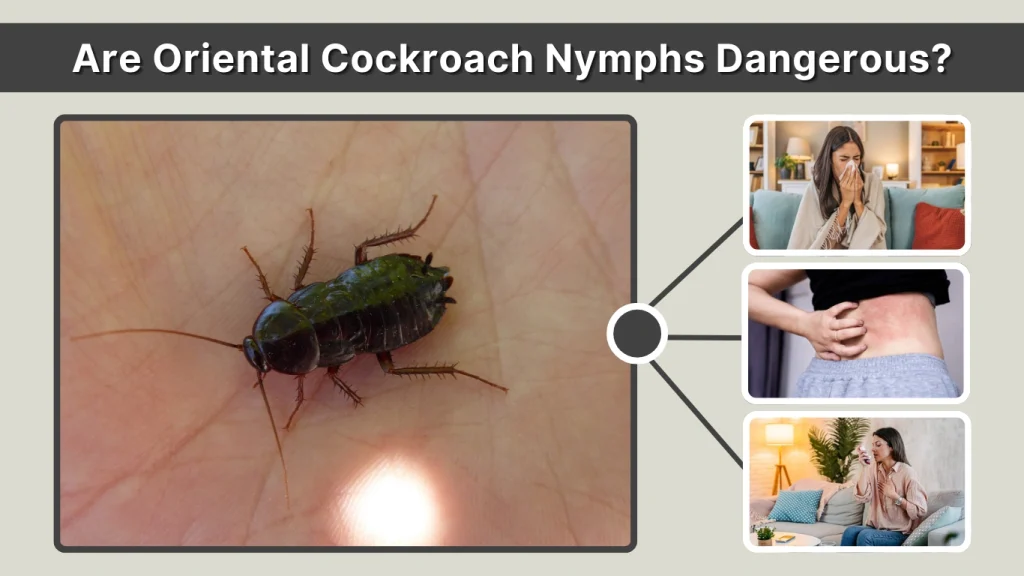
Although they are small, nymphs pose the same health risks as adult cockroaches.
Bacteria Transmission
Oriental cockroaches crawl through garbage, sewage, and decaying organic matter. As they move through your home, they can transfer harmful bacteria such as:
- Salmonella
- E. coli
- Other pathogens associated with food contamination
Allergies and Asthma
Cockroach droppings, shed skins, and body fragments can trigger allergic reactions. Nymphs shed their exoskeleton multiple times during development, which increases allergen levels in infested homes.
Children and individuals with asthma are particularly sensitive to cockroach allergens.
How to Identify an Infestation of Nymphs
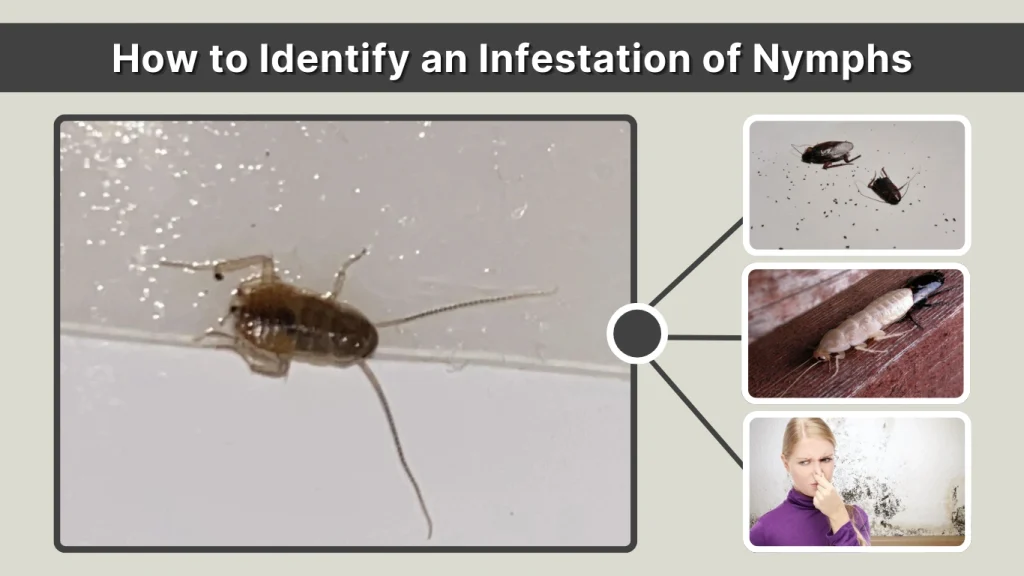
Because nymphs are smaller and hide well, you may not see them immediately. Look for these signs:
Small Dark Droppings
Their droppings appear as tiny black specks or smears in damp areas.
Shed Skins
Since nymphs molt several times, you may find thin, shell-like exoskeletons near hiding spots.
Musty Odor
A heavy infestation can produce a strong, musty smell caused by pheromones.
Increased Night Activity
Use sticky traps in suspected areas to monitor nighttime movement.
Finding multiple nymphs typically means reproduction is happening nearby.
How to Get Rid of Oriental Cockroach Nymphs
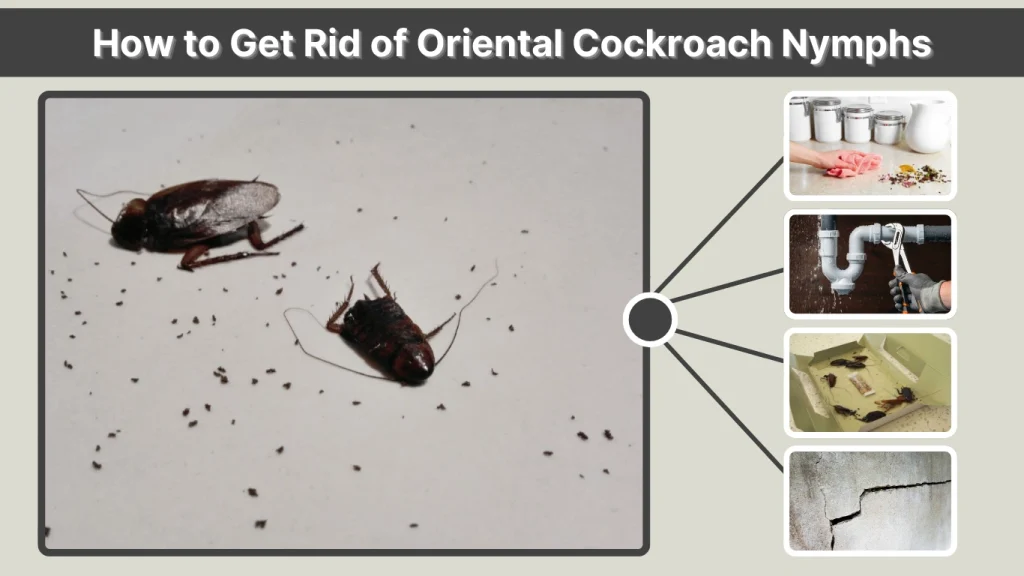
Eliminating nymphs requires addressing both current populations and the conditions allowing them to survive.
1. Fix Moisture Problems Immediately
Moisture control is the most critical step.
- Repair leaking pipes
- Use a dehumidifier in basements
- Improve ventilation in bathrooms and laundry rooms
- Clear clogged drains
- Remove standing water
Without consistent moisture, nymph survival rates drop significantly.
2. Deep Clean Damp Areas
Remove food debris and organic buildup.
- Clean under appliances
- Vacuum cracks and crevices
- Scrub drains to remove biofilm
- Take out trash regularly
While moisture is the main attractant, eliminating food helps reduce growth.
3. Use Gel Baits
Gel baits are highly effective against nymphs. Because they forage for food, they consume bait and share it indirectly with others.
Place bait:
- Near damp walls
- Under sinks
- Behind appliances
- Along basement edges
Avoid placing bait in constantly wet areas, as moisture reduces effectiveness.
4. Apply Dust in Hidden Areas
Boric acid or silica-based dust can be applied lightly in:
- Wall voids
- Under cabinets
- Behind baseboards
Use only a thin layer. Excess dust can repel cockroaches.
Keep dust away from children and pets.
5. Seal Entry Points
Prevent new nymphs from entering by sealing:
- Foundation cracks
- Gaps around pipes
- Door thresholds
- Window frames
Exterior prevention reduces reinfestation risk.
How Long Does It Take to Eliminate Nymphs?
The timeline depends on infestation size and environmental conditions.
- Minor problems may improve within 2–3 weeks.
- Moderate infestations may take 1–2 months.
- Severe infestations may require professional treatment.
Because the nymph stage lasts several months, ongoing monitoring is essential even after visible activity declines.
When to Call a Professional
Professional pest control may be necessary if:
- Nymphs continue appearing after several weeks of treatment
- There is heavy basement or crawl space activity
- Sewer or drain systems appear to be the source
- You live in a multi-unit building
Professionals can identify hidden nesting areas and use targeted treatments not available over the counter.
Preventing Future Nymph Infestations
Prevention focuses on moisture management and home maintenance.
- Inspect plumbing monthly
- Keep indoor humidity low
- Clean drains regularly
- Store food in airtight containers
- Remove yard debris near the foundation
- Maintain proper sealing around the home
A dry, well-sealed home is the best defense against oriental cockroach nymphs.
Final Thoughts
Oriental cockroach nymphs are a clear sign that breeding is occurring in or near your home. Because they thrive in damp, cool environments, moisture control is the most effective way to eliminate them. Combine leak repairs, deep cleaning, baiting, and proper sealing to break their life cycle.
Acting quickly prevents nymphs from maturing into adults and multiplying further. With consistent effort and proper prevention, you can successfully eliminate oriental cockroach nymphs and keep your home protected long term.