
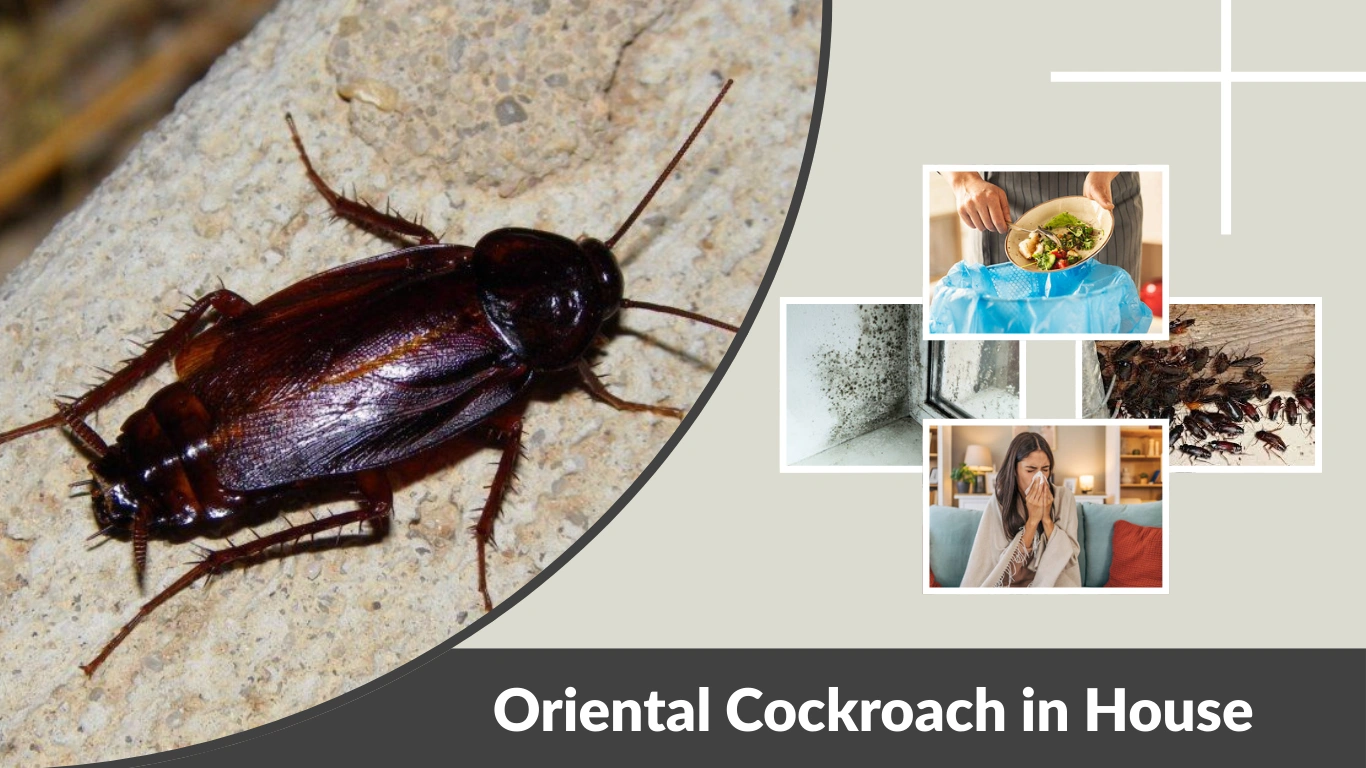
Finding an oriental cockroach in your house can be alarming. These dark, shiny pests are often associated with damp basements, drains, and unsanitary conditions. While a single sighting doesn’t always mean a full infestation, it’s a sign that something in your home is attracting them—usually moisture. The good news is that with quick action and proper prevention steps, you can control the problem and reduce the chances of seeing them again.
What Is an Oriental Cockroach?
Oriental cockroaches are large, dark-colored insects sometimes referred to as “water bugs.” They typically measure about 1 to 1.25 inches long and have a glossy dark brown or black appearance. Unlike some other cockroach species, they move more slowly.
There are slight differences between males and females. Male oriental cockroaches have short wings that cover about three-quarters of their bodies, while females have very small wing pads and appear almost wingless. Neither gender is capable of true flight.
They prefer cool, damp environments, which is why they are commonly found in basements, crawl spaces, drains, and around leaky pipes. Outdoors, they live under mulch, leaves, stones, and debris.
Why Is There an Oriental Cockroach in Your House?
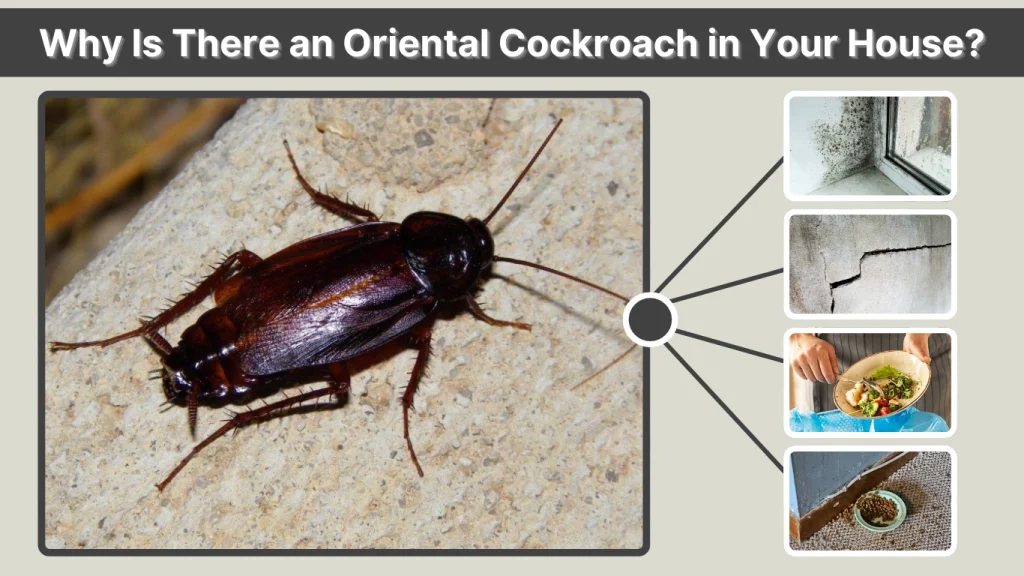
If you’ve spotted one inside, it usually means your home offers what they need to survive: moisture, shelter, and food.
1. Moisture Problems
Oriental cockroaches are highly attracted to damp areas. Common moisture sources include:
- Leaking pipes under sinks
- Damp basements
- Poorly ventilated bathrooms
- Standing water near floor drains
- Condensation around appliances
Even small plumbing issues can create the ideal habitat for these pests.
2. Easy Entry Points
These cockroaches often enter homes through small openings such as:
- Cracks in the foundation
- Gaps under doors
- Broken window screens
- Utility pipe openings
- Sewer connections and drains
They are especially common in older homes where sealing may be worn or damaged.
3. Available Food Sources
Although they prefer decaying organic matter, oriental cockroaches will eat almost anything. Indoors, they may feed on:
- Garbage
- Pet food left overnight
- Food crumbs
- Organic buildup in drains
If food and moisture are both available, they are more likely to stay and reproduce.
Are Oriental Cockroaches Dangerous?
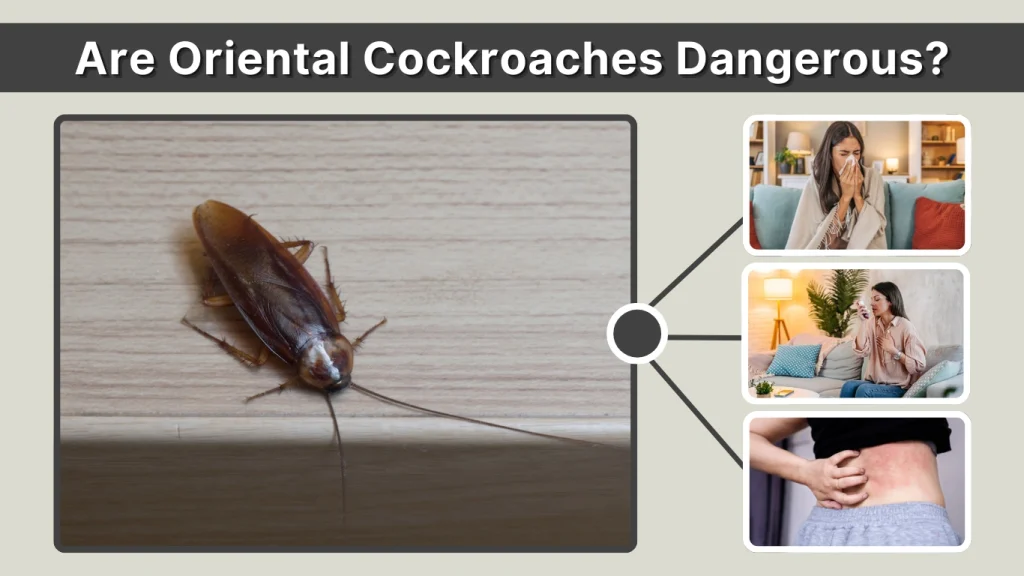
While they don’t bite, oriental cockroaches can pose health risks.
Health Concerns
These pests crawl through garbage, sewage, and decaying matter. As a result, they can carry bacteria such as Salmonella and E. coli on their bodies. When they move across kitchen counters or food preparation areas, they may spread contamination.
Allergies and Asthma
Cockroach droppings, shed skins, and saliva can trigger allergic reactions and asthma symptoms, especially in children and sensitive individuals. In homes with recurring infestations, indoor air quality can suffer.
What Should You Do Immediately?
If you see an oriental cockroach in your house, take action quickly.
1. Confirm Identification
Make sure it is indeed an oriental cockroach. Their dark color and preference for damp areas help distinguish them from German or American cockroaches.
2. Eliminate Moisture Sources
This is the most important step. Fix leaking pipes, dry out damp areas, and consider using a dehumidifier in basements or crawl spaces. Improving ventilation in bathrooms and laundry rooms can also help.
3. Clean Thoroughly
Remove potential food sources by:
- Taking out trash regularly
- Cleaning under appliances
- Wiping down counters nightly
- Storing food in airtight containers
Pay special attention to drains, as organic buildup can attract them.
4. Seal Entry Points
Use caulk to seal cracks and gaps around doors, windows, and the foundation. Install door sweeps and repair damaged screens to prevent further entry.
Signs of an Oriental Cockroach Infestation
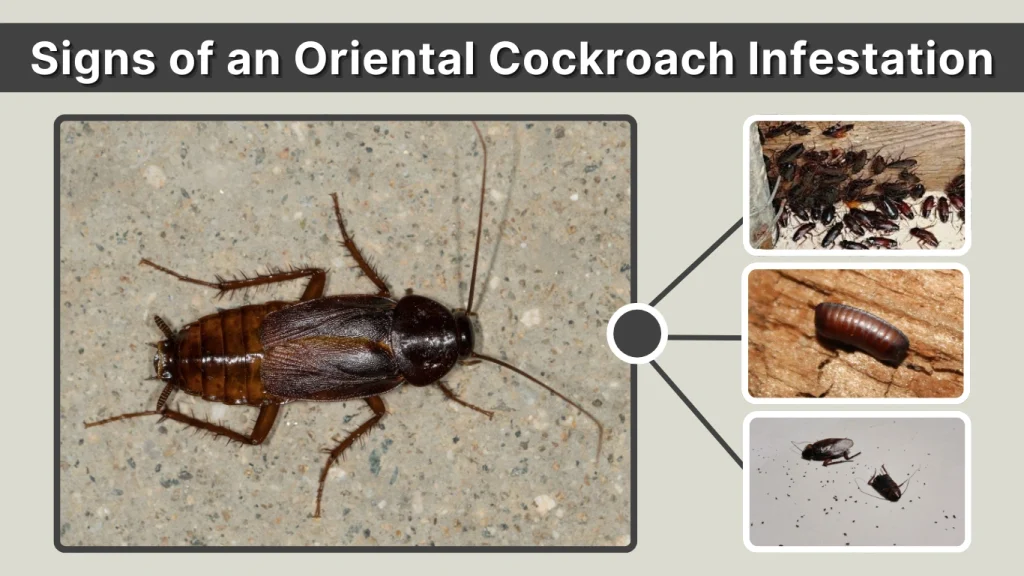
Seeing one oriental cockroach does not always mean you have a full infestation. However, certain warning signs suggest a larger problem.
Multiple Sightings
If you frequently see cockroaches—especially at night—it’s a strong indicator that more are hiding nearby. Oriental cockroaches are nocturnal and prefer to stay out of sight during the day. Spotting them in daylight may suggest overcrowding in their hiding areas.
Egg Cases (Oothecae)
Female oriental cockroaches produce egg cases called oothecae. These are dark, capsule-shaped cases that may be found in damp, hidden locations. Each case can contain multiple eggs, leading to rapid population growth if not addressed.
Droppings
Their droppings look like small, black specks or smears. You may notice them near baseboards, in cabinets, under sinks, or around basement walls.
Musty Odor
A strong infestation can produce a noticeable musty smell. This odor comes from pheromones released by cockroaches and can linger in enclosed areas.
How to Prevent Oriental Cockroaches
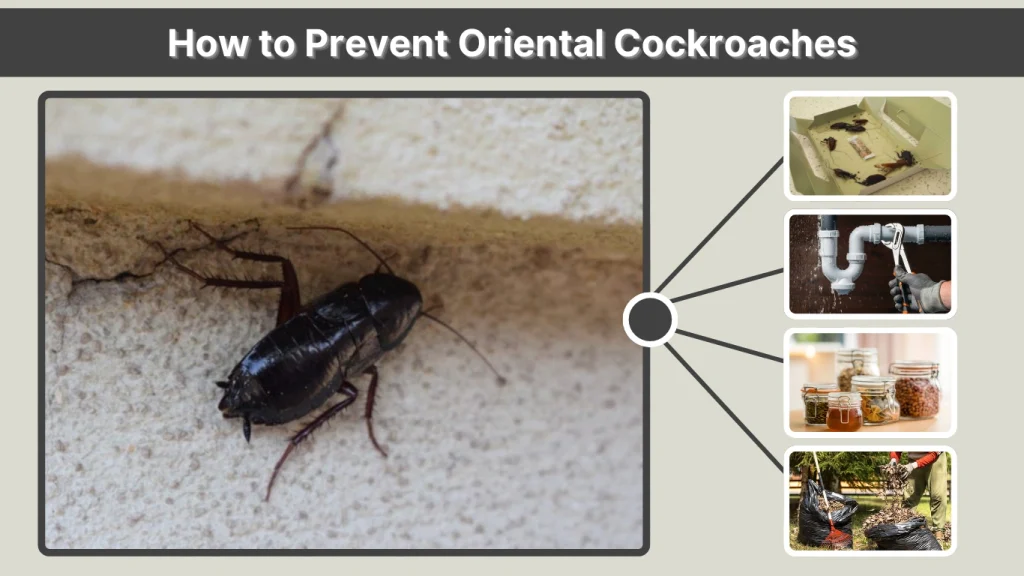
Prevention focuses mainly on moisture control and home maintenance. Since these pests thrive in damp conditions, eliminating water sources makes your home far less attractive.
Reduce Moisture
- Repair leaking pipes immediately.
- Keep gutters clean and direct water away from the foundation.
- Use a dehumidifier in basements.
- Ensure proper ventilation in bathrooms and kitchens.
Dry environments are far less appealing to oriental cockroaches.
Store Food Properly
Even though moisture is their primary attraction, accessible food will encourage them to stay.
- Store dry goods in airtight containers.
- Clean up spills and crumbs promptly.
- Avoid leaving pet food out overnight.
- Take trash out regularly and use tightly sealed bins.
Maintain Your Home’s Exterior
Outdoor conditions often contribute to indoor infestations.
- Remove leaf piles and yard debris.
- Keep mulch away from the foundation.
- Trim vegetation that touches the house.
- Seal cracks in the foundation and exterior walls.
Reducing outdoor harborage areas limits their ability to move inside.
When to Call a Professional Exterminator
DIY methods can be effective for minor problems, but sometimes professional treatment is necessary.
Consider contacting a pest control expert if:
- You continue seeing cockroaches despite preventive steps.
- There are large numbers in the basement or crawl space.
- The infestation appears connected to sewer lines.
- Egg cases and droppings are widespread.
Professionals can identify nesting areas, apply targeted treatments, and address hidden moisture problems that homeowners may overlook.
Common Mistakes to Avoid
When dealing with oriental cockroaches, certain mistakes can make the problem worse.
Ignoring a Single Sighting
Even one cockroach can signal favorable conditions in your home. Early action prevents larger infestations.
Overusing Sprays
Store-bought sprays may kill visible cockroaches but often fail to eliminate hidden populations. Excessive spraying can also drive them deeper into walls and cracks.
Focusing Only on Cleanliness
While cleanliness is important, moisture is the main factor attracting oriental cockroaches. Fixing leaks and damp areas is far more effective than cleaning alone.
Neglecting Drain Maintenance
Since they often enter through drains, failing to clean and maintain them can allow ongoing access to your home.
FAQs
Why am I seeing oriental cockroaches in my house?
Oriental cockroaches are usually attracted to moisture. Leaky pipes, damp basements, clogged drains, or poor ventilation create ideal conditions for them. They may also enter through cracks in the foundation or gaps around doors and windows while searching for water and shelter.
Are oriental cockroaches worse than other cockroaches?
They are not necessarily worse, but they prefer damp environments and are commonly found near sewage or decaying matter. This increases the risk of bacterial contamination compared to species that primarily invade kitchens for food.
Can oriental cockroaches survive in dry homes?
They struggle to survive in very dry conditions because they rely heavily on moisture. Reducing humidity, fixing leaks, and improving airflow can make your home much less attractive and limit their ability to reproduce.
Do oriental cockroaches mean my house is dirty?
Not necessarily. While poor sanitation can contribute to infestations, oriental cockroaches are mainly attracted to moisture. Even clean homes with plumbing leaks or damp basements can experience problems.
How long does it take to get rid of oriental cockroaches?
The timeline depends on the severity of the infestation. Minor problems may improve within a few weeks after fixing moisture issues and using baits. Larger infestations can take several weeks or require professional treatment for complete elimination.