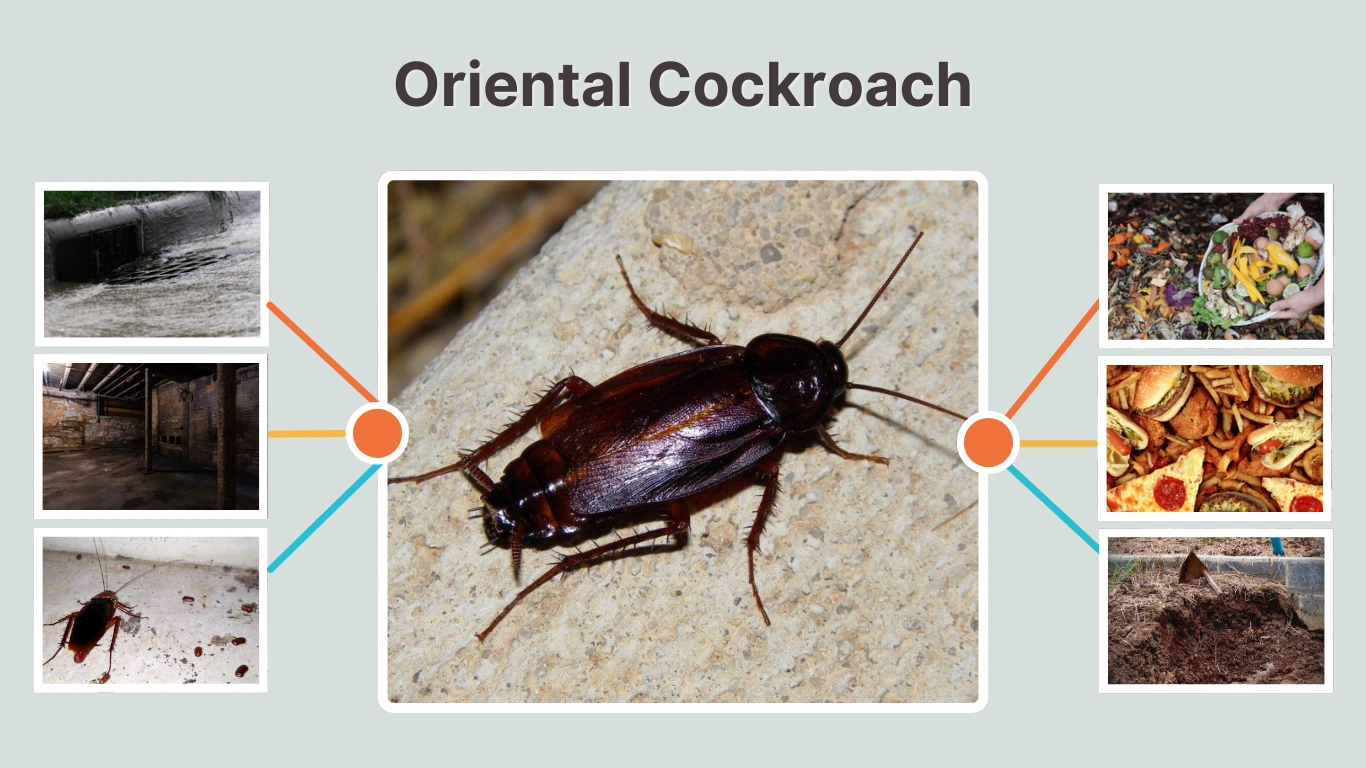
The Oriental cockroach (Blatta orientalis), sometimes called the “water bug” or “black beetle cockroach,” is one of the larger and more recognizable cockroach species. Unlike the fast-breeding German cockroach, Oriental cockroaches reproduce more slowly but thrive in damp, dark environments. They are particularly associated with basements, drains, sewers, and areas where moisture accumulates. These pests are notorious not only for their unpleasant odor but also for spreading bacteria and contaminating food. Understanding their size, identification features, life cycle, and diet is essential to controlling infestations effectively.
What is an Oriental Cockroach?
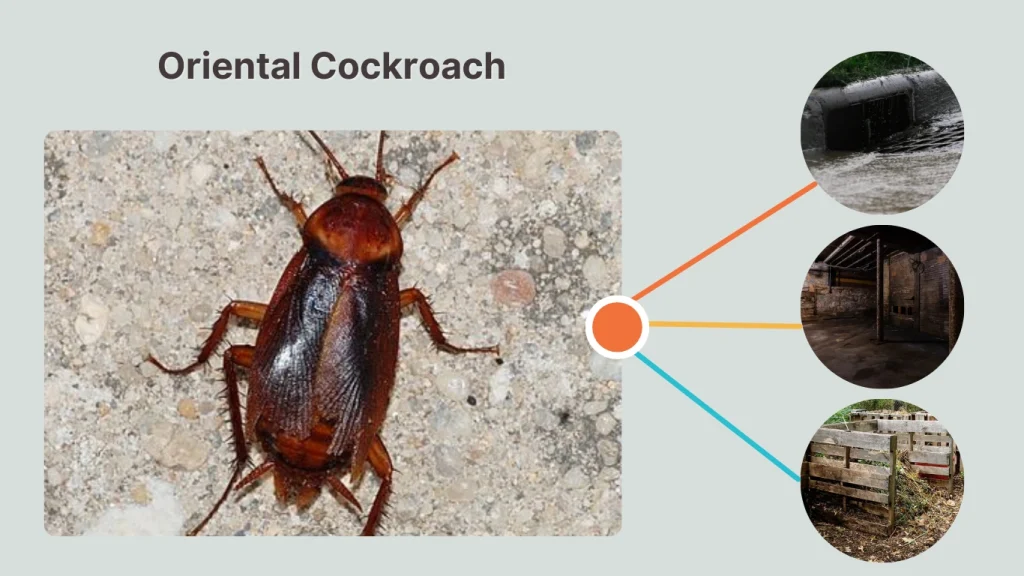
The Oriental cockroach is a common household pest that thrives in cool, moist environments. Its scientific name is Blatta orientalis. Despite being called the “Oriental” cockroach, its origins are debated—some experts suggest Africa, while others point to southern Russia.
This cockroach is sometimes nicknamed the “water bug” because of its strong association with damp places such as drains and basements. Unlike other cockroach species, Oriental cockroaches are not strong climbers, meaning they are less likely to be found on high kitchen counters but more often on floors and in low, moist spaces.
Identification of Oriental Cockroach
Correct identification is important when dealing with cockroach infestations, as different species may require different control strategies.
Physical Appearance
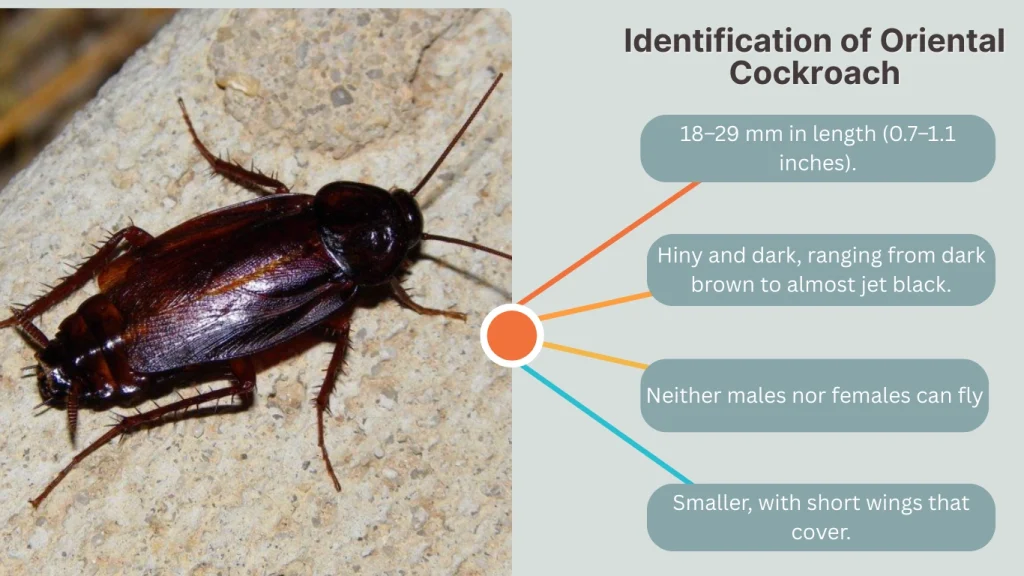
Oriental cockroaches are among the larger household cockroach species. Adults typically measure between 18–29 mm in length (0.7–1.1 inches). Their bodies are shiny and dark, ranging from dark brown to almost jet black.
Males and females differ in appearance:
- Males: Smaller, with short wings that cover about three-quarters of their abdomen.
- Females: Larger and broader, with very short, rudimentary wings that do not cover much of the body.
Neither males nor females can fly, unlike some other cockroach species. They rely on crawling and are slower movers compared to German or American cockroaches.
Nymphs
Nymphs are immature Oriental cockroaches. They are wingless, smaller, and usually reddish-brown to black in color. As they mature, they undergo several molts, gradually developing into darker, shinier adults. Shed exoskeletons left behind by nymphs are often one of the first signs of infestation.
Eggs (Ootheca)
The egg capsule, known as an ootheca, is dark brown or reddish-brown, measuring around 8–10 mm in length. Each capsule contains 16–18 eggs. Females deposit these oothecae in hidden, moist areas such as under debris, in cracks, or near water sources.
The oothecae are more robust than those of German cockroaches, which allows them to survive in harsher environments.
Size of Oriental Cockroach
Oriental cockroaches are larger than German cockroaches but smaller than American cockroaches. Adult males typically reach 18–25 mm in length, while females can grow slightly larger, up to 29 mm.
Their size and shiny dark coloration make them easy to distinguish from German cockroaches, which are smaller and lighter in color. Despite being larger, Oriental cockroaches move more slowly, which makes them easier to catch sight of but no less troublesome.
Oriental Cockroach Diet
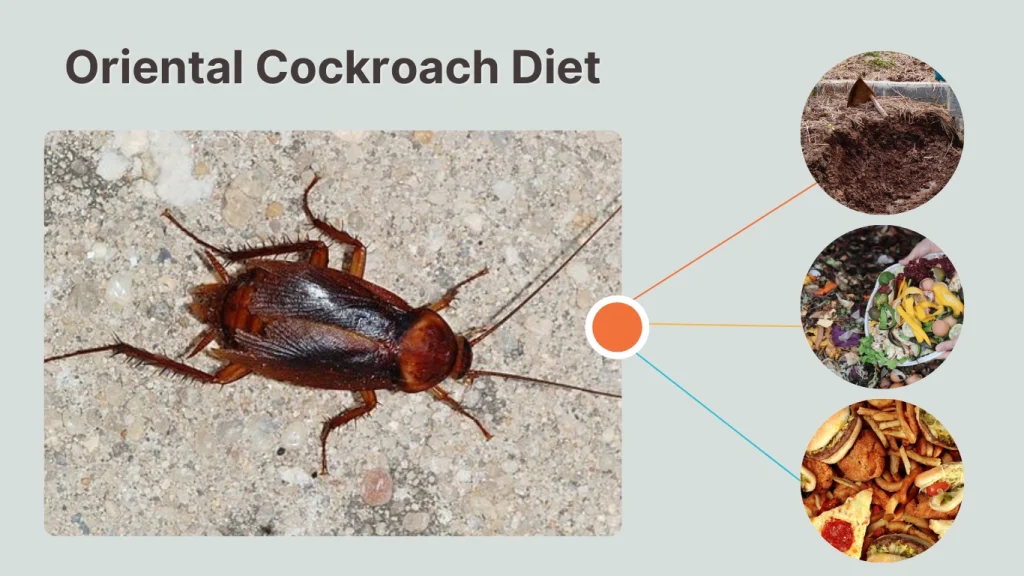
Like most cockroaches, Oriental cockroaches are scavengers with an omnivorous diet. They feed on almost anything available, but they are especially attracted to:
- Decaying organic matter
- Garbage and food waste
- Starchy foods (bread, grains, pasta)
- Sugary substances
- Animal feces and pet food
When food is scarce, they can survive on unusual substances such as paper, fabrics, and even book bindings. Their preference for decaying matter is one of the reasons they are considered one of the dirtiest cockroach species, as they are often found in garbage areas, sewers, and drains.
Life Cycle of Oriental Cockroach
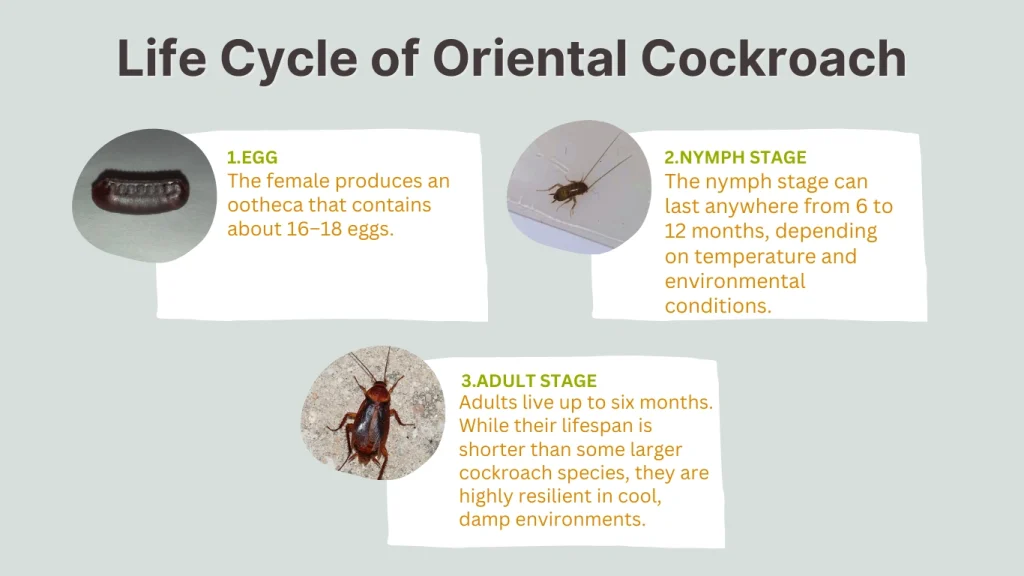
Oriental cockroaches undergo gradual metamorphosis, which means their development has three main stages: egg, nymph, and adult.
Egg Stage
The female produces an ootheca that contains about 16–18 eggs. She deposits it in a protected, moist location, where it remains for roughly two months before hatching. This long incubation period is one reason why Oriental cockroaches reproduce more slowly than German cockroaches.
Nymph Stage
Once hatched, nymphs emerge and begin feeding immediately. They molt several times, gradually growing larger and darker in color. The nymph stage can last anywhere from 6 to 12 months, depending on temperature and environmental conditions.
Adult Stage
Adults live up to six months. While their lifespan is shorter than some larger cockroach species, they are highly resilient in cool, damp environments. Adults reproduce at a slower rate compared to German cockroaches, but infestations can still become significant over time if left unchecked.
Behavior & Habitat
Oriental cockroaches are well known for preferring dark, damp, and cool areas. This preference makes them different from German cockroaches, which favor warm kitchens and bathrooms. Oriental cockroaches are often found:
- In basements and crawl spaces
- Around leaky pipes and floor drains
- In sewers and garbage collection areas
- Under mulch, leaf piles, or outdoor debris
They are nocturnal, meaning they are most active at night while foraging for food and water. During the day, they remain hidden in cracks, damp soil, or under debris. Unlike German cockroaches, they are poor climbers and rarely reach upper shelves or counters, but they infest ground-level areas quickly.
Another notable trait is their slower movement. They cannot dart as quickly as German cockroaches, which sometimes makes them easier to spot, though their hiding places are often difficult to access.
Oriental Cockroach Infestation Signs
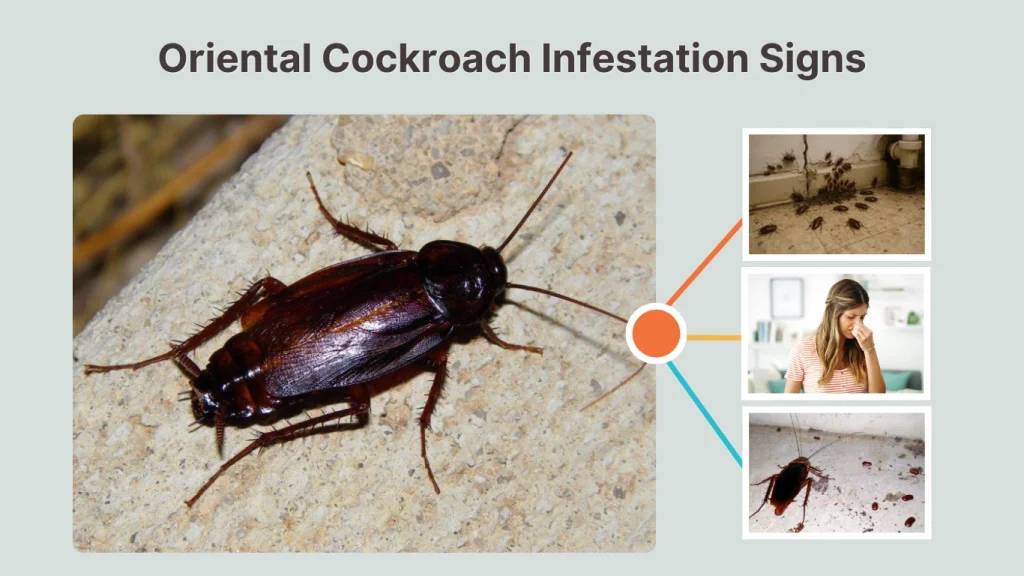
Recognizing the signs of an Oriental cockroach infestation is crucial for early treatment. Some common indicators include:
- Sightings: Spotting large, shiny black or dark brown cockroaches around basements, bathrooms, or drains.
- Odor: Infestations produce a strong, musty odor caused by their secretions. This smell can permeate stored items and food.
- Egg Capsules: Discovering reddish-brown oothecae in hidden damp areas.
- Droppings: Small, irregular black droppings that may be found near hiding places.
- Shed Skins: Evidence of molting, especially near drains or dark corners.
Infestations tend to worsen during warmer months, when populations peak. However, Oriental cockroaches are active year-round if conditions remain moist and favorable.
Health Risks & Problems
Oriental cockroaches are not just unpleasant to see—they also pose serious health concerns. Because they live in sewers, garbage, and drains, they frequently come into contact with harmful bacteria, viruses, and fungi, which they spread to food and surfaces.
Spread of Bacteria
These cockroaches carry pathogens such as E. coli and Salmonella. When they walk across food or utensils, they contaminate them, which can cause food poisoning, diarrhea, and other gastrointestinal illnesses.
Allergic Reactions
Their shed skins, saliva, and droppings release proteins that act as allergens. People exposed to infestations may experience allergic symptoms like sneezing, rashes, or itchy eyes.
Asthma Triggers
For children and sensitive individuals, Oriental cockroaches can worsen asthma. Continuous exposure to their allergens increases the risk of frequent asthma attacks, making infestations especially dangerous in homes.
Oriental Cockroach vs. Other Cockroaches
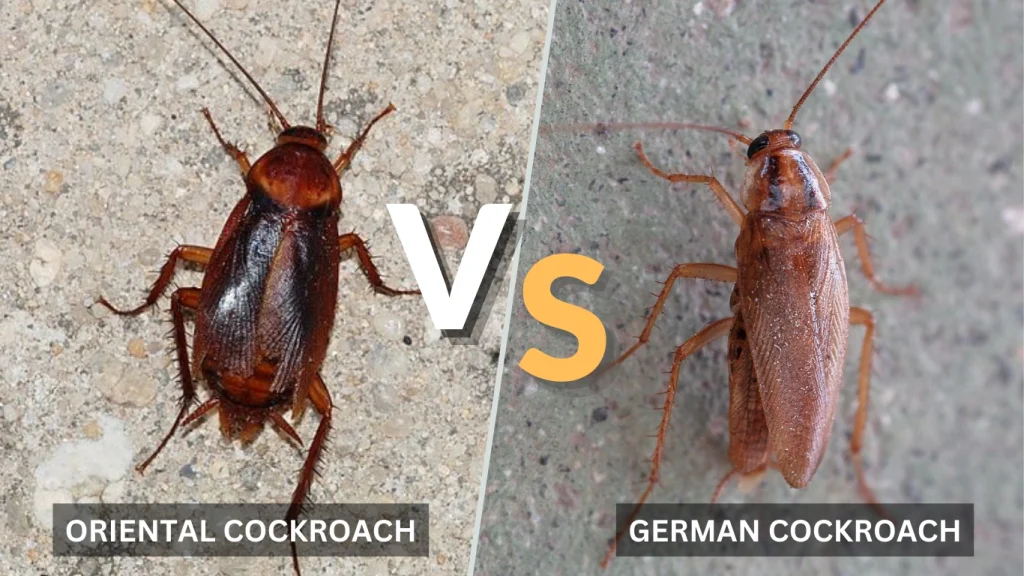
Oriental cockroaches are often confused with other species. Knowing their differences helps in choosing the right control methods.
Oriental vs. German Cockroach
German cockroaches are smaller (13–16 mm) and lighter in color, with two dark stripes on their thorax. They reproduce much faster, with females producing egg cases every few weeks. Oriental cockroaches are larger, darker, and prefer cooler, damp environments such as basements and drains.
Oriental vs. American Cockroach
American cockroaches are the largest household species, reaching up to 50 mm in length. They are reddish-brown and often found in warm, humid places such as sewers and boiler rooms. Oriental cockroaches are smaller, darker, and less likely to climb or fly, but they thrive in damp, cool areas.
How to Get Rid of Oriental Cockroaches
Controlling Oriental cockroaches requires a mix of sanitation, prevention, and treatment. Since they prefer damp areas, moisture control is essential.
Prevention Tips
- Seal cracks and gaps around plumbing, foundations, and doors.
- Keep garbage tightly sealed and dispose of waste regularly.
- Repair leaks and eliminate standing water.
- Reduce clutter in basements and crawl spaces.
Natural Remedies
- Boric Acid: Effective when applied in thin layers near hiding spots.
- Diatomaceous Earth: Cuts into cockroaches’ exoskeletons, causing dehydration.
- Essential Oils: Peppermint and eucalyptus oils may repel them temporarily.
Chemical Treatments
- Gel Baits: Attract and poison cockroaches that carry toxins back to their nests.
- Insecticide Sprays: Useful for direct contact but less effective on hidden infestations.
- Dusts: Applied in cracks and crevices, effective for long-term control.
- Professional Pest Control: Severe infestations may require licensed exterminators with specialized treatments and insect growth regulators (IGRs).
Oriental Cockroach Killer Products (Overview)
- Gel Baits: Products like Advion and Combat are highly effective.
- Sticky Traps: Useful for monitoring infestations.
- IGRs (Insect Growth Regulators): Prevent nymphs from developing into reproductive adults.
- Powders and Sprays: Work best in damp or basement environments where Oriental cockroaches hide.
A combination of baits, traps, and IGRs typically provides the best long-term results.
Interesting Facts About Oriental Cockroaches
- Nicknamed “Black Beetle Cockroach” – Due to their shiny, dark appearance.
- Often Called “Water Bugs” – They thrive in damp, wet environments like drains and sewers.
- Slower Movers – Unlike German cockroaches, they crawl slowly, making them easier to spot.
- Highly Resistant – They can survive for weeks without food, but only a few days without water.
- Peak Activity in Summer – Populations are most noticeable during warm, humid months.
FAQs
What is the scientific name of the Oriental cockroach?
The scientific name of the Oriental cockroach is Blatta orientalis. Despite its name, its origins are not strictly Asian—it is believed to have spread globally from Africa or southern Russia through trade and travel.
How big do Oriental cockroaches get?
Adult Oriental cockroaches typically measure between 18–29 mm in length. Males are slightly smaller and slimmer with short wings, while females are larger, wingless, and bulkier in appearance.
Do Oriental cockroaches fly?
No, Oriental cockroaches cannot fly. Males have wings that cover part of their body, and females have very short, non-functional wings. Both sexes rely on crawling and are slower than other cockroach species.
Why are they called water bugs?
They are often called “water bugs” because they prefer damp, wet environments such as sewers, drains, and basements. This nickname, however, is misleading since they are not true water insects but a cockroach species.
How can you tell Oriental cockroaches from German cockroaches?
Oriental cockroaches are larger, darker, and shinier, typically black or dark brown. German cockroaches are smaller, light brown, and marked by two dark stripes behind the head. Habitat preference also differs: Germans prefer warm kitchens, while Orientals thrive in damp basements and drains.