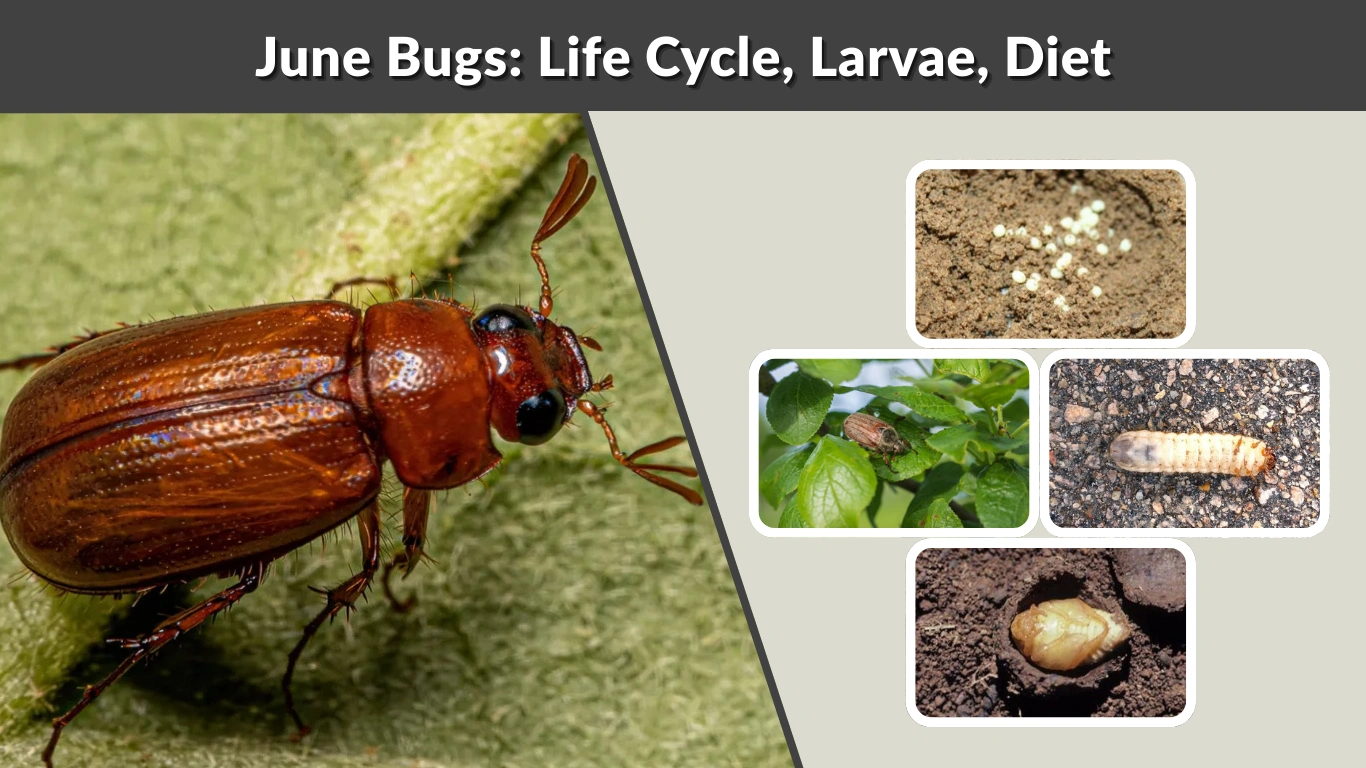
June bugs are large, brown beetles that appear in late spring and early summer, often buzzing clumsily around porch lights at night. While they may look intimidating, most adult June bugs are harmless to humans. The real concern lies underground, where their larvae can damage lawns and garden plants. Many people also confuse them with Japanese beetles or worry that they bite. In this guide, we’ll explore what June bugs are, their life cycle, larvae behavior, diet, and whether they pose any real threat.
What Is a June Bug?
A June bug, also called a June beetle or May beetle, is a type of scarab beetle belonging to the family Scarabaeidae. There are dozens of species across North America, and although they vary slightly in size and shade, most share similar characteristics.
Adult June bugs are typically reddish-brown or dark brown and measure about ½ to 1 inch long. They have hard wing covers (elytra) that protect their delicate flying wings underneath. When they fly, they often make a loud buzzing sound and appear somewhat clumsy in the air.
June bugs are primarily nocturnal. They are most active at night and are strongly attracted to artificial lights. This behavior explains why they frequently gather around porch lights, street lamps, and illuminated windows during warm evenings.
Despite their somewhat alarming size and noisy flight, adult June bugs are generally harmless. They do not sting, and they are not aggressive toward humans.
June Bug Identification
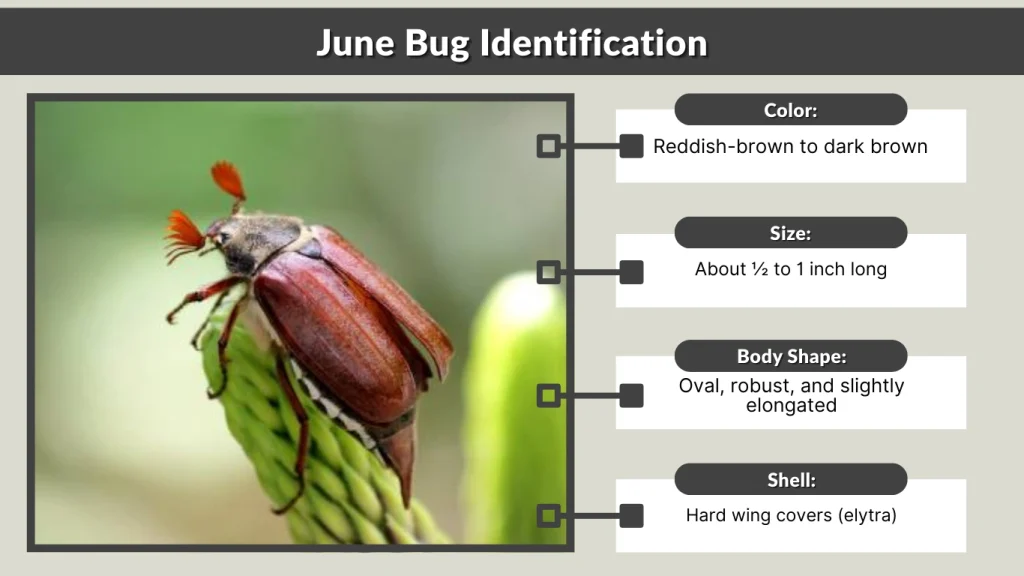
Correctly identifying a June bug is important, especially since they are often confused with other beetles like Japanese beetles or chafer beetles. While there are many species of June bugs, most share similar physical traits and behaviors that make them easy to recognize.
Adult June bugs are typically large, brown beetles that appear in late spring and early summer. They are most active at night and are commonly found flying around outdoor lights. Their size, color, and clumsy flight pattern are key clues.
Here are the main identification features:
- Color: Reddish-brown to dark brown
- Size: About ½ to 1 inch long
- Body Shape: Oval, robust, and slightly elongated
- Shell: Hard wing covers (elytra)
- Wings: Membranous flying wings underneath hard shell
- Flight Pattern: Loud, buzzing, and clumsy
- Activity Time: Primarily nocturnal
- Attraction: Strongly attracted to lights
June Bugs Life Cycle
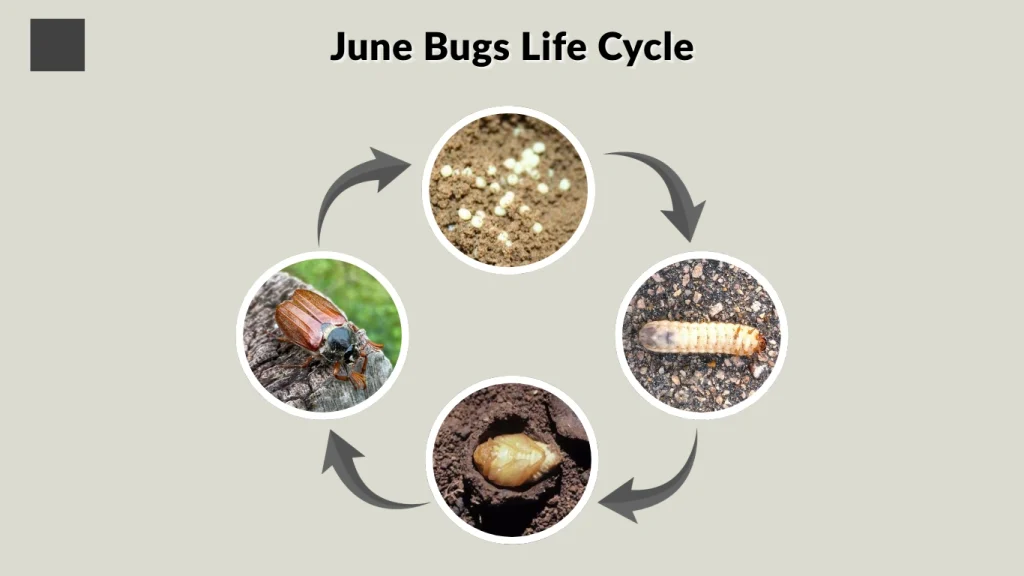
June bugs go through a complete metamorphosis, meaning they develop in four distinct stages: egg, larva, pupa, and adult. Depending on the species, the full life cycle can take one to three years.
Egg Stage
The life cycle begins when female June bugs lay eggs in the soil during early summer. They prefer grassy areas such as lawns, pastures, and gardens. A single female can lay dozens of eggs at a time.
These eggs hatch within two to four weeks, depending on soil temperature and moisture levels. Warm, moist soil conditions tend to speed up development.
Larvae Stage (June Bug Larvae)
After hatching, June bug larvae emerge. These larvae are commonly known as white grubs. They are creamy white with brown heads and have a distinctive C-shaped body. At this stage, they live entirely underground.
The larvae feed on grassroots and organic matter in the soil. This is the longest stage of their life cycle and can last one to three years depending on the species. During this time, the grubs grow larger and molt several times.
Because they feed on grass roots, large populations of June bug larvae can cause noticeable lawn damage. Lawns may develop brown patches or feel loose and spongy underfoot.
Pupa Stage
Once the larvae are fully grown, they enter the pupal stage. They create small chambers in the soil where they transform into adult beetles. This stage usually occurs in late summer.
The pupal stage lasts several weeks. During this time, the insect reorganizes its body structure and develops wings and other adult features.
Adult Stage
Adult June bugs typically emerge from the soil in late spring or early summer. Their main purpose is reproduction. After mating, females return to the soil to lay eggs, restarting the cycle.
Most adult June bugs live only a few weeks to a few months. During this time, they are most visible at night and are often drawn to lights.
June Bug Larvae and Lawn Damage
While adult June bugs may chew on leaves occasionally, the larvae are responsible for the most serious damage.
June bug larvae feed on the roots of grasses and other plants. When roots are damaged, grass cannot properly absorb water and nutrients. As a result, sections of lawn may turn brown, thin out, or die entirely.
Common signs of a grub infestation include:
- Irregular brown patches in the lawn
- Grass that lifts easily like a loose carpet
- Increased activity from animals such as skunks, raccoons, or birds digging in the yard
In many cases, minor grub populations do not cause significant harm. However, if there are five to ten grubs per square foot of soil, noticeable lawn damage may occur.
Proper lawn care, including aeration and maintaining healthy soil, can help reduce the risk of severe infestations.
June Bug Diet
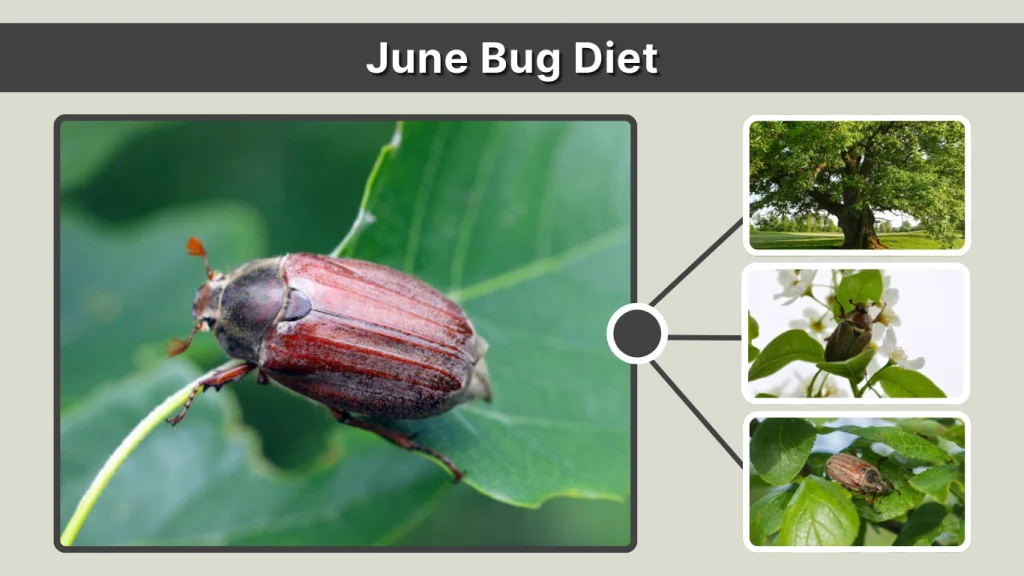
June bugs have different diets depending on their stage of development.
What Adult June Bugs Eat
Adult June bugs typically feed on the leaves of trees, shrubs, and garden plants. They are especially fond of:
- Oak trees
- Maple trees
- Fruit trees
- Various ornamental shrubs
In most cases, adult feeding damage is minor. They may create small holes in leaves, but healthy plants can usually tolerate this level of feeding without long-term harm.
What Larvae Eat
Larvae primarily feed on grass roots and occasionally on the roots of garden plants. Because they live underground, their feeding can go unnoticed until visible damage appears above ground.
The connection between their diet and lawn damage is direct: the more roots they consume, the weaker the grass becomes.
Do June Bugs Bite?
One of the most common concerns people have is whether June bugs bite. The simple answer is no — June bugs do not bite humans.
They do not have stingers, and their mouthparts are designed for chewing plant material, not for biting people or animals. While they may look large and intimidating, they are not aggressive insects.
Sometimes people mistake their behavior for biting because June bugs often fly directly into people. This happens because they are strongly attracted to light and are poor flyers. If you are standing near a porch light or illuminated window, a June bug may accidentally bump into you. Although this can be startling, it is harmless.
In short, June bugs are more of a nuisance than a threat.
June Bug vs Japanese Beetle
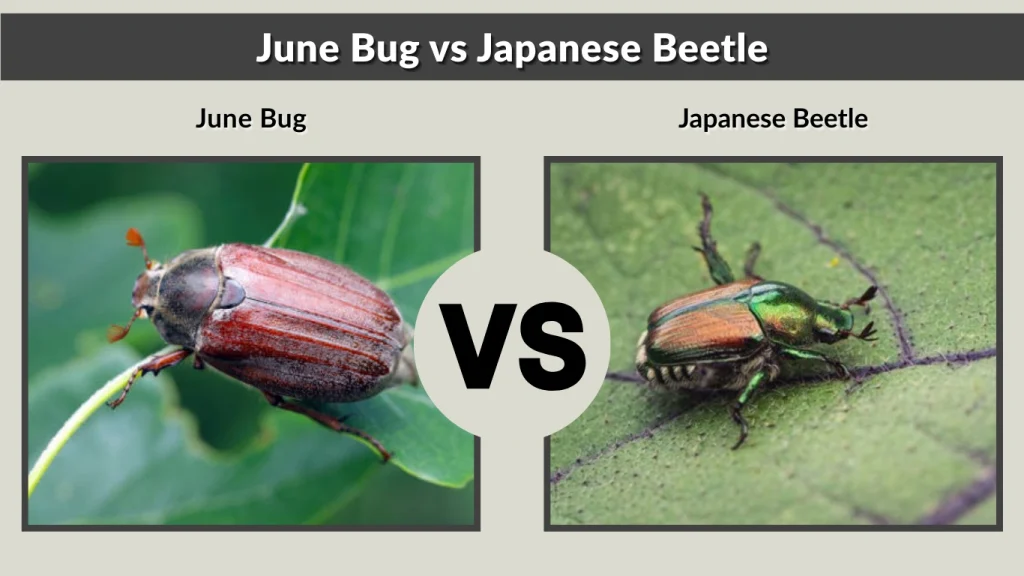
June bugs are frequently confused with Japanese beetles, but they are different insects with distinct appearances and behaviors.
June bugs are typically larger and brown or reddish-brown in color. They are most active at night and are commonly seen flying around lights.
Japanese beetles, on the other hand, are smaller and have a metallic green body with copper-colored wing covers. They are active during the day and are known for aggressively feeding on plant leaves, often skeletonizing them.
Another major difference is the type of visible damage they cause. While both insects have larvae that feed on grass roots, Japanese beetle adults are far more destructive to garden plants and ornamental shrubs. They often appear in large groups and can quickly damage roses, grapes, and other plants.
If you see a brown beetle clumsily flying at night, it is most likely a June bug. If you notice shiny green beetles covering plants during the day, you are probably dealing with Japanese beetles.
Interesting June Bug Facts
June bugs may seem like simple summer insects, but they have several interesting characteristics.
First, despite their name, they are not true “bugs.” True bugs belong to a different insect order, while June bugs are beetles in the scarab family.
Second, they are strongly attracted to light, a behavior known as phototaxis. Scientists believe this instinct may interfere with their natural navigation methods, causing them to fly toward artificial light sources.
Another fascinating fact is that some species take up to three years to complete their life cycle. This means the larvae can remain underground for multiple seasons before emerging as adults.
June bugs also have natural predators. Birds, moles, skunks, raccoons, and other animals feed on both adult beetles and their larvae. In fact, increased animal digging in your yard can be an early sign of a grub problem.
Finally, although they are common across North America, there are more than 100 different species of June beetles, each with slight variations in size and color.
How to Prevent or Control June Bugs
Controlling June bugs usually focuses on managing their larvae, since that is the stage responsible for lawn damage.
One of the most effective prevention methods is maintaining a healthy lawn. Proper watering, mowing at the correct height, and regular aeration encourage deep root growth, making grass more resistant to grub feeding.
Beneficial nematodes are a natural biological control option. These microscopic organisms live in soil and target grub populations without harming beneficial insects, pets, or people.
Milky spore treatment is another long-term solution commonly used against grub infestations. It introduces a natural bacterium into the soil that specifically affects certain scarab beetle larvae.
Reducing outdoor lighting during peak June bug season may also decrease the number of adult beetles gathering near your home. Switching to yellow “bug lights” can help minimize attraction.
If infestations are severe and cause extensive lawn damage, professional pest control treatment may be necessary.
FAQs
Are June bugs dangerous to humans?
June bugs are not dangerous to humans. They do not bite, sting, or spread diseases. Although their large size and noisy flight can be startling, they are harmless. Most concerns related to June bugs involve lawn damage from their larvae rather than any direct threat to people.
How long do June bugs live?
The full life cycle of a June bug can last one to three years, depending on the species. However, adult June bugs typically live only a few weeks to a few months. Most of their life is spent underground in the larval stage.
When are June bugs most active?
Adult June bugs are most active in late spring and early summer. They are nocturnal insects, meaning they are primarily active at night. You are most likely to see them flying around outdoor lights during warm evenings.
How do I get rid of June bug larvae?
To control June bug larvae, focus on lawn health and soil treatments. Beneficial nematodes and milky spore products can reduce grub populations naturally. In severe cases, targeted lawn insecticides may be used. Proper lawn maintenance also helps prevent large infestations from developing.
Conclusion
June bugs are common summer beetles that are more annoying than dangerous. While adults may buzz around lights and occasionally chew on leaves, the real concern lies underground, where their larvae can damage lawns by feeding on grass roots. Understanding their life cycle, diet, and behavior makes it easier to identify and manage them effectively. With proper lawn care and preventive measures, most June bug problems can be kept under control without significant damage.