
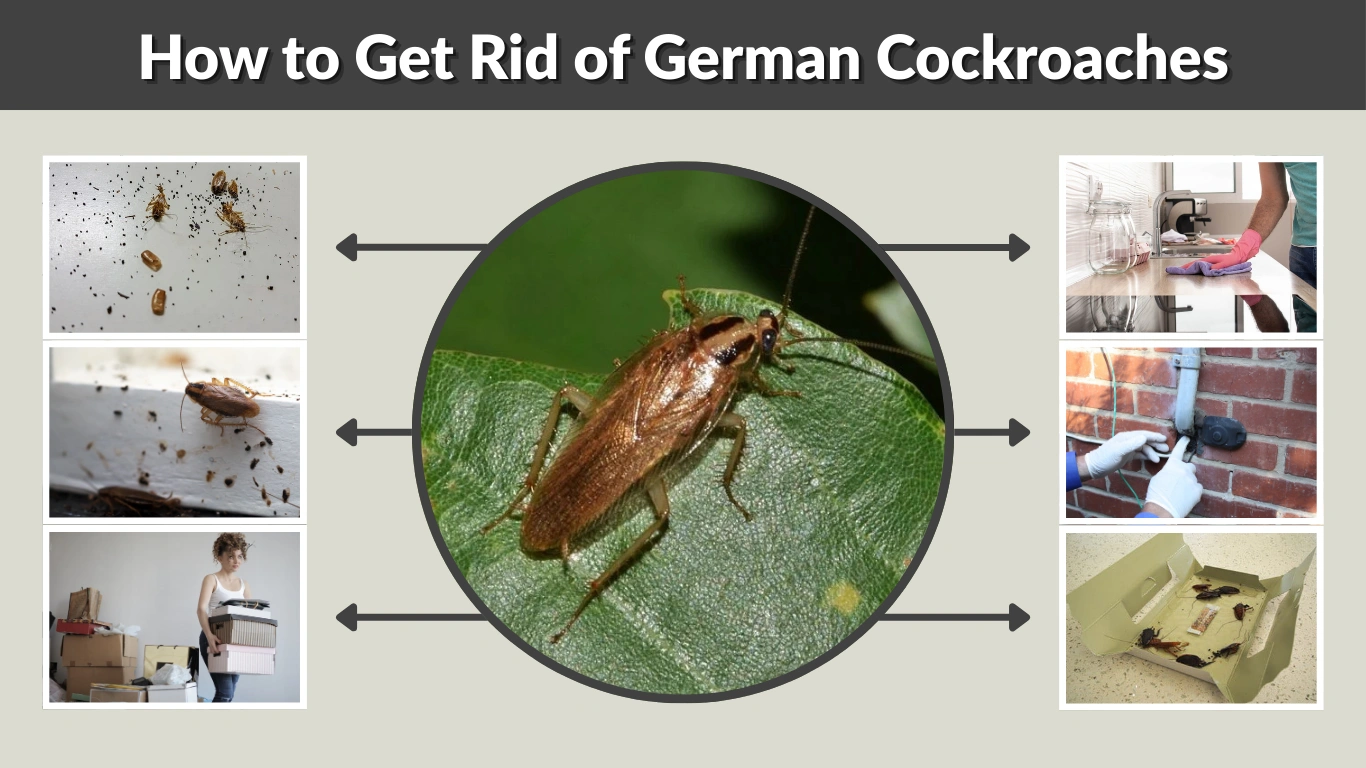
German cockroaches (Blattella germanica) are among the most persistent and troublesome household pests. Small, fast, and excellent at hiding, they can quickly multiply and infest kitchens, bathrooms, and pantries. Unlike some other roach species, German cockroaches thrive in close proximity to humans, feeding on food crumbs, grease, and even soap residue. Getting rid of them requires patience, consistency, and a systematic approach. This guide will walk you through the essential steps for identifying, preparing, treating, and monitoring an infestation.
Know Your Enemy: Identification
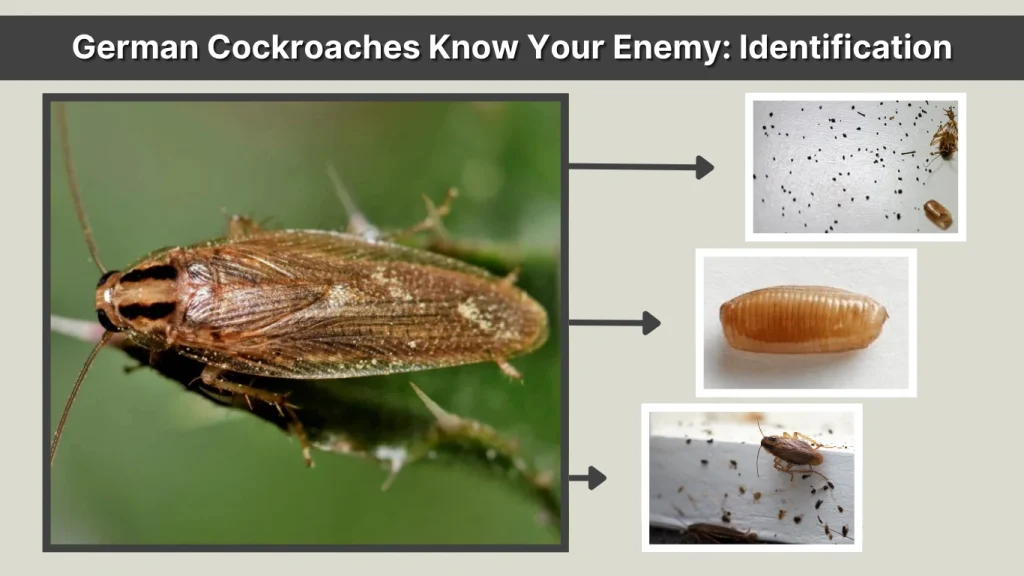
Before tackling a roach problem, you must confirm that you’re dealing with German cockroaches. They are usually ½ to ⅝ inches long, light brown or tan in color, and distinguished by two dark parallel stripes running down their pronotum (the area behind the head).
Unlike larger roach species such as the American cockroach, German cockroaches prefer to stay close to food and water sources. They are fast-moving, nocturnal, and often scatter when lights are turned on. Signs of an infestation include:
- Droppings: Tiny, black, pepper-like specks around cabinets, appliances, or countertops.
- Egg cases (oothecae): Small, light brown capsules, often tucked into cracks or hidden near food.
- Odor: A musty smell in heavily infested areas.
Correct identification is crucial, since treatment methods may vary for different roach species.
Safety & Preparation
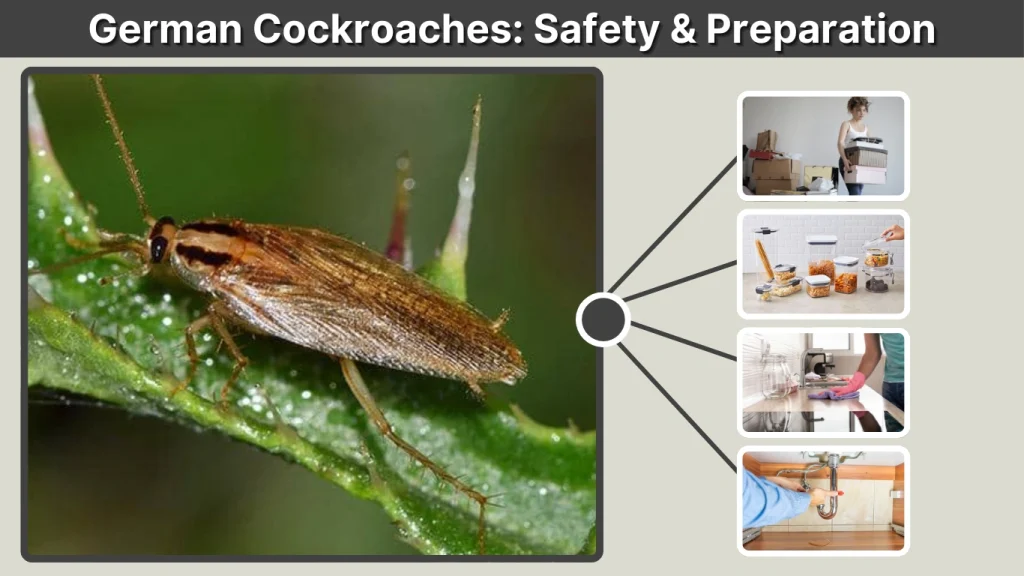
Before beginning treatment, you need to make your home less welcoming to roaches. Preparation ensures that every treatment step is effective. Here’s what to do:
- Declutter: Remove cardboard boxes, stacks of paper, and unnecessary kitchen items that provide hiding spots.
- Empty cabinets: Take out food items, dishes, and utensils before treatment. Store them in sealed containers.
- Clean thoroughly: Wipe down grease from stoves, clean behind appliances, and vacuum crumbs from corners.
- Fix leaks: Roaches thrive near water sources, so repair dripping faucets or pipes.
- Protect pets and children: Keep them away from treatment areas and store food bowls or toys safely.
It’s also wise to wear gloves and a mask while handling pesticides, baits, or dusts. Good preparation ensures the treatments that follow won’t be wasted.
Severity Assessment & Mapping
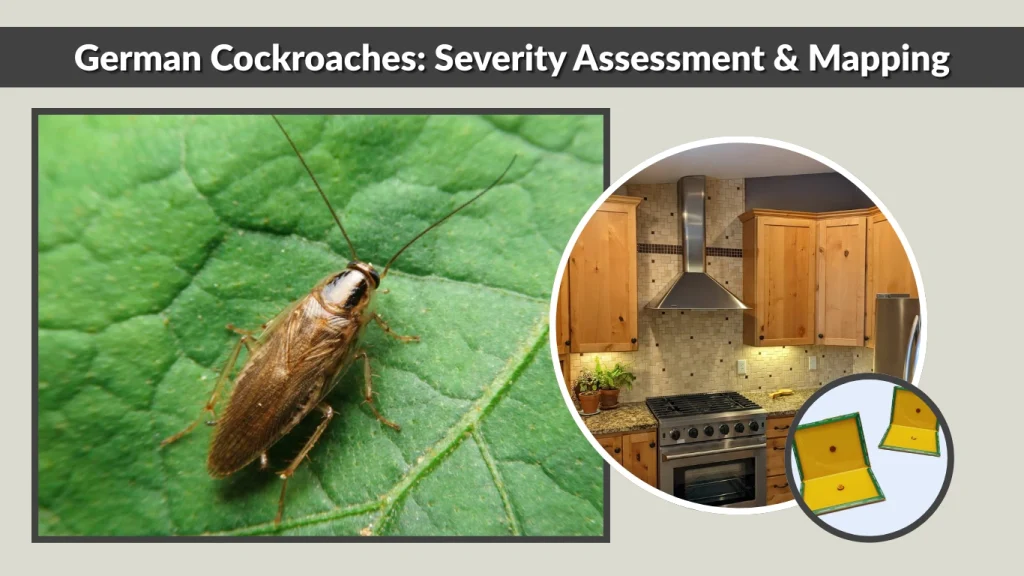
One of the most overlooked steps in roach control is mapping the infestation. Simply spraying or baiting randomly won’t deliver results—you need to know where roaches live and travel.
- Place sticky glue traps (10–20 is ideal) around kitchens and bathrooms, especially behind the refrigerator, near the stove, under sinks, and along baseboards.
- Check traps after a day or two to determine hotspots. Areas with the most roaches or droppings should become your priority zones.
- Continue using these traps weekly to monitor progress.
By mapping activity, you not only target treatments more effectively but also measure whether your strategy is working.
Step 1: Deep Sanitation
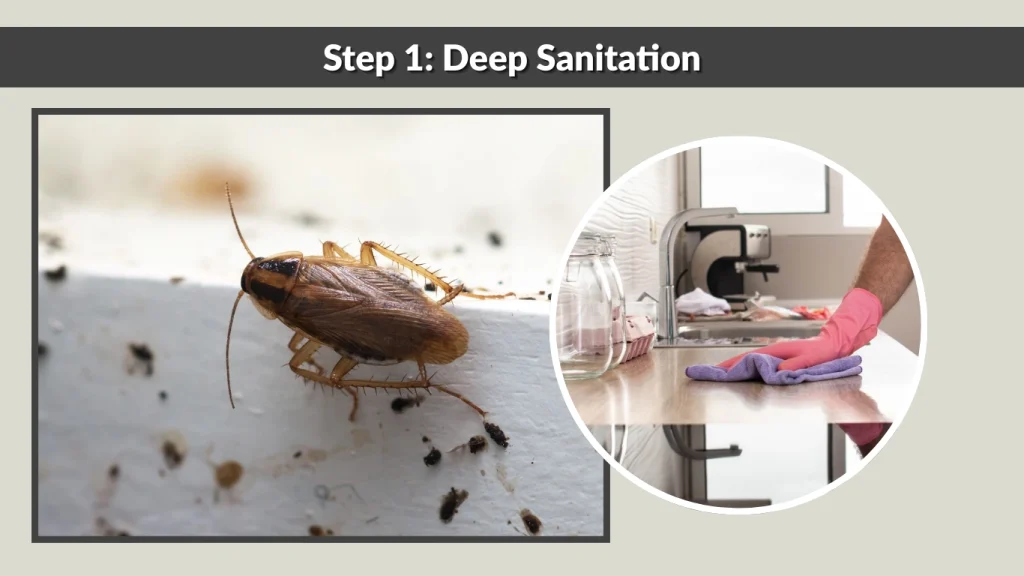
The first and most important step is cleaning. Without sanitation, even the best baits and insecticides won’t be effective. German cockroaches are opportunistic feeders that will happily consume crumbs, grease, and even soap film.
Here’s how to clean effectively:
- Nightly wipe-downs: Clean countertops, stovetops, and sinks before bed.
- Vacuum regularly: Remove food particles from corners and under appliances.
- Trash discipline: Empty trash daily and use sealed bins.
- Dry sinks and surfaces: Roaches can survive without food longer than without water, so keep sinks dry overnight.
- Food storage: Store all food in airtight containers, including pet food.
This step doesn’t kill roaches directly, but it forces them to rely on your bait placements rather than alternate food sources.
Step 2: Exclusion (Seal Entry Points)
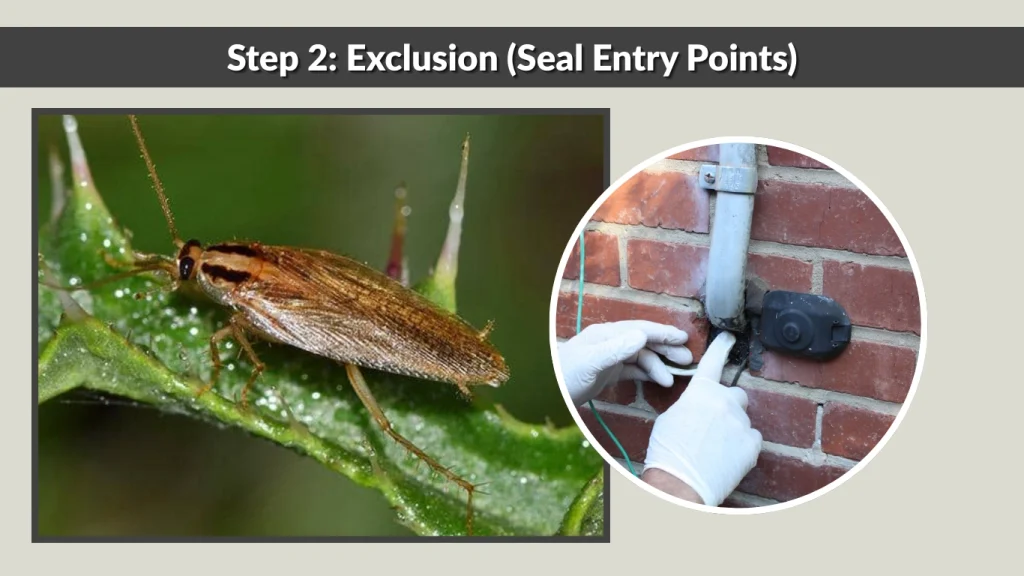
Once sanitation is under control, focus on sealing off their hiding places and entryways. German cockroaches often hide in tiny cracks that are difficult to reach. Sealing prevents re-infestation and limits their movement.
- Use caulk to close gaps around baseboards, countertops, and wall joints.
- Seal spaces around plumbing pipes, especially under sinks and behind toilets.
- Install door sweeps on kitchen and bathroom doors.
- Fill gaps behind cabinets and electrical outlets.
While sealing alone won’t eliminate roaches, it complements baiting and dusting by reducing harborage areas.
Step 3: Baiting the Right Way
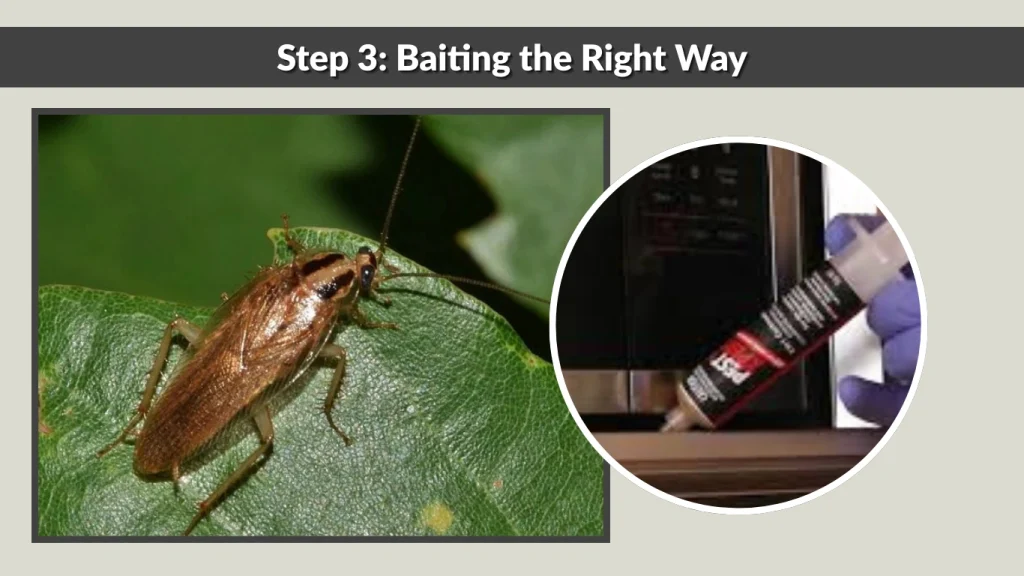
Baiting is the cornerstone of German cockroach control. Unlike sprays, which can repel roaches and make them harder to kill, gel baits are attractive and lethal when ingested.
- Apply pea-sized dots of gel bait in cracks, crevices, and near hot appliances like the stove, refrigerator motor, and dishwasher.
- Place bait close to known hotspots identified from sticky traps.
- Do not overapply—many small dots are better than one large smear.
- Avoid spraying insecticides near bait placements, since sprays may repel roaches and reduce bait effectiveness.
- Refresh baits every 1–2 weeks, especially if they dry out.
Baiting works because roaches carry the poison back to their nests, where other roaches consume it through droppings and carcasses, spreading the treatment throughout the colony.
Step 4: Use Insect Growth Regulators (IGRs)
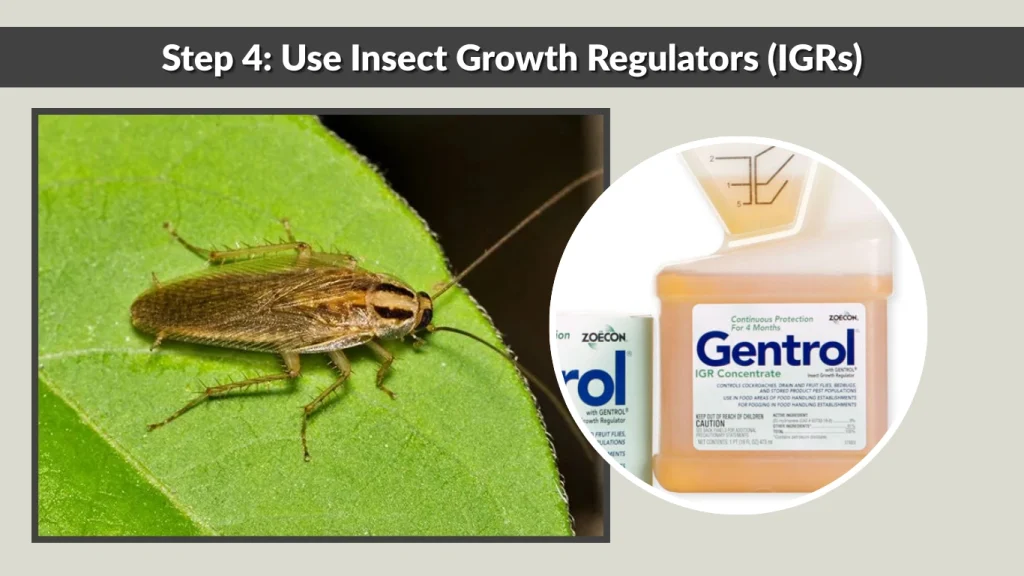
Even if baits kill adult roaches, German cockroaches reproduce rapidly. This is where insect growth regulators (IGRs) become vital. Products containing hydroprene or pyriproxyfen disrupt the cockroach life cycle by preventing nymphs from maturing into reproducing adults.
- Apply IGRs in the same areas where you’ve placed baits.
- Use them in cracks, behind appliances, and under sinks.
- Pairing IGRs with bait ensures that even if some roaches survive, they cannot rebuild the infestation.
This step is especially helpful in severe infestations, where new egg cases are constantly being produced.
Step 5: Apply Dusts in Voids
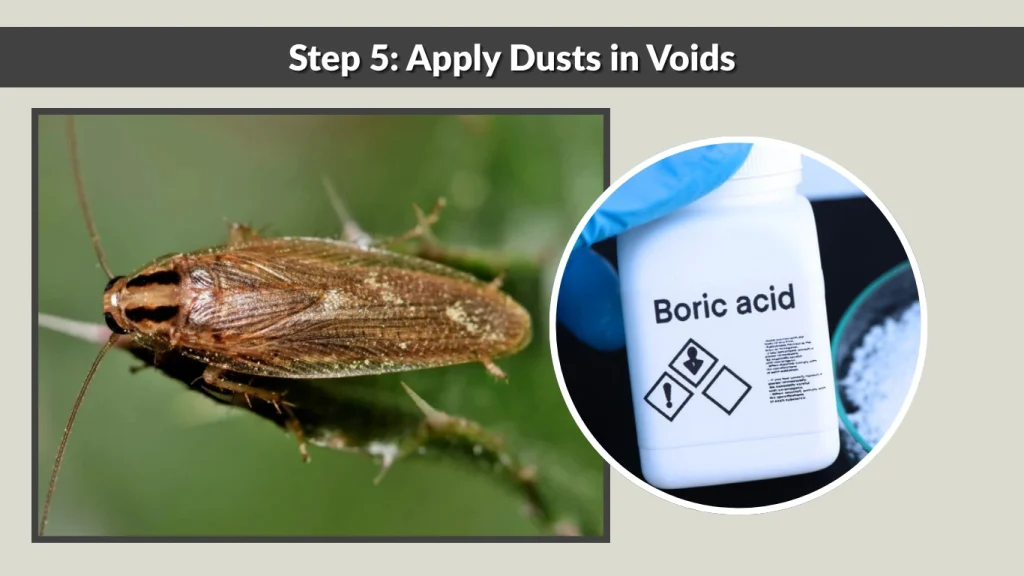
Some areas are too deep or hidden for baits. This is where insecticidal dusts like boric acid or silica gel come in. These substances cling to roach bodies and gradually dehydrate them.
- Use a bulb duster to apply a light coating of dust in voids, wall cracks, and under baseboards.
- Avoid overapplying—roaches will avoid piles of dust. A fine, invisible layer is most effective.
- Focus on areas such as electrical outlets, behind refrigerators, under cabinets, and inside wall voids.
Dusts remain active for months, giving you long-term control, especially in areas where sprays or baits can’t reach.
Step 6: Targeted Residual Sprays (Optional)
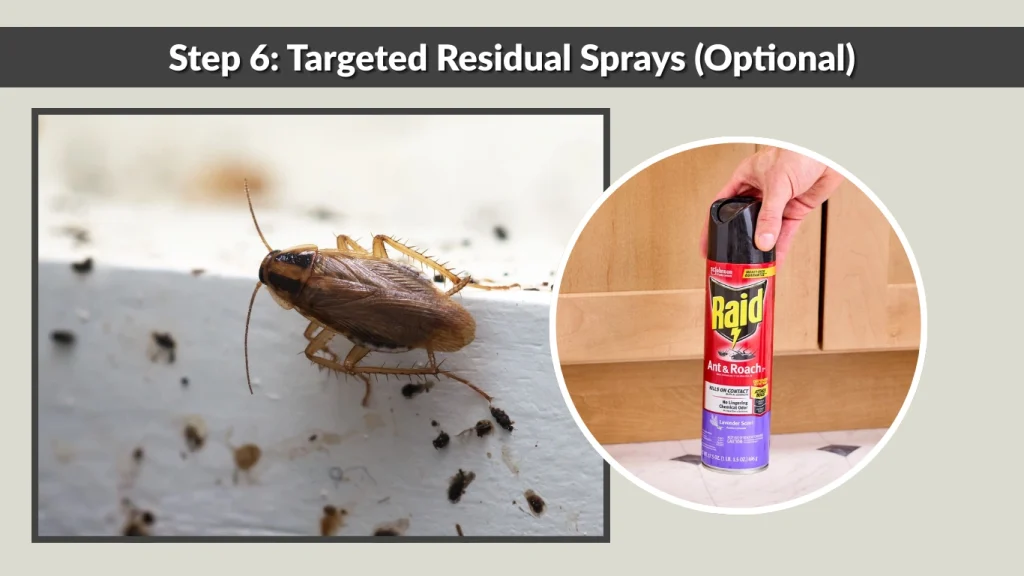
Unlike baits and dusts, sprays should only be used strategically. Repellent sprays can scatter roaches and reduce bait effectiveness. However, non-repellent residual sprays may help in extreme infestations.
- Apply only in cracks and crevices, not on open surfaces.
- Never spray directly over baits.
- Choose products specifically labeled for indoor cockroach control.
This step is optional but can provide an extra layer of defense if baits alone aren’t enough.
Step 7: Monitor and Rotate Treatments
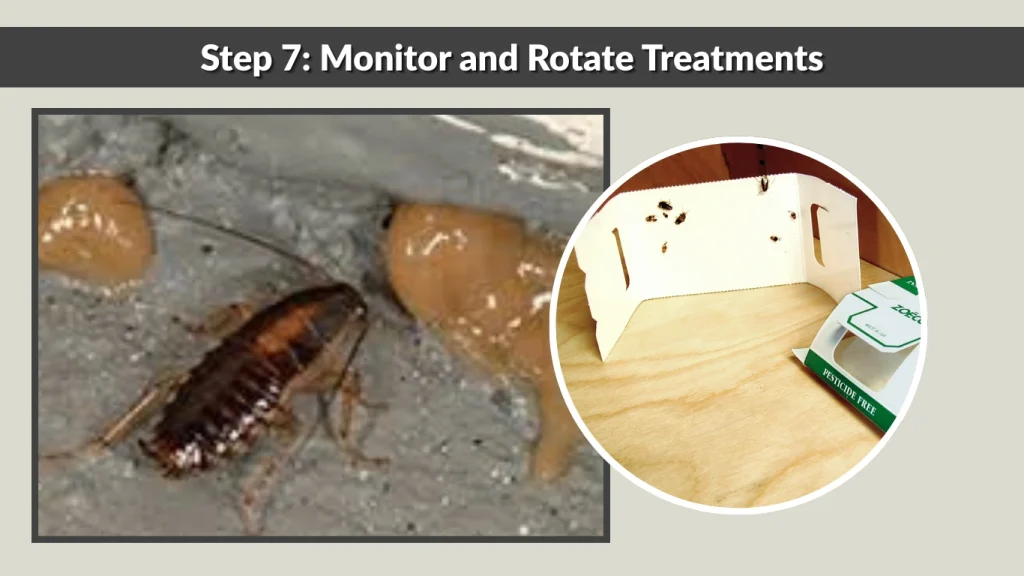
Cockroach control isn’t a one-time job—it’s a process. Monitoring helps you track progress and refine your strategy.
- Replace sticky traps weekly to track numbers.
- If bait consumption slows, rotate to a different active ingredient to avoid resistance.
- Reapply dust or bait as needed based on activity levels.
- Keep notes on where you applied products and the results you observed.
By actively monitoring, you’ll know if the population is shrinking or if certain hotspots still need attention.
Step 8: Follow-Up and Maintenance
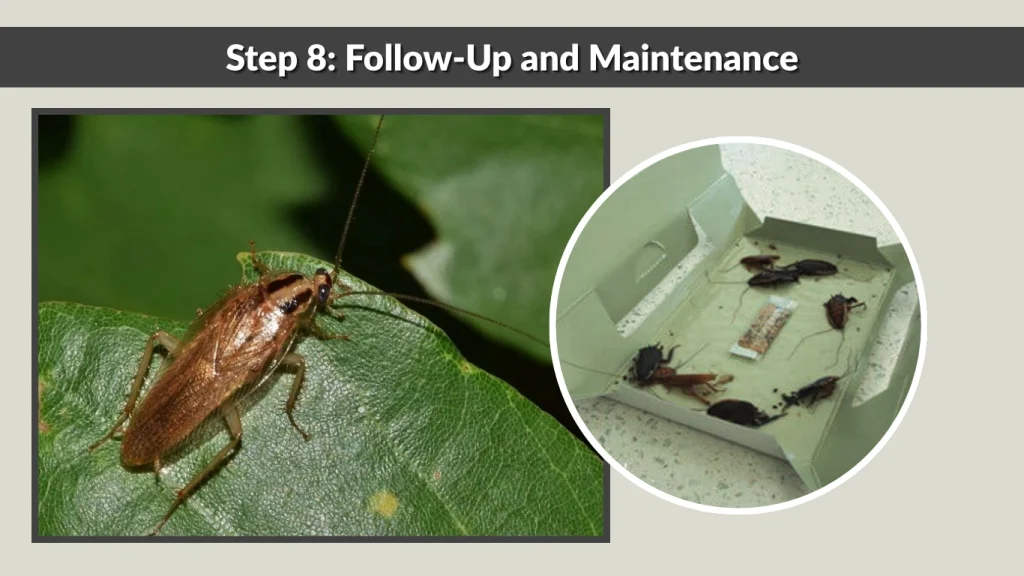
German cockroach infestations don’t disappear overnight. It usually takes 4–6 weeks to achieve full control. Consistency is the key.
- Week 1: Heavy cleaning, bait placement, IGR application, dusting, and initial monitoring.
- Week 2–3: Refresh baits, rotate products if needed, reapply dust in voids, and check traps.
- Week 4–6: Population should be minimal. Continue baiting and sealing any new gaps.
At this stage, your goal is to eliminate any survivors and prevent re-infestation.
Apartment & Multi-Unit Considerations
German cockroach infestations are particularly challenging in apartments and multi-unit housing. Since roaches move through shared walls, plumbing, and hallways, treating only one unit may not be effective.
- Work with landlords or neighbors to ensure coordinated treatment.
- Seal pipe chases and wall penetrations to reduce movement between units.
- Consider professional pest control for building-wide infestations.
Common Mistakes to Avoid
Many infestations persist because of treatment errors. Avoid these common pitfalls:
- Spraying over bait placements (repels roaches).
- Neglecting sanitation (gives roaches alternate food sources).
- Using too much dust (roaches avoid thick piles).
- Stopping too early (nymphs still need to be killed after adults disappear).
Success comes from combining sanitation, baiting, IGRs, and dusting consistently.
Long-Term Prevention
Once roaches are gone, keep them out for good with ongoing prevention:
- Clean kitchen surfaces nightly.
- Keep sinks and counters dry.
- Store food in sealed containers, including pet food.
- Inspect cardboard boxes and grocery bags before bringing them inside.
- Maintain sticky traps in hidden corners for early detection.
A prevention routine makes your home far less attractive to future invaders.
When to Call a Professional
Sometimes infestations are too severe for DIY methods, especially in multi-unit buildings or commercial kitchens. Call a pest control professional if:
- You still see roaches after 4–6 weeks of treatment.
- Large numbers are present in multiple rooms.
- You have infants, pets, or medical conditions that require safer handling.
Professionals have access to stronger formulations and can provide comprehensive building-wide solutions.