
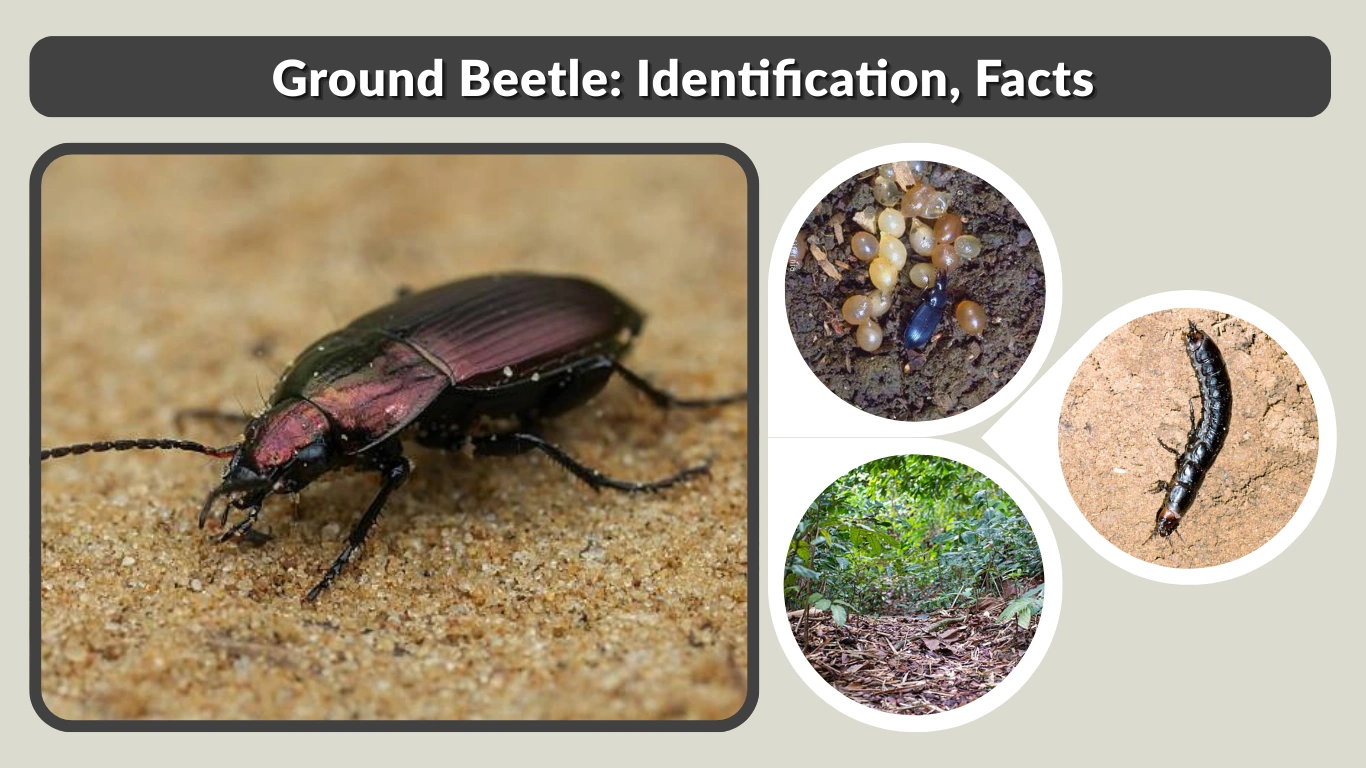
Ground beetles are fast-moving insects commonly found in gardens, under rocks, and sometimes inside homes. Because of their dark color and quick movements, they are often mistaken for cockroaches. However, ground beetles are very different—and in most cases, they are beneficial insects rather than pests. Understanding how to identify them, where they live, and whether they pose any risk can help you decide what to do if you spot one indoors.
What Is a Ground Beetle?
Ground beetles belong to the family Carabidae, which includes more than 40,000 species worldwide. They are primarily outdoor insects that live close to the soil surface. Most species are predators, feeding on other small insects and garden pests.
Unlike household pests that invade food storage areas, ground beetles prefer natural environments such as gardens, forests, fields, and lawns. They are especially active at night and spend the daytime hiding under stones, logs, mulch, or leaf litter.
One of the main reasons people become concerned about ground beetles is their appearance. Their dark, shiny bodies and rapid movement can look alarming at first glance. However, they do not seek out humans, damage property, or infest homes in the way that cockroaches or ants do.
Ground Beetle Identification Guide
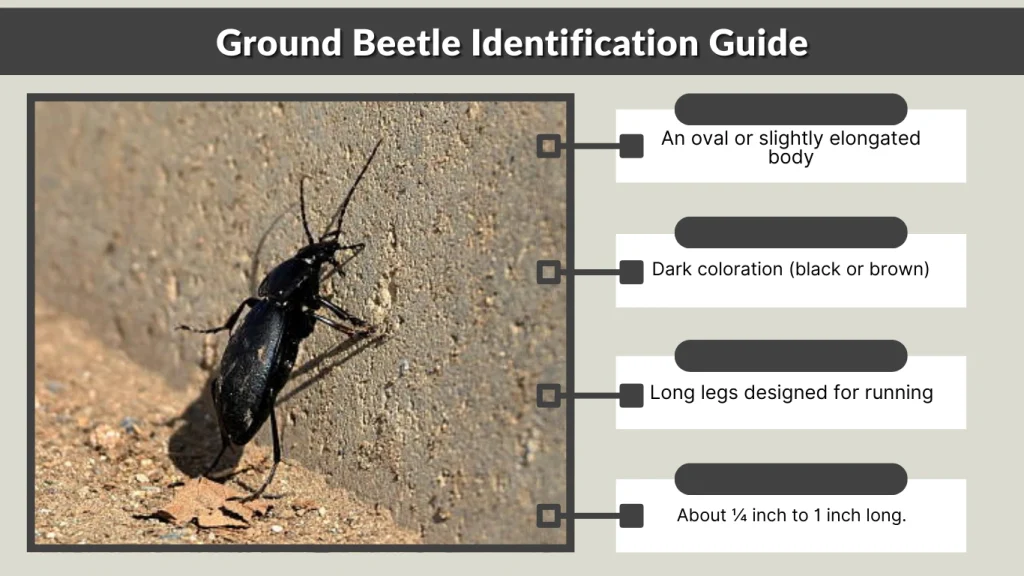
Correct identification is important because ground beetles are frequently confused with other insects. Knowing their key features can help you quickly tell the difference.
Physical Characteristics
Ground beetles typically have:
- An oval or slightly elongated body
- Dark coloration (black or brown), though some species appear metallic green, blue, or purple
- Long legs designed for running
- Thread-like antennae
- Hard wing covers called elytra
Most species range from about ¼ inch to 1 inch long. While they do have wings under their wing covers, many species rarely fly and prefer running quickly along the ground.
Another defining feature is their speed. Ground beetles are extremely fast runners and will quickly hide if disturbed.
Ground Beetle vs Cockroach
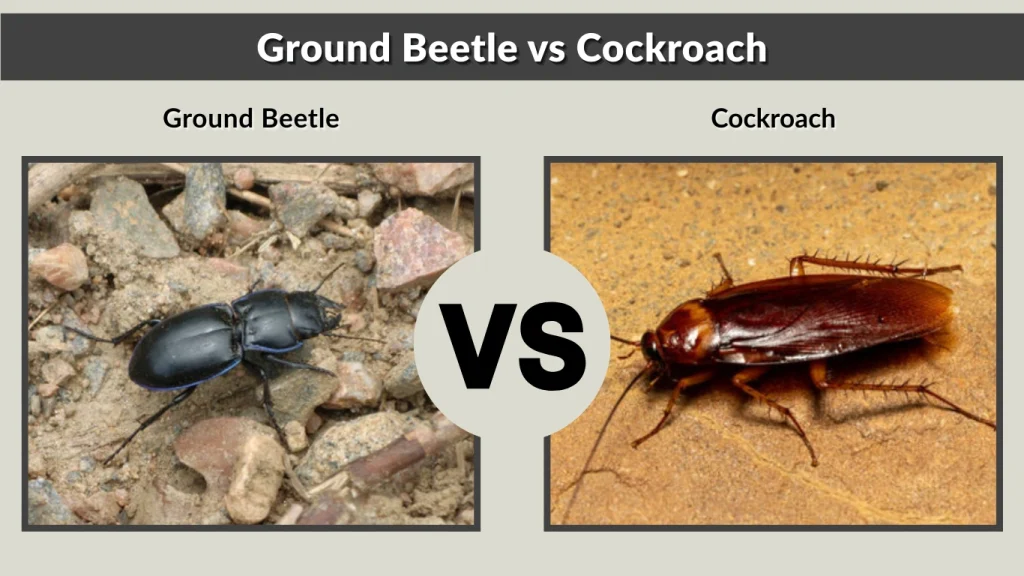
Because of their similar coloring, ground beetles are often mistaken for cockroaches. However, several clear differences can help you distinguish them:
- Body shape: Ground beetles have a more narrow and slightly flattened body, while cockroaches are broader and more oval-shaped.
- Movement: Ground beetles run quickly and purposefully. Cockroaches tend to dart unpredictably and may climb walls.
- Habitat: Ground beetles are outdoor insects. Cockroaches prefer indoor environments near food and moisture.
- Antennae: Cockroaches usually have longer, more prominent antennae relative to their body size.
If you find a single beetle near a doorway or basement, especially during warmer months, it is more likely a ground beetle than a cockroach infestation.
Common Species You May See
Some common ground beetle types include:
- Black ground beetle: Shiny black and commonly found in gardens
- Violet ground beetle: Recognizable by its metallic purple edges
- Fiery searcher beetle: A larger species with an iridescent green body
While their appearance varies slightly, their behavior and habitat are generally similar.
Ground Beetle Life Cycle
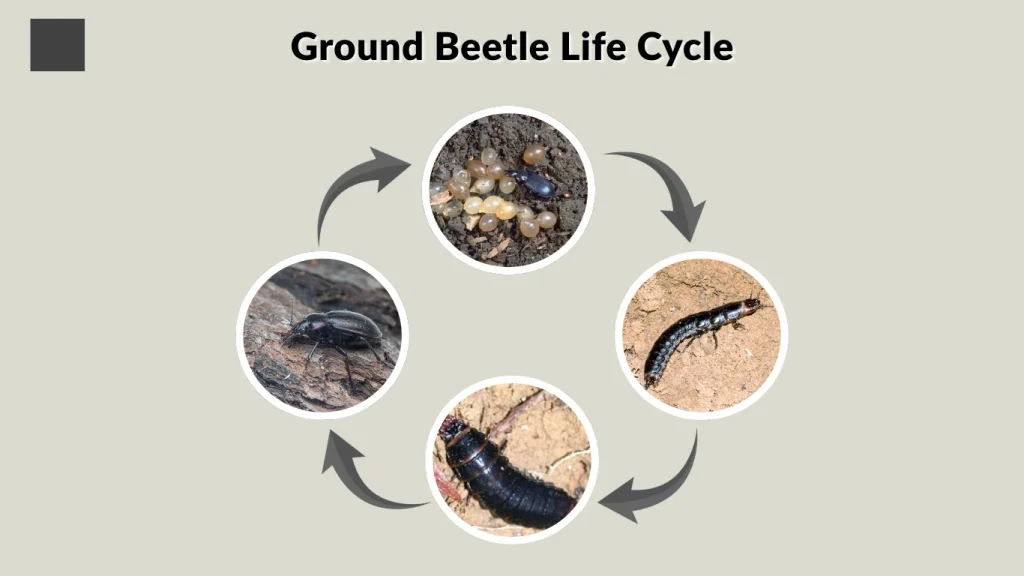
Like most beetles, ground beetles undergo complete metamorphosis, meaning they pass through four stages: egg, larva, pupa, and adult.
Egg Stage
Female ground beetles lay eggs in the soil, often in areas rich in organic material. This provides immediate access to food sources once the larvae hatch. The egg stage typically lasts several days to a few weeks, depending on temperature and environmental conditions.
Ground Beetle Larvae
Ground beetle larvae look very different from adults. They have:
- Elongated, segmented bodies
- Dark or brown coloring
- Strong jaws for hunting
Larvae are also predatory and live in the soil or under debris. They feed on small insects, larvae of other pests, and soft-bodied organisms such as slugs. This stage can last several weeks to months.
Because they remain underground, most homeowners never see ground beetle larvae.
Pupa Stage
After the larval stage, the beetle enters the pupal stage in the soil. During this time, it transforms into an adult. This process can take a few weeks.
Adult Stage
Adult ground beetles emerge ready to hunt. Depending on the species, they may live for several months to over a year. Many species are most active in spring and summer, though some are active in fall.
Their seasonal activity patterns often explain why people suddenly notice them indoors during certain times of the year.
Ground Beetle Habitat
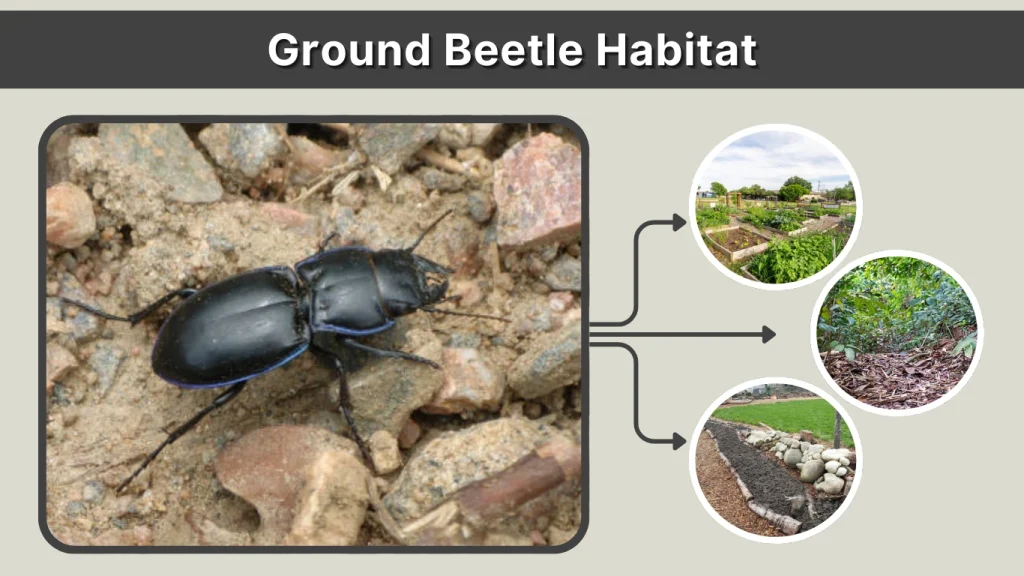
Ground beetles prefer outdoor environments where they can easily hide and hunt. Their natural habitats include:
- Gardens and flower beds
- Forest floors
- Lawns and fields
- Areas under rocks, logs, and mulch
They thrive in moist environments with plenty of hiding places. Leaf litter, compost piles, and stacked firewood create ideal shelter.
Because they are nocturnal, ground beetles usually come out at night to search for prey. During the day, they remain hidden to avoid predators and extreme temperatures.
Sometimes, heavy rain, extreme heat, or sudden temperature changes drive them indoors. They may enter homes through cracks in foundations, gaps under doors, or basement windows. However, once inside, they typically do not survive long because indoor conditions do not provide their preferred food sources or habitat.
Ground Beetle Diet
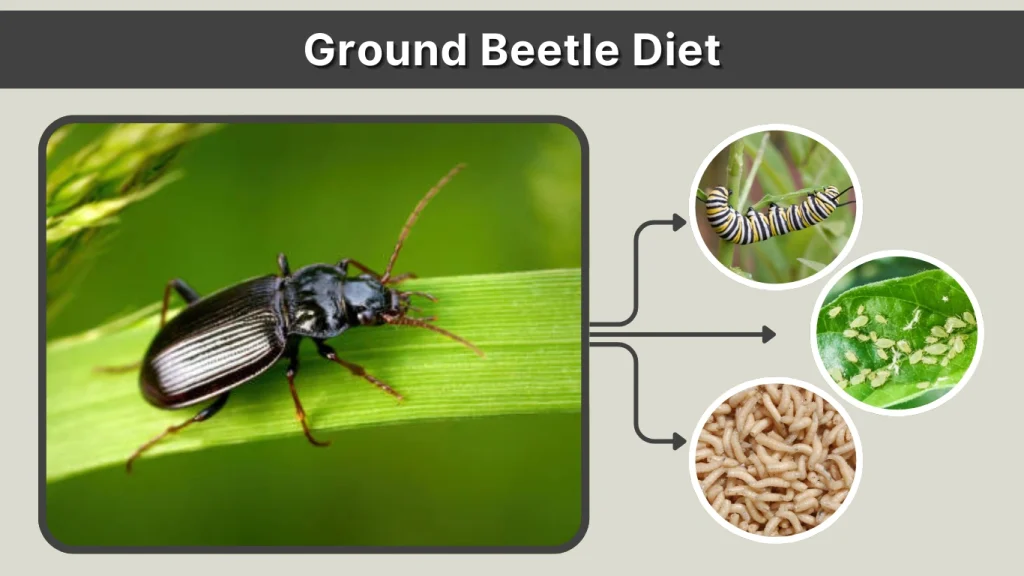
Ground beetles are primarily carnivorous and play an important role in natural pest control. Both adults and larvae are active hunters, feeding on a variety of small insects and soft-bodied pests.
Common prey includes:
- Caterpillars
- Slugs and snails
- Aphids
- Cutworms
- Maggots
- Other insect larvae
Because of this diet, ground beetles are considered highly beneficial in gardens and agricultural areas. Farmers and gardeners often welcome their presence since they help reduce populations of harmful pests without the need for chemical pesticides.
Do Ground Beetles Eat Plants?
Most ground beetles do not damage healthy plants. However, a small number of species may feed on seeds or plant material. Even so, plant damage is rare compared to the benefits they provide by controlling destructive insects.
If you see ground beetles in your garden, they are usually helping rather than harming your plants.
Ground Beetle in House: Why Are They Indoors?
Seeing a ground beetle inside your home can be surprising. However, in most cases, it is accidental rather than a sign of infestation.
How They Get Inside
Ground beetles may enter homes through:
- Cracks in the foundation
- Gaps under doors
- Open windows
- Basement vents
- Damaged weather stripping
They are especially likely to enter during seasonal changes or after heavy rainfall, when their outdoor hiding spots become flooded.
What Attracts Them
Ground beetles are attracted to:
- Bright outdoor lights
- Moisture around foundations
- Other insects near entry points
If your porch light draws in moths and other small insects, ground beetles may follow in search of food.
Are They an Infestation Risk?
Ground beetles do not reproduce indoors. Homes do not provide the soil and food sources they need to complete their life cycle. Most indoor sightings involve a single beetle or a few individuals that wandered inside accidentally.
If you frequently see them indoors, it usually indicates that they are living close to your foundation outdoors—not that they are infesting your house.
Do Ground Beetles Bite?
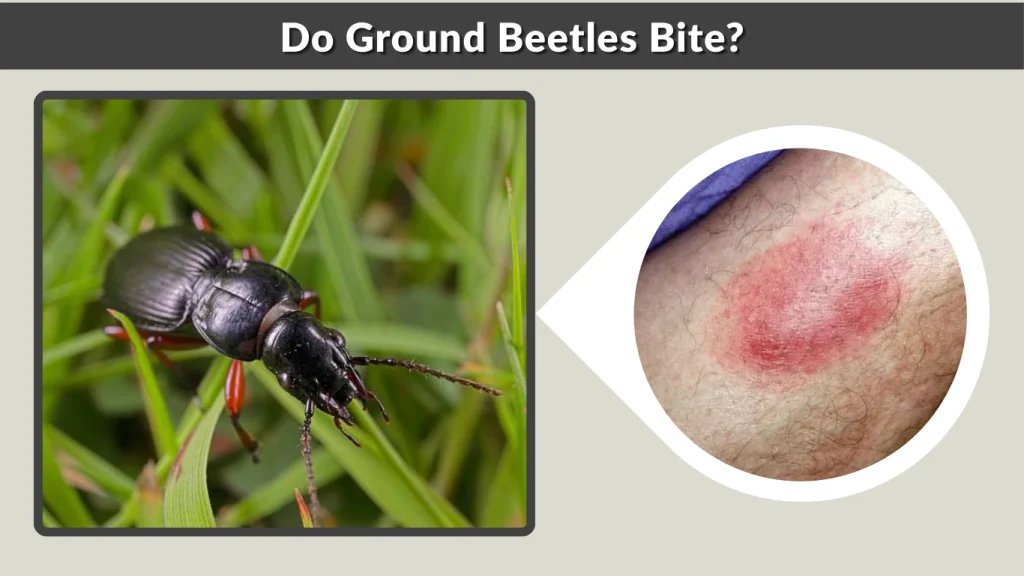
One of the most common concerns homeowners have is whether ground beetles bite.
Ground beetles do have strong jaws, which they use to capture prey. In rare cases, they may pinch or bite if handled roughly or trapped against the skin.
However:
- They do not seek out humans
- They are not aggressive
- Their bite is not venomous
- Bites are generally mild and harmless
At most, a bite may cause slight discomfort similar to a small pinch. They do not transmit diseases and are not considered medically significant.
Pets are also generally safe. Ground beetles pose no serious risk to cats or dogs.
How to Get Rid of Ground Beetles
If you prefer not to have ground beetles around your home, prevention is usually the most effective approach.
Prevention Tips
- Seal cracks and gaps in your foundation
- Install or repair weather stripping under doors
- Reduce outdoor lighting or switch to yellow “bug” bulbs
- Remove leaf litter, mulch, and debris near your home’s exterior
- Keep firewood stacked away from the foundation
- Improve drainage to reduce moisture buildup
These steps help reduce both hiding places and the insects that ground beetles feed on.
If you find one indoors, simply capture it with a cup and release it outside or vacuum it up.
When to Call Pest Control
Professional pest control is rarely necessary for ground beetles. However, you may consider contacting a professional if:
- Large numbers consistently enter your home
- You suspect structural gaps you cannot locate
- Other pest problems are present
In most situations, simple home maintenance solves the issue.
Interesting Ground Beetle Facts
Ground beetles may look intimidating, but they are fascinating insects with unique traits:
- They are among the fastest running insects on the ground.
- Most species are nocturnal hunters.
- Some species can spray defensive chemicals when threatened.
- There are over 40,000 species worldwide.
- They are considered important biological control agents in agriculture.
Because of their beneficial role, many experts recommend tolerating them outdoors whenever possible.
FAQs
Are ground beetles harmful?
No, ground beetles are not harmful to humans. They do not spread disease, damage property, or infest homes. In fact, they are beneficial predators that help control garden pests.
Why do I keep seeing ground beetles in my house?
They usually enter accidentally through small gaps or cracks. Seasonal weather changes, heavy rain, or bright outdoor lights can increase sightings.
How can I tell if it’s a cockroach or a ground beetle?
Ground beetles have a narrower body and are typically found near entry points rather than kitchens or food storage areas. Cockroaches prefer indoor nesting sites and reproduce inside homes.
Do ground beetles fly?
Some species can fly, but many prefer running. They are much more likely to move quickly along the ground than take to the air.
Are ground beetles good for gardens?
Yes, they are highly beneficial. They feed on caterpillars, slugs, and other destructive insects, making them natural pest control allies.