
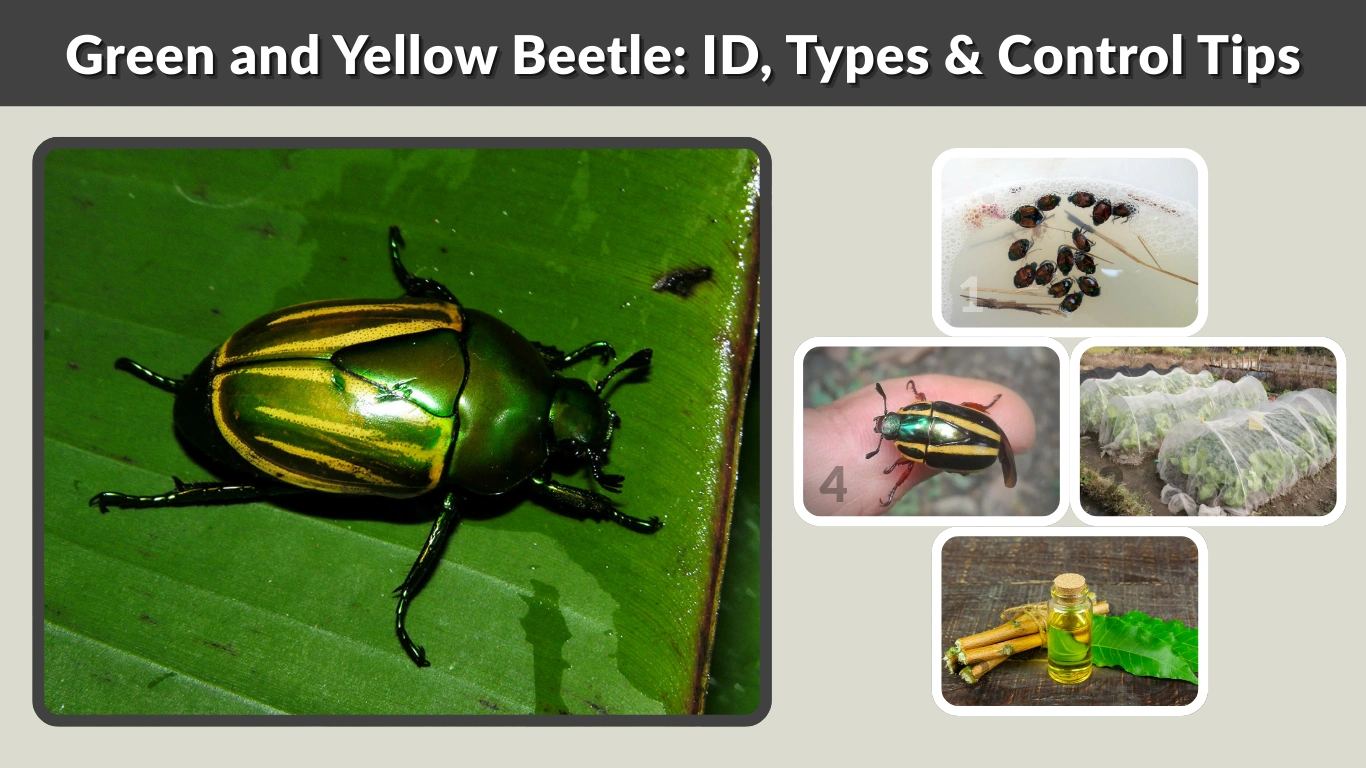
Green and yellow beetles are eye-catching insects that often appear in gardens, lawns, and crop fields during warmer months. Their bright coloring can make them look exotic or even dangerous, but most species are harmless to people. The real concern is usually plant damage. Because several different species share similar green and yellow patterns, proper identification is essential before taking action. This guide will help you recognize common types and understand whether they pose a threat to your garden.
What Is a Green and Yellow Beetle?
A “green and yellow beetle” is not a single species. Instead, it’s a broad description used for many beetles that share similar coloration. These insects belong to different beetle families, and their behavior, diet, and impact on plants can vary widely.
Why Many Beetles Share These Colors
Bright green and yellow coloring serves important purposes in nature. In some species, it acts as camouflage, helping the beetle blend into leaves and stems. In others, it may function as warning coloration, signaling to predators that the insect tastes bad or contains defensive chemicals.
Metallic green coloring, especially in species like the Japanese beetle or tiger beetle, comes from microscopic structural features in their exoskeleton that reflect light.
Are They Always the Same Species?
No. Two beetles may look similar in color but belong to entirely different species. Accurate identification depends on:
- Size
- Shape
- Spots or stripes
- Feeding behavior
- Host plants
Looking closely at these details can help you determine whether you’re dealing with a harmless visitor or a destructive garden pest.
Common Types of Green and Yellow Beetles
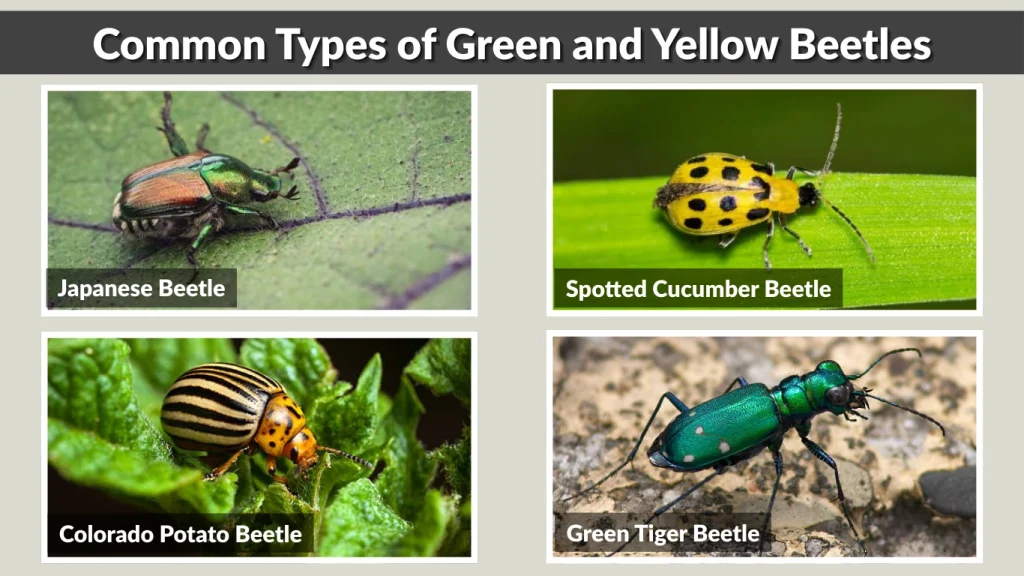
Several well-known species fit the green and yellow description. Here are some of the most common ones found in North America and similar climates.
Japanese Beetle (Popillia japonica)
The Japanese beetle is one of the most recognized green and yellow beetles. It has:
- A metallic green head and thorax
- Coppery or bronze wing covers
- Small white tufts along the sides of its abdomen
These beetles are serious garden pests. Adults feed on over 300 plant species, including roses, grapes, linden trees, and beans. They often skeletonize leaves, leaving behind only the veins.
Their larvae, known as grubs, live in the soil and feed on grass roots, damaging lawns.
Spotted Cucumber Beetle
This beetle is yellow to yellow-green with distinct black spots on its wing covers. It is commonly found on:
- Cucumbers
- Squash
- Melons
- Pumpkins
Spotted cucumber beetles not only chew on leaves and flowers but can also transmit bacterial wilt disease to plants. They are a common problem in vegetable gardens.
Colorado Potato Beetle
The Colorado potato beetle has a yellow body with bold black stripes running lengthwise on its wing covers. While it may not appear metallic green, it often has yellow and greenish tones.
This species primarily attacks:
- Potatoes
- Eggplants
- Tomatoes
Both adults and larvae feed aggressively on foliage, sometimes defoliating entire plants if left untreated.
Green Tiger Beetle
Unlike the previous examples, the green tiger beetle is actually beneficial. It has a metallic green body with pale yellow or cream markings.
Tiger beetles are fast-moving predators that hunt other insects. You’ll often see them running quickly across bare soil or sunny paths. They rarely harm plants and can help control pest populations naturally.
How to Identify a Green and Yellow Beetle
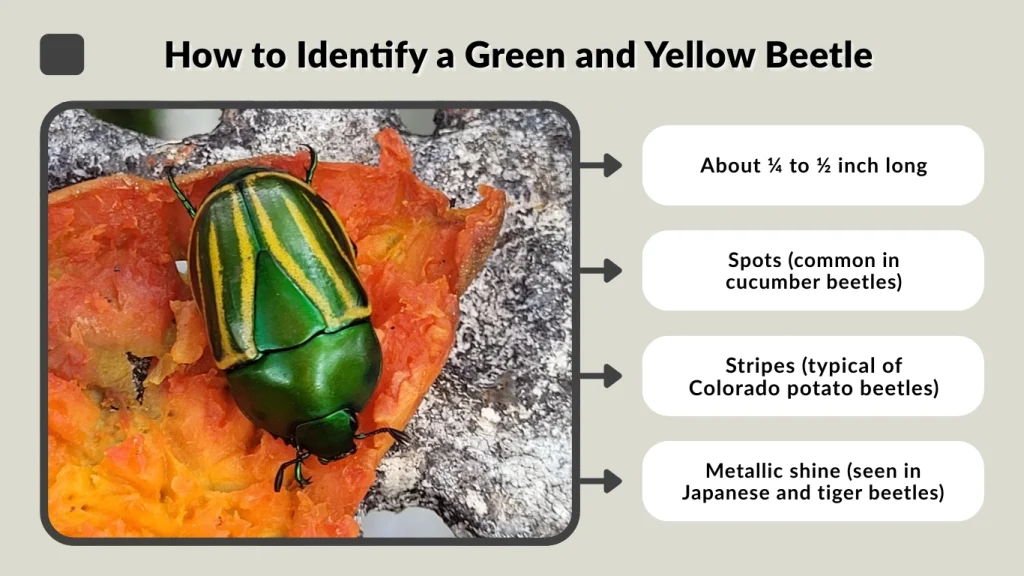
Correct identification is the key to deciding whether control measures are necessary.
Size and Body Shape
Most plant-feeding beetles are oval-shaped and about ¼ to ½ inch long. Japanese beetles, for example, are compact and rounded, while cucumber beetles are slightly more elongated.
Tiger beetles tend to have longer legs and a sleeker body built for speed.
Markings and Patterns
Pay close attention to:
- Spots (common in cucumber beetles)
- Stripes (typical of Colorado potato beetles)
- Metallic shine (seen in Japanese and tiger beetles)
Patterns are often more reliable than color alone.
Where You Found It
Location provides important clues:
- On rose bushes → likely Japanese beetles
- On cucumbers or squash → cucumber beetles
- On potato plants → Colorado potato beetles
- Running on bare ground → tiger beetles
Behavior Clues
Some beetles fly in large groups and gather on plants. Others move quickly and avoid human contact. If the insect appears to be actively feeding on leaves, inspect the plant for damage such as holes or skeletonized foliage.
Are Green and Yellow Beetles Harmful?
Whether a green and yellow beetle is harmful depends entirely on the species.
Garden Damage
Certain species can cause significant plant damage. Common signs include:
- Leaves with holes
- Skeletonized foliage
- Wilting plants
- Reduced fruit production
Heavy infestations may weaken plants and reduce yields in vegetable gardens.
Are They Poisonous to Humans?
Most green and yellow beetles are not poisonous and do not pose a direct threat to humans. They typically do not bite or sting. However, it’s still best to avoid handling insects directly, as some may release defensive chemicals that can irritate sensitive skin.
Why Are Green and Yellow Beetles in Your Garden?
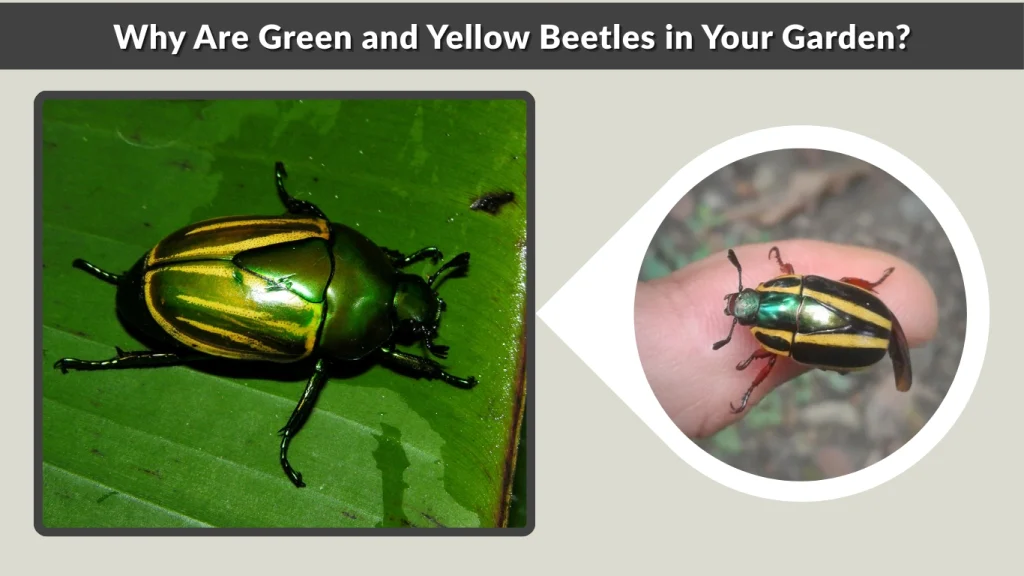
If you’re seeing multiple green and yellow beetles, your yard likely provides the food and environment they need to thrive.
Attraction to Certain Plants
Many pest species are drawn to specific host plants. For example:
- Roses, grapes, and ornamental trees attract Japanese beetles.
- Cucumbers, squash, and melons attract cucumber beetles.
- Potatoes and eggplants attract Colorado potato beetles.
If these plants are present, they can act as a magnet during peak beetle season.
Seasonal Activity
Most green and yellow beetles are active from late spring through mid-summer. Warm temperatures speed up their life cycle, increasing feeding and reproduction. In colder regions, populations may peak for just a few weeks. In warmer climates, activity may last longer.
Lawn and Soil Conditions
Some beetles begin their life underground as grubs. Healthy, moist soil can provide an ideal environment for larvae to develop. When they mature into adults, they emerge and begin feeding on nearby plants.
Light Attraction
Certain beetle species are attracted to porch lights and outdoor lighting at night. If you notice them gathering around windows or entryways, light may be drawing them in.
How to Get Rid of Green and Yellow Beetles
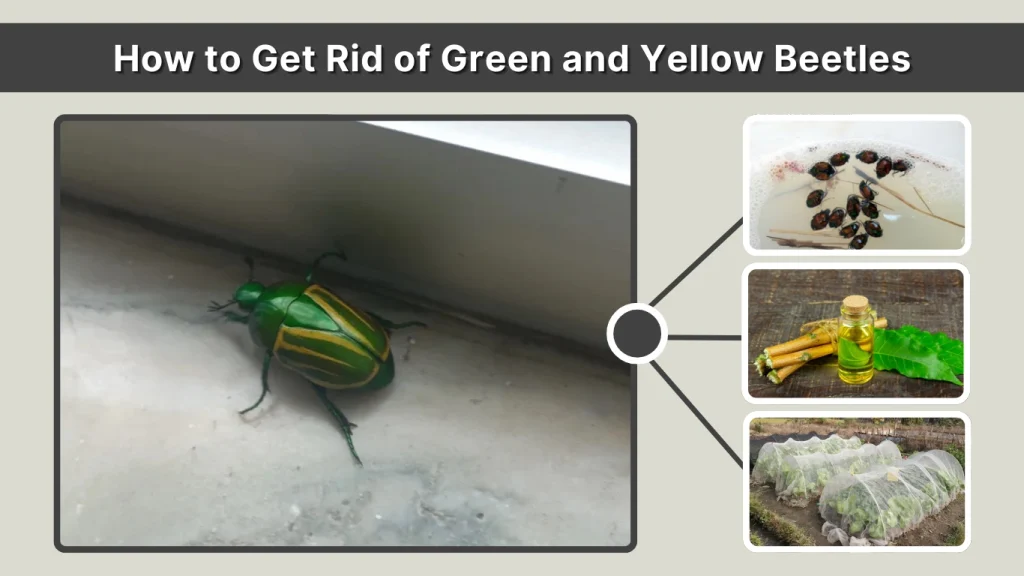
Control methods depend on the severity of the infestation and the specific species involved. In many cases, combining approaches works best.
Natural Control Methods
If the population is small, start with non-chemical options:
Hand-picking
Early morning is the best time to remove beetles, as they are slower in cooler temperatures. Drop them into a bucket of soapy water.
Neem oil
Neem oil disrupts feeding and reproduction. Spray affected plants according to label directions, covering both upper and lower leaf surfaces.
Row covers
Lightweight garden fabric can prevent beetles from reaching vulnerable vegetable crops.
Companion planting
Some gardeners use plants like garlic or chives to help deter certain beetles, though results may vary.
Chemical Treatment Options
For severe infestations, stronger measures may be necessary.
Insecticidal soap
Effective against soft-bodied insects and young beetles, though repeated applications may be required.
Pyrethrin-based sprays
These plant-derived insecticides can quickly reduce adult beetle populations. Always follow label instructions carefully.
Systemic insecticides
In extreme cases, systemic treatments may protect ornamental plants. However, they should be used cautiously due to potential impacts on pollinators.
Treating the Larval Stage
If beetles are recurring yearly, the problem may begin in your soil.
- Apply beneficial nematodes to target grubs naturally.
- Consider grub control treatments in late summer if lawn damage is visible.
Breaking the life cycle can significantly reduce next year’s population.
How to Prevent Future Infestations
Prevention is often easier than control.
Garden Maintenance Tips
- Remove plant debris at the end of the growing season.
- Rotate vegetable crops each year.
- Keep plants healthy with proper watering and fertilization.
Strong plants are more resilient to pest damage.
Monitor Early
Inspect plants regularly during late spring. Early detection allows you to remove beetles before they multiply.
Encourage Natural Predators
Birds, parasitic wasps, and predatory insects can help manage beetle populations. Avoid overusing broad-spectrum insecticides that may harm beneficial species.
FAQs
What is the most common green and yellow beetle?
The Japanese beetle is one of the most common green and yellow beetles in many regions. It has a metallic green body with bronze wing covers and often gathers in groups on roses, grapes, and ornamental plants during summer.
Are green and yellow beetles dangerous?
Most green and yellow beetles are not dangerous to people. They do not sting and rarely bite. The primary concern is plant damage, as some species feed heavily on leaves, flowers, and crops.
How do I identify a green beetle in my garden?
Look at its size, markings, and the plant it’s feeding on. Striped beetles often target potatoes, spotted ones favor cucurbits, and metallic green beetles commonly appear on roses and fruit trees.
How do I stop beetles from eating my plants?
Start with hand removal, neem oil, and row covers. If the infestation grows, insecticidal soap or pyrethrin sprays may help. Treating soil grubs can also prevent future outbreaks.