
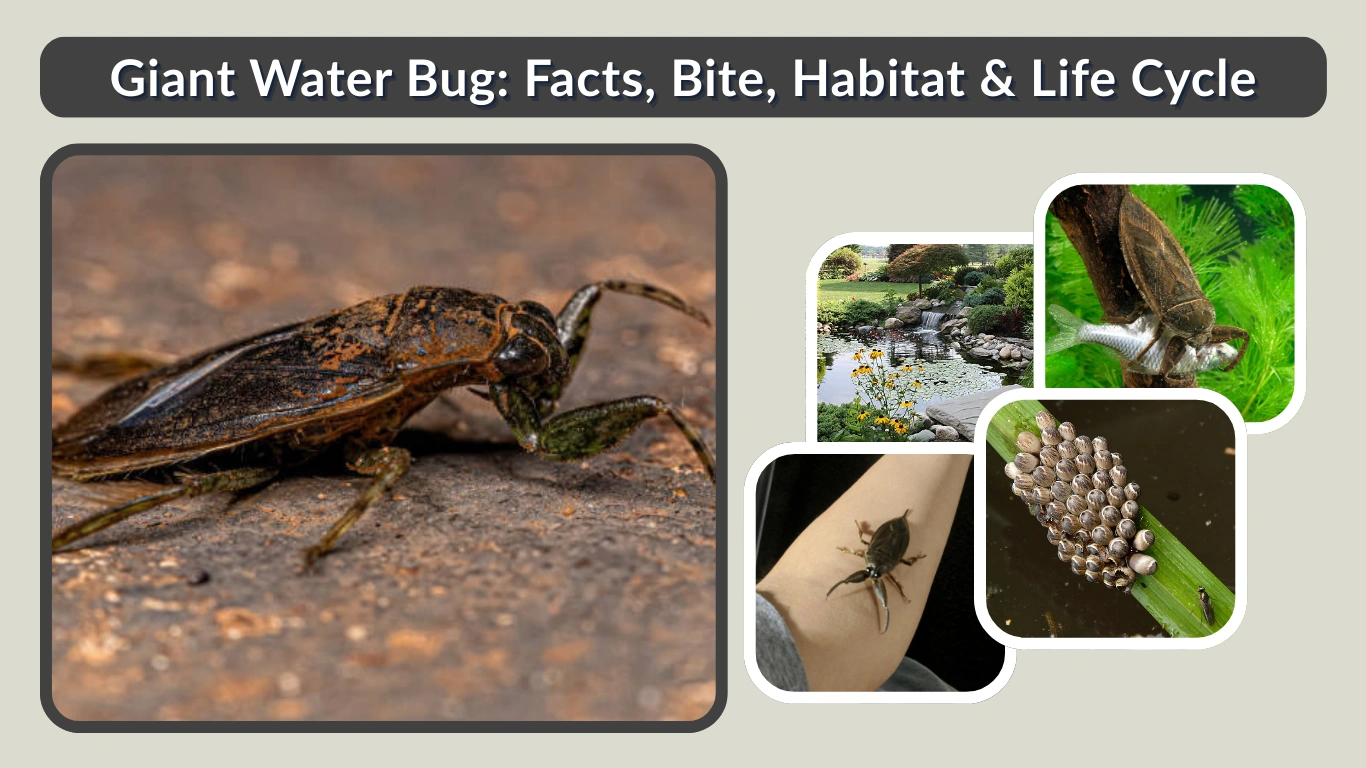
Giant water bugs are large aquatic insects known for their powerful bite and impressive hunting skills. Often called “toe-biters,” these insects are among the biggest true bugs in the world. Despite their intimidating appearance, they play an important role in freshwater ecosystems. Many people become curious—or concerned—after spotting one near a pond, swimming pool, or porch light. Understanding their habitat, behavior, and diet helps separate myths from facts and explains why these unusual insects are more fascinating than frightening.
What Is a Giant Water Bug?
A giant water bug is a large predatory insect belonging to the family Belostomatidae. They are aquatic insects commonly found in freshwater environments such as ponds and lakes. Because of their size and brownish color, they are sometimes mistaken for cockroaches, but they are not related.
These insects are often nicknamed “toe-biters” due to their painful defensive bite. In some regions, they are also called electric light bugs because they are attracted to artificial lights at night. Giant water bugs are considered the largest true bugs in the world, with some species growing over 4 inches long.
Their bodies are flat and oval-shaped, helping them move easily through water. They have strong, grasping front legs used to capture prey and folded wings that allow them to fly when necessary.
Where Do Giant Water Bugs Live?
Natural Habitat
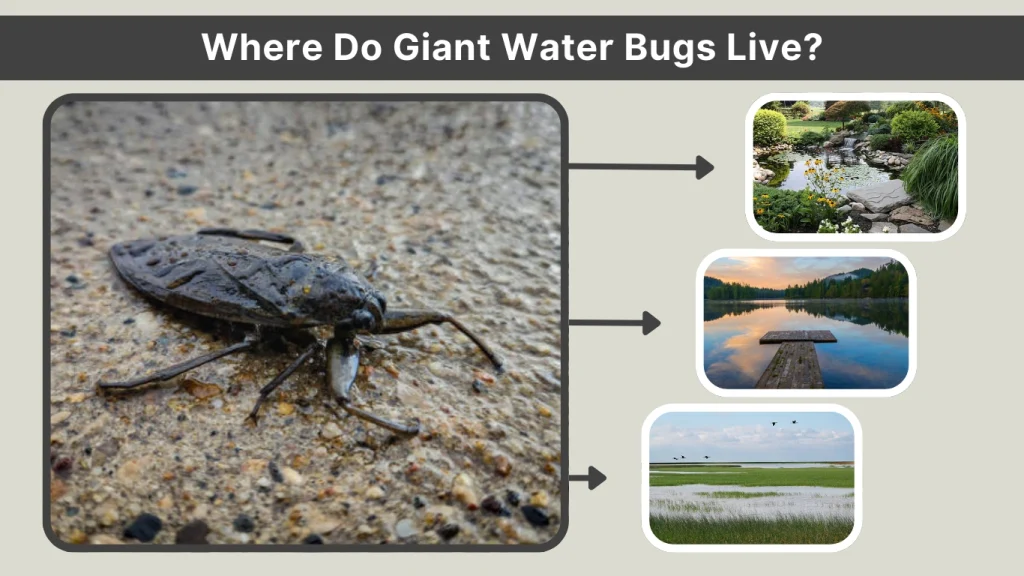
If you are wondering where giant water bugs live, the answer is simple: freshwater environments. They prefer ponds, lakes, marshes, and slow-moving streams. They thrive in warm, still, or gently flowing water where they can easily hide among plants and debris.
Vegetation is especially important because it provides both camouflage and hunting cover. Giant water bugs often cling to underwater plants or rest near the bottom, waiting for prey to swim close.
They prefer habitats with abundant small fish, tadpoles, and insects, ensuring a steady food supply.
Geographic Distribution
Giant water bugs are found in many parts of the world. They live throughout North and South America, Asia, and Australia. Warmer climates tend to support larger populations, though they can also be found in temperate regions during warmer months.
Why They Sometimes Appear Near Homes
These insects are nocturnal and strongly attracted to artificial lights. During warm evenings, they may fly toward porch lights, streetlights, or illuminated windows. Rainstorms or flooding can also displace them from their natural habitats, causing unexpected encounters.
Giant Water Bug Habitat and Behavior
The giant water bug habitat typically includes calm freshwater bodies with plenty of vegetation. They prefer water that is not heavily polluted and that supports a healthy ecosystem of smaller aquatic animals.
These insects are mostly active at night. During the day, they remain still, hiding among plants or debris to avoid predators. Their brown coloring helps them blend into their surroundings.
Giant water bugs are ambush hunters. Rather than chasing prey, they stay motionless until an animal swims close enough to grab. Their powerful front legs act like pincers, allowing them to secure prey quickly.
In colder regions, some species overwinter in mud or sheltered areas to survive low temperatures.
Giant Water Bug Diet
What Do Giant Water Bugs Eat?
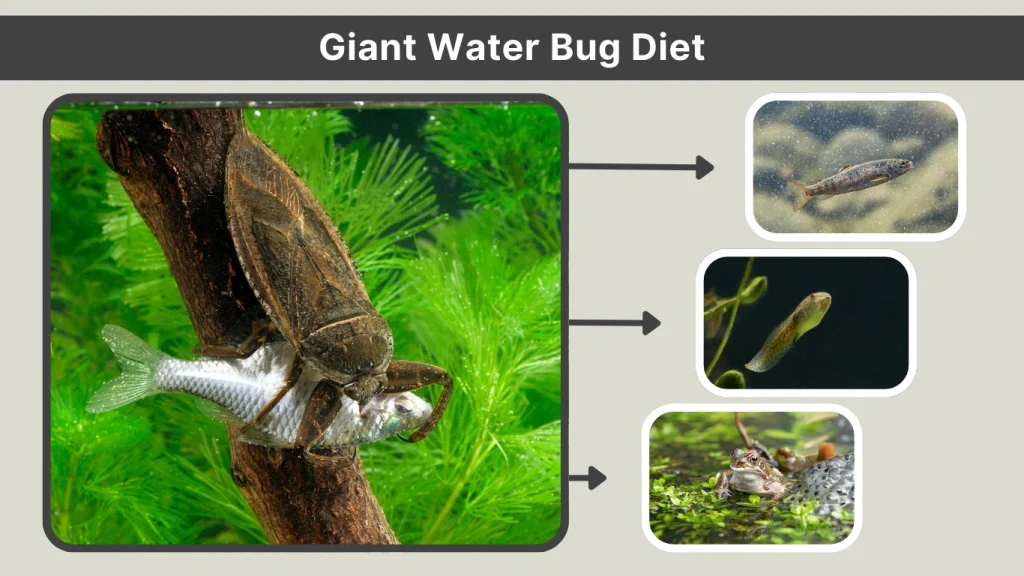
The giant water bug diet consists mainly of other aquatic animals. They commonly feed on small fish, tadpoles, frogs, aquatic insects, and even small crustaceans. Larger species have been known to attack small snakes in rare situations.
Because they are opportunistic predators, they eat whatever suitable prey is available in their habitat.
How They Hunt
Giant water bugs are stealthy ambush predators. They remain perfectly still until prey approaches. Once within reach, they grab the animal with their strong front legs.
After capturing prey, they use their sharp beak (called a rostrum) to inject digestive enzymes. These enzymes break down the internal tissues of the prey. The bug then sucks out the liquefied contents, leaving behind an empty shell.
This hunting strategy makes them highly effective predators in freshwater ecosystems.
Giant Water Bug Facts (Quick Overview)
Giant water bugs are known for their impressive size and predatory nature. Most species range from 2 to 4 inches in length, though tropical species may grow even larger. Their bodies are typically brown or dark tan, which helps them blend into muddy or plant-filled water.
Although they spend most of their lives in water, giant water bugs have fully developed wings and can fly. They usually fly at night and are strongly attracted to lights, which is why they sometimes appear on porches, parking lots, or even inside homes.
These insects are carnivorous and play a major role in controlling populations of other aquatic animals. They are ambush predators, meaning they wait quietly for prey rather than actively chasing it. In freshwater ecosystems, they are considered top invertebrate predators.
Their lifespan typically ranges from several months to about a year, depending on environmental conditions and species.
Giant Water Bug Bite: How Dangerous Is It?
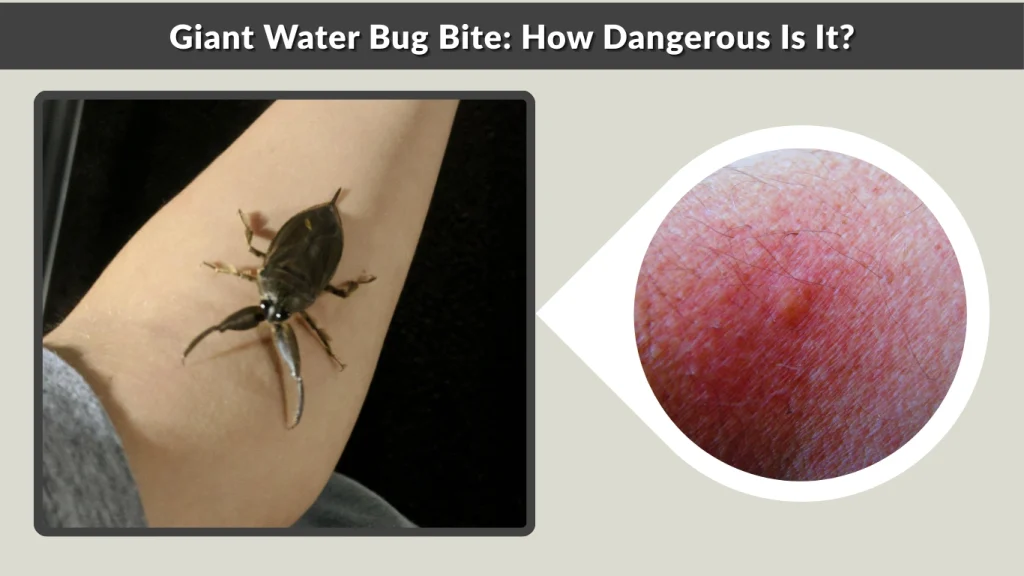
The giant water bug bite is one of the main reasons these insects have a fearsome reputation. While they are not aggressive toward humans, they will bite if handled, stepped on, or threatened.
Why Do They Bite?
Giant water bugs bite purely in self-defense. They do not hunt humans and have no interest in attacking people. Most bites happen when someone accidentally grabs one, steps on it barefoot near a pond, or tries to remove it from a pool.
Because they are strong insects with powerful mouthparts, their defensive response can be intense.
What Does the Bite Feel Like?
Many people describe the bite as extremely painful. It has been compared to a strong bee sting or even worse. The pain is immediate and sharp due to the digestive enzymes injected through their beak.
Although the pain can be severe, it usually fades within a few hours. Some swelling and redness may occur, but serious complications are rare.
Are They Venomous?
Giant water bugs are not venomous in the traditional sense. They do not inject venom designed to harm humans. Instead, they inject digestive enzymes meant to break down prey tissues. These enzymes cause the intense pain associated with the bite.
For healthy individuals, the bite is not life-threatening.
What to Do If Bitten
If bitten by a giant water bug:
- Wash the area with soap and water
- Apply an ice pack to reduce swelling
- Use over-the-counter pain relief if necessary
- Monitor for signs of infection
Seek medical attention only if you experience an allergic reaction or unusual symptoms, which are uncommon.
Giant Water Bug Life Cycle
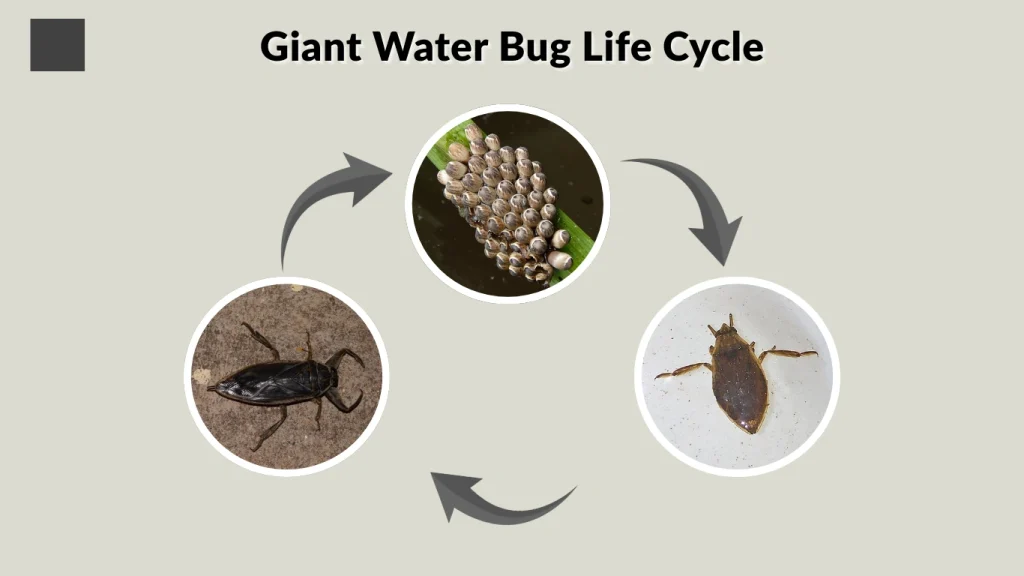
The giant water bug life cycle consists of three main stages: egg, nymph, and adult. Their development is gradual and fascinating, especially because of their unusual parental care behavior.
Egg Stage
In many species, the female lays eggs either on aquatic vegetation or directly on the male’s back. One of the most remarkable facts about giant water bugs is that males often carry and protect the eggs until they hatch.
This behavior is rare among insects. The male keeps the eggs moist and protected from predators, increasing their chances of survival.
Nymph Stage
After hatching, the young insects are called nymphs. Nymphs resemble smaller versions of adults but lack fully developed wings. They go through several molts, shedding their outer exoskeleton as they grow.
Each molt brings them closer to adult size. During this stage, they already behave as predators and feed on small aquatic organisms.
Adult Stage
Once fully developed, adult giant water bugs have wings and are capable of flight. They continue hunting and eventually reproduce, starting the cycle again.
Their total lifespan typically ranges from several months to about one year, depending on environmental conditions such as temperature and food availability.
Are Giant Water Bugs Dangerous to Humans or Pets?
Despite their intimidating size and painful bite, giant water bugs are not truly dangerous to humans. They are not aggressive and will only bite when provoked.
For swimmers, accidental contact may result in a painful bite, but it is not medically serious in most cases.
However, they can pose a threat to small fish or tadpoles in backyard ponds. Because they are skilled predators, they may reduce populations of small aquatic pets.
Overall, they are more of an ecological predator than a household threat.
Interesting Giant Water Bug Facts
There are many surprising giant water bug facts that make them unique among insects:
- Some species can grow over 4 inches long, making them the largest true bugs in the world.
- Males often carry eggs on their backs, a rare behavior in the insect world.
- In parts of Southeast Asia, giant water bugs are considered a delicacy and are used in traditional dishes.
- They are strong fliers and may travel significant distances at night.
- Their nickname “toe-biter” comes from reports of swimmers being bitten on their toes in shallow water.
These fascinating traits show that giant water bugs are complex and important members of aquatic ecosystems.
FAQs
What happens if a giant water bug bites you?
A giant water bug bite causes immediate, intense pain similar to a strong bee sting. Swelling and redness may occur, but serious medical complications are rare. The pain usually fades within a few hours. Cleaning the area and applying ice can help reduce discomfort and inflammation.
Can a giant water bug bite kill you?
No, a giant water bug bite cannot kill you. Although the bite is painful, it is not venomous in a life-threatening way. The insect injects digestive enzymes, not deadly venom. Severe reactions are extremely uncommon, and most bites heal without medical treatment.
Why are giant water bugs attracted to light?
Giant water bugs are nocturnal insects that use natural light sources, like the moon, for navigation. Artificial lights can confuse them, causing them to fly toward homes, streetlights, and buildings. This behavior is why they are sometimes called “electric light bugs.”
Do giant water bugs fly?
Yes, giant water bugs can fly. Although they spend most of their lives in water, adults have fully developed wings. They typically fly at night, especially during warm weather, when searching for new water sources or mates.
What do giant water bugs eat?
The giant water bug diet includes small fish, tadpoles, frogs, aquatic insects, and occasionally small snakes. They are ambush predators that grab prey with strong front legs and inject digestive enzymes before consuming the liquefied tissues.
Conclusion
Giant water bugs may look intimidating, but they are simply powerful freshwater predators performing an essential ecological role. They live in ponds, lakes, and slow-moving streams, where they hunt small aquatic animals using a stealthy ambush strategy. While their bite is painful, it is defensive and rarely dangerous.
Understanding their habitat, diet, life cycle, and behavior helps reduce unnecessary fear. Rather than viewing them as threats, it is more accurate to see giant water bugs as impressive and highly adapted hunters of the aquatic world.