
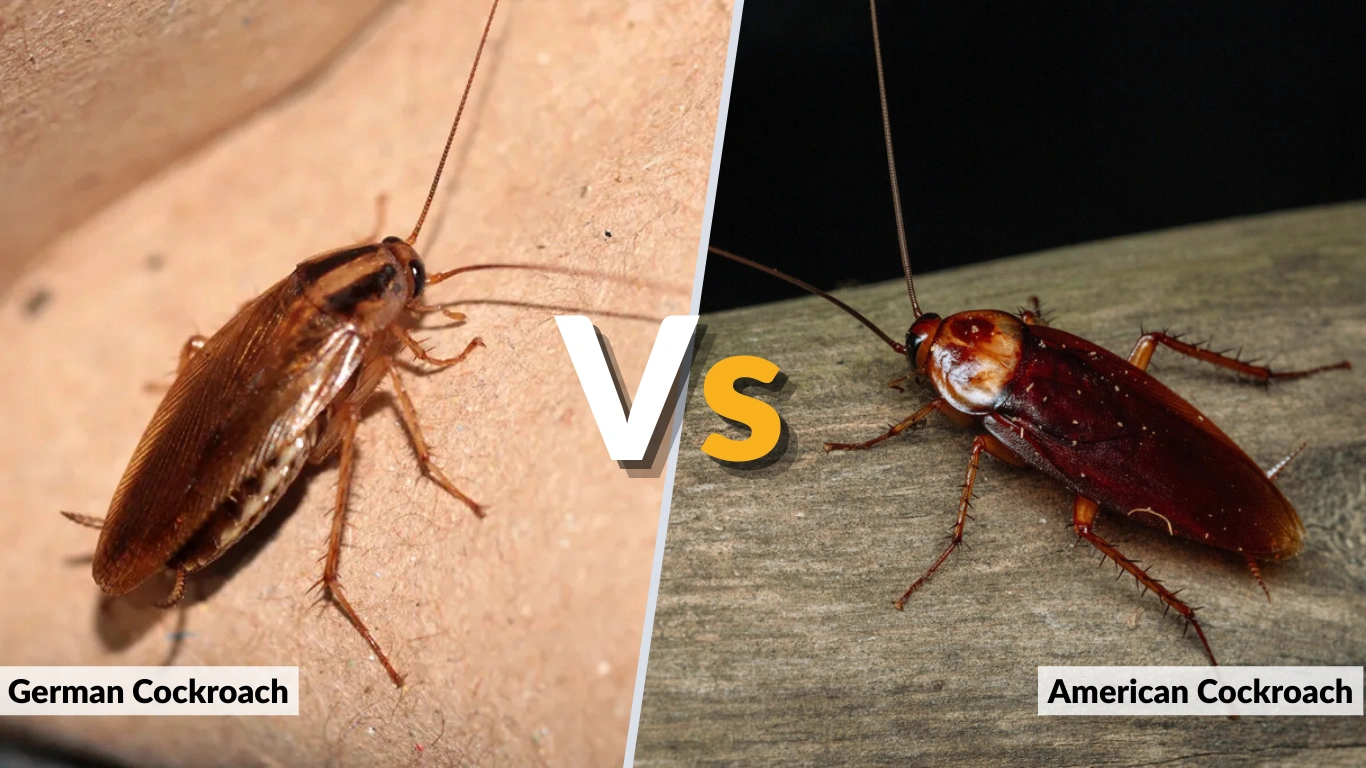
German and American cockroaches are the two species most commonly found in and around homes, yet they are often confused with one another. While both are unwanted pests, they differ significantly in size, behavior, habitat, and the level of infestation they cause. Correctly identifying which cockroach species you are dealing with is critical, as control methods that work for one may be ineffective for the other. This article breaks down the key differences between German and American cockroaches, helping you understand their characteristics, risks, and why one species is often far more problematic indoors.
Overview of German and American Cockroaches
What Is a German Cockroach?
The German cockroach (Blattella germanica) is the most common indoor cockroach species worldwide. It is small, fast-moving, and highly adaptable to human environments. German cockroaches prefer warm, humid areas close to food and water, making kitchens and bathrooms ideal habitats. Unlike some other species, they rarely survive outdoors for long periods and rely heavily on indoor shelter. Because of their rapid reproduction and ability to hide in tiny cracks, German cockroaches can quickly turn a minor issue into a severe infestation.
What Is an American Cockroach?
The American cockroach (Periplaneta americana) is one of the largest cockroach species commonly encountered in the United States. Despite their name, these cockroaches are not native to North America and are more often found in basements, crawl spaces, sewer systems, and commercial buildings. American cockroaches can survive both indoors and outdoors, typically entering homes in search of food, water, or warmth. While alarming due to their size, they are less likely to establish large indoor breeding populations compared to German cockroaches.
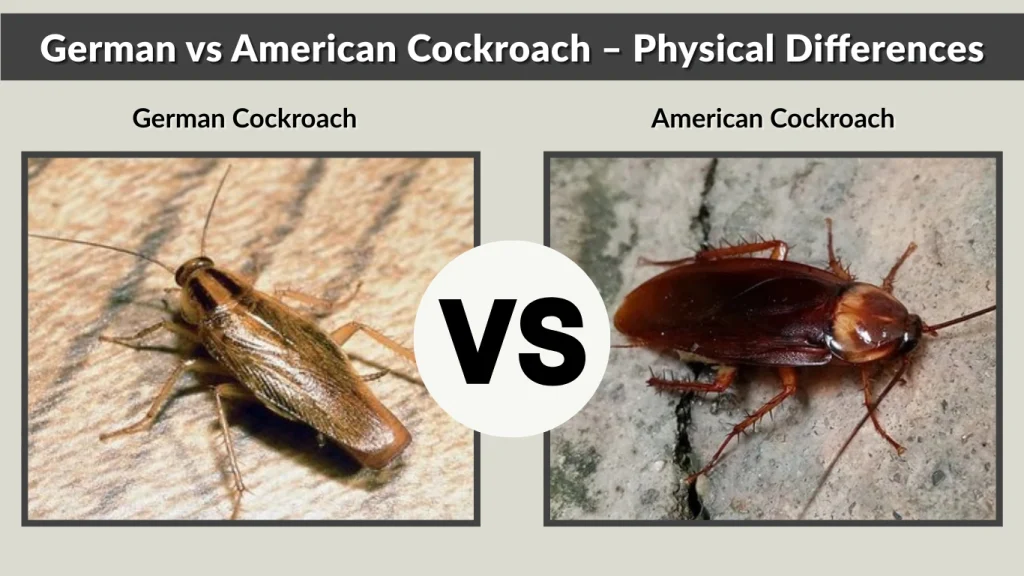
German vs American Cockroach – Physical Differences
| Feature | German Cockroach | American Cockroach |
| Scientific Name | Blattella germanica | Periplaneta americana |
| Adult Size | About ½ inch (12–15 mm) | 1½–2 inches (38–50 mm) |
| Color | Light brown to tan | Reddish-brown |
| Distinct Markings | Two dark parallel stripes behind the head | Yellowish figure-eight pattern behind the head |
| Body Shape | Slim and narrow | Broad and robust |
| Wings | Fully developed but rarely used for flight | Long wings; capable of gliding or short flights |
| Nymph Appearance | Darker brown with faint stripes | Dark reddish-brown, no stripes |
| Visibility | Often seen in groups during infestations | Usually seen individually |
| Speed | Very fast runner | Slower but more noticeable due to size |
German vs American Cockroach – Habitat and Behavior
Preferred Living Areas
German cockroaches are almost exclusively indoor pests. They nest close to food sources, hiding inside cabinets, drawers, appliances, and wall voids. Because they require frequent access to food and moisture, infestations are usually concentrated in kitchens and bathrooms. American cockroaches, on the other hand, prefer damp environments such as basements, sewers, and crawl spaces. They may enter living areas occasionally but usually remain closer to ground-level or utility areas.
Activity Patterns and Movement
Both German and American cockroaches are nocturnal, meaning they are most active at night. However, daytime sightings can indicate different problems. Seeing German cockroaches during the day often suggests a heavy infestation, where overcrowding forces them out of hiding. American cockroaches are more likely to be seen wandering individually and are less dependent on dense indoor nesting. Their ability to fly or glide can make encounters with them especially startling.
German vs American Cockroach – Reproduction and Infestation Risk
Reproduction Speed and Life Cycle
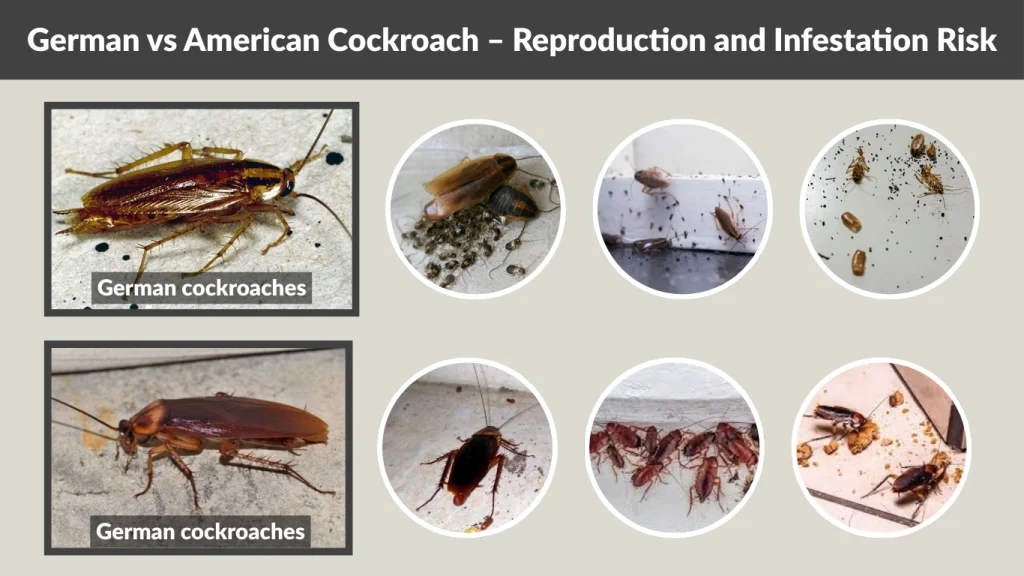
German cockroaches reproduce at a much faster rate than American cockroaches. A single German cockroach female can produce hundreds of offspring in her lifetime, carrying egg cases that contain dozens of eggs each. This rapid reproduction allows infestations to grow exponentially in a short time. American cockroaches reproduce more slowly, with fewer eggs per case and longer development cycles, making large indoor infestations less common.
Infestation Severity Indoors
Because of their rapid breeding cycle and preference for indoor environments, German cockroaches pose a much higher infestation risk inside homes. Once established, they spread quickly through kitchens, bathrooms, and adjoining rooms, often hiding in wall voids and appliances. American cockroaches are less likely to form dense indoor colonies. They typically enter homes from outside sources such as drains, sewers, or basements and are more often encountered individually rather than in large numbers.
Health Risks of German vs American Cockroaches
Bacteria and Disease Transmission
Both German and American cockroaches can carry bacteria and pathogens on their bodies, contaminating food and household surfaces. As they travel through unsanitary environments, they can spread organisms such as E. coli and Salmonella. German cockroaches present a greater health risk indoors because they live closer to food preparation areas and have more frequent contact with dishes, countertops, and stored food.
Allergies and Asthma Concerns
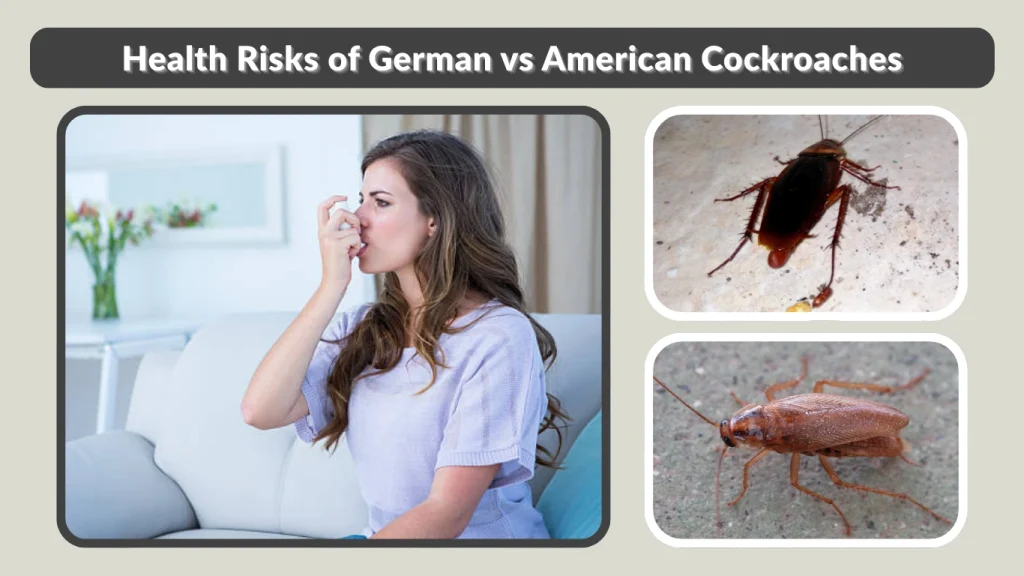
German cockroaches are a well-known trigger for allergies and asthma, particularly in children. Their droppings, shed skins, and saliva become airborne and can cause respiratory irritation. While American cockroaches can also contribute to allergen exposure, their lower indoor population levels generally make them less problematic in this regard.
German vs American Cockroach – Which One Is Worse?
When comparing the two species, German cockroaches are generally considered worse for homeowners. Their small size, rapid reproduction, and strong preference for indoor living make them much harder to eliminate once established. American cockroaches, although larger and more alarming to encounter, are less likely to cause persistent indoor infestations. From a control and health perspective, German cockroaches represent the more serious long-term problem.
German vs American Cockroach Control Methods
Best Treatment Methods for German Cockroaches
Effective control of German cockroaches relies on a combination of sanitation, targeted baiting, and population management. Gel baits are the most effective option, as they spread poison throughout the colony. Insect Growth Regulators (IGRs) are often used alongside baits to stop reproduction and prevent future generations. Sprays are generally discouraged, as they can cause bait avoidance and spread infestations into new areas. Consistent cleaning and moisture control are essential for long-term success.
Best Treatment Methods for American Cockroaches
American cockroach control focuses more on exclusion and environmental management. Sealing entry points, repairing cracks, and installing door sweeps can help prevent them from entering homes. Exterior treatments around foundations, drains, and sewer access points are often effective. Reducing moisture in basements and crawl spaces also plays a critical role, as these environments attract American cockroaches.
How to Identify Which Cockroach You Have in Your Home
Identifying the cockroach species in your home begins with observing size, color, and location. Small, tan cockroaches found in kitchens or bathrooms are most likely German cockroaches. Larger, reddish-brown cockroaches seen in basements, garages, or near drains are more commonly American cockroaches. Behavior can also offer clues, as German cockroaches are usually found in groups, while American cockroaches tend to appear individually. If identification remains unclear, a pest control professional can provide confirmation.
FAQs
Are German cockroaches harder to eliminate than American cockroaches?
Yes, German cockroaches are significantly harder to eliminate due to their rapid reproduction, resistance to insecticides, and preference for indoor nesting. American cockroaches are easier to control because they reproduce more slowly and rely more on outdoor environments.
Can German and American cockroaches infest the same home?
Yes, it is possible for both species to be present in the same home, especially in large buildings. German cockroaches usually infest kitchens and bathrooms, while American cockroaches remain closer to basements, drains, or utility areas.
Which cockroach species reproduces faster?
German cockroaches reproduce much faster than American cockroaches. Their short life cycle and large egg cases allow populations to grow rapidly if not controlled early.
Which cockroach is more dangerous to human health?
German cockroaches pose a greater health risk due to their close contact with food and higher indoor population density. They are strongly associated with asthma and allergy symptoms.
Conclusion
Understanding the differences between German and American cockroaches is essential for effective pest control. While both species can contaminate living spaces, German cockroaches are far more difficult to eliminate and present a greater health risk indoors. American cockroaches, although larger and more visible, are typically easier to manage through exclusion and moisture control. Proper identification, targeted treatment, and consistent prevention are the keys to keeping any cockroach infestation under control.