
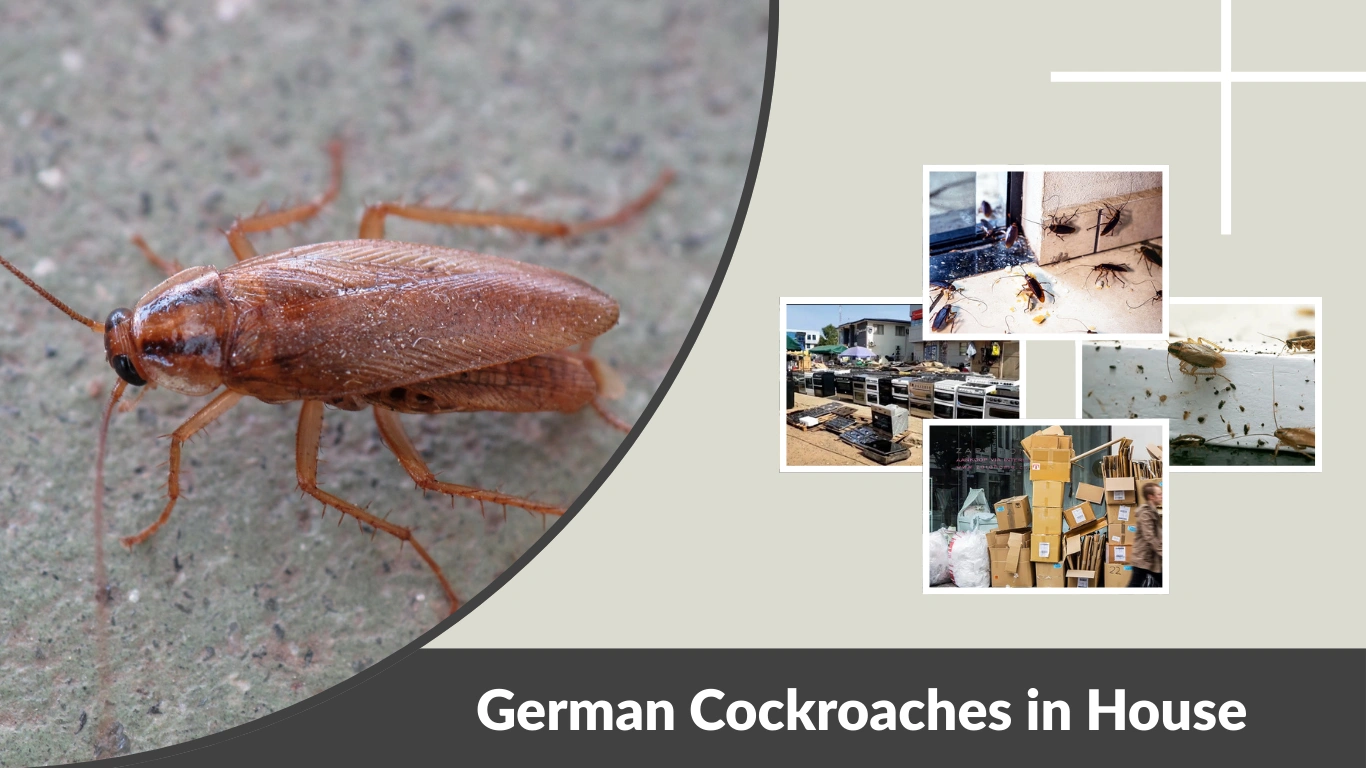
German cockroaches are the most common indoor roach species in the world, and if you’ve found even one inside your home, it’s rarely an isolated incident. These roaches reproduce quickly, hide deep within cracks, and often spread through apartment walls, plumbing lines, and shared ventilation systems. Early detection is critical because German cockroaches thrive indoors, where warmth, moisture, and food traces help them multiply rapidly. Understanding why they appear and how to eliminate them is the first step toward controlling an infestation.
What It Means to Find a German Cockroach in the House
A single German cockroach sighting almost always indicates more nearby. Unlike many outdoor roach species, German roaches live entirely indoors and rarely wander alone. If you see one adult or baby (nymph), it’s very likely that a hidden nest is already established within walls, cabinets, or kitchen appliances. These insects are nocturnal, so daytime sightings generally suggest overcrowding—a strong indicator of an active infestation.
Common hiding places include:
- Behind refrigerators and dishwashers
- Inside cabinet hinges
- Under sinks and near plumbing leaks
- Inside small cracks around outlets or baseboards
A lone roach usually means others are already nearby, even if they’re not yet visible.
Where German Cockroaches Come From (How They Enter Homes)
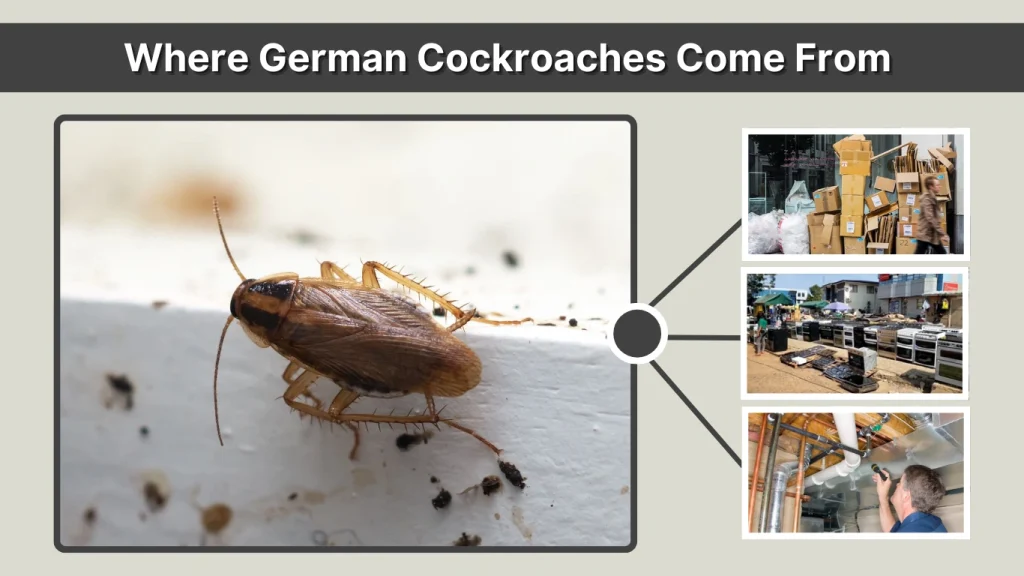
German cockroaches commonly enter homes through ordinary items, structural gaps, or neighboring units. They do not typically invade from outdoors like American or wood roaches; instead, they travel through human activity and interconnected building systems.
The most common entry routes include:
- Grocery bags, cardboard boxes, and delivered packages
- Used appliances or furniture
- Shared apartment plumbing lines
- Cracks around baseboards, pipes, or vents
- Air registers and ductwork
- Traveling from neighboring infested homes
Multi-unit buildings are especially vulnerable because roaches freely move between walls. Even a spotless home may become infested if nearby units or neighbors have roaches.
What Attracts German Cockroaches to Your Home
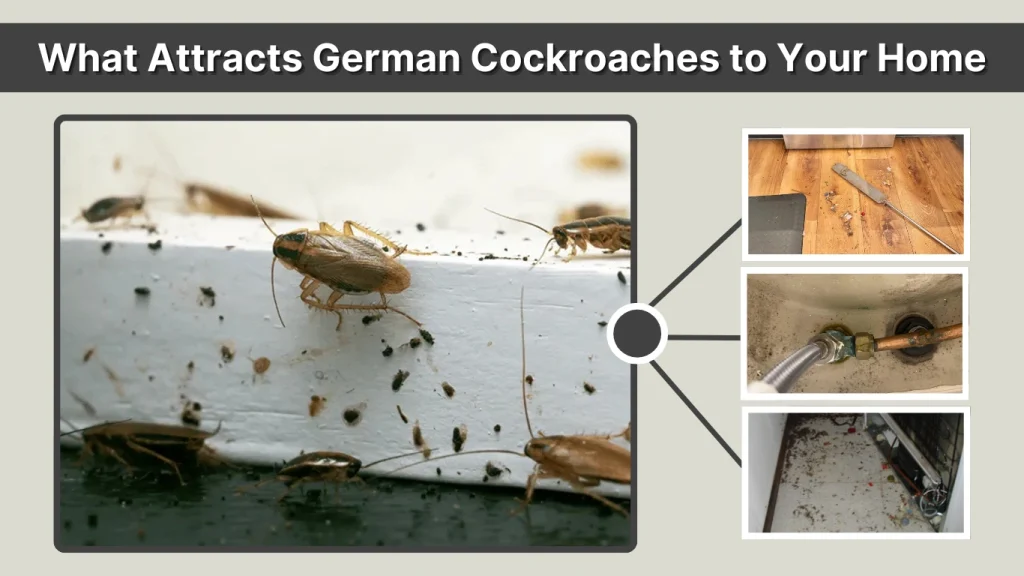
German cockroaches rely on three things: food, moisture, and warmth. Modern households unintentionally provide all of these. Even tiny crumbs, a drop of grease, or a bit of standing water can sustain a colony.
Major attractants include:
- Unwiped grease on stovetops
- Crumbs or food residue behind appliances
- Leaky pipes or condensation under sinks
- Dirty dish sponges, trash cans, or recycling bins
- Warm areas around microwave motors, refrigerators, and ovens
Clutter—especially in cabinets, storage closets, or small kitchen spaces—offers hiding places that help nymphs survive unseen.
Why You Might See German Cockroaches in a Clean House
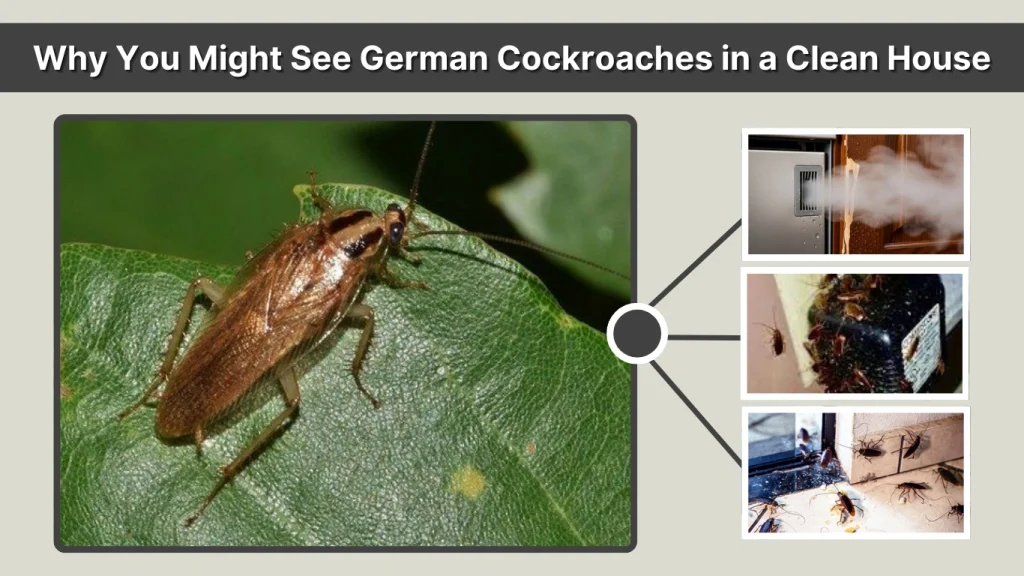
Many homeowners feel shocked or embarrassed to find German roaches in a spotless kitchen or bathroom. However, infestation has more to do with access and moisture than visible dirt. Even the cleanest homes contain micro-food sources and naturally warm appliance areas.
Reasons German roaches thrive in clean homes:
- Steam and moisture from sinks, dishwashers, or water lines
- Traces of grease behind ovens or refrigerators
- Heat from motors that attract roach colonies
- Shared walls or vents carrying roaches from neighbors
- Grocery packaging or cardboard boxes bringing in eggs or nymphs
Roaches also survive on extremely small amounts of food—even the residue on an unwashed utensil or inside a drain.
How German Cockroaches Spread Inside a House
Once inside, German cockroaches quickly move through the home, following warmth and moisture. They squeeze into cracks as thin as a credit card, allowing them to spread between rooms without being noticed.
Common internal pathways include:
- Plumbing lines under sinks and behind walls
- Electrical outlets
- Gaps around cabinet backing
- Loose baseboards
- Wall voids and junction boxes
- Warm appliance motors
German cockroaches often create multiple nesting sites, especially if the infestation is growing. The presence of nymphs (baby roaches) is a reliable sign that adults are reproducing inside the house—and that multiple nests are active.
German Cockroach Life Cycle Inside a Home
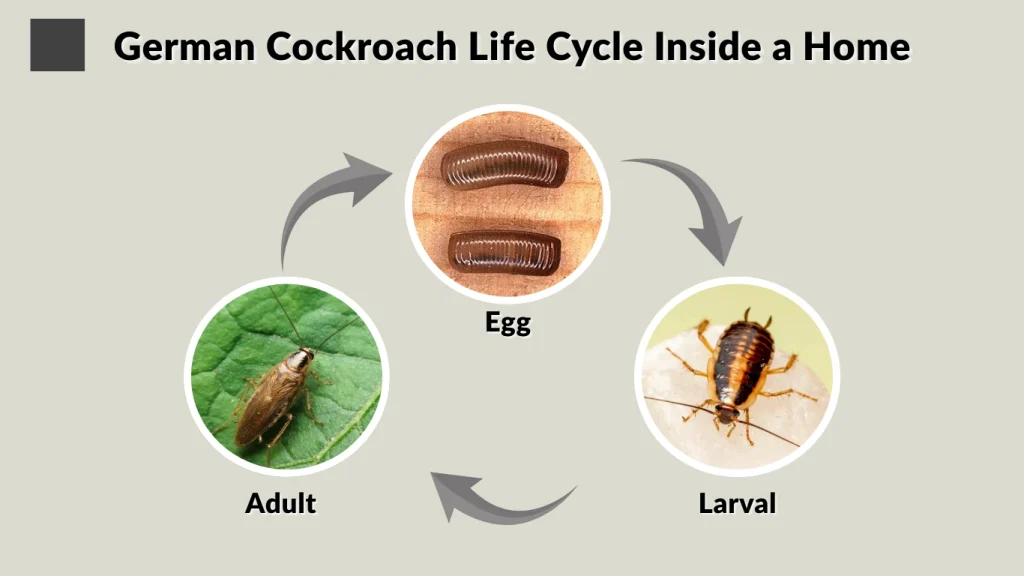
The German cockroach’s rapid life cycle is the main reason infestations grow so quickly. Females produce an egg case (ootheca) containing 30–40 babies and carry it until the eggs are nearly ready to hatch. This raises the survival rate dramatically.
The life cycle includes:
- Egg (ootheca) – 30–40 nymphs per case
- Nymph – multiple molts over 6–10 weeks
- Adult – lives 6–12 months and produces many oothecae
Because they breed exclusively indoors, German roaches can produce thousands of offspring in a year if not controlled early.
German Cockroach Identification (Adults & Babies)
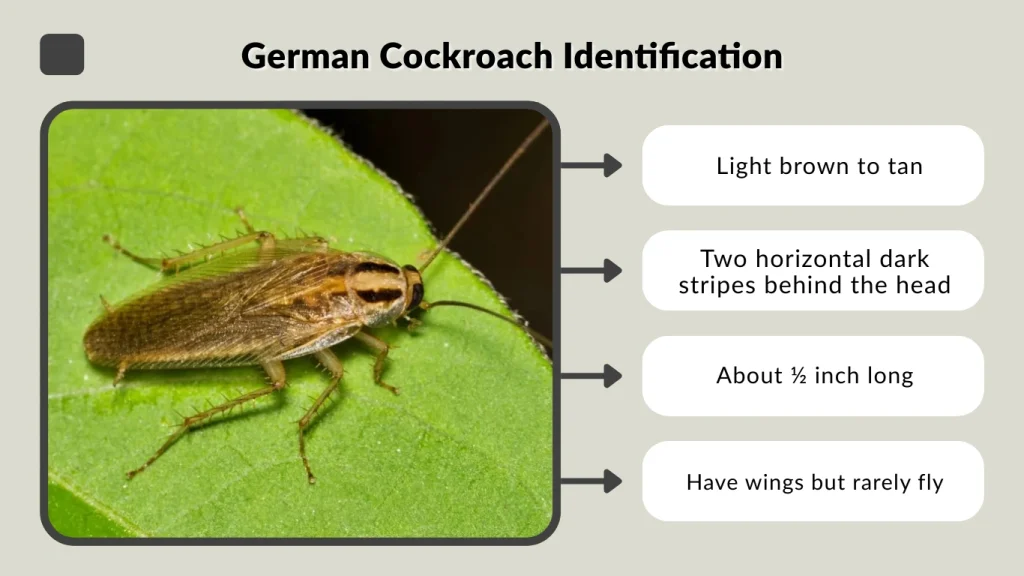
Knowing how to correctly identify German cockroaches helps prevent misdiagnosis, especially when homeowners confuse them with house crickets, wood roaches, or larger American roaches.
Adult German cockroaches:
- Light brown to tan
- Two horizontal dark stripes behind the head
- About ½ inch long
- Have wings but rarely fly
Baby German cockroaches (nymphs):
- Dark brown to black
- Completely wingless
- About ⅛–¼ inch long
- Extremely fast, hide in tight cracks
Because baby German roaches look nothing like adults, many people misidentify them as beetles or small mystery insects.
German Cockroach Signs in the House
An infestation often remains hidden until the signs become noticeable. Roaches leave behind distinct evidence as their population grows.
Common signs include:
- Pepper-like fecal specks in drawers, cabinet hinges, corners
- Shed skins from nymphs molting
- Ootheca shells (egg casings) near warm areas
- Musty odor from large colonies
- Daytime sightings (a warning sign of overcrowding)
- Dead roaches near water sources or heat appliances
If you find baby roaches, it confirms the infestation is active and breeding inside the home.
What to Do If You Saw One German Cockroach
Many homeowners ask whether seeing just one roach means an infestation. When that roach is German, the answer is almost always yes.
Here’s what to do immediately:
- Check warm appliances (behind fridge, under stove, around microwave).
- Inspect cabinets, especially under the sink and in dark corners.
- Look for pepper-like droppings, shed skins, or egg cases.
- Place sticky traps to confirm activity.
- Avoid spraying—this scatters them and can worsen the infestation.
If you find even limited evidence, begin treatment immediately. German cockroaches reproduce too quickly to take a “wait and see” approach.
How to Get Rid of German Cockroaches in the House
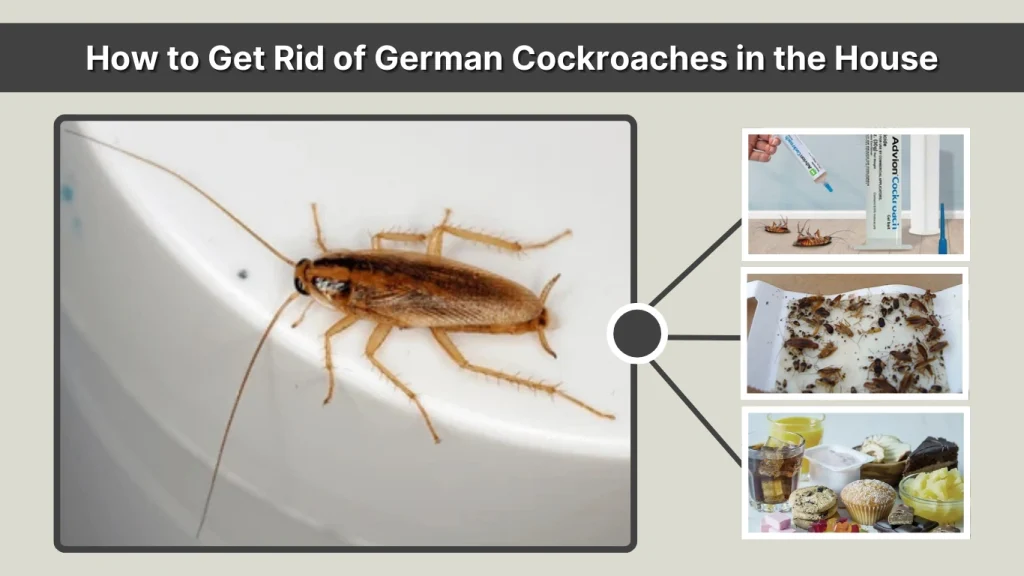
German roaches require a targeted removal strategy. Unlike other roaches, they do not respond well to sprays and will simply scatter deeper into walls.
The most effective method is gel bait + IGR (insect growth regulator).
Step 1: Use Gel Bait (Most Important)
Place pea-sized dots:
- Behind appliances
- Inside cabinets
- Under sinks
- Baseboard cracks
- Drawer corners
Roaches eat the bait, return to the nest, and spread the poison through their colony.
Step 2: Use an IGR
This prevents babies from maturing and adults from reproducing. It breaks the life cycle and stops egg development.
Step 3: Seal and Repair
- Fix leaks
- Seal cracks
- Tighten cabinet gaps
- Install weatherstripping
Step 4: Remove Food & Moisture
- Wipe grease
- Bag trash nightly
- Clean crumbs behind appliances
- Dry sinks before bed
**Step 5: Vacuum
Use a hose vacuum to remove visible roaches, droppings, and egg cases.**
Step 6: Follow Up
Continue baiting for at least 2–3 months. German cockroaches do not disappear overnight because hidden eggs keep hatching.
How to Get Rid of German Cockroaches Outside the House
German roaches do not typically live outdoors, but they may appear outside when populations overflow indoors or when attracted to exterior trash.
Steps to control outdoor sightings:
- Keep trash sealed
- Remove cardboard and clutter
- Seal gaps around windows, vents, and utility lines
- Avoid leaving pet food outside
Outdoor sprays may reduce exterior populations but do little for indoor control.
How to Prevent German Cockroaches from Returning
A long-term prevention plan is crucial because German roaches can re-enter homes easily.
Key prevention habits:
- Keep counters clean and dry
- Store food in sealed containers
- Sweep nightly
- Run the dishwasher before bed
- Fix leaks and standing water
- Seal cracks behind appliances
- Minimize cardboard storage
- Use airtight trash cans
Apartments require additional vigilance because roaches can migrate through walls.
House-to-House Spread: Can German Cockroaches Travel Between Homes?
Yes—German roaches move between homes far more easily than most people realize. They travel through:
- Plumbing lines
- Wall voids
- Air ducts
- Electrical outlets
- Hallways in apartment buildings
They can also hitch a ride on:
- Boxes
- Luggage
- Appliances
- Grocery bags
This is why infestations in apartments often require coordinated treatment for the entire building.