
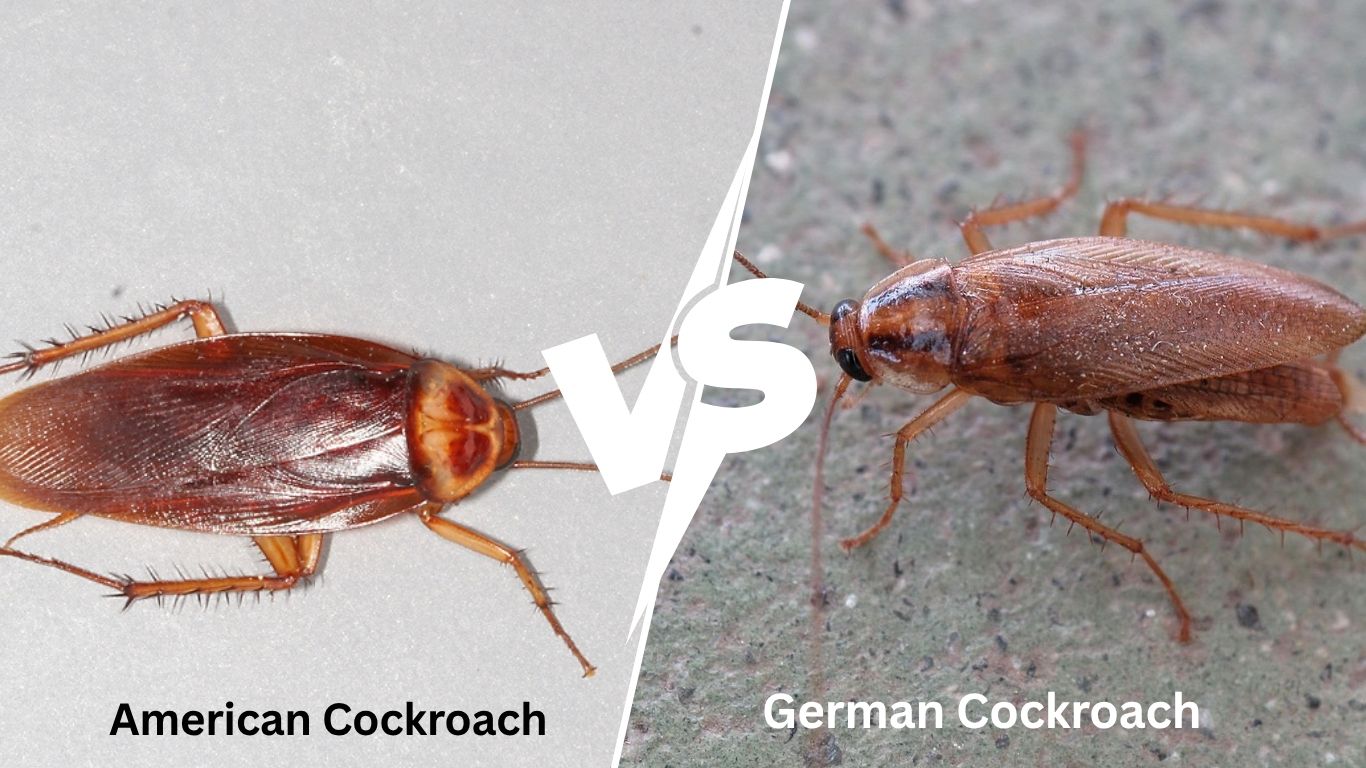
German cockroaches and American cockroaches are among the most troublesome pests found in homes, restaurants, and commercial spaces. While both species belong to the same insect family, their differences in size, habitat, and reproduction make them unique challenges for pest control. Identifying which species has invaded your space is essential for applying the right prevention and extermination strategies.
7 Key Differences Between Them
| Feature | German Cockroach | American Cockroach |
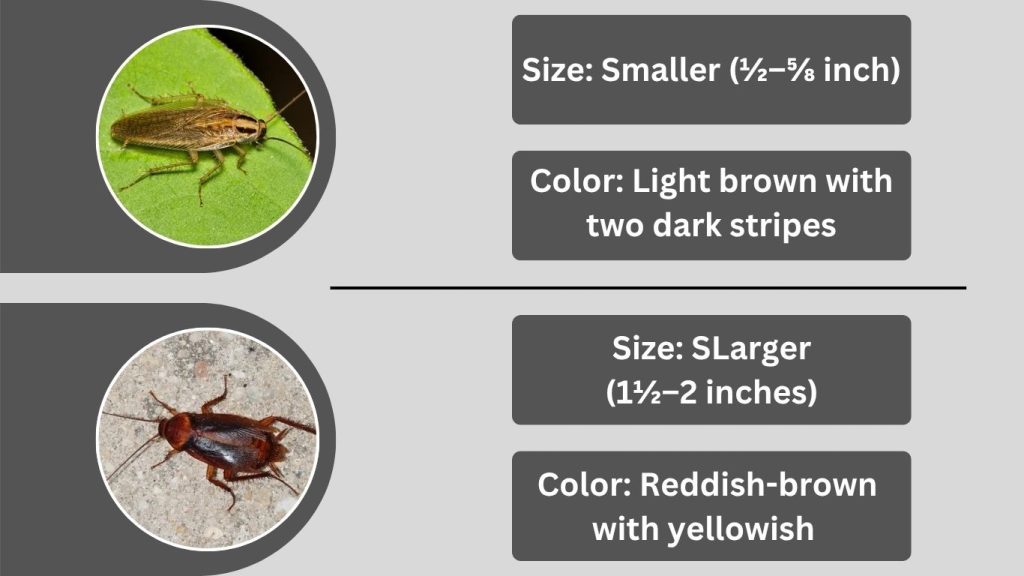
| Size | Smaller (½–⅝ inch) | Larger (1½–2 inches) |
| Color | Light brown with two dark stripes | Reddish-brown with yellowish edge around pronotum |
| Habitat Preference | Indoors, kitchens, bathrooms | Outdoors, basements, sewers, warm moist areas |
| Lifespan | 100–200 days | Up to 2 years |
| Reproduction Rate | Very high, reproduces quickly | Slower reproduction rate |
| Activity Time | Mostly nocturnal, indoors | Nocturnal but can be seen outdoors |
| Infestation Risk | High, spreads fast | Lower indoors but problematic outdoors |
1. Size
One of the most obvious distinctions is size. German cockroaches are much smaller, typically between ½ and ⅝ of an inch long. Their small size allows them to hide in tight cracks and crevices around kitchens and bathrooms. American cockroaches, on the other hand, are significantly larger, ranging from 1½ to 2 inches. Their sheer size often makes them easier to spot and more alarming when seen indoors.
2. Color and Appearance
German cockroaches are light brown with two parallel black stripes running just behind their heads. This feature is a quick visual cue for identification. American cockroaches are reddish-brown with a distinctive yellowish edge on the shield-like structure (pronotum) that covers their head. While both species are winged, American cockroaches are stronger fliers and may use flight to escape threats, while German cockroaches rely mostly on running.
3. Habitat Preference
German cockroaches are primarily indoor pests, thriving in warm, humid environments with abundant food and water. Kitchens, pantries, and bathrooms are their favorite hiding spots. They can live in small cracks around appliances and cupboards, making them extremely difficult to control. American cockroaches prefer outdoor habitats such as sewers, drains, and decaying organic matter. They may enter homes during extreme weather or when outdoor food sources become scarce, often nesting in basements or crawl spaces.
4. Lifespan
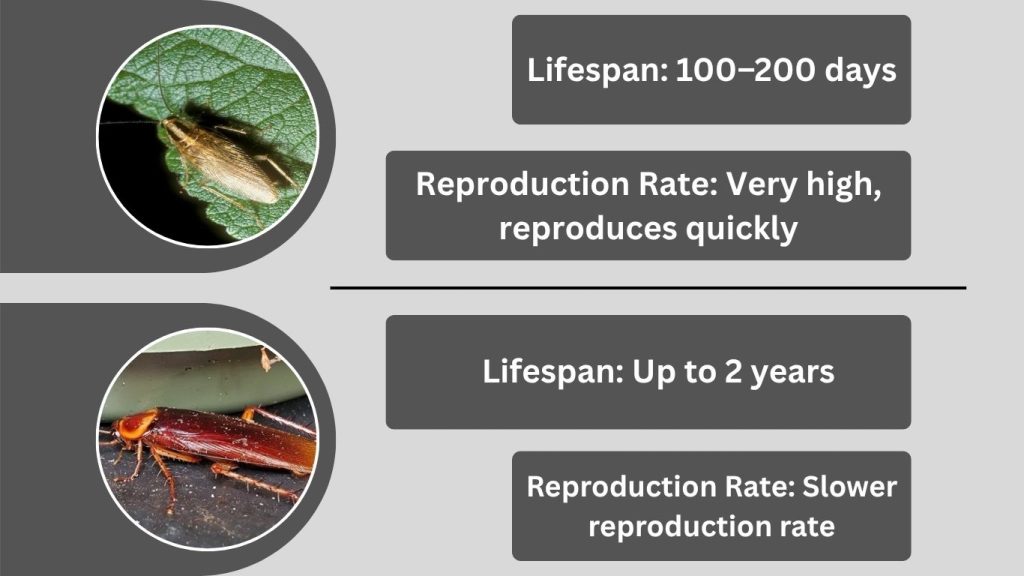
The German cockroach has a shorter lifespan, usually living between 100 and 200 days. However, their rapid reproductive cycle means populations can expand quickly in a short time. American cockroaches live much longer—up to two years under favorable conditions. This extended lifespan allows them to establish large colonies outdoors, which sometimes migrate indoors in search of food and warmth.
5. Reproduction Rate
German cockroaches are notorious for their fast breeding. A single female can produce up to 300–400 offspring in a year, making infestations spread rapidly. They carry their egg cases (oothecae) until just before hatching, ensuring maximum survival. American cockroaches reproduce at a slower pace, with each female producing fewer offspring annually. While still problematic, their slower breeding rate makes infestations somewhat easier to manage compared to German cockroaches.
6. Activity Time
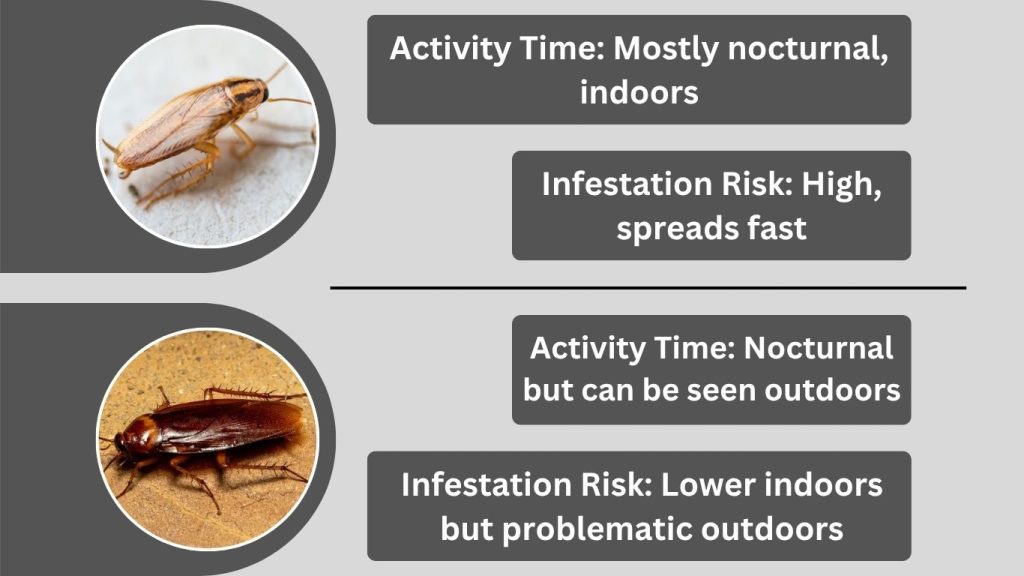
Both species are nocturnal, preferring to remain hidden during the day and emerging at night to feed. German cockroaches are strictly indoor foragers, rarely venturing outside of human dwellings. American cockroaches are more versatile, often seen both outdoors and indoors at night. Their nocturnal activity makes spotting them during the day a sign of a significant infestation.
7. Infestation Risk
German cockroaches pose the highest risk for household infestations due to their rapid reproduction and adaptability to indoor environments. They can quickly spread through apartments, restaurants, and food storage areas, contaminating everything they touch. American cockroaches are more common outdoors but can cause severe problems indoors when they invade basements, plumbing systems, or sewer-connected buildings. Both species spread bacteria and allergens, posing serious health risks.
Health Risks and Disease Transmission
Both German and American cockroaches are not just nuisances—they are health hazards. They carry bacteria like Salmonella, E. coli, and Staphylococcus on their legs and bodies as they crawl through garbage, sewers, and food surfaces. Their droppings, saliva, and shed skins can worsen asthma symptoms and trigger allergies, particularly in children and sensitive individuals. Over time, heavy infestations create an unhealthy environment and contaminate food preparation areas.
Behavior and Hiding Spots
German cockroaches prefer tight, warm spaces near food sources. They often hide behind refrigerators, inside cupboards, and in cracks around sinks or stoves. Their ability to stay concealed makes them difficult to detect until the infestation is severe. American cockroaches, however, are drawn to damp and dark areas like sewers, drains, basements, and crawl spaces. They are more likely to be seen in utility rooms or around plumbing pipes when they invade homes.
Feeding Habits
Both cockroach species are opportunistic feeders, but their food choices differ slightly. German cockroaches thrive on starches, sugars, and greasy residues often found in kitchens. Even tiny food crumbs can sustain them. American cockroaches have a broader diet and consume decaying organic matter, garbage, and even pet food. Their ability to survive on almost any organic substance makes them highly adaptable in urban and rural environments alike.
Signs of Infestation
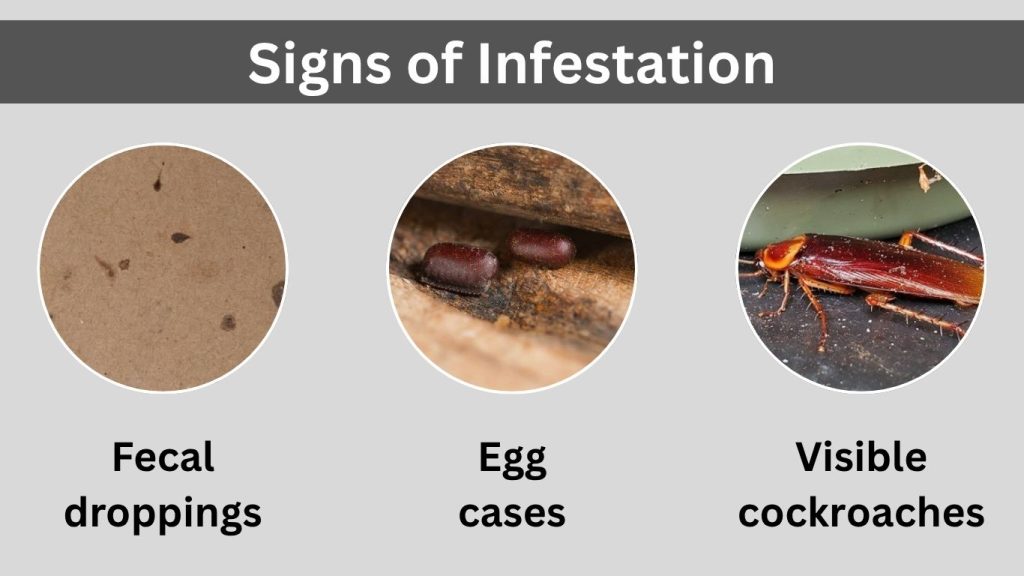
Identifying an infestation early can prevent widespread problems. Key signs include:
- Visible cockroaches: Spotting them during the day suggests a heavy infestation.
- Fecal droppings: German cockroaches leave pepper-like specks, while American cockroaches leave larger cylindrical pellets.
- Egg cases (oothecae): German cockroach egg cases are small and brown; American cockroach cases are longer and darker.
- Musty odor: A strong, unpleasant smell often develops in areas of heavy infestation.
Control and Treatment Options
Controlling cockroaches requires a different approach for each species:
- German cockroaches: Because of their rapid reproduction, bait gels, insect growth regulators, and regular monitoring are most effective. Sprays often fail since roaches hide deep in crevices. Professional exterminators typically use a combination of baits and residual treatments.
- American cockroaches: Outdoor management is essential. Perimeter treatments, sealing entry points, and eliminating moisture sources help reduce infestations. Traps and sprays may work indoors, but professional treatments provide long-term control.
Prevention Tips
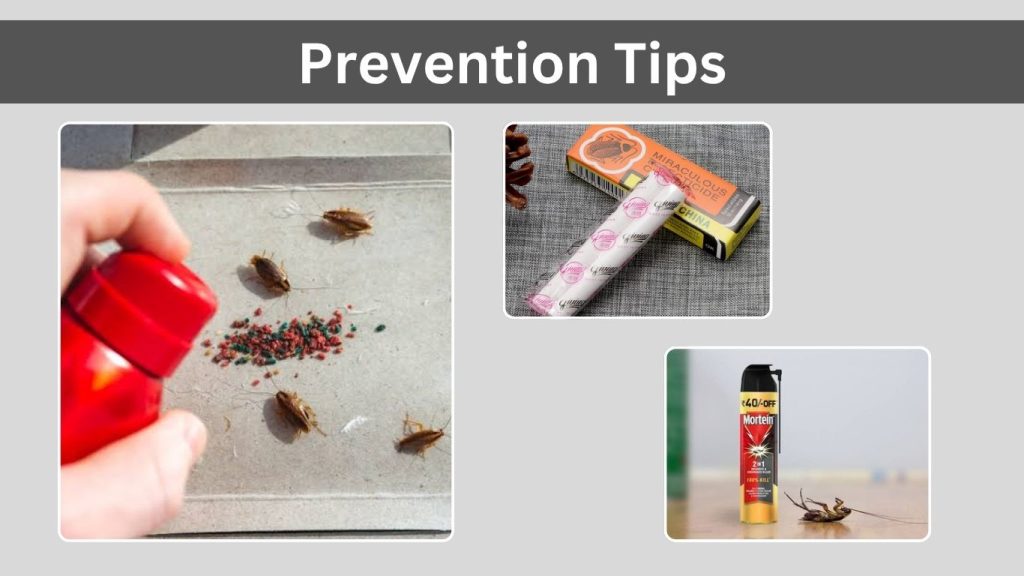
Preventing cockroach invasions is more effective than dealing with full infestations. Important steps include:
- Keeping kitchens and bathrooms clean and free from crumbs or grease.
- Fixing plumbing leaks to reduce water sources.
- Storing food in airtight containers.
- Taking out garbage daily and keeping bins sealed.
- Sealing cracks, gaps, and utility openings where roaches may enter.
- Scheduling routine pest inspections, especially for commercial kitchens and apartment complexes.
Similarities Between German and American Cockroaches
Despite their differences, both species share several traits. They are nocturnal, avoiding light and activity during the day. Both prefer warm, humid environments and thrive in human dwellings where food and water are available. They are strong survivors, capable of living weeks without food and days without water. Most importantly, both species spread bacteria, allergens, and diseases, making them a serious public health concern if left untreated.
FAQs
What attracts German cockroaches to homes?
German cockroaches are strongly attracted to food residue, grease, and moisture. Even small crumbs or unwashed dishes provide enough sustenance for them to thrive. Kitchens, bathrooms, and food storage areas are especially vulnerable, as these offer both food and water sources that allow infestations to spread quickly.
Are American cockroaches dangerous?
Yes, American cockroaches pose health risks. They spread bacteria such as Salmonella and E. coli, contaminating food and surfaces. Their droppings, shed skins, and saliva may also trigger allergies and asthma symptoms. While they are less common indoors than German cockroaches, their larger size and fast movement can cause significant distress when they appear.
Which cockroach species is harder to eliminate?
German cockroaches are far harder to eliminate due to their rapid reproduction rate and ability to hide in the smallest crevices. DIY sprays rarely solve the problem, and infestations often return if professional methods are not used. American cockroaches are larger and slower breeders, making them somewhat easier to manage once entry points are sealed.
Can German and American cockroaches live together?
Yes, but it is relatively uncommon. German cockroaches prefer indoor environments close to human food sources, while American cockroaches usually remain outdoors. However, in large buildings, sewer systems, or warehouses, both species can coexist, making pest control more complex and requiring professional treatment strategies.