
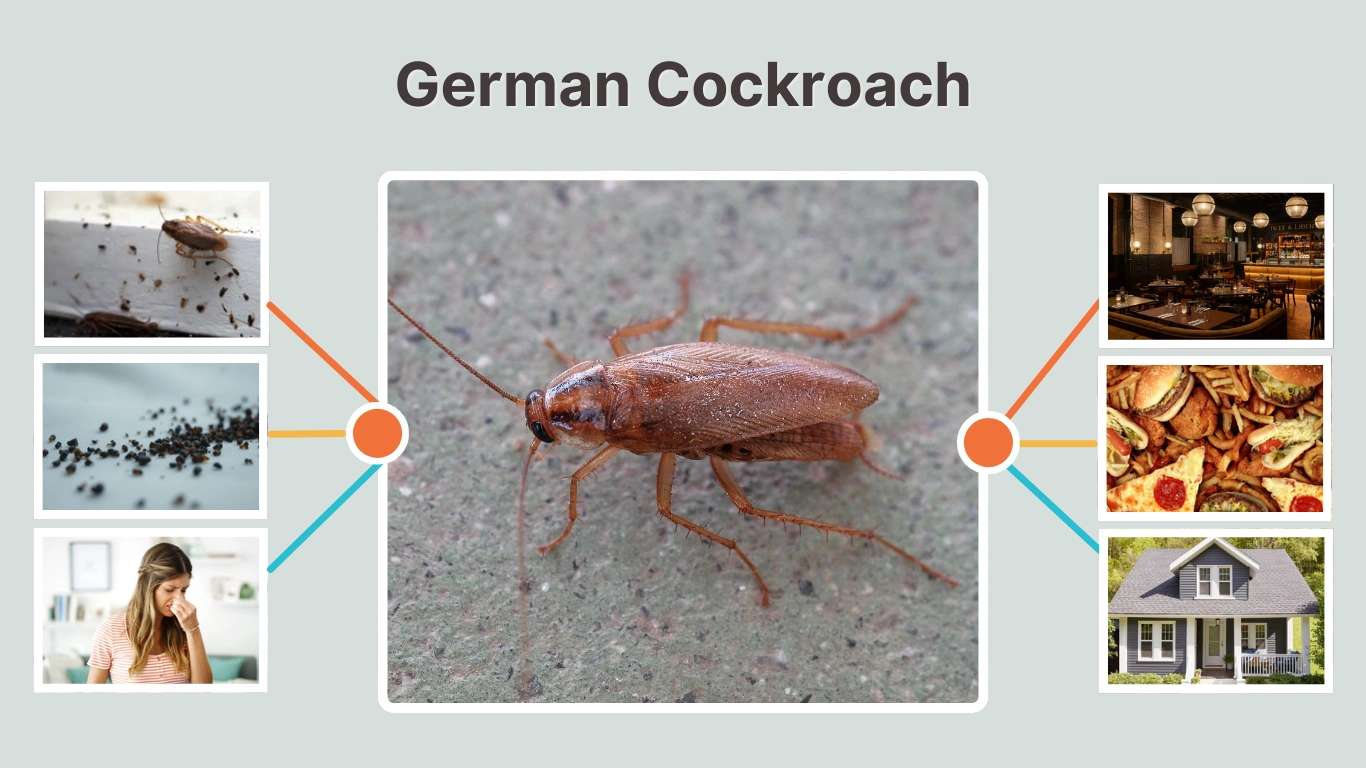
The German cockroach (Blattella germanica) is one of the most widespread and problematic household pests in the world. Known for their small size, rapid reproduction, and strong adaptability, these cockroaches thrive in human environments, especially in kitchens and bathrooms. They not only contaminate food but also spread harmful bacteria, making them a serious health concern. Understanding their size, diet, identification, and life cycle is essential for recognizing infestations early and applying the right control measures.
What is a German Cockroach?
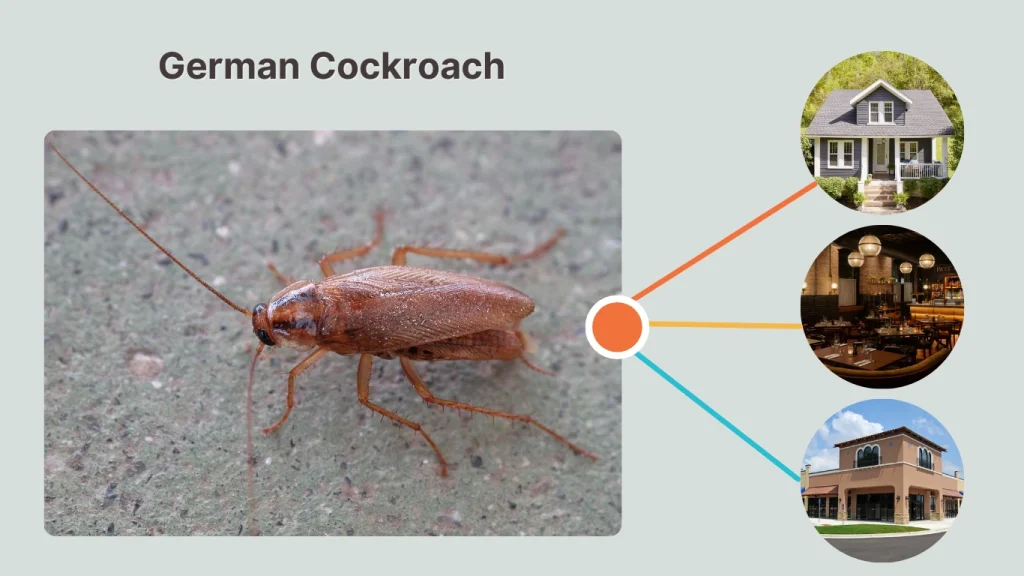
The German cockroach is a small, light-brown cockroach species commonly found inside homes, restaurants, and commercial buildings. Unlike some outdoor cockroach species, German cockroaches prefer warm, humid environments where humans live. They are highly adaptable, capable of hiding in tiny cracks and breeding rapidly, which makes infestations difficult to control.
These cockroaches are native to Asia but have spread worldwide due to human activity. Today, they are considered one of the most important urban pests because of their ability to transmit diseases and allergens.
Identification of German Cockroach
Physical Appearance
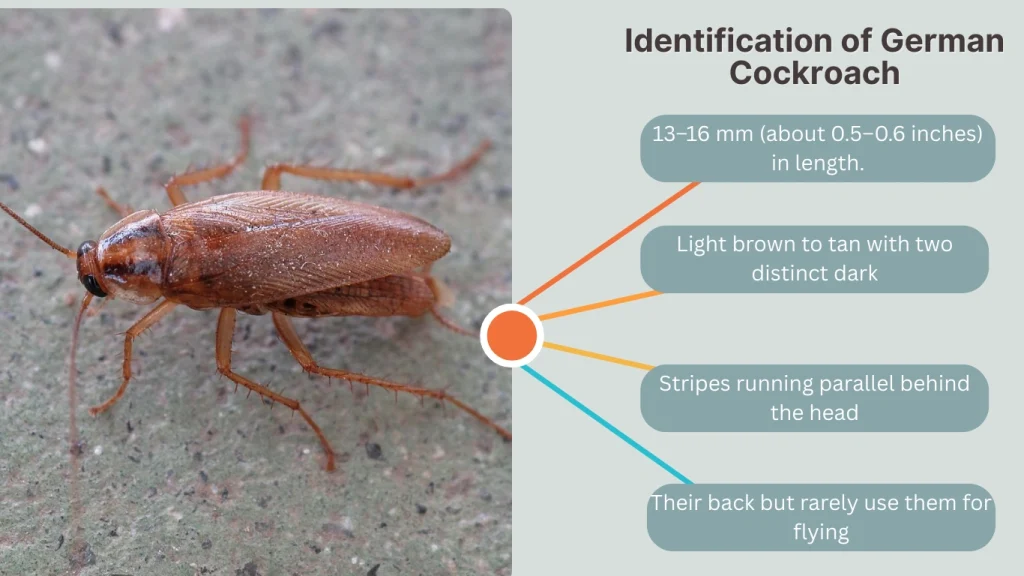
German cockroaches are relatively small compared to other cockroach species. Adults typically measure between 13–16 mm (about 0.5–0.6 inches) in length. Their bodies are light brown to tan with two distinct dark stripes running parallel behind the head, making them easy to distinguish from other cockroach species. They have wings that cover their back but rarely use them for flying; instead, they are fast runners.
German Cockroach Nymphs
Nymphs are the immature form of German cockroaches. They are smaller, darker, and wingless compared to adults. Nymphs undergo several molts before reaching adulthood, and during this period, they can already cause significant problems because of their feeding habits. As they grow, they shed their exoskeleton multiple times, leaving behind shed skins that are often signs of an infestation.
Eggs (Ootheca)
Female German cockroaches carry an egg case called an ootheca. These oothecae are light brown and about 6–9 mm in length. Each ootheca contains around 30–40 eggs, and females usually carry them until just before hatching. This behavior makes the species highly reproductive since one female can produce several oothecae in her lifetime, leading to hundreds of offspring.
Size of German Cockroach
German cockroaches are among the smaller household cockroach species. Adults typically measure 13–16 mm, making them significantly smaller than the American cockroach, which can grow over 50 mm (2 inches). Their compact size allows them to hide in cracks, crevices, and narrow gaps where larger cockroaches cannot fit.
Males are slightly slimmer than females, while females often appear broader because they carry egg cases. Despite their small size, German cockroaches are among the fastest breeders, which makes them much harder to eliminate once they infest a home.
German Cockroach Diet
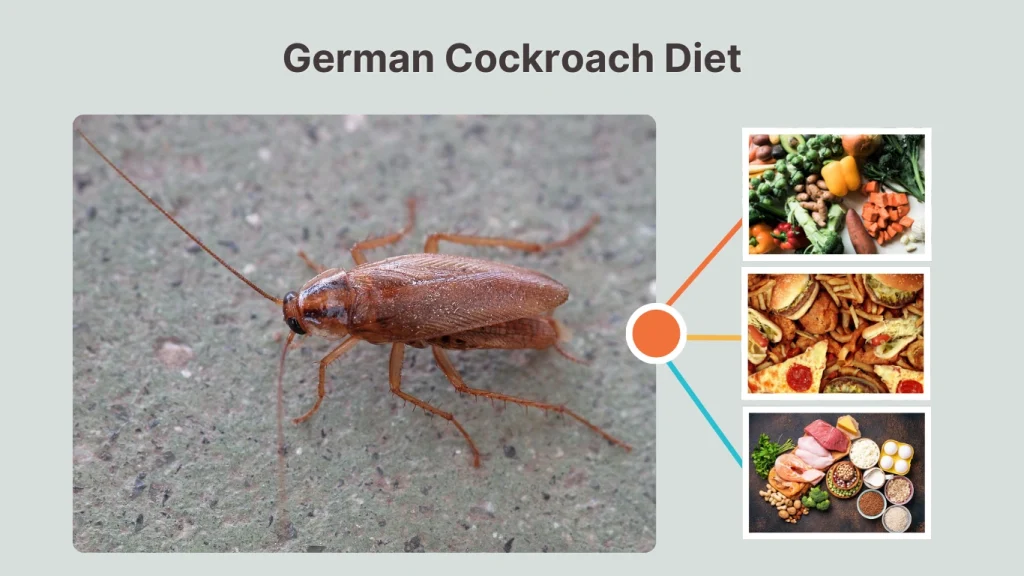
German cockroaches are opportunistic feeders with an omnivorous diet. They are particularly drawn to starchy, sugary, fatty, and protein-rich foods. Common food sources include crumbs, grease, meats, sweets, and leftover human food.
However, in the absence of traditional food, German cockroaches are known to consume unusual substances such as soap, toothpaste, glue, and even book bindings. This ability to survive on non-food items helps them persist in places where food is scarce.
Their feeding activity is nocturnal, meaning they usually come out at night when it is dark and quiet. This makes infestations harder to detect until they have grown large. If German cockroaches are spotted during the day, it usually indicates a heavy infestation.
Life Cycle of German Cockroach
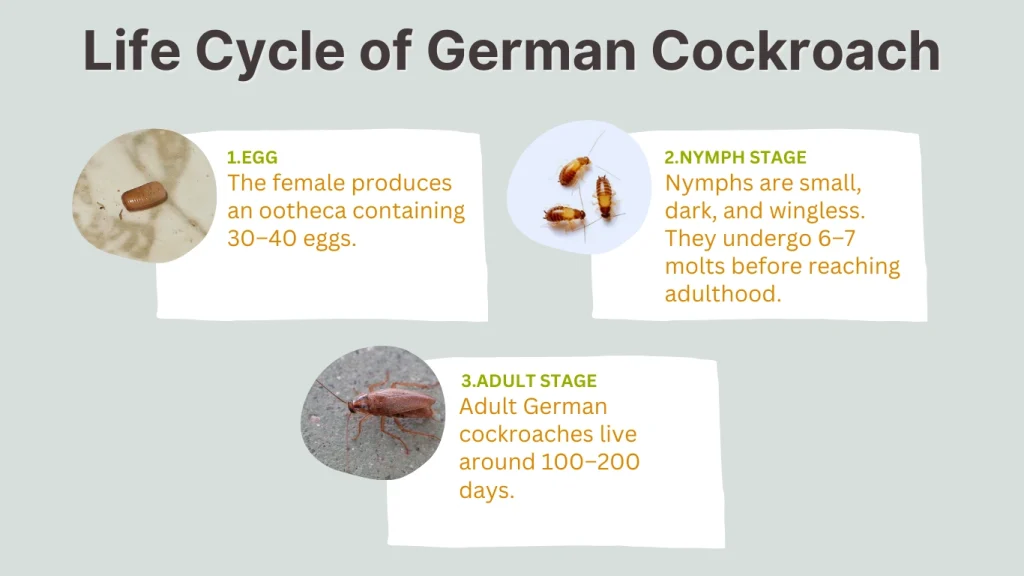
German cockroaches undergo gradual metamorphosis, consisting of three main stages: egg, nymph, and adult.
Egg Stage
The female produces an ootheca containing 30–40 eggs. She carries it until the nymphs are nearly ready to hatch, giving them a higher survival rate. Within about 28 days, the eggs hatch, releasing tiny nymphs.
Nymph Stage
Nymphs are small, dark, and wingless. They undergo 6–7 molts before reaching adulthood. During this stage, they grow rapidly and can survive on very little food. The nymphal period lasts about 6 weeks to several months, depending on temperature and environmental conditions.
Adult Stage
Adult German cockroaches live around 100–200 days. A female can produce multiple oothecae throughout her life, contributing to population explosions. Because each female can generate hundreds of offspring, infestations grow quickly if not controlled.
Behavior & Habitat
German cockroaches prefer warm, humid, and dark environments. Indoors, they are commonly found in kitchens, bathrooms, and laundry areas where food and water are accessible. They hide in cracks, behind appliances, under sinks, inside cabinets, and around garbage areas.
Being nocturnal, they are most active at night, emerging to search for food and water. During the day, they remain hidden in tight spaces. When populations become large, they may be forced to move into more visible areas, making infestations easier to detect.
Their behavior is strongly linked to human activity. They hitchhike easily in bags, boxes, and used appliances, spreading from one place to another. Once established, they are difficult to remove without consistent and targeted pest control.
German Cockroach Infestation Signs
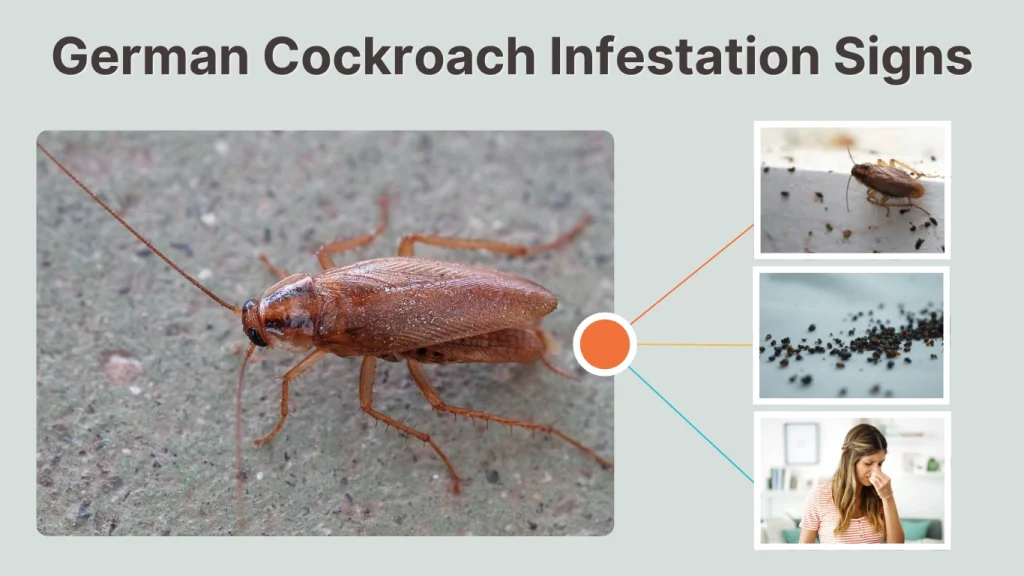
Detecting a German cockroach infestation early is critical. Some key signs include:
- Sightings: Spotting cockroaches, especially during the day, often indicates a severe infestation.
- Droppings: Small, dark fecal droppings that resemble pepper grains can be found near hiding spots.
- Odor: Large infestations produce a musty, unpleasant smell caused by secretions.
- Shed Skins: Nymphs molt several times, leaving behind shed exoskeletons.
- Egg Cases: Empty oothecae may be found in hidden areas, signaling reproduction is ongoing.
Health Risks & Dangers
German cockroaches are more than just a nuisance—they pose serious health risks. Because they live in unsanitary places such as drains, garbage bins, and sewers, they carry bacteria, viruses, and parasites on their bodies and in their droppings. When they crawl across food, utensils, or countertops, they contaminate them, leading to potential illness.
Spread of Bacteria and Pathogens
German cockroaches have been linked to the spread of harmful bacteria such as Salmonella and E. coli. These pathogens can cause food poisoning, diarrhea, and stomach infections. In addition, cockroaches may harbor parasitic worms that can be transmitted to humans.
Allergies and Asthma Triggers
One of the most dangerous aspects of German cockroaches is their role in worsening asthma and allergies. Their saliva, feces, and shed skins contain proteins that act as allergens. Children living in cockroach-infested homes are especially vulnerable, often experiencing more frequent and severe asthma attacks.
Food Contamination
Even a small number of German cockroaches can contaminate large amounts of food. Since they feed on garbage and decaying matter, they spread germs wherever they travel. Infestations in restaurants or food storage areas can result in major health code violations.
German Cockroach vs. American Cockroach
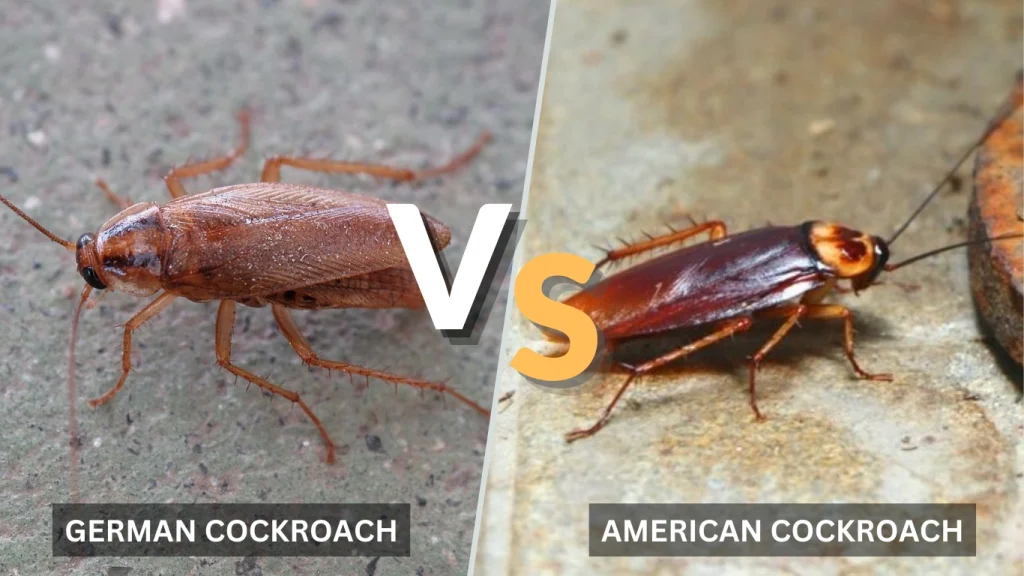
Many people confuse German cockroaches with American cockroaches, but the two are quite different.
| Feature | German Cockroach | American Cockroach |
| Size | 13–16 mm (small) | Up to 50 mm (large) |
| Color | Light brown with two dark stripes | Reddish-brown, uniform color |
| Habitat | Prefers kitchens, bathrooms, and warm indoor spaces | Often found in basements, sewers, and larger spaces |
| Reproduction | Extremely fast, hundreds of offspring per female | Slower reproduction rate |
| Activity | Strictly nocturnal, small hiding spots | More visible in dark, damp areas |
| Infestation Risk | Harder to eliminate due to rapid breeding | Easier to control but intimidating due to size |
The German cockroach’s ability to reproduce quickly makes it far more difficult to control compared to the American cockroach.
How to Get Rid of German Cockroaches
Dealing with German cockroaches requires patience and consistency. Since they reproduce quickly and hide in difficult-to-reach areas, complete eradication may take several weeks or months.
Prevention Methods
- Seal Entry Points: Close cracks and crevices around baseboards, pipes, and cabinets.
- Eliminate Food Sources: Store food in sealed containers, clean crumbs, and wash dirty dishes promptly.
- Remove Water Sources: Fix leaky faucets and pipes, and avoid leaving standing water in sinks or pet bowls.
- Reduce Clutter: Remove cardboard boxes, papers, and clutter where cockroaches may hide.
Natural Remedies
- Boric Acid: A common household remedy that dehydrates cockroaches when ingested.
- Diatomaceous Earth (DE): A natural powder that damages their exoskeletons, leading to death.
- Baking Soda and Sugar Mix: Sugar attracts the cockroaches, while baking soda harms their digestive system.
- Essential Oils: Peppermint, eucalyptus, and tea tree oils may repel them, though not as effectively as baits.
Chemical Treatments
- Gel Baits: One of the most effective control methods. Cockroaches eat the bait and carry poison back to the colony.
- Insecticide Sprays: Can kill on contact but usually do not eliminate nests.
- Cockroach Dusts: Applied in cracks and crevices, these powders kill cockroaches that pass through treated areas.
- Professional Extermination: In severe infestations, pest control services may be necessary. They use advanced baits and insect growth regulators (IGRs) to break the reproduction cycle.
German Cockroach Killer Products
Several commercial products are designed specifically to target German cockroaches. These include:
- Gel Baits: Brands like Advion and Combat Max are highly effective.
- Sticky Traps: Useful for monitoring infestations and reducing numbers.
- Insect Growth Regulators (IGRs): Prevent young cockroaches from maturing and reproducing.
- Combination Kits: Many pest control companies sell complete kits with baits, sprays, and traps for long-term control.
For best results, homeowners often combine multiple methods, such as using baits for long-term control and sprays for immediate relief.
Interesting Facts About German Cockroaches
- Rapid Reproduction: A single female can produce over 30,000 offspring in a year under ideal conditions.
- Survival Without Food: German cockroaches can live up to two weeks without food but only a few days without water.
- Strong Runners: They can run up to 3 miles per hour, allowing them to escape quickly when threatened.
- Adaptability to Insecticides: Over the years, German cockroaches have developed resistance to many pesticides, making them harder to control.
- Can Survive Without a Head: Like other cockroach species, they can live for about a week without a head, eventually dying from dehydration.
FAQs
What is the scientific name of the German cockroach?
The scientific name is Blattella germanica. Despite the name, they are not originally from Germany but are thought to have originated in Asia.
How big do German cockroaches get?
Adult German cockroaches measure about 13–16 mm (0.5–0.6 inches) in length, making them smaller than many other cockroach species such as the American cockroach.
Do German cockroaches bite humans?
Bites are rare, but they can occur in severe infestations when food is limited. More commonly, they contaminate food rather than bite.
How fast do they reproduce?
Extremely fast. A female can carry egg cases containing up to 40 eggs, and nymphs mature into adults within a few months. This rapid cycle makes infestations difficult to eliminate.
What attracts German cockroaches the most?
They are attracted to warmth, moisture, food crumbs, grease, and clutter. Kitchens and bathrooms are the most common infestation sites.