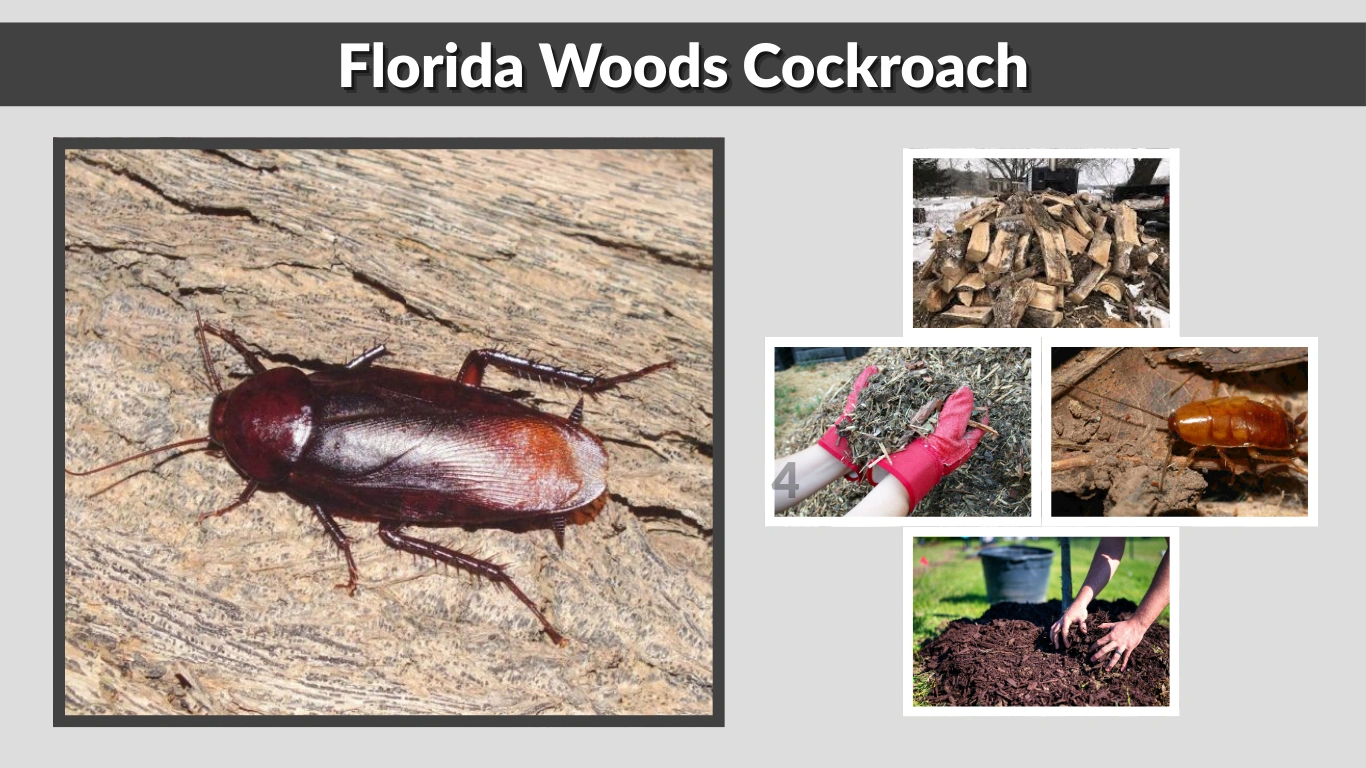
The Florida Woods Cockroach, also known as the Palmetto Bug, is a large and distinctive cockroach species commonly found in the southeastern United States. Despite its intimidating appearance, it is not as harmful as many other cockroach species. Recognizing its size, color, habitat, behaviors, and potential risks can help homeowners identify and manage encounters effectively.
Size and Physical Appearance
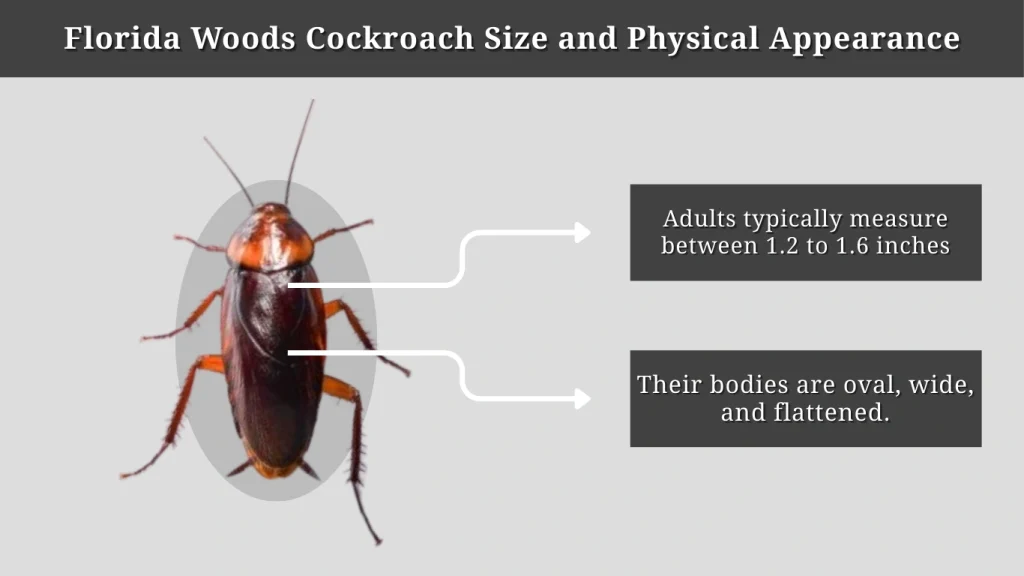
The Florida Woods Cockroach is among the largest cockroaches in North America. Adults typically measure between 1.2 to 1.6 inches (30–40 mm) in length, giving them a robust presence compared to other household pests. Their bodies are oval, wide, and flattened, with a glossy exterior that makes them easy to spot.
One distinguishing feature is their reduced wings. Unlike other cockroaches that fly, Florida Woods Cockroaches have short, underdeveloped wings, leaving them unable to take flight. This makes them less mobile indoors and largely dependent on crawling to navigate their environment. Their antennae are long and slender, used for sensing food and environmental changes.
Color and Distinctive Traits
The typical coloration of the Florida Woods Cockroach ranges from dark reddish-brown to nearly black. Their glossy exoskeleton gives them a shiny appearance, helping them blend into damp and decaying organic matter in their natural environment.
Unlike the American cockroach, which has a lighter brown body with a yellow band behind the head, the Florida Woods Cockroach lacks this marking. Their darker, uniform coloration and wingless appearance make them easy to distinguish once identified correctly.
Natural Habitat
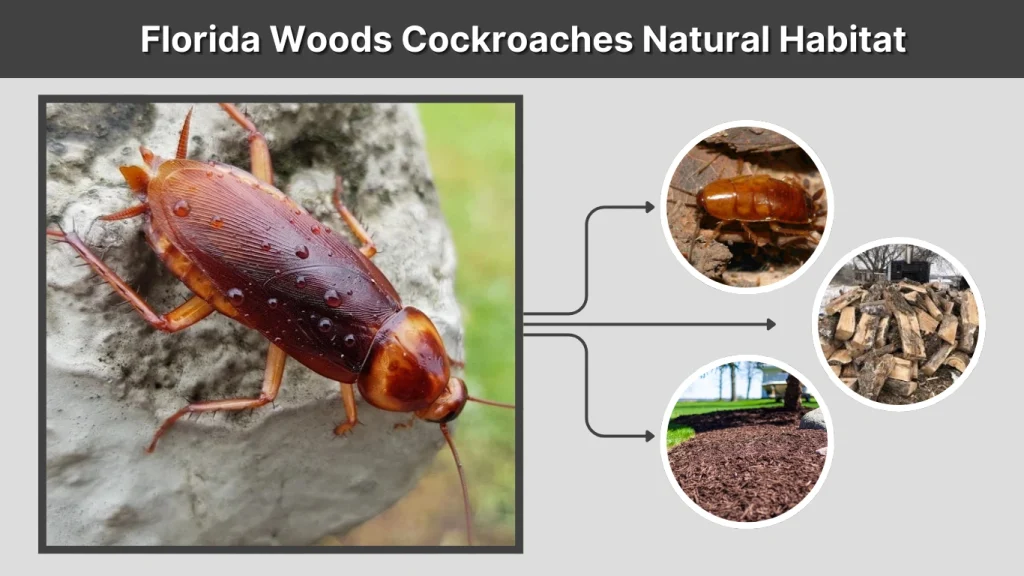
Florida Woods Cockroaches thrive in hot, humid, and shaded environments. They prefer outdoor areas where moisture and decaying organic matter are abundant. Common habitats include woodpiles, mulch, compost heaps, decaying logs, and beneath piles of leaves.
Because they depend on high humidity, they are less commonly found indoors compared to other cockroach species. When they do wander inside, it is usually by accident or during heavy rains when outdoor habitats flood. Unlike German cockroaches, which infest kitchens and bathrooms, Florida Woods Cockroaches cannot survive long indoors due to the lack of constant dampness.
Hiding Places
Outdoors, these cockroaches often hide in sheltered, shaded areas. Wood storage sheds, mulch beds, and the underside of porches are favorite hiding places. Firewood stacked close to homes is one of the most common ways they end up near or inside human dwellings.
Indoors, they may be spotted in crawl spaces, attics, basements, or garages—particularly if moisture is present. Their large size makes them more noticeable, but because they are nocturnal, they are typically encountered at night. Seasonal changes, especially during wetter months, may push them closer to homes in search of dry hiding areas.
Behaviors and Adaptations
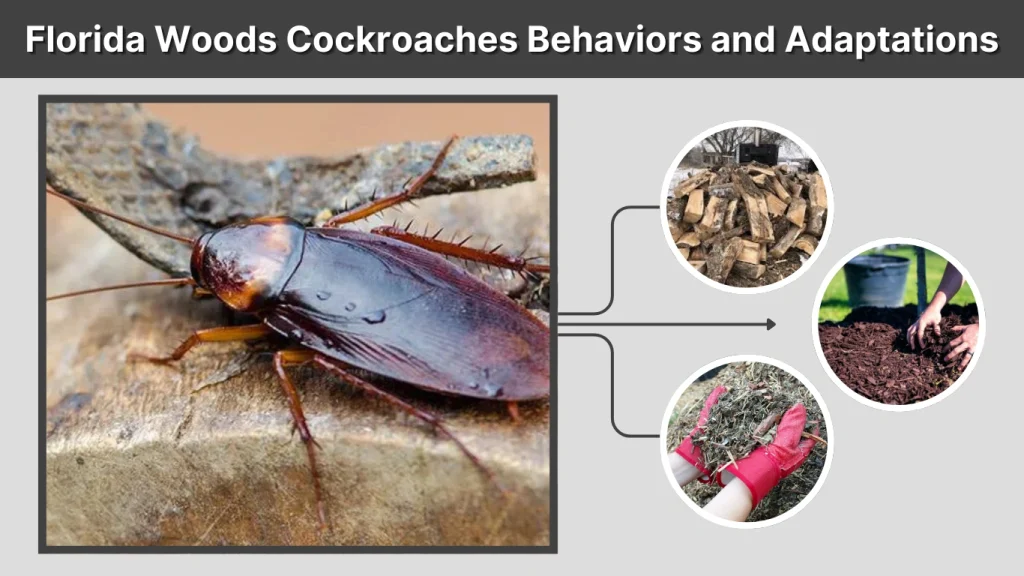
The Florida Woods Cockroach is primarily nocturnal, becoming most active during the evening hours. Its diet consists mainly of decaying organic matter, including rotting plants, wood debris, and leaf litter. This diet makes them important contributors to the ecosystem, as they play a role in natural decomposition and nutrient recycling.
One of their most notable adaptations is their ability to secrete a foul-smelling liquid from specialized glands. This defensive mechanism helps deter predators such as birds, frogs, and small mammals. For humans, the odor can be unpleasant and may linger if the cockroach is disturbed or crushed.
Although they cannot fly, their strong legs make them efficient crawlers, allowing them to move quickly through soil, mulch, and leaf litter. This agility, combined with their nocturnal habits, helps them avoid predators and survive in harsh outdoor environments.
Risks to Humans
While the Florida Woods Cockroach is not as dangerous as some of its relatives, it still poses minor risks to humans. The main concern is nuisance. Their large size and sudden appearance can be unsettling, especially indoors. Additionally, the strong odor they release when threatened may cause discomfort in enclosed spaces.
For sensitive individuals, exposure to cockroach droppings, shed skins, or body parts may trigger allergic reactions. These can lead to respiratory irritation, skin rashes, or worsening of asthma symptoms. However, unlike German cockroaches, Florida Woods Cockroaches are not significant carriers of disease and are less likely to contaminate food surfaces.
Another indirect risk is contamination. If they enter kitchens or pantries, they can spread bacteria simply by crawling across surfaces. While the likelihood is lower compared to other cockroach species, maintaining proper hygiene and sealing entry points helps minimize this risk.
Identification Tips
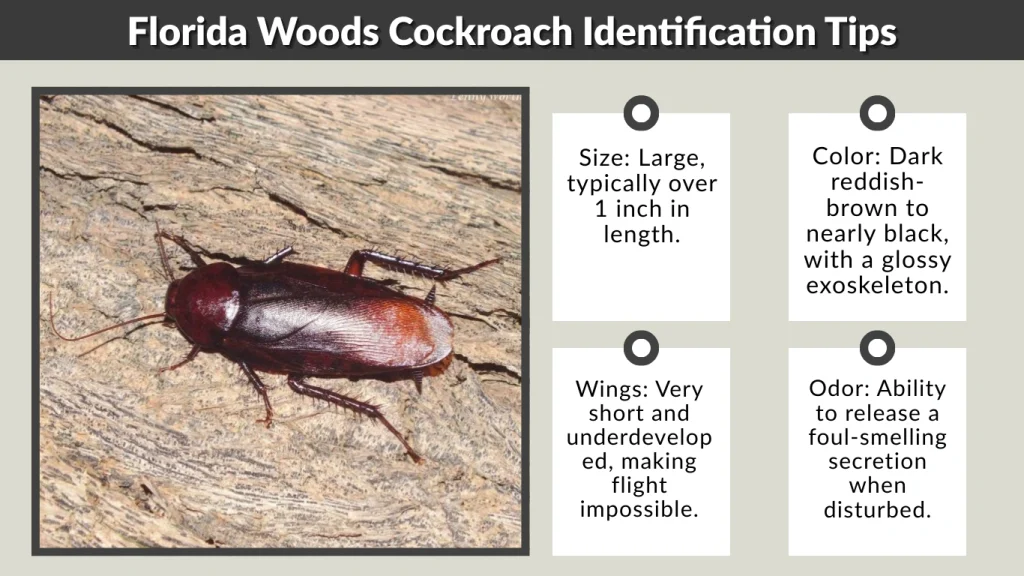
Recognizing the Florida Woods Cockroach becomes easier once you know what to look for. The key identification markers include:
- Size: Large, typically over 1 inch in length.
- Color: Dark reddish-brown to nearly black, with a glossy exoskeleton.
- Wings: Very short and underdeveloped, making flight impossible.
- Odor: Ability to release a foul-smelling secretion when disturbed.
Compared to the American cockroach, which can reach similar lengths, the Florida Woods Cockroach has a darker, more uniform color and smaller wings. Unlike the German cockroach, which is light brown and found indoors near food sources, the Florida Woods variety prefers outdoor, damp environments and rarely thrives inside homes.
Prevention and Control
Although Florida Woods Cockroaches are more of a nuisance than a health threat, prevention is essential to keep them from becoming unwelcome guests.
Outdoor Prevention
- Remove hiding spots: Clear away piles of leaves, mulch, and decaying vegetation close to your home.
- Firewood management: Store firewood at least 20 feet away from the house and off the ground.
- Moisture control: Fix leaks and improve drainage around the foundation to reduce dampness.
Indoor Prevention
- Seal entry points: Caulk cracks around windows, doors, and utility pipes to block access.
- Maintain cleanliness: Keep kitchens and bathrooms free of food debris and excess moisture.
- Monitor storage spaces: Regularly check basements, attics, and crawl spaces for signs of activity.
Control Measures
If cockroaches do make it inside, non-toxic traps or sticky boards can help monitor and reduce numbers. In cases of repeated sightings or strong odors, professional pest control may be necessary. Technicians can apply targeted treatments that reduce populations without harming the environment.
FAQs
What is the average size of a Florida Woods Cockroach?
Florida Woods Cockroaches typically measure between 1.2 and 1.6 inches long, making them one of the largest cockroach species in North America.
Where do Florida Woods Cockroaches usually hide?
They hide outdoors in mulch, woodpiles, and decaying vegetation. Indoors, they may be found in basements, crawl spaces, or garages, especially in damp conditions.
Are Florida Woods Cockroaches harmful to humans?
They are not major disease carriers but can cause allergic reactions and spread bacteria if they enter kitchens. The unpleasant odor they release also makes them a nuisance.
How do I tell the difference between Florida Woods and American cockroaches?
American cockroaches are lighter brown with fully developed wings, while Florida Woods Cockroaches are darker, glossy, and have very short, non-functional wings.
What steps can I take to keep Florida Woods Cockroaches away from my home?
Keep firewood stored away from the house, remove decaying vegetation, seal entry points, and maintain indoor cleanliness to reduce the chance of encounters.