
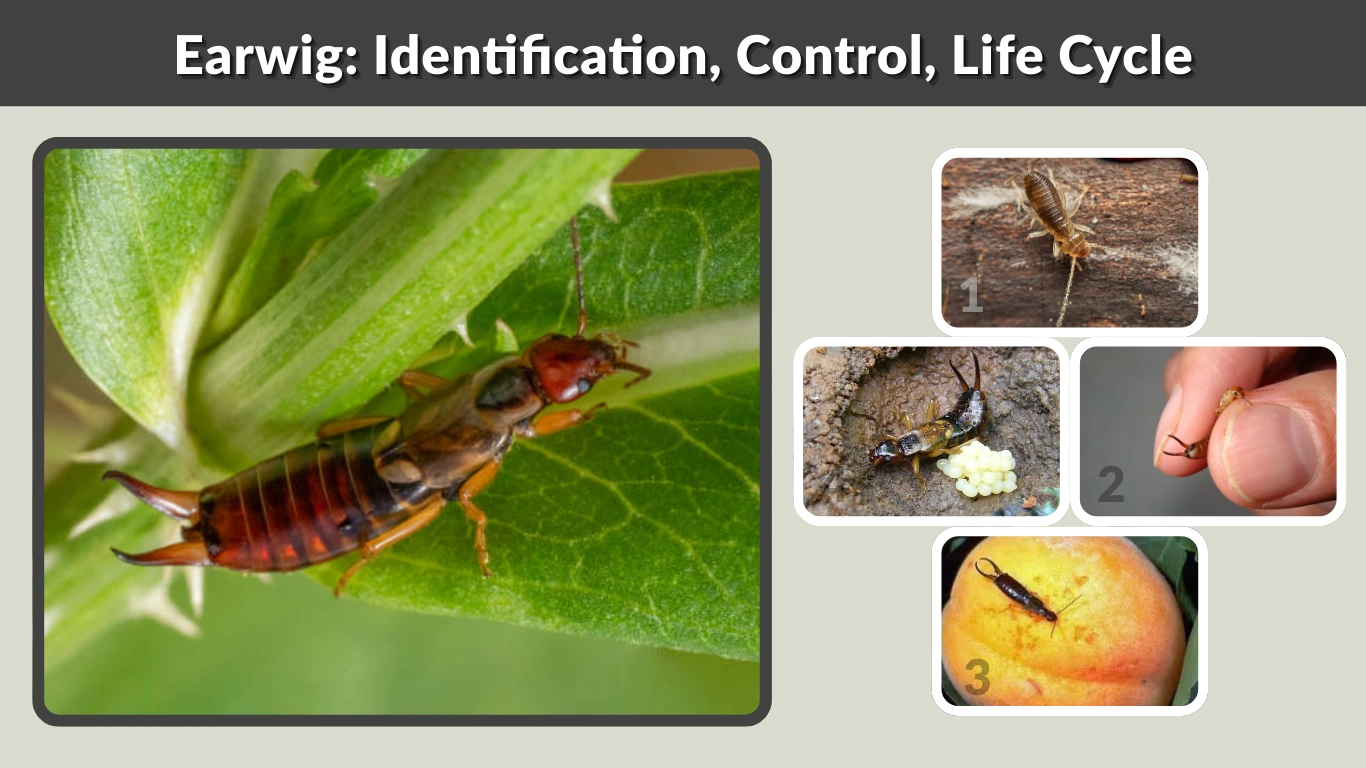
Earwigs are small, elongated insects that often cause alarm when spotted inside homes. Recognizable by the pincers at the end of their abdomen, these insects are commonly found in gardens, mulch beds, and damp outdoor areas. Although earwigs look intimidating, they are generally harmless to humans. Most problems arise when they move indoors searching for moisture or shelter. Understanding earwig species, life cycle, diet, and why earwigs appear in homes can help you manage and prevent infestations effectively.
What Is an Earwig?
An earwig is an insect belonging to the order Dermaptera. The name refers to a group of insects known for their distinctive forceps-like pincers, called cerci, located at the end of their abdomen. These pincers are more curved in males and straighter in females.
Earwigs typically measure about ½ to 1 inch long. They have flat, narrow bodies that allow them to hide in tight spaces. Most species are reddish-brown or dark brown, though some may appear lighter.
One of the most persistent myths about earwigs is that they crawl into human ears to lay eggs. This belief is not supported by scientific evidence. Earwigs do not seek out human ears and are not parasitic. They prefer damp environments and dark hiding places rather than interacting with people.
Earwig Identification
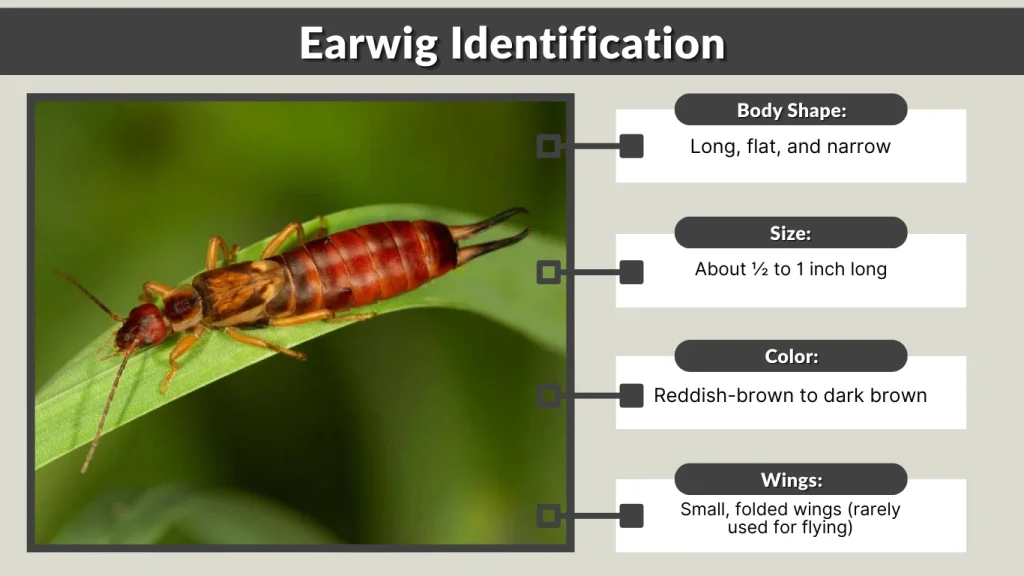
Earwigs are easy to recognize once you know their key features. They have a long, narrow body and a pair of noticeable pincers at the end of their abdomen. Although their appearance may look intimidating, their physical traits are quite distinct compared to other household insects. Proper identification helps distinguish earwigs from beetles, roaches, or other small brown bugs commonly found indoors.
Key Identification Features
- Body Shape: Long, flat, and narrow
- Size: About ½ to 1 inch long
- Color: Reddish-brown to dark brown
- Pincers (Cerci): Curved in males, straighter in females
- Wings: Small, folded wings (rarely used for flying)
- Antennae: Long and thread-like
- Activity: Mostly nocturnal
- Preferred Habitat: Damp, dark environments
How to Tell Earwigs Apart from Similar Insects
- Unlike cockroaches, earwigs have visible rear pincers.
- Unlike beetles, their bodies are more flattened and flexible.
- They do not have the broad shield shape seen in stink bugs.
Correct identification is the first step in choosing the right control and prevention methods.
Common Earwig Species
There are more than 2,000 earwig species worldwide, but only a few are commonly encountered near homes.
European Earwig (Forficula auricularia)
The European earwig is the most widespread and commonly seen species. It was introduced to many regions and has adapted well to gardens and residential areas. This species is reddish-brown with noticeable pincers and fully developed wings, though it rarely flies.
European earwigs prefer moist soil, mulch, and leaf litter. They are active at night and hide during the day under rocks, boards, and debris. This species is often responsible for earwigs found inside homes.
Ring-Legged Earwig
The ring-legged earwig is smaller and darker than the European species. It gets its name from the lighter-colored bands on its legs. Unlike the European earwig, this species is less likely to enter homes and is more commonly found outdoors.
Other Regional Species
Depending on climate and location, different earwig species may be present. Some are primarily agricultural pests, while others play a more balanced ecological role in gardens. Most species share similar behaviors, especially their attraction to moisture and darkness.
Earwig Life Cycle
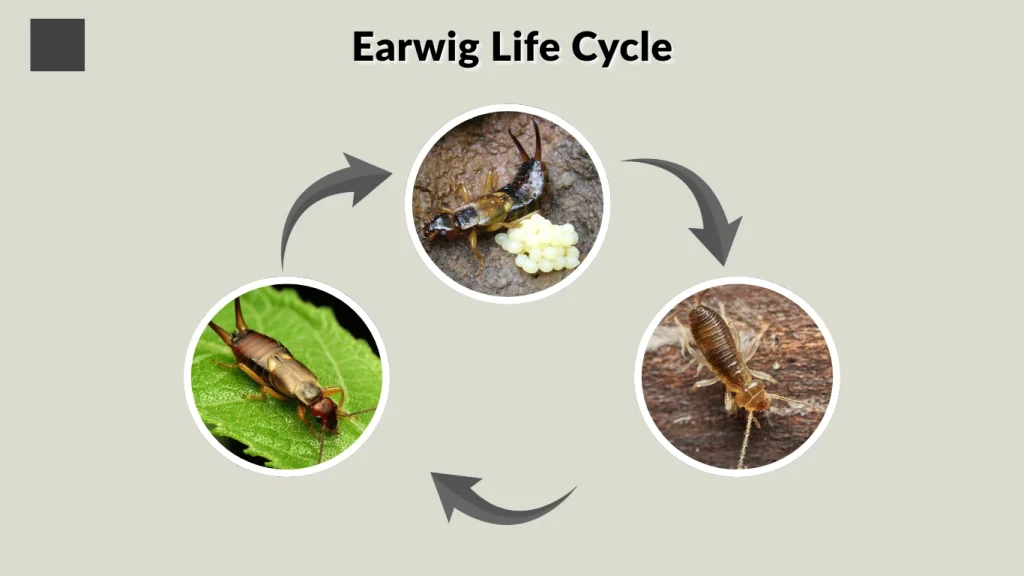
The earwig life cycle consists of three main stages: egg, nymph, and adult.
Female earwigs lay eggs in late winter or early spring. Unlike many insects, earwig mothers show unusual parental care. They guard their eggs in underground chambers and even clean them to prevent mold growth. This maternal behavior increases egg survival.
After several days to weeks, the eggs hatch into nymphs. Nymphs resemble smaller versions of adults but lack fully developed wings. They molt multiple times as they grow, gradually developing adult features.
By late spring or early summer, earwigs reach adulthood. Adults are mostly nocturnal and feed actively during warm months. Most earwigs live for about one year, depending on environmental conditions.
Understanding this life cycle is important for control efforts, as treatments are often most effective during early stages of development.
Earwig Diet
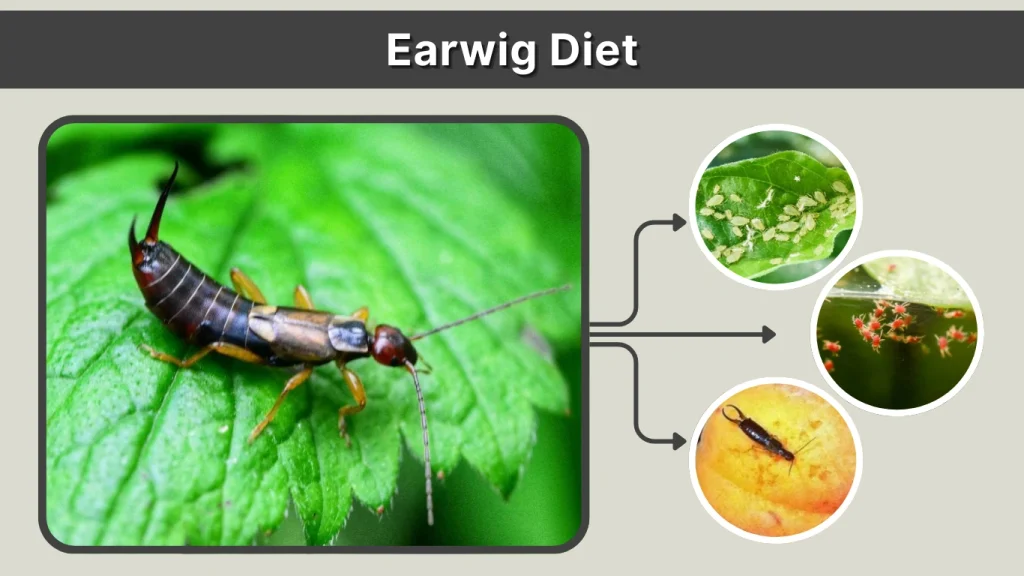
Earwigs are omnivorous insects, meaning they eat both plant and animal matter. In gardens, they feed on leaves, flowers, fruits, and vegetables. They may also consume aphids, mites, and other small insects.
This mixed diet makes earwigs both beneficial and problematic. On one hand, they help control certain garden pests. On the other, they can damage seedlings, soft fruits, and ornamental plants.
Inside homes, earwigs do not typically find abundant food sources. They may feed on crumbs, decaying organic matter, or other small insects if available. However, homes are usually shelter sites rather than feeding grounds.
Why Are There Earwigs in My Home?
If you are seeing earwigs indoors, moisture is usually the main reason. Earwigs are highly attracted to damp environments and often enter homes during hot, dry weather or heavy rain. When outdoor conditions become unfavorable, they look for cooler, moist shelter.
Common indoor locations include basements, bathrooms, kitchens, laundry rooms, and crawl spaces. They may enter through cracks in the foundation, gaps around doors and windows, or openings near plumbing and utility lines.
Earwigs are nocturnal, so you are more likely to see them at night. During the day, they hide in dark areas such as under sinks, behind baseboards, or inside cardboard boxes. While their presence can be unsettling, indoor infestations are usually temporary and related to environmental conditions.
Earwig Bite – Are Earwigs Dangerous?
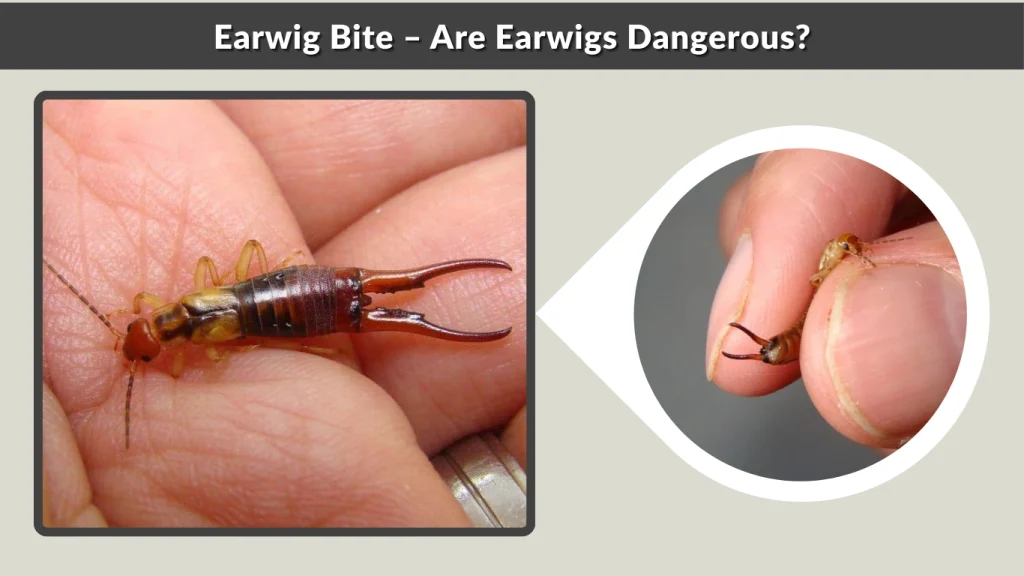
Earwigs look intimidating because of their pincers, but they are not dangerous to humans.
Do Earwigs Bite or Pinch?
Earwigs do not technically “bite.” Instead, they may use their pincers to pinch if handled or threatened. These pincers are primarily used for defense, capturing prey, and mating.
In rare cases, a pinch may cause minor discomfort, similar to a small pinch from tweezers. However, earwigs do not inject venom and do not break the skin in most situations.
Are Earwigs Harmful to Humans?
Earwigs are not poisonous and do not spread diseases. They are considered nuisance pests rather than health threats. Their appearance can cause concern, but they pose no significant risk to people or pets.
Are Earwigs Beneficial in Gardens?
Interestingly, earwigs can play a helpful role in gardens. Because they feed on aphids, mites, and insect larvae, they can help reduce certain pest populations. However, when their numbers grow too large, they may begin feeding on plants and flowers, causing noticeable damage.
Maintaining balance is key when managing earwig populations outdoors.
Earwig Control Methods
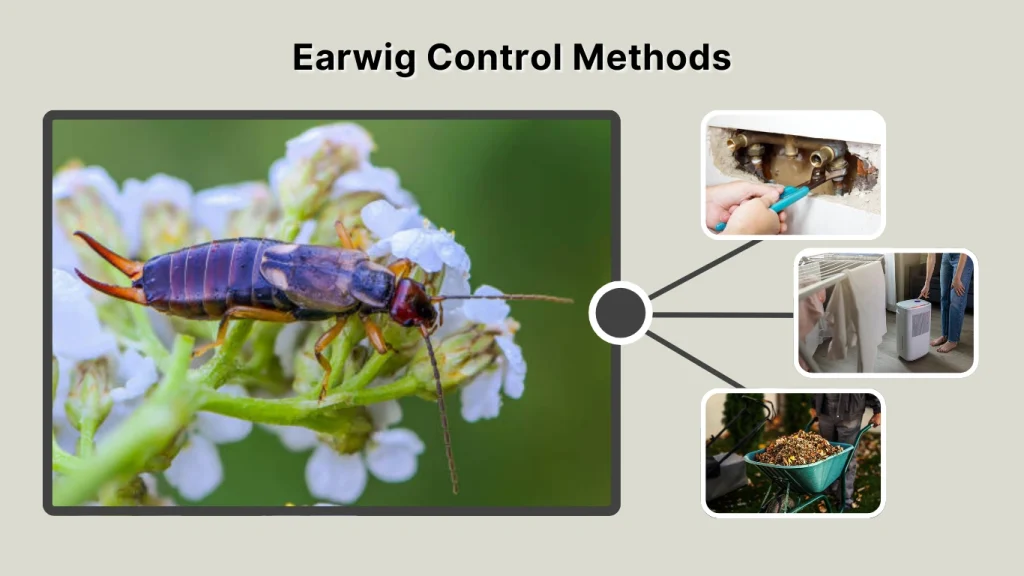
Effective earwig control focuses on reducing moisture and limiting access to shelter.
Natural Earwig Control
Start by eliminating damp conditions around your home. Fix leaky faucets, improve drainage, and use dehumidifiers in basements or crawl spaces. Outdoors, remove mulch, leaf piles, and excess debris near the foundation.
Sealing cracks and gaps around windows, doors, and utility lines helps prevent entry. Reducing outdoor hiding spots can significantly decrease the number of earwigs migrating indoors.
Chemical Control Options
If natural methods are not enough, perimeter insecticide treatments may help reduce populations around the home’s exterior. These treatments should be applied according to product instructions.
For persistent infestations, professional pest control services can assess moisture issues and apply targeted treatments safely.
Earwig Traps
Trapping can be an effective way to monitor and reduce earwig numbers.
Homemade Earwig Traps
A simple method involves rolling up damp newspaper and placing it in the garden overnight. Earwigs will crawl inside for shelter. In the morning, dispose of the paper.
Another option is an oil and soy sauce trap. Fill a shallow container with vegetable oil and a small amount of soy sauce. The scent attracts earwigs, and the oil prevents escape.
Cardboard tubes placed in garden beds can also serve as temporary hiding spots for collection and removal.
Commercial Earwig Traps
Sticky traps and baited traps are available for indoor and outdoor use. Place them along walls, near entry points, or in damp areas where earwigs are active.
How to Prevent Earwig Infestations
Prevention is the most reliable way to control earwigs long term.
- Repair leaking pipes and faucets
- Improve yard drainage
- Keep mulch and firewood away from the foundation
- Seal cracks in walls and foundations
- Install weather stripping around doors
By reducing moisture and eliminating shelter sites, you make your home far less attractive to earwigs.
Interesting Earwig Facts
The name “earwig” comes from an old European myth suggesting the insects crawl into ears. In reality, they prefer dark, damp environments and avoid human contact.
Earwigs are primarily nocturnal and hide during the day. Their pincers vary in shape between males and females and are used mainly for defense and mating displays.
Despite their reputation, earwigs are more of a nuisance than a threat and can even provide ecological benefits when populations are balanced.
FAQs
Do earwigs crawl into people’s ears?
No, earwigs do not crawl into human ears to lay eggs. This is an old myth with no scientific evidence. Earwigs prefer dark, damp outdoor environments like soil and mulch. While they may accidentally wander indoors, they avoid human contact and are not parasitic.
Do earwigs bite humans?
Earwigs do not bite in the traditional sense. They may use their pincers to pinch if threatened or handled, but this is rare and usually harmless. A pinch may cause mild discomfort, but earwigs are not venomous and do not spread disease.
Why are there earwigs in my house?
Earwigs typically enter homes in search of moisture or shelter. Heavy rain, dry heat, or changes in outdoor conditions can drive them indoors. They commonly hide in basements, bathrooms, kitchens, and other damp areas.
What do earwigs eat indoors?
Inside homes, earwigs may feed on crumbs, decaying organic matter, or small insects if available. However, houses mainly provide shelter rather than a food source. Most earwigs prefer feeding on plants, insects, and organic debris outdoors.
How do you get rid of earwigs naturally?
To control earwigs naturally, reduce moisture around your home, seal cracks, and remove outdoor debris. Homemade traps like rolled damp newspaper or oil-based traps can help reduce populations without chemicals.
Where do earwigs lay eggs?
Earwigs lay their eggs in moist soil, under mulch, or beneath debris. The female guards and cleans the eggs until they hatch. Eggs are rarely found indoors because they are typically buried underground.
How long do earwigs live?
Most earwigs live for about one year. They hatch in spring, mature during summer, and reproduce before colder weather arrives. Environmental conditions such as moisture and temperature can influence their lifespan.