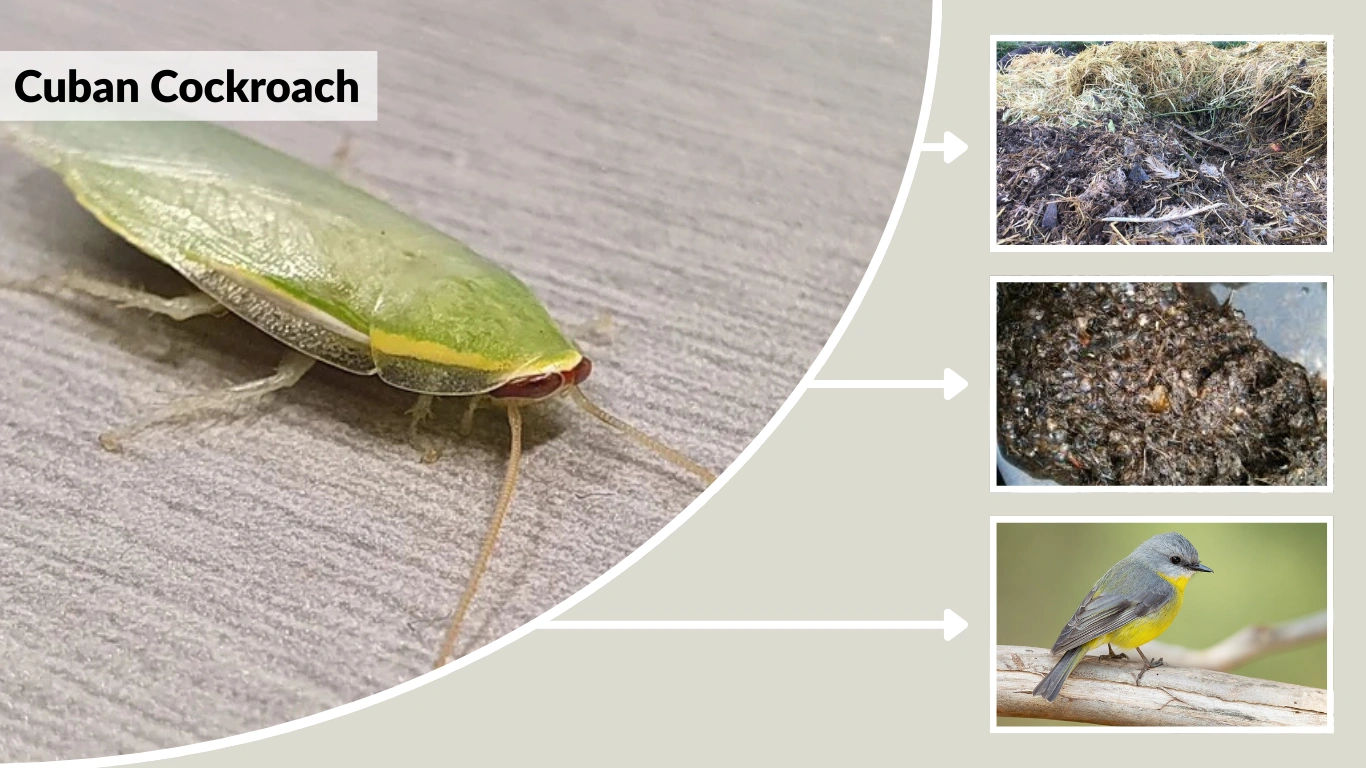
The Cuban cockroach (Panchlora nivea) is a fascinating insect that often surprises people with its vibrant green color and unusual habits. Unlike the common household cockroach, which is known for being a nuisance, this species has a unique appearance and primarily lives outdoors. Found in Cuba and other warm regions, it has also spread to parts of the United States, especially in Florida and Texas. Understanding its characteristics, lifestyle, and interaction with humans helps us distinguish it from other roach species and know how to manage them if they become a concern.
Appearance and Identification
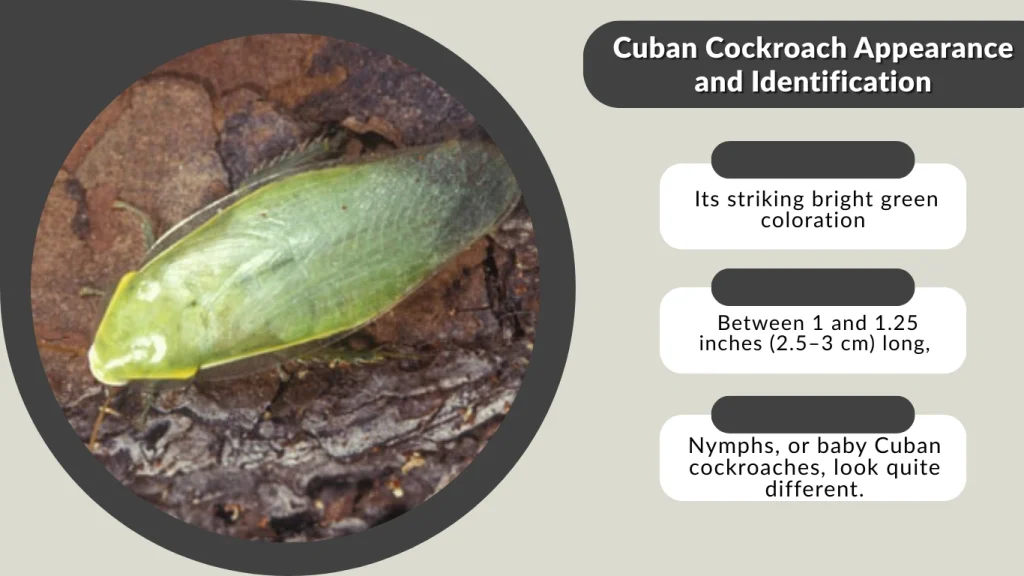
The Cuban cockroach is most recognizable for its striking bright green coloration. Adults typically measure between 1 and 1.25 inches (2.5–3 cm) long, with fully developed wings that allow them to fly with ease. The vibrant green shade of adults gives them an almost leaf-like look, making them blend naturally with outdoor vegetation.
Nymphs, or baby Cuban cockroaches, look quite different. They are brown in color, wingless, and resemble common household cockroaches. Over time, as they molt and grow, their bodies develop the signature green wings of the adult stage. This transformation makes them one of the more visually distinct roach species in the world.
Habitat and Distribution
As their name suggests, Cuban cockroaches are native to Cuba and the Caribbean islands. However, they have also been introduced to the southeastern United States, thriving especially in Florida and spreading into Texas. Their love for warm, humid environments makes these areas ideal for them.
Unlike many other roach species that invade kitchens or bathrooms, Cuban cockroaches typically prefer to live outdoors. They can often be found in trees, shrubs, and gardens, hiding in foliage during the day. At night, they are drawn to light sources, which often causes them to accidentally enter homes through open windows or doors.
Diet and Feeding Habits
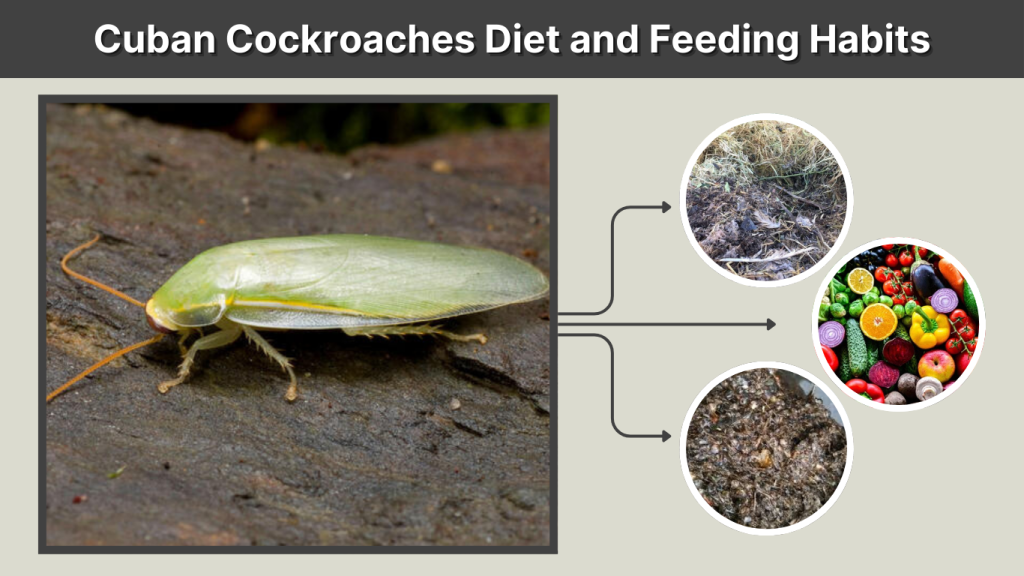
Cuban cockroaches are not scavengers of human food in the same way that German or American cockroaches are. Instead, their diet consists mainly of decaying plant matter, fruits, and organic debris. This makes them natural recyclers in the environment, contributing to the decomposition process and enriching soil quality.
In captivity, where some people keep them as pets, they can be fed a variety of foods including fruits, vegetables, and other plant-based matter. Their feeding habits make them much less of a direct nuisance to humans compared to traditional household cockroaches.
Behavior and Lifestyle
One of the most noticeable traits of Cuban cockroaches is their ability to fly gracefully. Many roach species are poor fliers, but these green insects glide well and often cover short distances effortlessly. This flying ability is also the reason they are frequently drawn toward porch lights, street lamps, and other bright areas at night.
Cuban cockroaches are primarily nocturnal and spend most of their active hours exploring or feeding. During the day, they hide in shaded areas, under leaves, or inside loose bark. Their attraction to light makes them more visible to people, though they rarely linger inside homes for long.
Socially, they behave similarly to other cockroach species, living in small groups when conditions are favorable. However, since they prefer outdoor habitats, they are less likely to infest human dwellings permanently.
Reproduction and Life Cycle
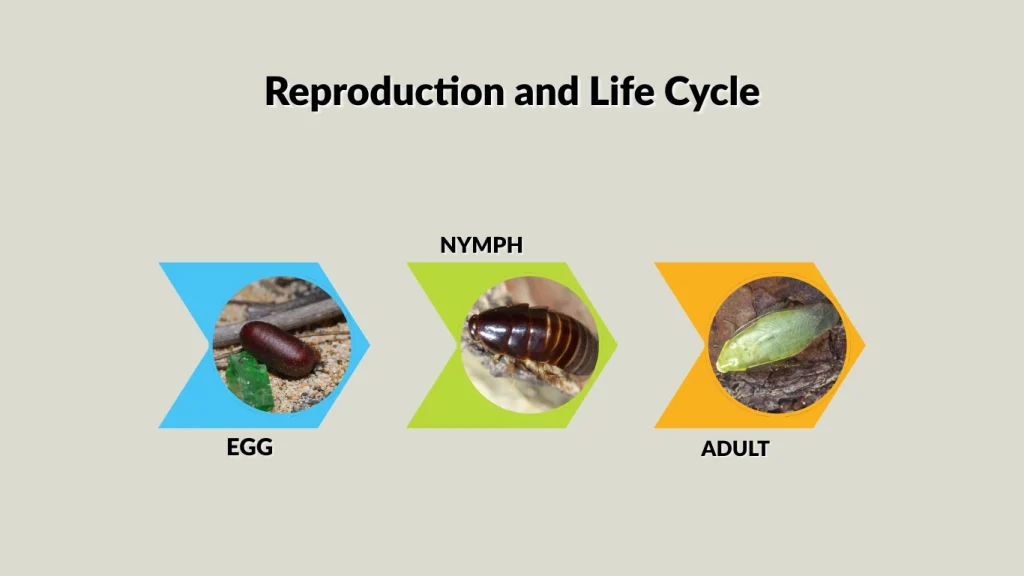
The reproduction process of the Cuban cockroach is similar to other cockroach species but with some unique features. Females produce egg cases (oothecae) that hold multiple eggs. These egg cases are usually deposited in sheltered outdoor environments, where they remain safe until hatching.
When the eggs hatch, the nymphs emerge as small, brown, wingless roaches. These juveniles go through several molts as they mature. Each molt brings them closer to the adult form, with the final stage giving them their iconic bright green wings.
The complete life cycle from egg to adult usually takes several months, depending on environmental conditions. On average, Cuban cockroaches live around 12 months, though this can vary based on climate and available resources.
Interaction with Humans
Unlike common roaches that infest kitchens and bathrooms, Cuban cockroaches are mostly outdoor insects. They rarely invade homes, but their attraction to light often causes them to fly indoors by accident. Once inside, they do not establish infestations in the same way German or American cockroaches do.
A common question is whether Cuban cockroaches bite or are dangerous. Fortunately, they are harmless to humans. They do not spread diseases, contaminate food, or bite. In fact, their gentle nature and striking color have made them somewhat popular in the insect hobbyist community, where some enthusiasts even keep them as exotic pets.
For those interested in caring for Cuban cockroaches, proper housing with soil or leaf litter, fresh fruits, and vegetables is sufficient. They thrive in warm, humid environments and are relatively easy to maintain in captivity.
Predators and Natural Threats
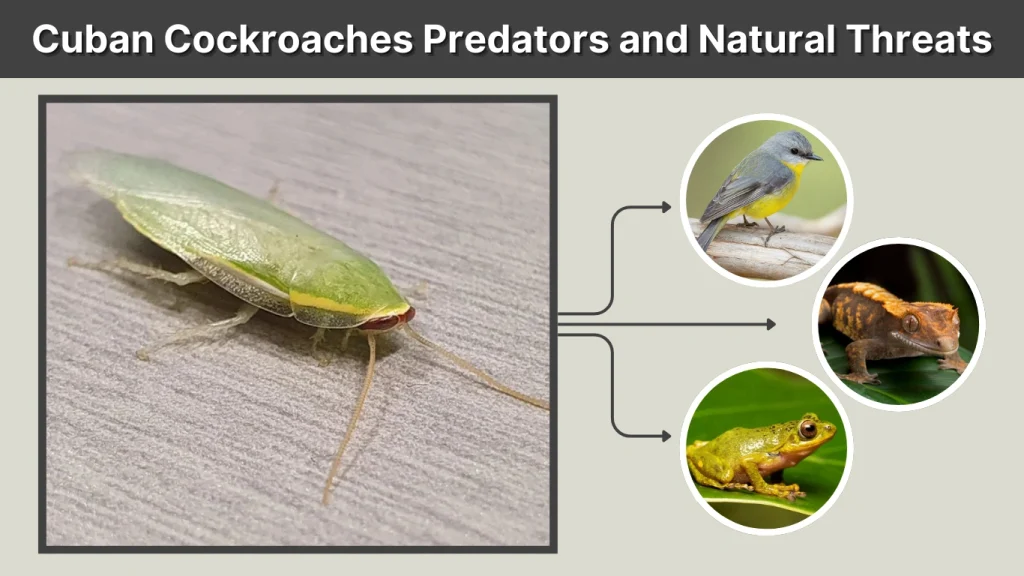
Cuban cockroaches are prey for a variety of animals. Birds, reptiles, amphibians, and small mammals feed on them regularly. Their bright green wings may help them camouflage among leaves, but they are still vulnerable when flying at night. Other insects such as spiders and predatory beetles also pose a threat.
Environmental conditions also play a role in their survival. Prolonged cold weather, which they are not adapted to, can drastically reduce populations outside their tropical and subtropical ranges.
Cuban Cockroach in Different Regions
Although native to Cuba and nearby islands, Cuban cockroaches have established populations in Florida due to the state’s subtropical climate. They are most commonly found in gardens, parks, and wooded areas, where the warm weather allows them to thrive year-round.
In Texas, Cuban cockroaches are also present, but their populations are more limited to the southern regions with warmer climates. They are less abundant in cooler areas, as their survival heavily depends on humidity and heat.
Despite their expansion, they remain mostly outdoor dwellers and rarely create long-term problems for households, making them quite different from invasive roach species.
How to Get Rid of Cuban Cockroaches
For most people, Cuban cockroaches are not serious pests, but their tendency to fly into homes can be bothersome. Here are a few ways to manage or prevent them:
- Seal entry points: Ensure that windows, doors, and vents are screened and closed properly.
- Reduce outdoor lighting: Since they are highly attracted to bright lights, switching to yellow or low-attraction bulbs can minimize their presence.
- Natural repellents: Essential oils such as peppermint or eucalyptus may discourage them from lingering near entryways.
- Pest control services: In cases where they become a persistent nuisance, professional exterminators can provide effective treatment.
Because Cuban cockroaches live mostly outdoors, prevention works better than elimination. Keeping the home less inviting is the key to avoiding encounters.
FAQs
What does a Cuban cockroach eat?
Cuban cockroaches feed mainly on decaying plant material, fruits, and organic matter. This makes them important decomposers in their natural habitats.
Are Cuban cockroaches dangerous?
No, they are harmless to humans. They do not bite, sting, or spread diseases, unlike many household cockroach species.
How big do Cuban cockroaches get?
Adult Cuban cockroaches grow to about 1 to 1.25 inches (2.5–3 cm) in length, with fully developed wings that allow them to fly.
How can I get rid of Cuban cockroaches in my house?
Seal cracks and entry points, reduce bright outdoor lighting, and use natural repellents. Professional pest control is an option if they become persistent.
Do Cuban cockroaches live indoors?
They prefer living outdoors in trees, shrubs, and gardens, but may accidentally fly indoors at night when attracted to lights.