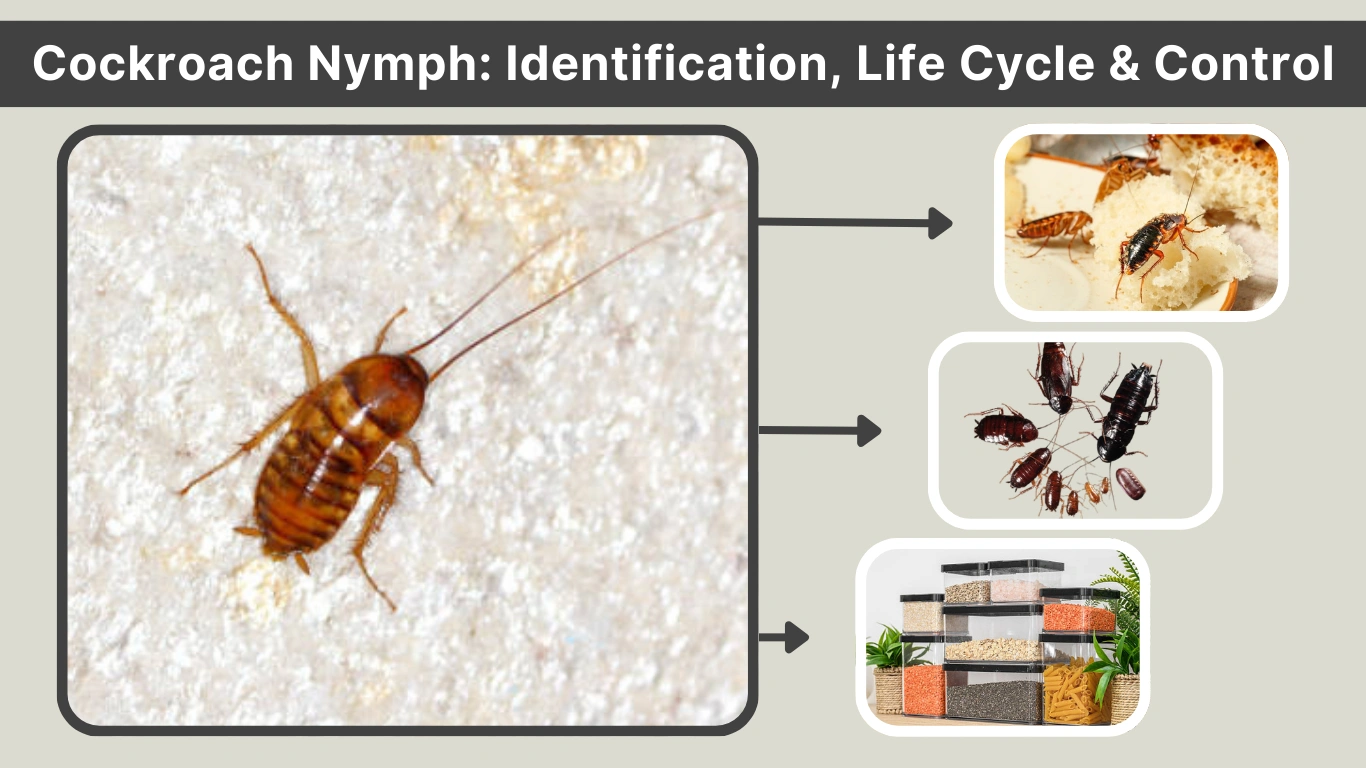
Cockroach nymphs are immature roaches that hatch from eggs and grow into adults through several molting stages. Because they resemble smaller versions of adult cockroaches, many homeowners mistake them for different insects or assume they are harmless baby bugs. However, spotting cockroach nymphs indoors often signals an active infestation. Understanding how to identify them, how they develop, and why they appear in your home is essential for stopping a roach problem before it spreads.
What Is a Cockroach Nymph?
A cockroach nymph is the juvenile stage of a cockroach. Unlike butterflies or beetles that undergo complete metamorphosis, cockroaches develop through incomplete metamorphosis, which includes three stages: egg, nymph, and adult.
After hatching from an egg case (called an ootheca), the young roach enters the nymph stage. During this period, it looks similar to an adult but is smaller and lacks fully developed wings. As the nymph grows, it sheds its outer shell multiple times in a process known as molting. Each stage between molts is called an instar.
Depending on the species, a cockroach may molt anywhere from 5 to 13 times before reaching adulthood. Throughout this stage, nymphs actively feed, hide, and grow—just like adult roaches.
What Does a Cockroach Nymph Look Like?
Identifying a cockroach nymph correctly is important because they are often confused with beetles, bed bugs, or other small brown insects.
Size and Body Shape
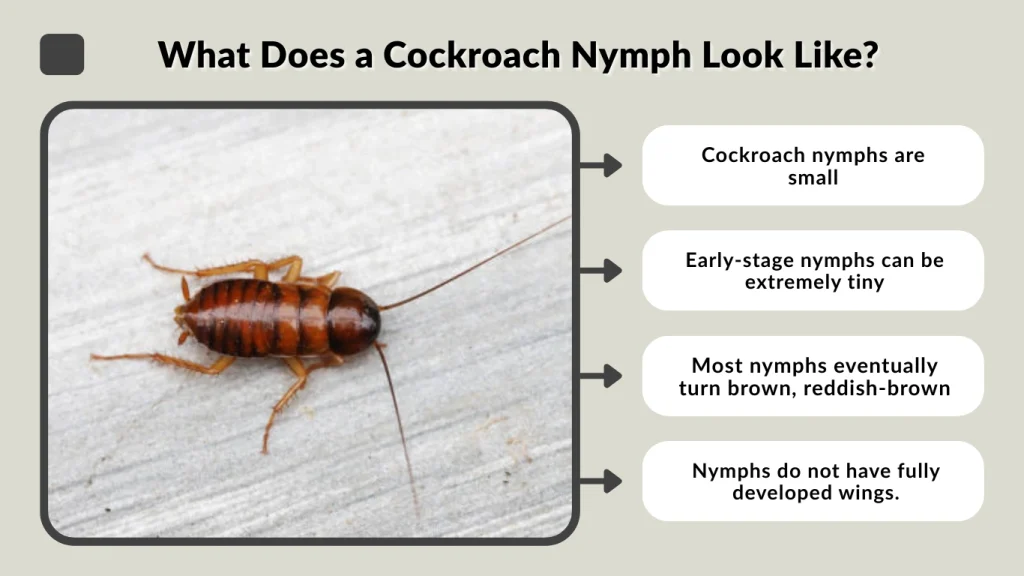
Cockroach nymphs are small, oval-shaped, and flat-bodied insects. Their flattened shape allows them to squeeze into tight cracks and crevices. Early-stage nymphs can be extremely tiny—sometimes just a few millimeters long—while later-stage nymphs grow closer in size to adult roaches.
For example:
- German cockroach nymphs are very small and commonly found indoors.
- American cockroach nymphs are larger and may appear darker in color.
Despite size differences between species, all nymphs maintain the typical roach body structure: long antennae, six legs, and a segmented body.
Color Changes During Growth
One of the most noticeable characteristics of a cockroach nymph is its color change during development.
- Immediately after molting, a nymph appears white or pale.
- Within a few hours, its exoskeleton hardens and darkens.
- Most nymphs eventually turn brown, reddish-brown, or dark brown depending on the species.
This temporary white appearance often surprises homeowners, who may think they are seeing a different insect altogether.
Do Cockroach Nymphs Have Wings?
Cockroach nymphs do not have fully developed wings. This is one of the easiest ways to distinguish them from adult roaches.
While later-stage nymphs may show small wing pads, they cannot fly. Only adult cockroaches of certain species develop functional wings—and even then, not all adult roaches are strong fliers.
If you see a small, wingless roach running quickly across your floor, it is most likely a nymph.
Cockroach Nymph vs Adult Roach
Although they look similar, there are clear differences between nymphs and adult cockroaches:
- Size: Nymphs are smaller.
- Wings: Adults have fully developed wings (in most species).
- Reproduction: Only adults can reproduce.
- Color consistency: Adults have stable, darker coloration.
Behaviorally, however, nymphs act much like adults. They hide during the day, feed at night, and avoid light whenever possible.
Cockroach Nymph Life Cycle
Understanding the life cycle helps explain why seeing nymphs is often a warning sign of a growing infestation.
Egg Stage (Ootheca)
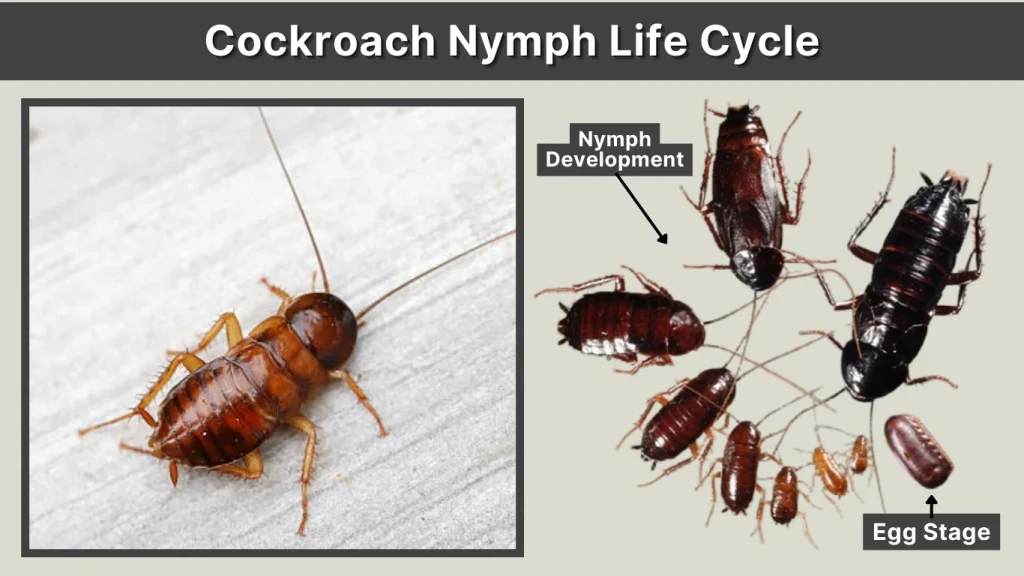
Cockroach eggs are not laid individually. Instead, the female produces a protective capsule called an ootheca. This egg case contains multiple eggs—sometimes up to 30 or more, depending on the species.
Some species carry the egg case until just before it hatches, while others hide it in cracks, behind appliances, or in dark, humid spaces. Once the eggs hatch, tiny nymphs emerge and immediately begin searching for food and shelter.
Nymph Development Stages
After hatching, nymphs begin feeding and growing. Because their outer shell does not stretch, they must molt to increase in size. Each molt allows the nymph to grow larger and more developed.
The number of molts depends on the species, but environmental factors also play a major role. Warm temperatures, high humidity, and abundant food sources can accelerate development. In ideal indoor conditions, some species mature surprisingly quickly.
How Long Does the Nymph Stage Last?
The nymph stage can last anywhere from several weeks to several months. In some species, it may take up to a year for a cockroach to reach full adulthood.
German cockroaches, one of the most common indoor pests, develop relatively quickly compared to other species. This rapid growth is one reason infestations can expand so fast if left untreated.
Because nymphs are constantly maturing into reproductive adults, early detection is critical. Even a small number of nymphs can lead to a much larger population over time.
Are Cockroach Nymphs Dangerous?
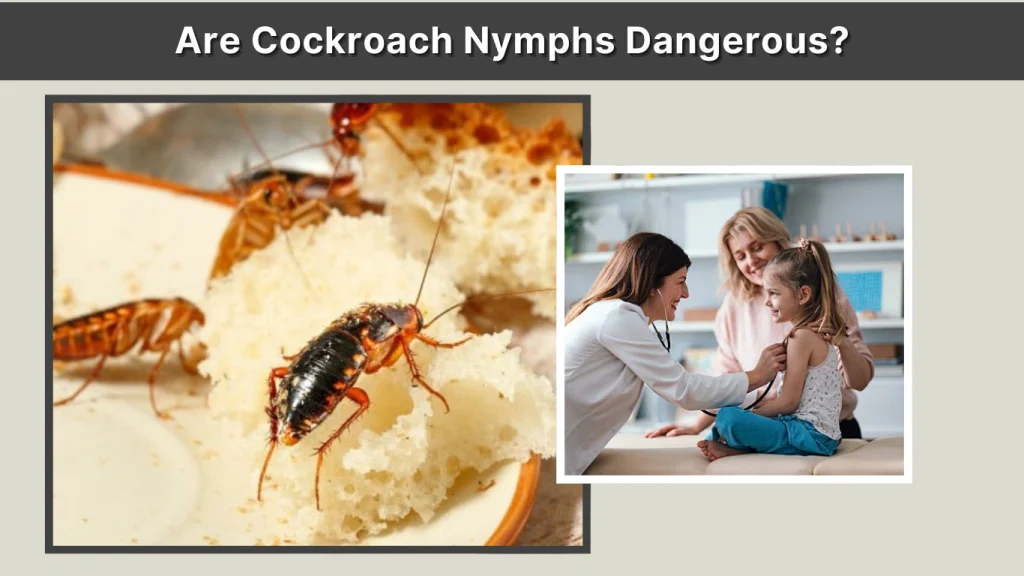
Yes, cockroach nymphs can be dangerous—especially inside homes. Although they are smaller than adults, they pose many of the same health risks.
Cockroach nymphs crawl through unsanitary areas such as drains, garbage bins, and wall voids. As they move across food preparation surfaces, they can spread bacteria like Salmonella and E. coli. This contamination increases the risk of foodborne illness.
In addition, cockroach droppings, shed skins, and saliva contain allergens that may trigger asthma and allergic reactions. Children, elderly individuals, and people with respiratory conditions are particularly vulnerable. Even a small infestation can significantly affect indoor air quality.
Because nymphs grow into reproductive adults, their presence also signals a potential population increase if the problem is not addressed quickly.
Why You’re Seeing Cockroach Nymphs in Your Home
Seeing cockroach nymphs usually means one thing: roaches are breeding indoors.
Unlike adult cockroaches that may wander in from outside, nymphs rarely travel far from their nesting site. If you notice small, wingless roaches in your kitchen or bathroom, there is likely an egg case nearby.
Common reasons you might see nymphs include:
- Accessible food sources (crumbs, grease, pet food)
- Moisture problems (leaky pipes, condensation, damp cabinets)
- Cluttered storage areas
- Cracks and crevices for hiding
Cockroaches prefer warm, humid environments. That’s why kitchens, bathrooms, basements, and areas behind appliances are common hotspots.
You may also notice increased activity at night. Cockroaches are nocturnal and typically scatter quickly when exposed to light.
How to Get Rid of Cockroach Nymphs
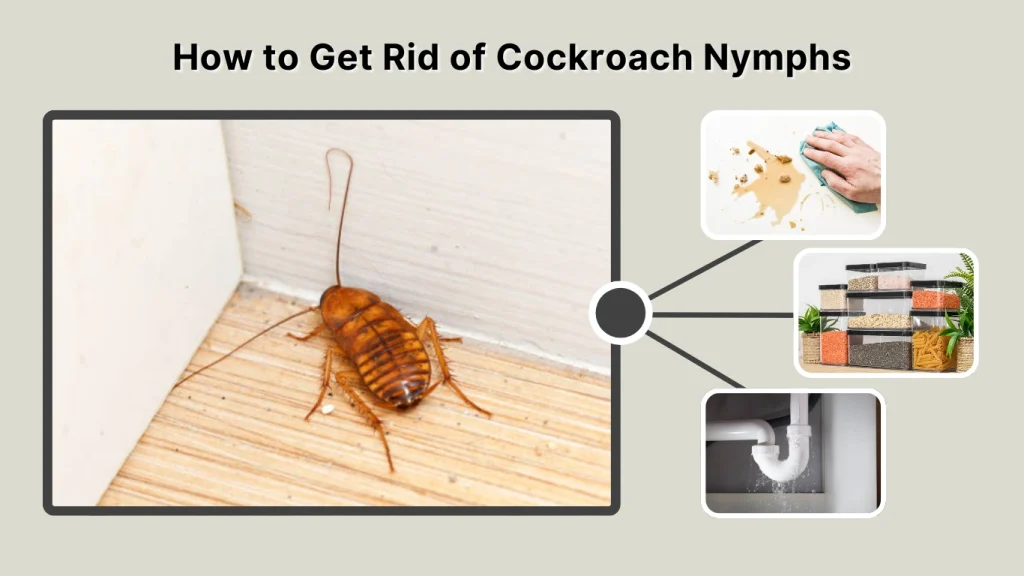
Eliminating cockroach nymphs requires more than just killing the ones you see. Because they develop quickly, a complete control strategy is necessary.
Immediate Steps to Take
Start by removing the conditions that allow roaches to thrive:
- Clean up food spills and crumbs immediately
- Store dry goods in airtight containers
- Take trash out regularly
- Fix leaking pipes and reduce moisture
- Seal cracks and small entry points
Reducing access to food and water weakens the population and improves the effectiveness of treatments.
Best Treatment Options
For active infestations, targeted treatments work best.
Gel baits are highly effective because roaches consume the bait and carry it back to nesting areas. This can eliminate hidden populations over time.
Boric acid can be applied in thin layers inside wall voids and behind appliances. When roaches walk through it, the powder damages their exoskeleton and is ingested during grooming.
Insect Growth Regulators (IGRs) are especially useful against nymphs. These products disrupt development, preventing immature roaches from reaching adulthood and reproducing.
In severe infestations, professional pest control services may be necessary to locate and eliminate hidden nesting sites.
Preventing Future Infestations
Prevention is just as important as treatment.
- Maintain consistent cleaning routines
- Reduce indoor humidity
- Store food properly
- Inspect dark, hidden spaces regularly
- Avoid leaving pet food out overnight
Regular maintenance helps ensure that even if a few roaches enter, they cannot establish a breeding population.
Cockroach Nymph vs Similar Household Bugs
Because cockroach nymphs are small and wingless, they are often mistaken for other pests.
Bed bugs are smaller, rounder, and typically found near sleeping areas. They do not have long antennae like roaches.
Beetles often have harder, more rounded shells and shorter antennae.
Termites are pale and soft-bodied, usually found near wood structures rather than kitchens.
If you’re unsure, look for key roach features: long antennae, fast movement, flattened body shape, and a preference for dark, humid spaces.
Correct identification is important because treatment methods differ depending on the pest.
FAQs
Do cockroach nymphs fly?
No, cockroach nymphs cannot fly. They do not have fully developed wings. Some later-stage nymphs may show small wing pads, but functional wings only appear in adulthood for certain species.
How small are cockroach nymphs?
Early-stage nymphs can be just a few millimeters long. As they grow and molt, they increase in size and may eventually resemble smaller versions of adult roaches.
Are cockroach nymphs a sign of infestation?
Yes, seeing nymphs typically indicates an active indoor infestation. Because young roaches stay close to nesting areas, their presence means eggs have already hatched nearby.
What color are cockroach nymphs?
Cockroach nymphs are usually brown or reddish-brown. Immediately after molting, they appear white or pale until their outer shell hardens and darkens.
How long does it take for a nymph to become an adult?
Depending on the species and environmental conditions, the nymph stage can last from several weeks to several months. Warm temperatures and easy access to food speed up development.
Conclusion
Cockroach nymphs are more than just small bugs—they are early-stage roaches that signal active reproduction inside your home. Because they grow quickly and eventually become breeding adults, early identification and prompt action are essential.
By understanding what cockroach nymphs look like, how they develop, and why they appear indoors, you can take effective steps to eliminate infestations and prevent them from returning. Consistent sanitation, moisture control, and targeted treatments are key to keeping your home roach-free.