
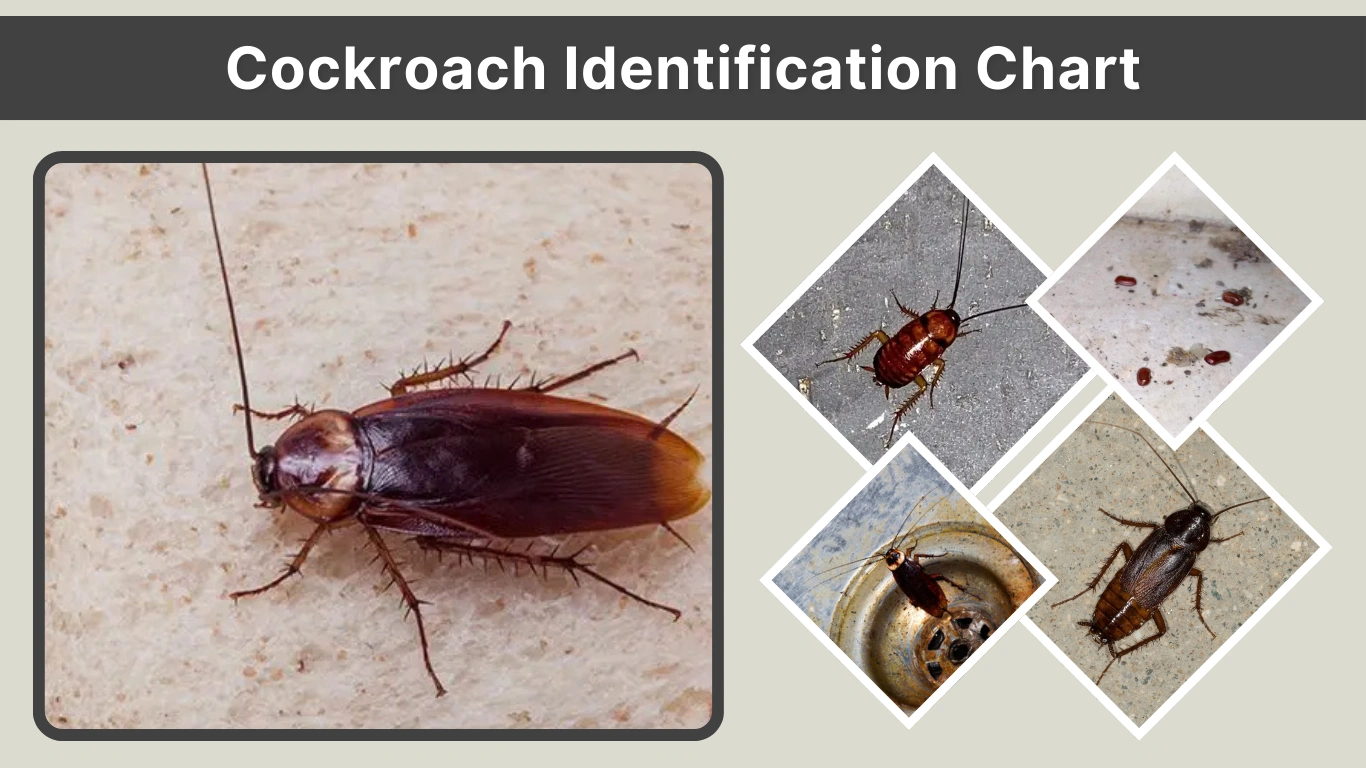
Correctly identifying a cockroach species is the first step toward effective control. Many homeowners assume all roaches are the same, but different species vary in size, color, behavior, and habitat. Some thrive indoors and reproduce rapidly, while others typically live outside and only wander in occasionally. Misidentifying the species can lead to ineffective treatment and recurring problems. By understanding key physical traits and habitat clues, you can use a cockroach identification chart to determine which type you’re dealing with and choose the most appropriate solution.
Why Accurate Cockroach Identification Is Important
Not all cockroaches behave the same way. Some species are highly invasive indoor pests, while others prefer damp outdoor environments. Proper identification helps determine how serious the infestation may be and what control strategies will work best.
Species-Specific Behavior Differences
Different cockroach species have unique habits. For example, German cockroaches reproduce quickly and prefer warm indoor kitchens and bathrooms. Oriental cockroaches thrive in damp, cool areas like basements and drains. American cockroaches are larger and often enter homes from sewer systems or outdoor environments.
Reproduction rates also vary. German cockroaches multiply rapidly, making infestations grow quickly. Other species reproduce more slowly, which affects how urgently treatment must be applied.
Indoor vs Outdoor Cockroaches
Some cockroaches, like the German and brown-banded species, primarily live indoors and rarely survive outside. Others, such as American and smokybrown cockroaches, typically live outdoors but may enter homes seeking food or moisture.
Understanding whether the species is an indoor breeder or an occasional invader helps determine whether the issue is an active infestation or a temporary problem.
Cockroach Identification Chart (Quick Reference Guide)
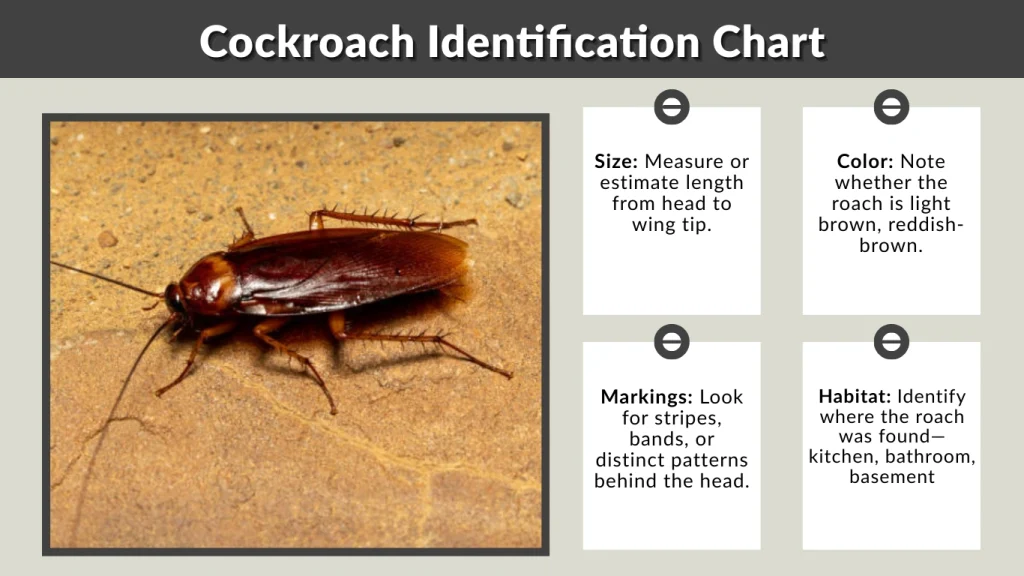
A cockroach identification chart allows you to compare species based on size, color, markings, and habitat. When using a chart, focus on these key features:
- Size: Measure or estimate length from head to wing tip.
- Color: Note whether the roach is light brown, reddish-brown, or dark brown/black.
- Markings: Look for stripes, bands, or distinct patterns behind the head.
- Habitat: Identify where the roach was found—kitchen, bathroom, basement, or outdoors.
Most identification charts include columns such as:
- Species Name
- Average Size
- Color
- Distinctive Features
- Preferred Habitat
- Common Indoor Locations
Using these categories makes it easier to narrow down the species quickly and accurately.
Most Common Cockroach Species in Homes
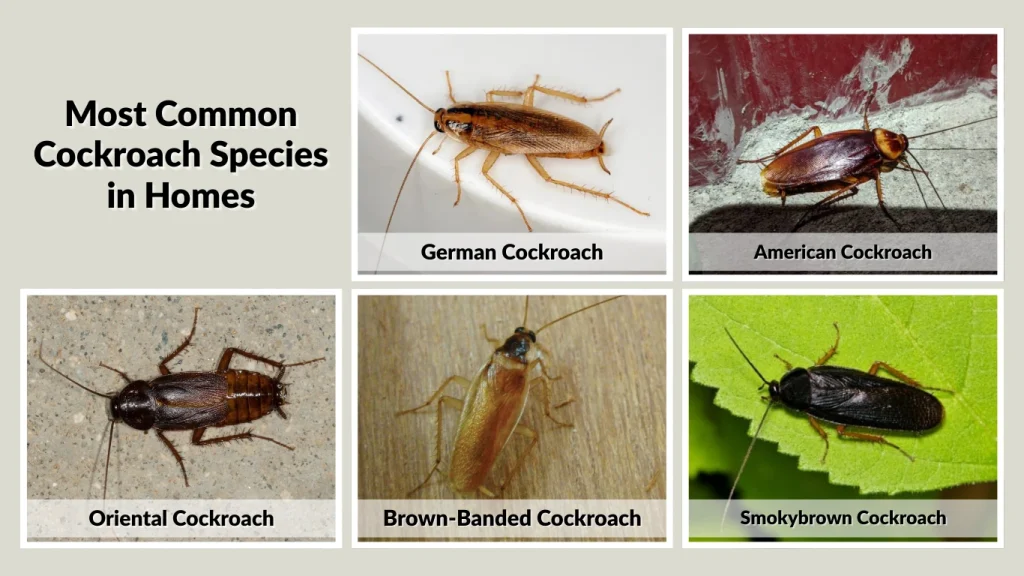
Several cockroach species are commonly found in residential settings. Recognizing their unique characteristics is essential for proper identification.
German Cockroach
The German cockroach is the most common indoor species. It measures about ½ to ⅝ inch long and is light brown to tan in color. Its most distinctive feature is two dark parallel stripes running from the head down to the wings.
German cockroaches are typically found in kitchens and bathrooms, especially near food and water sources. They reproduce rapidly, which means infestations can spread quickly if not addressed promptly. Seeing small light-brown roaches in cabinets or under sinks often indicates this species.
American Cockroach
The American cockroach is much larger, ranging from 1½ to 2 inches long. It is reddish-brown and has a yellowish figure-eight marking behind its head. This species is sometimes called the “palmetto bug.”
American cockroaches prefer basements, crawl spaces, and sewer systems. They can enter homes through drains or foundation cracks. Unlike German cockroaches, they are more likely to be found in lower levels of buildings and may fly short distances.
Oriental Cockroach
Oriental cockroaches are dark brown to black and have a shiny appearance. They are slightly smaller than American cockroaches but larger than German cockroaches.
These roaches prefer damp, cool environments and are often found in basements, drains, and areas with high moisture. Because of their preference for water, they are sometimes referred to as “water bugs.” Their slow movement and dark coloration help distinguish them from other species.
Brown-Banded Cockroach
Brown-banded cockroaches are smaller, similar in size to German cockroaches, but lighter in color. They have distinct light-colored bands across their wings and abdomen.
Unlike German cockroaches, brown-banded roaches are less dependent on moisture. They may be found in bedrooms, living rooms, and even inside electronics or furniture. Spotting small roaches in dry areas away from kitchens may indicate this species.
Smokybrown Cockroach
The smokybrown cockroach is large, typically measuring 1¼ to 1½ inches long. It has a uniform dark brown or mahogany color without the lighter markings seen on American cockroaches. Its wings extend fully over the abdomen, and it is a strong flier.
This species is more common in warm, humid climates. Smokybrown cockroaches usually live outdoors in trees, mulch, gutters, and leaf piles but may enter homes through attics, vents, or small openings. Finding large, dark brown flying roaches near light sources can indicate this species.
How to Identify Cockroaches by Size and Color
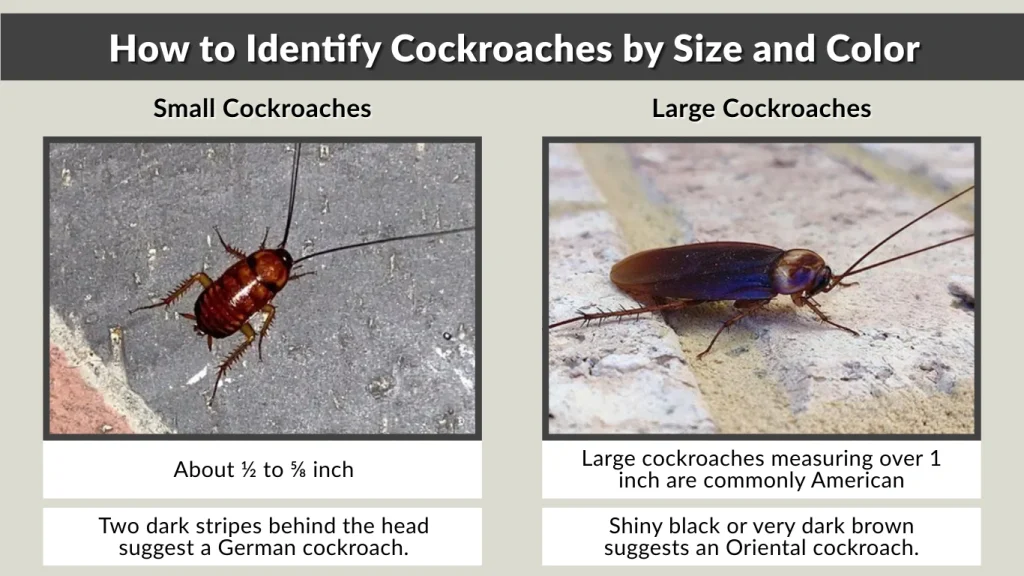
Size and color are two of the fastest ways to narrow down a cockroach species.
Small Cockroaches (Under 1 Inch)
If the cockroach is small—about ½ to ⅝ inch—it is most likely a German or brown-banded cockroach. Check for distinguishing features:
- Two dark stripes behind the head suggest a German cockroach.
- Light bands across the wings or abdomen point to a brown-banded cockroach.
These smaller species are often linked to indoor infestations.
Large Cockroaches (Over 1 Inch)
Large cockroaches measuring over 1 inch are commonly American, Oriental, or smokybrown species.
- Reddish-brown with a yellow marking behind the head typically indicates an American cockroach.
- Shiny black or very dark brown suggests an Oriental cockroach.
- Uniform dark brown with long wings often signals a smokybrown cockroach.
Color and Marking Clues
Carefully observe body markings. Stripes, bands, or distinctive patterns behind the head are strong identification indicators. Uniform coloring without stripes may point to larger outdoor species.
Lighting conditions can affect how colors appear, so examining the insect in natural light can improve accuracy.
Identifying Cockroach Nymphs (Baby Roaches)
Cockroach nymphs look different from adults, which can make identification more challenging. Nymphs are smaller, wingless, and often darker in color than mature roaches.
For example, German cockroach nymphs are dark brown with a lighter stripe running down the middle of their backs. As they mature, they develop wings and the characteristic twin stripes behind the head.
Seeing nymphs indoors usually indicates active breeding. Because nymphs cannot travel far, their presence suggests that a nest is nearby. Identifying nymphs early can help prevent a growing infestation.
Cockroach Identification by Habitat
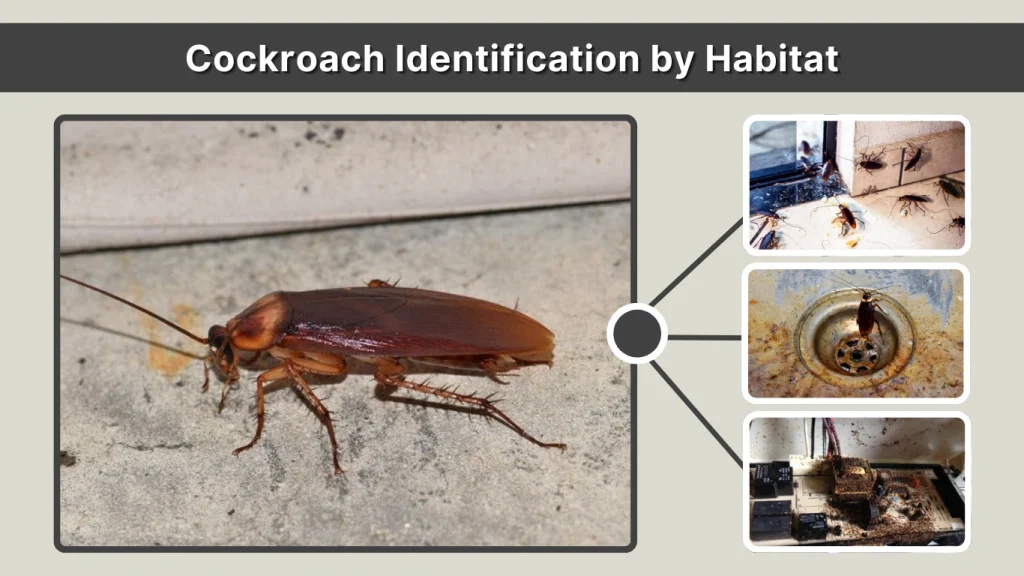
Location plays a major role in species identification.
Kitchen and Pantry Cockroaches
Roaches frequently found in kitchens—especially near sinks, dishwashers, and cabinets—are often German cockroaches. Their preference for warmth and moisture makes kitchens an ideal environment.
Bathroom and Drain Cockroaches
Cockroaches seen near drains, basements, or damp crawl spaces may be Oriental or American cockroaches. Their need for moisture draws them to plumbing systems and water sources.
Outdoor and Garden Species
Large roaches found near mulch, leaf piles, or exterior walls are often American or smokybrown cockroaches. These species may wander indoors during extreme weather or in search of food.
Matching habitat clues with physical traits improves identification accuracy.
Identifying Cockroach Droppings and Egg Cases
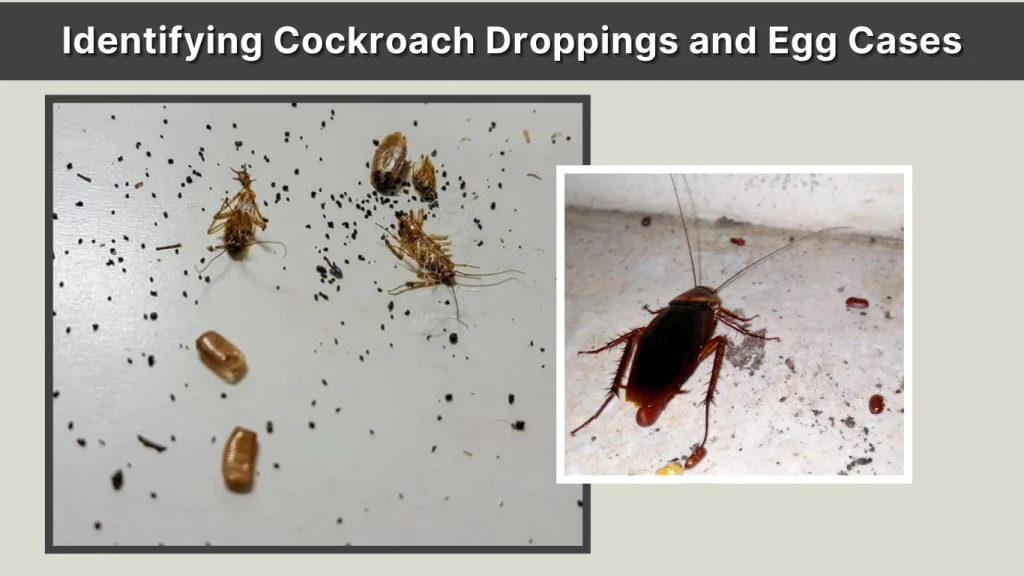
Even if you don’t see a live cockroach, other signs can help with identification.
What Droppings Look Like
Small cockroaches, such as German roaches, leave droppings that resemble black pepper or coffee grounds. Larger species produce cylindrical droppings with blunt ends.
The size of droppings often corresponds with the size of the cockroach.
Egg Casings (Oothecae)
Cockroach egg cases, called oothecae, are oval-shaped and brown or reddish in color. German cockroaches often carry their egg cases until just before hatching, while other species deposit them in hidden areas.
Finding egg casings in cabinets or near appliances usually indicates an indoor breeding species.
German vs American Cockroach: Key Differences
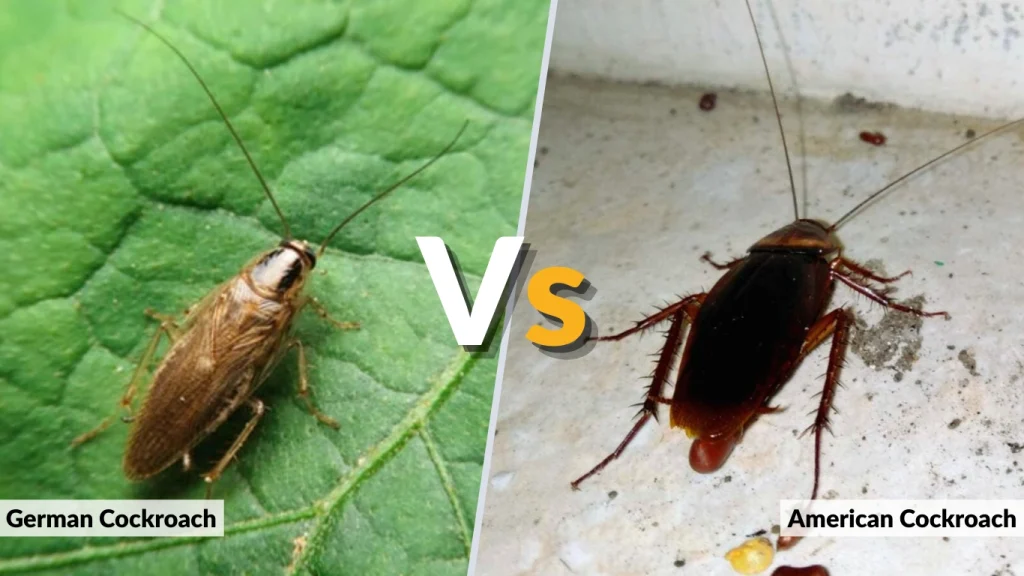
German and American cockroaches are often confused, but their differences are significant.
German cockroaches are small, light brown, and have two dark stripes behind the head. They reproduce rapidly and primarily live indoors, especially in kitchens and bathrooms.
American cockroaches are much larger, reddish-brown, and feature a yellowish marking behind the head. They are more commonly found in basements, sewers, and outdoor areas.
Correctly distinguishing between these two species is crucial, as German cockroach infestations typically require more aggressive and immediate treatment.
What to Do After Identifying the Species
Once you’ve identified the cockroach species, tailor your control strategy accordingly. Indoor breeding species like German cockroaches require thorough sanitation, baiting, and possibly professional treatment.
Outdoor invaders may be controlled by sealing entry points, reducing moisture, and maintaining exterior cleanliness. Accurate identification allows you to choose the most effective and targeted solution.
Conclusion
Using a cockroach identification chart makes it easier to determine which species is present in your home. By examining size, color, markings, and habitat, you can narrow down the possibilities and take appropriate action.
Accurate identification is the foundation of effective control. The sooner you identify the species and address the source of the problem, the better your chances of preventing a full infestation and protecting your home.