
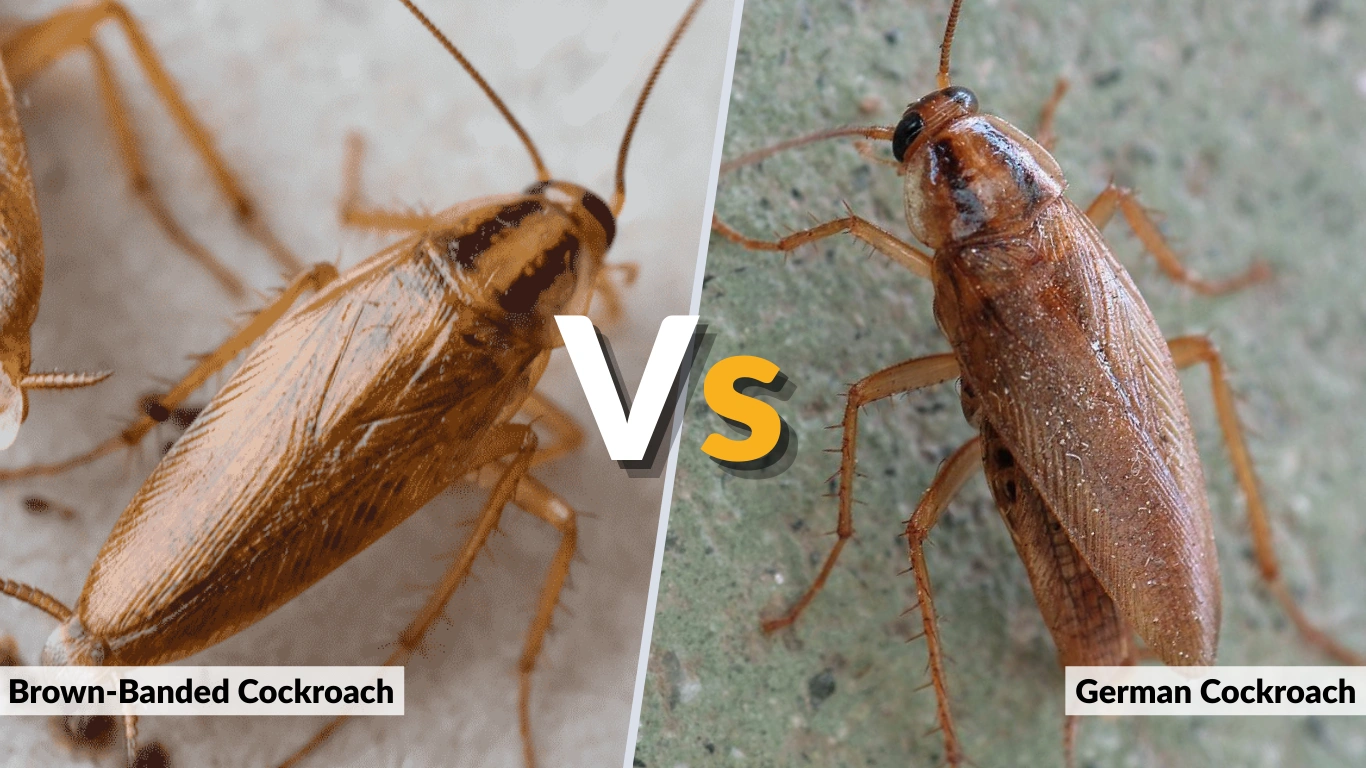
Brown-banded and German cockroaches are two of the most common indoor roach species found in homes and apartments. Because they are similar in size and color, many homeowners confuse them. However, these two species differ significantly in appearance, behavior, habitat preferences, and infestation patterns. Correct identification is essential because treatment strategies vary depending on the species. Understanding their differences can help you respond quickly and choose the most effective control approach before a small problem becomes a major infestation.
Quick Comparison Overview
Before diving into the details, here’s a general comparison:
- Size: German cockroaches are slightly larger and broader; brown-banded roaches are smaller and more slender.
- Markings: German roaches have two dark vertical stripes behind the head; brown-banded roaches have light horizontal bands across the body.
- Habitat: German roaches prefer kitchens and bathrooms; brown-banded roaches prefer dry areas like bedrooms and living rooms.
- Egg Cases: German females carry their egg cases; brown-banded females attach them to surfaces.
- Reproduction Speed: German cockroaches reproduce faster and spread more aggressively.
Now let’s explore these differences in detail.
Identification Differences
Size and Overall Appearance
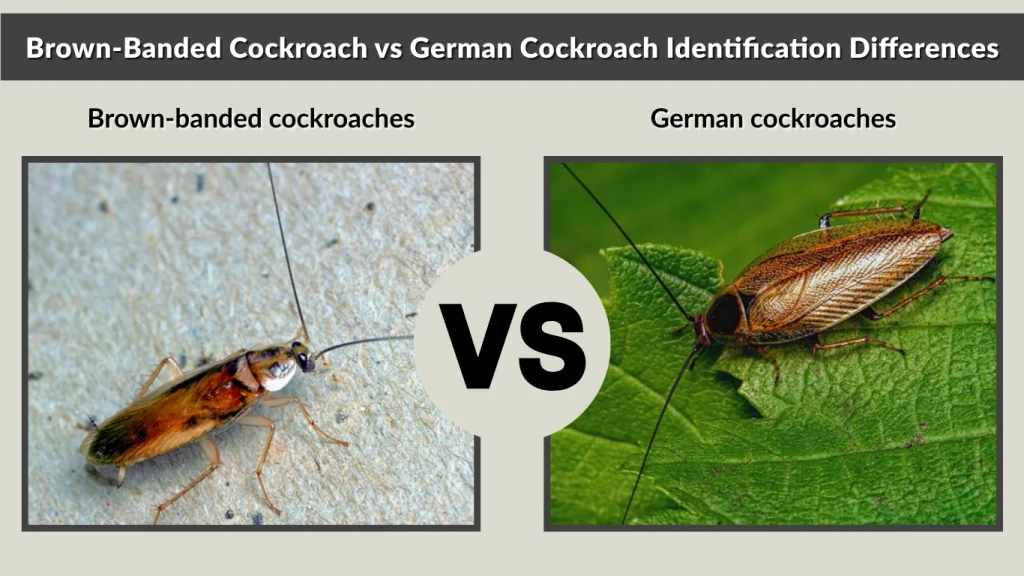
German cockroaches typically measure about 1/2 to 5/8 inch long as adults. They have a tan to light brown color and a slightly broader body shape.
Brown-banded cockroaches are a bit smaller, usually around 1/2 inch or less. They are light brown to dark brown and have a more slender appearance. Males tend to be slimmer and more active, while females are slightly wider with shorter wings.
Although size differences are subtle, the body shape and markings make identification easier when examined closely.
Distinctive Markings
Markings are the most reliable way to tell these two species apart.
German Cockroach Markings:
German cockroaches have two dark, parallel vertical stripes running down the pronotum (the shield-like area behind the head). These stripes are clearly visible and are the most recognizable identification feature.
Brown-Banded Cockroach Markings:
Brown-banded cockroaches have two lighter-colored horizontal bands across their wings and abdomen. These bands may appear more pronounced in nymphs (immature roaches). The bands give this species its name and help distinguish it from other roaches.
If you notice stripes running lengthwise behind the head, you are likely dealing with German cockroaches. If you see lighter bands running across the body, it is most likely a brown-banded cockroach.
Wings and Flying Ability
Both species have wings as adults, but their use of them differs.
German cockroaches have fully developed wings but rarely fly indoors. They primarily run and prefer staying close to food and moisture sources.
Brown-banded cockroach males are more capable of short flights, especially when disturbed. Females have shorter wings and typically do not fly. While neither species is known for strong flight, brown-banded cockroaches are slightly more likely to glide or flutter.
Habitat and Hiding Spots
One of the biggest differences between brown-banded and German cockroaches is where they prefer to live inside the home.
Brown-Banded Cockroach Habitat
Brown-banded cockroaches prefer warm, dry environments. Unlike many other roach species, they are not highly dependent on moisture. They are often found in:
- Bedrooms
- Living rooms
- Closets
- Inside furniture
- Behind picture frames
- Inside cabinets away from sinks
- Near ceilings or high on walls
They tend to occupy higher areas in a room, including shelves and upper cabinets. Electronics are also common hiding spots because they provide warmth.
This wide distribution throughout the home makes brown-banded infestations harder to detect at first.
German Cockroach Habitat
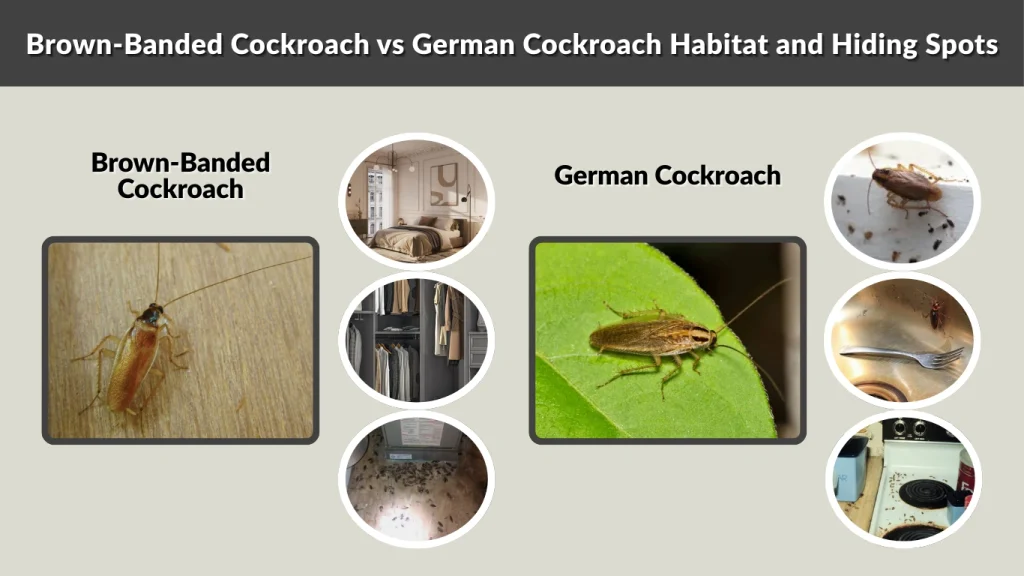
German cockroaches prefer warm, humid environments and are strongly attracted to moisture. They are most commonly found in:
- Kitchens
- Bathrooms
- Under sinks
- Behind refrigerators
- Inside dishwashers
- Near plumbing fixtures
They typically stay close to food and water sources. Unlike brown-banded cockroaches, German roaches are usually found near the floor or lower cabinets rather than high walls or ceilings.
If you are consistently seeing roaches in kitchen cabinets or around sinks, German cockroaches are the more likely culprit.
Behavior Differences
Although both species are nocturnal and avoid light, their survival needs and movement patterns differ significantly.
Moisture Requirements
German cockroaches require frequent access to water. They cannot survive long in dry environments and are highly dependent on moisture. This is why infestations are concentrated around kitchens and bathrooms.
Brown-banded cockroaches, on the other hand, can survive in much drier conditions. They obtain moisture from food and do not need to stay near water sources. This allows them to spread into bedrooms, offices, and other dry areas of the home.
Distribution Within the Home
German cockroach infestations are usually centralized around food preparation areas. While they may spread, their populations tend to cluster in kitchens and bathrooms.
Brown-banded cockroaches are more scattered. Because they do not rely heavily on moisture, they can infest multiple rooms at once. You may find them in areas where food is not even present.
This difference in distribution plays a major role in treatment strategies, which we will discuss in the next section.
Reproduction and Life Cycle Differences
Reproductive behavior is one of the most important distinctions between brown-banded and German cockroaches, especially when it comes to how quickly an infestation can grow.
Egg Case (Ootheca) Behavior
Both species produce egg cases called oothecae, but they handle them very differently.
German Cockroach:
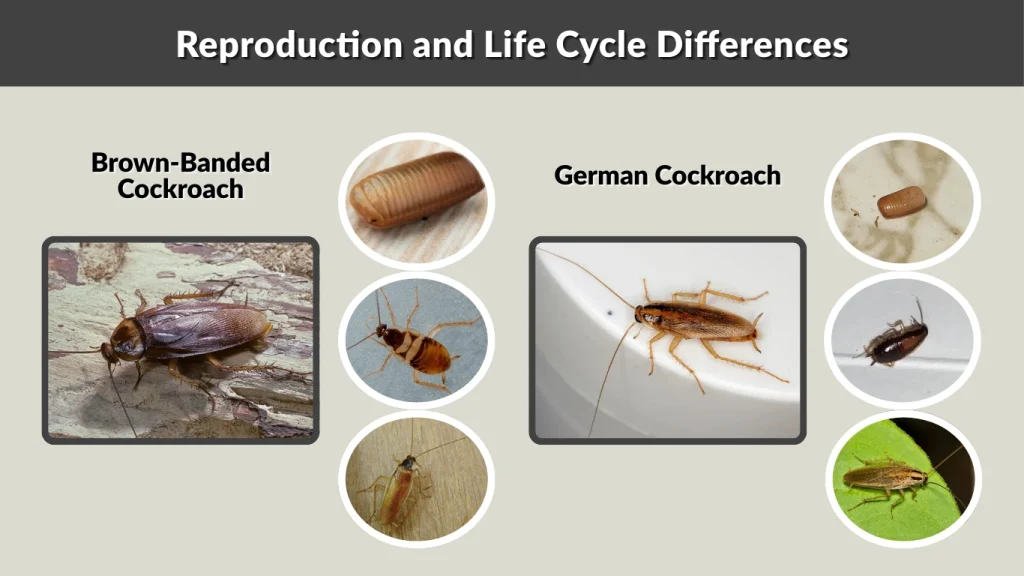
Female German cockroaches carry their egg case protruding from the abdomen until just before the eggs hatch. Each egg case may contain 30–40 eggs. Because the female protects the eggs until they are nearly ready to emerge, survival rates are high.
Brown-Banded Cockroach:
Brown-banded females do not carry the egg case for long. Instead, they attach it to hidden surfaces such as furniture, ceilings, cabinets, or behind appliances. Each egg case typically contains about 10–18 eggs.
This behavioral difference is important because brown-banded egg cases are often glued in unexpected areas throughout the home.
Reproduction Speed
German cockroaches reproduce much faster than brown-banded cockroaches. A single female German cockroach can produce thousands of offspring within a year under ideal conditions. This rapid reproduction makes German infestations more aggressive and harder to control once established.
Brown-banded cockroaches reproduce more slowly, but their ability to spread into multiple dry areas makes them persistent and difficult to fully eliminate if egg cases are missed.
Signs of Infestation
Identifying early warning signs helps determine which species is present and how severe the infestation may be.
Brown-Banded Cockroach Signs
- Roaches spotted in bedrooms or living rooms
- Activity in upper cabinets or high on walls
- Egg cases attached to furniture or ceilings
- Damage to books, paper, wallpaper, or fabrics
- Small droppings resembling black pepper in dry areas
Because they hide in less obvious places, brown-banded infestations may go unnoticed longer.
German Cockroach Signs
- Frequent sightings in kitchens and bathrooms
- Roaches emerging when lights are turned on
- Strong, musty odor in heavy infestations
- Droppings in drawers and food cabinets
- Egg cases visible protruding from females
If German cockroaches are seen during the daytime, it often indicates a severe infestation, as overcrowding forces them into the open.
Health Risks Comparison
Both brown-banded and German cockroaches pose health risks, but the level of exposure may vary depending on infestation size and location.
Allergen Production
Cockroach saliva, droppings, and shed skins contain allergens that can trigger asthma attacks and allergic reactions. German cockroaches are more commonly linked to asthma problems, particularly in urban apartments, because they tend to infest kitchens where food contamination is more likely.
Brown-banded cockroaches also produce allergens, but their scattered distribution throughout the home increases the chance of allergens spreading into bedrooms and living spaces.
Bacterial Contamination
Both species can carry bacteria such as:
- Salmonella
- E. coli
- Other pathogens picked up from unsanitary environments
They contaminate surfaces by crawling across food, countertops, and utensils. German cockroaches may present a higher contamination risk in kitchens due to their close proximity to food preparation areas.
Treatment and Control Differences
Because these species behave differently, treatment methods must be adjusted accordingly.
Brown-Banded Cockroach Control
Effective control strategies include:
- Placing gel baits in upper cabinets, behind wall décor, and inside furniture
- Treating cracks and crevices high on walls
- Inspecting electronics for hiding spots
- Removing egg cases manually when found
- Using insect growth regulators (IGRs) to disrupt development
Since brown-banded roaches spread throughout dry areas, treatment must extend beyond the kitchen.
German Cockroach Control
German cockroach control typically focuses on moisture-rich areas:
- Applying gel baits under sinks and behind appliances
- Sealing plumbing entry points
- Fixing leaks and reducing humidity
- Thoroughly cleaning grease and food residue
- Using IGRs and targeted residual insecticides
Because of their rapid reproduction, consistent and aggressive treatment is often required.
Professional Pest Control Considerations
While small infestations may be managed with DIY methods, German cockroach infestations often require professional treatment due to their high reproductive rate.
Brown-banded infestations may also require professional help if egg cases are widely distributed or hidden in hard-to-reach areas.
Prevention Tips for Both Species
Preventing cockroach infestations involves consistent sanitation and structural maintenance.
- Store food in airtight containers
- Clean spills immediately
- Vacuum regularly, including hidden areas
- Reduce clutter to limit hiding spots
- Seal cracks and crevices with caulk
- Repair leaks and control humidity
For brown-banded cockroaches specifically, inspect upper walls and furniture. For German cockroaches, prioritize moisture control in kitchens and bathrooms.