
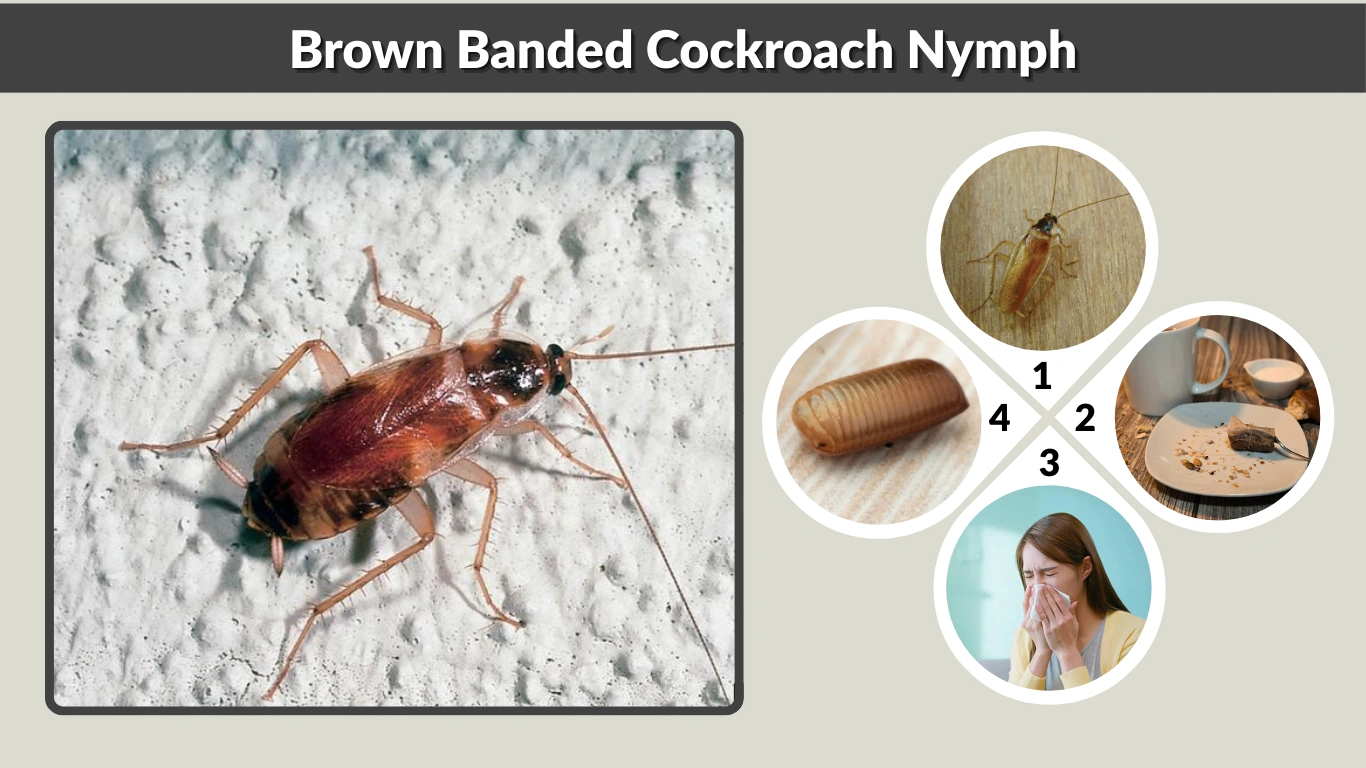
The brown banded cockroach nymph is a small but persistent household pest that often goes unnoticed until an infestation becomes well established. Unlike larger roach species that prefer damp basements or kitchens, brown banded cockroaches can thrive in drier, warmer areas of a home. Their nymphs—immature stages of the insect—are especially important to recognize because early identification can prevent a full-blown infestation. Understanding what these nymphs look like, how they behave, and how to control them is key to maintaining a pest-free living space.
What Is a Brown Banded Cockroach Nymph?
A brown banded cockroach nymph is the immature form of Supella longipalpa, commonly known as the brown banded cockroach. Like other cockroach species, they undergo incomplete metamorphosis, meaning they hatch from eggs looking like small versions of the adults. They gradually molt several times before reaching maturity.
Nymphs differ from adults mainly in size, color, and wing development. While adults have fully formed wings (though they do not always fly), nymphs are wingless and smaller. Despite their size, they are just as capable of spreading bacteria and contaminating food.
Physical Characteristics
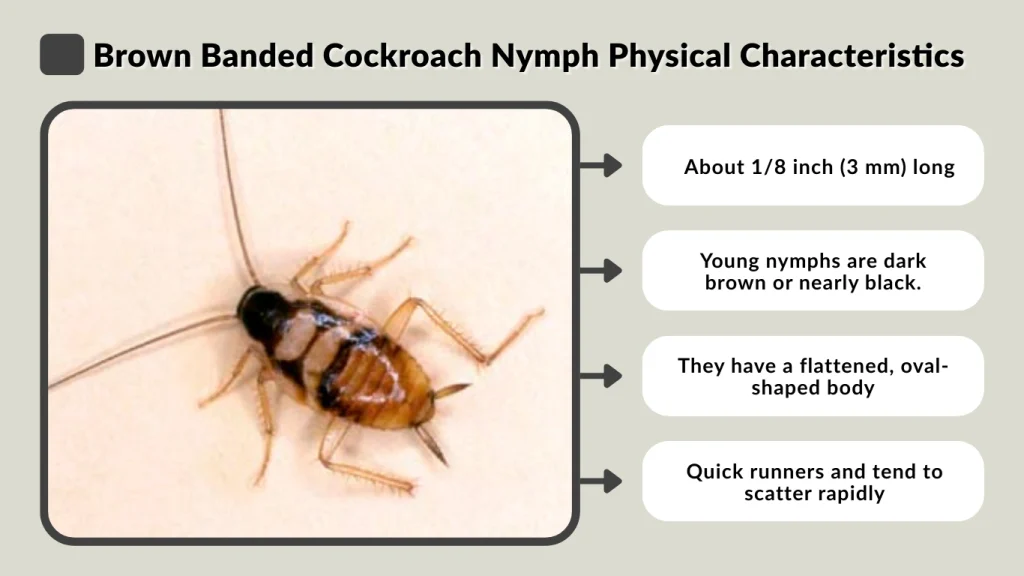
Identifying brown-banded cockroach nymphs accurately can help distinguish them from other roach species.
Size
Newly hatched nymphs measure about 1/8 inch (3 mm) long. As they grow and molt, they gradually increase in size until they reach about 1/2 inch (13 mm) as adults.
Color
Young nymphs are dark brown or nearly black. As they mature, they develop distinctive light brown or tan bands that run across their bodies. These horizontal bands are what give the species its name.
Body Shape
They have a flattened, oval-shaped body, long antennae, and six spiny legs. Their flattened shape allows them to squeeze into tight cracks and crevices.
Movement
Brown banded cockroach nymphs are quick runners and tend to scatter rapidly when exposed to light. They are nocturnal, meaning they are most active at night.
Life Cycle of the Brown Banded Cockroach
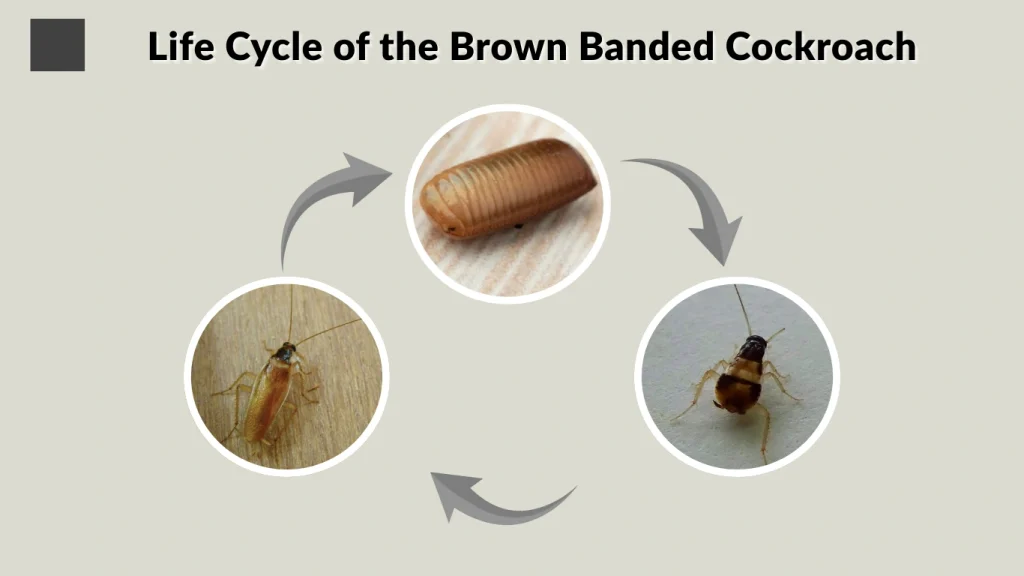
Understanding the life cycle is essential for effective pest control.
Egg Stage
Female brown banded cockroaches produce egg cases called oothecae. Each ootheca contains around 10–18 eggs. Unlike German cockroaches, which carry their egg cases until just before hatching, brown banded females attach the egg cases to surfaces in hidden areas.
Common egg-laying sites include:
- Furniture
- Behind picture frames
- Inside cabinets
- Under tables
- Within electronics
The eggs hatch in about 50–75 days, depending on temperature.
Nymph Stage
After hatching, nymphs go through several molts (typically 6–8 instars). This stage may last between 3 to 6 months, depending on environmental conditions such as warmth and food availability.
During each molt, the nymph sheds its exoskeleton, leaving behind a translucent skin that may be visible in infested areas.
Adult Stage
Once mature, brown banded cockroaches can live for about 5 to 6 months. Females may produce multiple egg cases during their lifetime, leading to rapid population growth if left unchecked.
Habitat and Preferred Environments
One of the defining features of brown banded cockroach nymphs is their preference for warm, dry environments.
Unlike other cockroach species that gravitate toward moisture, brown banded cockroaches prefer temperatures around 80°F (27°C) or higher. They are commonly found in:
- Bedrooms
- Living rooms
- Closets
- Office spaces
- Upper cabinets
- Near ceilings
They are often located higher up on walls or furniture rather than near the floor. This unusual behavior can help distinguish them from German cockroaches.
Electronics are also a common hiding place. The warmth generated by appliances like televisions, routers, and computers provides an ideal environment for both nymphs and adults.
Diet and Feeding Habits
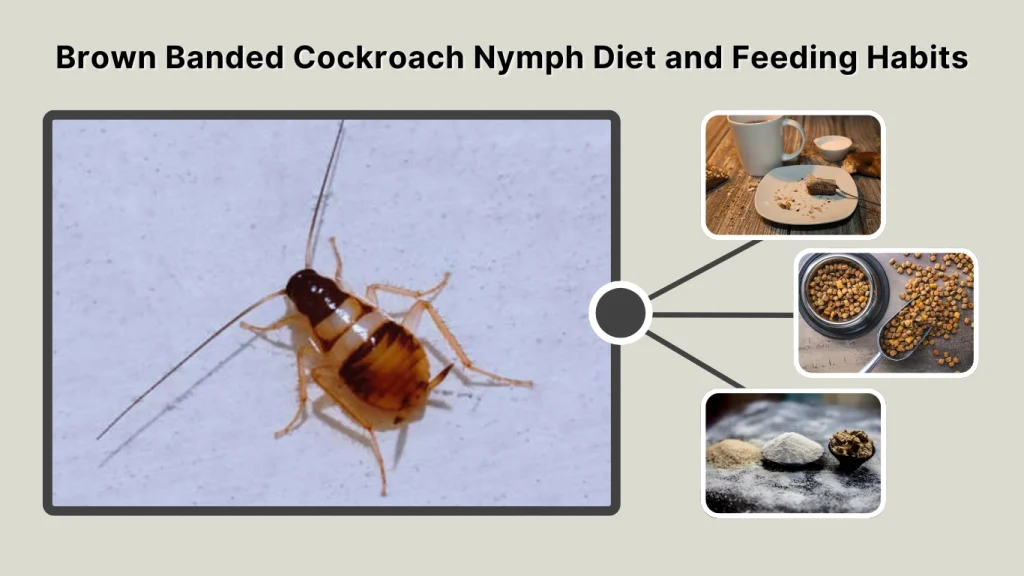
Brown banded cockroach nymphs are scavengers and will consume a wide variety of organic materials.
Common food sources include:
- Crumbs and food debris
- Pet food
- Glue
- Paper
- Starch-based materials
- Fabric fibers
- Book bindings
Their ability to survive on non-food items like wallpaper paste or book glue makes them particularly difficult to eliminate without targeted control measures.
Signs of Infestation
Early detection of brown banded cockroach nymphs can prevent widespread infestation.
1. Sightings
Seeing small, dark brown roaches with light bands—especially during the day—can indicate a growing population.
2. Egg Cases
Small, capsule-shaped egg cases may be found attached to furniture or hidden surfaces.
3. Shed Skins
Molted exoskeletons are often found in hiding areas.
4. Fecal Droppings
Droppings resemble black pepper or coffee grounds and may appear on shelves, drawers, or high surfaces.
5. Damage
Chewed paper, books, or fabric can be a sign of feeding activity.
Health Risks
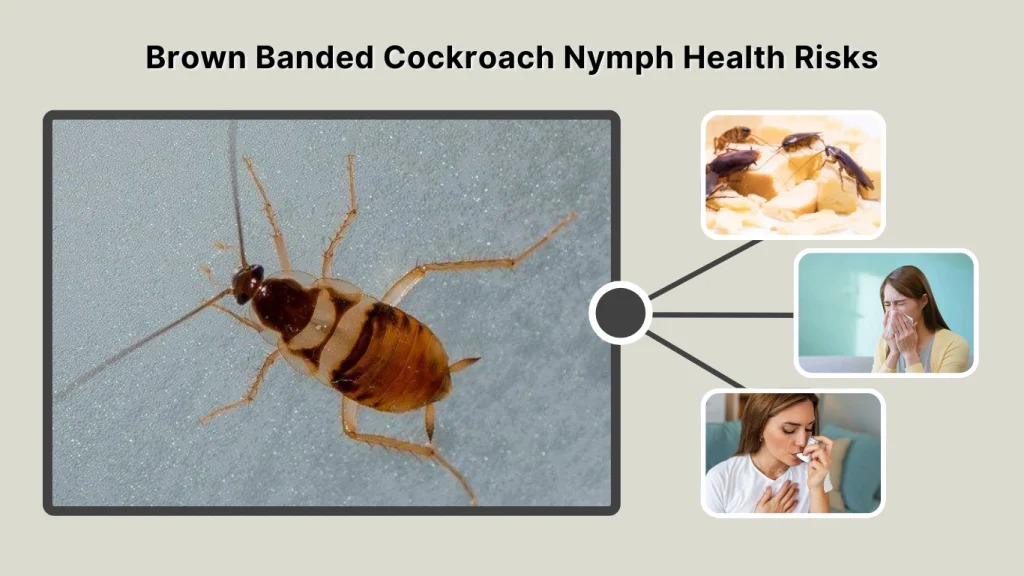
While brown banded cockroach nymphs do not bite humans, they can pose health concerns.
Allergen Production
Cockroach saliva, droppings, and shed skins contain allergens that can trigger asthma and allergic reactions, especially in children.
Bacterial Contamination
Cockroaches can carry bacteria such as Salmonella and E. coli, potentially contaminating food and surfaces.
Psychological Impact
Infestations can cause stress, anxiety, and embarrassment for homeowners.
Prevention Strategies
Preventing brown banded cockroach nymph infestations requires proactive steps.
1. Reduce Clutter
Clutter provides hiding places. Keeping areas organized reduces available harborage.
2. Seal Cracks and Crevices
Use caulk to seal gaps in walls, cabinets, and baseboards.
3. Store Food Properly
Keep food in airtight containers and clean up spills promptly.
4. Maintain Cleanliness
Regular vacuuming, especially in hidden areas, can remove eggs and nymphs.
5. Control Temperature
Reducing indoor warmth may make the environment less favorable for breeding.
Control and Treatment Options
If brown banded cockroach nymphs are already present, several treatment methods can help eliminate them.
1. Gel Baits
Cockroach gel baits are highly effective. Place them in cracks, behind appliances, and inside cabinets. Nymphs feed on the bait and carry toxins back to the nest.
2. Insect Growth Regulators (IGRs)
IGRs disrupt the development of nymphs, preventing them from reaching maturity and reproducing.
3. Boric Acid
Applied in thin layers in hidden areas, boric acid damages the cockroach’s digestive system when ingested.
4. Sticky Traps
These help monitor infestation levels and identify problem areas.
5. Professional Pest Control
Severe infestations often require professional treatment, especially when roaches are spread throughout multiple rooms.
Differences Between Brown Banded and German Cockroach Nymphs
Many homeowners confuse brown banded cockroach nymphs with German cockroach nymphs.
Key differences include:
- Location: Brown banded roaches prefer dry, elevated areas; German cockroaches prefer moist kitchens and bathrooms.
- Markings: Brown banded nymphs have horizontal light bands; German nymphs typically have two dark vertical stripes behind the head.
- Egg Cases: Brown banded females attach egg cases to surfaces; German females carry them until hatching.
Correct identification is crucial for proper control methods.
Why Early Detection Matters
Brown banded cockroach nymphs may seem minor due to their small size, but they represent the future reproductive population. Eliminating adults without targeting nymphs and egg cases often leads to reinfestation.
Because females can lay multiple egg cases, even a few surviving nymphs can restart the infestation cycle. Integrated pest management—combining sanitation, exclusion, and chemical control—is the most effective long-term solution.
Final Thoughts
The brown banded cockroach nymph is a small yet significant pest that thrives in warm, dry indoor environments. Recognizable by its dark body and light horizontal bands, this immature stage plays a critical role in the expansion of infestations. Unlike other roach species, brown banded cockroaches often inhabit higher and less obvious areas of the home, making early detection challenging.