
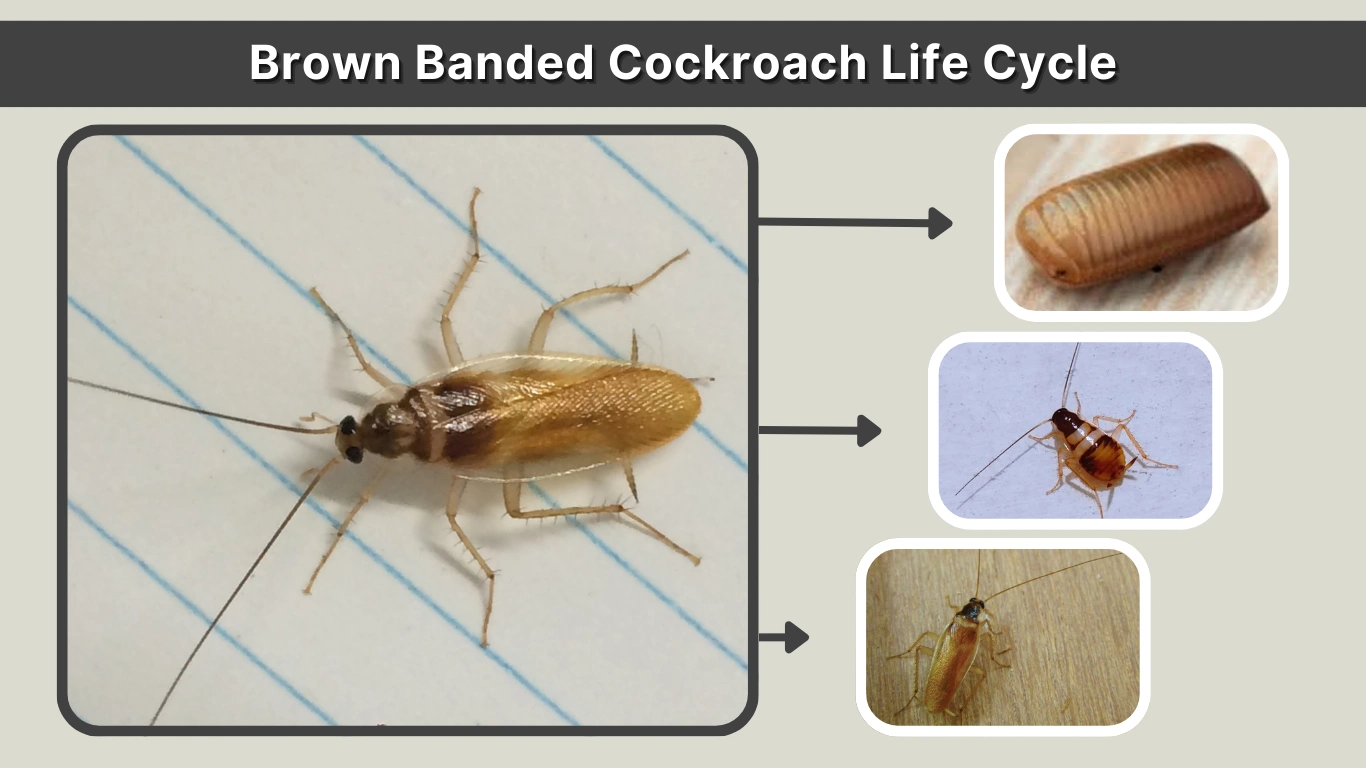
The brown banded cockroach life cycle explains how this indoor pest grows, reproduces, and spreads inside homes and buildings. Unlike some other cockroach species, brown banded cockroaches prefer warm, dry areas and often hide in ceilings, cabinets, and furniture. Understanding their life stages — from egg to adult — helps homeowners and pest control professionals break their breeding cycle and prevent infestations before they grow out of control.
Overview of the Brown Banded Cockroach
The brown banded cockroach (Supella longipalpa) is a small domestic species commonly found in apartments, houses, offices, and hotels. It gets its name from the two light brown bands that run across its wings and abdomen.
Adult males are light brown and fully winged, while females are slightly darker with shorter wings. Unlike German cockroaches, which prefer moist areas like kitchens and bathrooms, brown banded cockroaches thrive in warm, dry locations such as:
- Inside cabinets
- Behind picture frames
- Inside electronics
- Under furniture
- In closets and bedrooms
Because they spread egg cases throughout a structure rather than carrying them, infestations can become widespread quickly.
What Is the Life Cycle of a Brown Banded Cockroach?
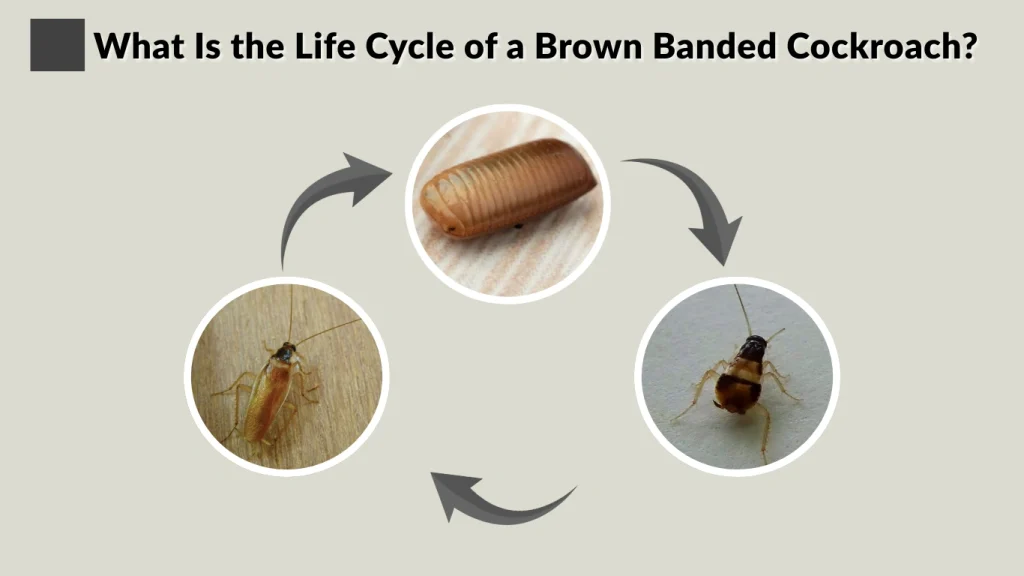
The brown banded cockroach undergoes incomplete metamorphosis, meaning it develops through three main stages:
- Egg
- Nymph
- Adult
There is no pupal stage like in butterflies. Young cockroaches resemble small adults and gradually grow larger through molting.
Under ideal indoor conditions, the entire life cycle typically takes 3 to 6 months, though it can extend longer depending on temperature and food availability.
Stage 1 – Egg Stage (Ootheca Development)
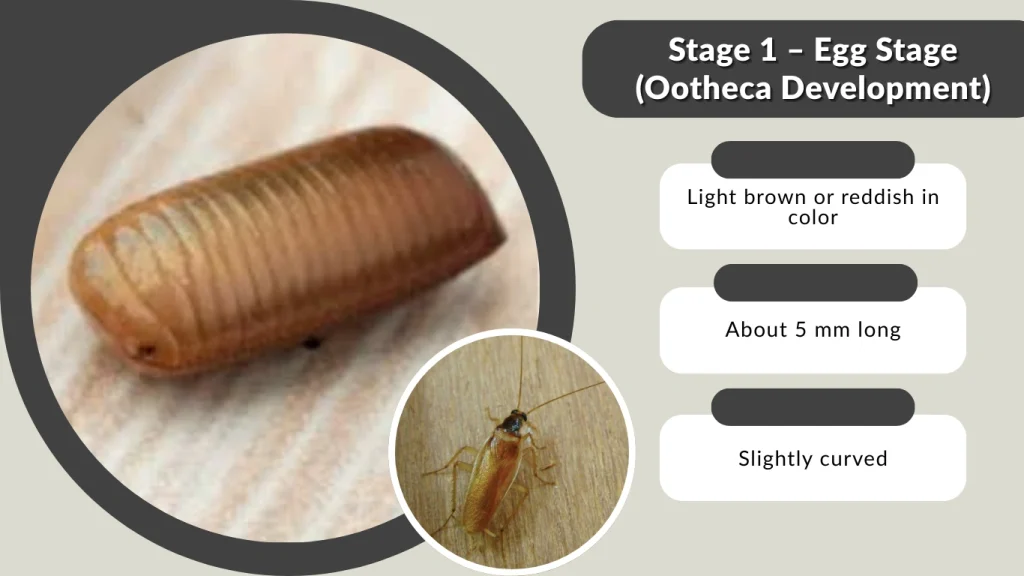
The egg stage begins when a fertilized female produces an egg case known as an ootheca.
What Is an Ootheca?
An ootheca is a small, capsule-shaped egg case that protects developing embryos. In brown banded cockroaches, it is:
- Light brown or reddish in color
- About 5 mm long
- Slightly curved
Unlike German cockroaches, females do not carry the egg case until hatching. Instead, they glue it to hidden surfaces such as ceilings, furniture, and walls.
How Many Eggs Are in One Ootheca?
Each brown banded cockroach ootheca contains approximately 10 to 18 eggs.
A single female can produce:
- Around 10 to 14 egg cases during her lifetime
- Over 150 offspring under favorable conditions
This reproductive ability allows infestations to grow steadily if not controlled early.
Incubation Period
Eggs typically hatch within 40 to 100 days, depending on environmental conditions.
Factors affecting hatching time include:
- Temperature (optimal range: 80–85°F)
- Humidity levels
- Availability of food nearby
Warmer indoor environments speed up development, while cooler conditions slow it down.
Once hatched, young cockroaches emerge as nymphs.
Stage 2 – Nymph Stage
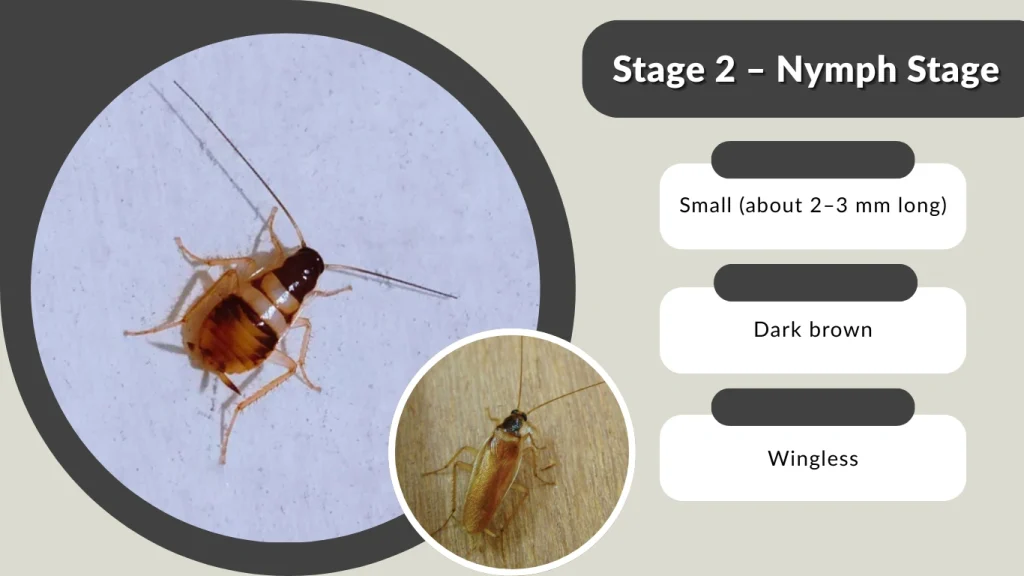
The nymph stage is the longest developmental period in the brown banded cockroach life cycle.
What Does a Brown Banded Cockroach Nymph Look Like?
Newly hatched nymphs are:
- Small (about 2–3 mm long)
- Dark brown
- Wingless
- Marked with light-colored bands across the abdomen
They resemble miniature adults but lack fully developed wings and reproductive organs.
How Many Molts Do They Go Through?
As nymphs grow, they shed their exoskeleton multiple times in a process called molting.
Brown banded cockroach nymphs typically go through:
- 6 to 8 molts (instars)
After each molt, they become larger and more developed. Molting allows them to expand their rigid outer shell and continue growing.
During this stage, they actively search for food and hiding spots, making them harder to detect inside homes.
Duration of the Nymph Stage
The nymph stage generally lasts 2 to 4 months, depending on:
- Temperature
- Food supply
- Population density
- Environmental stability
Warm, stable indoor climates allow nymphs to develop faster. Limited food or cooler temperatures can extend this period significantly.
Because nymphs remain hidden in elevated areas and dry locations, infestations often go unnoticed until adults begin appearing.
Stage 3 – Adult Stage
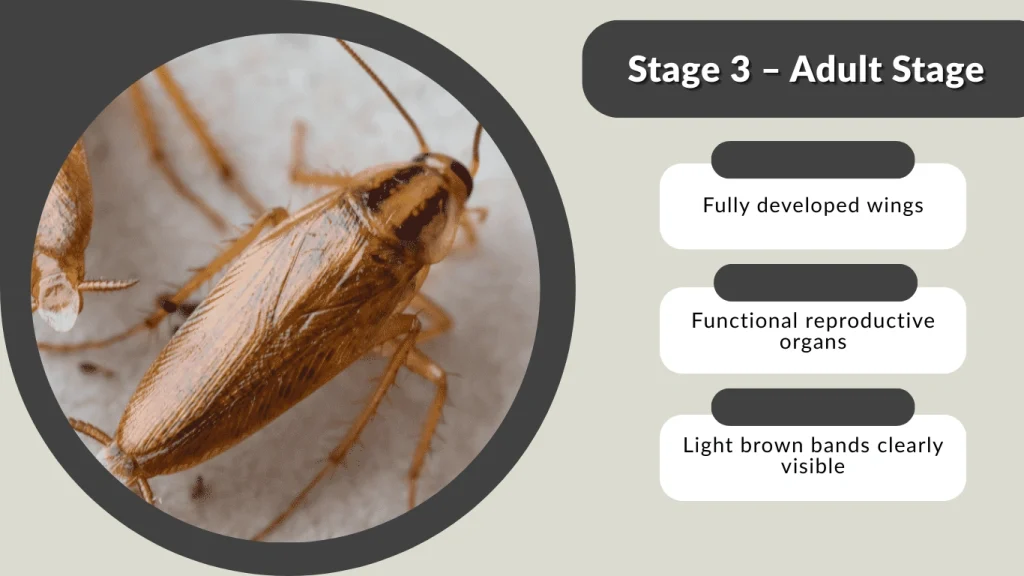
After completing their final molt, brown banded cockroaches reach adulthood.
When Do They Reach Maturity?
Adults emerge with:
- Fully developed wings
- Functional reproductive organs
- Light brown bands clearly visible
Males are capable of short flights, while females primarily crawl.
Sexual maturity occurs shortly after the final molt, allowing reproduction to begin quickly.
Adult Lifespan
Adult brown banded cockroaches typically live 3 to 6 months.
During this time, females continuously produce egg cases, ensuring the cycle repeats. Under optimal indoor conditions, overlapping generations can exist simultaneously — eggs, nymphs, and adults — making infestations persistent.
Complete Brown Banded Cockroach Life Cycle Timeline
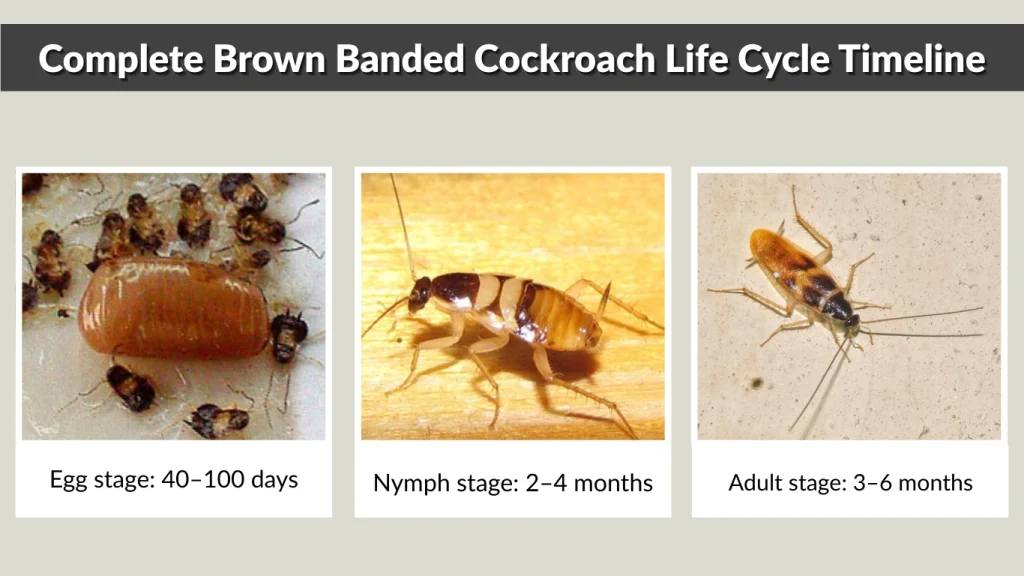
Understanding the full development timeline helps estimate how quickly an infestation can grow.
Here is a simplified breakdown of the brown banded cockroach life cycle timeline:
- Egg stage: 40–100 days
- Nymph stage: 2–4 months
- Adult stage: 3–6 months
- Total lifespan: Approximately 4–10 months
In warm indoor environments with steady food access, development moves toward the shorter end of this range. Because females produce multiple egg cases during adulthood, generations often overlap. This means eggs, nymphs, and adults can all be present at the same time inside a structure.
Environmental Factors That Affect Their Life Cycle
Several environmental conditions directly influence how fast brown banded cockroaches grow and reproduce.
Temperature
Brown banded cockroaches prefer temperatures between 80–85°F (27–29°C). Warmer conditions accelerate egg development and molting. Cooler environments slow growth and may extend the life cycle significantly.
Humidity
Unlike German cockroaches, brown banded cockroaches tolerate lower humidity levels. They thrive in dry indoor spaces, making them common in:
- Bedrooms
- Living rooms
- Offices
- Storage areas
However, extremely dry conditions can reduce egg survival rates.
Food Availability
Access to food plays a major role in development speed. They feed on:
- Starches
- Glue and book bindings
- Paper
- Crumbs
- Fabric fibers
Limited food can delay molting and reduce reproductive output.
Hiding Locations
Because they prefer elevated, hidden areas, infestations can spread across ceilings, cabinets, wall voids, and electronics. These protected spaces shield egg cases and nymphs from disturbances.
How Fast Do Brown Banded Cockroaches Multiply?
Although they reproduce more slowly than German cockroaches, brown banded cockroaches can still establish steady infestations.
A single female can produce:
- 10–14 egg cases
- 10–18 eggs per case
- Over 150 offspring in her lifetime
If even a portion of those offspring survive and reproduce, population growth can become noticeable within 4 to 6 months.
Because egg cases are glued in various hidden locations rather than carried, infestations often become scattered throughout a building.
Signs of a Brown Banded Cockroach Infestation
Identifying an infestation early helps interrupt the life cycle before numbers increase.
Common signs include:
Egg Cases (Ootheca)
Small, light brown capsules attached to:
- Furniture
- Walls
- Ceilings
- Inside cabinets
Shed Skins
Molted exoskeletons from nymphs may be found in hidden areas.
Fecal Droppings
Tiny dark specks resembling pepper may appear in drawers or on shelves.
Musty Odor
Heavy infestations may produce a mild, unpleasant smell.
Sightings in High Locations
Unlike many cockroach species, brown banded cockroaches are often seen:
- On ceilings
- Inside upper cabinets
- Behind wall décor
How to Break the Brown Banded Cockroach Life Cycle
Effective control requires targeting all three life stages.
Targeting the Egg Stage
Egg cases are resistant to many insecticides. Physical removal is often necessary:
- Vacuum cracks and crevices
- Scrape off visible ootheca
- Dispose of vacuum bags immediately
Regular inspection of elevated surfaces is essential.
Eliminating Nymphs
Nymphs are vulnerable to:
- Gel baits
- Bait stations
- Insect growth regulators (IGRs)
IGRs are particularly effective because they disrupt molting, preventing nymphs from reaching reproductive adulthood.
Controlling Adults
Adult control methods include:
- Gel bait placements near hiding areas
- Residual insecticides in cracks and crevices
- Reducing clutter
- Sealing entry points
Professional pest control may be required for widespread infestations.
An integrated pest management (IPM) approach — combining sanitation, monitoring, and targeted treatments — provides the most effective long-term results.
FAQs
How long does a brown banded cockroach live?
Brown banded cockroaches typically live between 4 and 10 months from egg to death. The adult stage alone lasts about 3 to 6 months. Lifespan varies depending on temperature, food supply, and indoor environmental conditions.
How many eggs does a brown banded cockroach lay?
Each egg case contains about 10 to 18 eggs. A single female can produce 10 to 14 egg cases during her lifetime, resulting in over 150 potential offspring under favorable conditions.
How long does it take for eggs to hatch?
Eggs usually hatch within 40 to 100 days. Warmer indoor temperatures speed up development, while cooler environments can delay hatching significantly.
Do brown banded cockroaches multiply quickly?
They reproduce steadily rather than explosively. However, because females produce multiple egg cases and generations overlap, infestations can grow noticeably within a few months if left untreated.
What temperature kills brown banded cockroaches?
Extreme temperatures can kill them. Sustained temperatures above 120°F (49°C) or below freezing can be lethal. Professional heat treatments are sometimes used to eliminate infestations safely and effectively.