
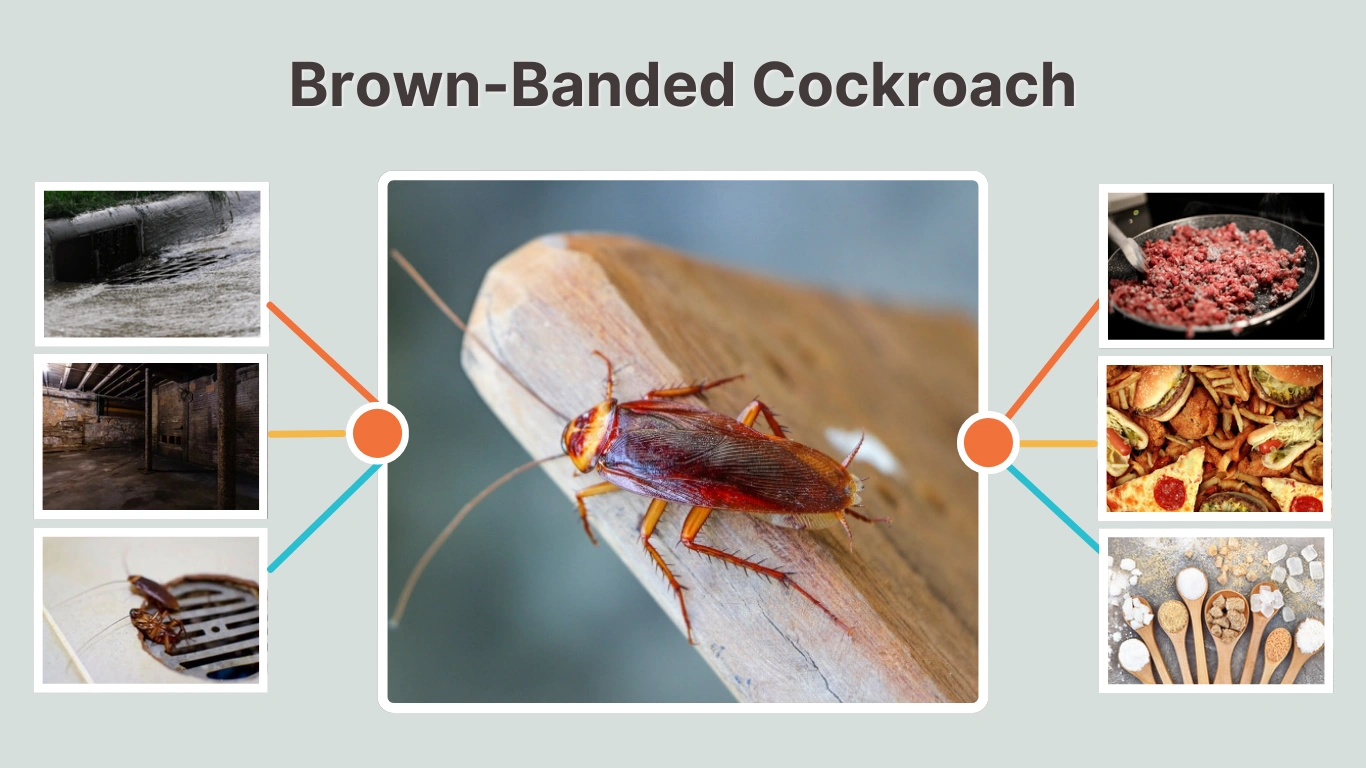
The brown-banded cockroach (Supella longipalpa) is a small but highly invasive household pest found across the world. Unlike the more well-known German cockroach, this species prefers warmer and drier environments, making them common in living rooms, bedrooms, and furniture rather than just kitchens and bathrooms. Their name comes from the distinct brown bands that run across their wings and abdomen. While they may be less recognized compared to other roaches, they reproduce quickly, contaminate food, and spread allergens, making them a major concern in homes and businesses alike.
What is a Brown-Banded Cockroach?
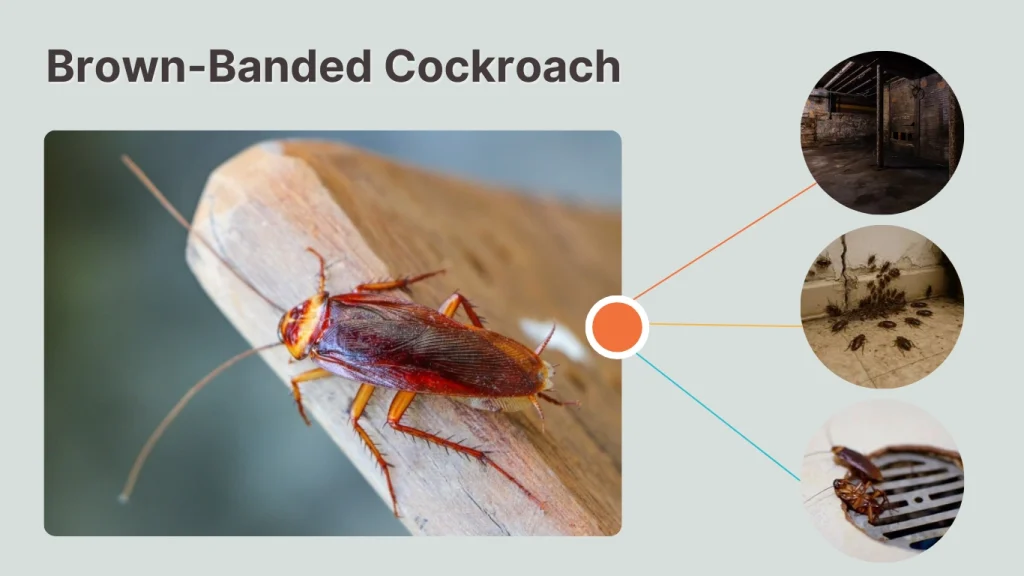
The brown-banded cockroach is a tiny, light-brown roach species that thrives indoors. Its scientific name is Supella longipalpa, and it is one of the smallest pest cockroach species found in households. Originally believed to have originated from Africa, it is now distributed worldwide, particularly in warm climates.
Unlike other cockroach species that prefer moist environments, the brown-banded cockroach is adaptable to drier conditions. They are often overlooked because they hide in unusual places, such as behind picture frames, in ceilings, or inside electrical appliances. Their presence is a serious issue not only due to the nuisance factor but also because of the health risks they pose.
Identification of Brown-Banded Cockroach
Physical Appearance
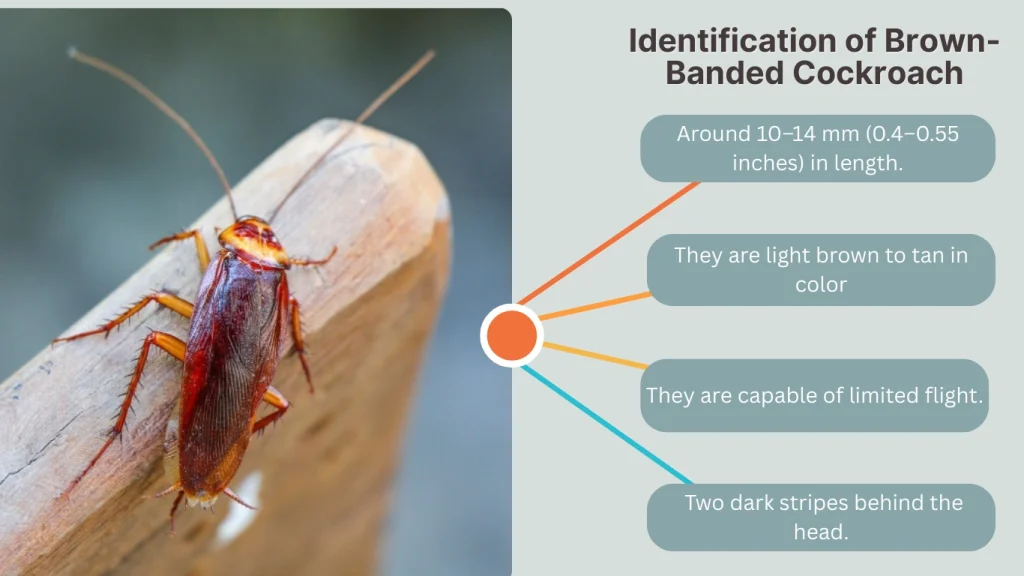
Adult brown-banded cockroaches are small, measuring around 10–14 mm (0.4–0.55 inches) in length. They are light brown to tan in color and can be recognized by two pale bands running across their wings and abdomen. These bands are the most distinctive feature and help in distinguishing them from German cockroaches, which instead have two dark stripes behind the head.
Males and females have slightly different appearances. Males are more slender, with longer wings that cover their abdomen completely, and they are capable of limited flight. Females are broader, with shorter wings that do not cover their entire abdomen, giving them a more rounded appearance.
Brown-Banded Cockroach Nymphs
Nymphs, or immature cockroaches, are darker in color compared to adults. Their pale banding is already visible, though it becomes clearer as they grow. Since they are wingless, nymphs are often mistaken for small beetles or different insects, but their behavior and hiding patterns reveal their true identity.
Eggs (Ootheca)
Female brown-banded cockroaches produce oothecae (egg cases) that are small, light brown, and only about 5 mm long. Unlike German cockroaches, which carry their egg cases until close to hatching, brown-banded females attach the oothecae to furniture, ceilings, or hidden areas such as underneath shelves. Each ootheca contains 10–18 eggs, and females can produce multiple oothecae during their lifetime, making infestations multiply quickly if left unchecked.
Size of Brown-Banded Cockroach
The brown-banded cockroach is one of the smallest pest cockroaches. Adults grow between 10–14 mm in length, making them slightly smaller than German cockroaches, which average 13–16 mm. Their small size enables them to squeeze into cracks, behind wallpaper, and within furniture.
Because of their ability to infest areas away from kitchens and bathrooms, they are often harder to detect. People may first notice them when they find pale bands or see them scuttling across living room walls or ceilings at night.
Brown-Banded Cockroach Diet
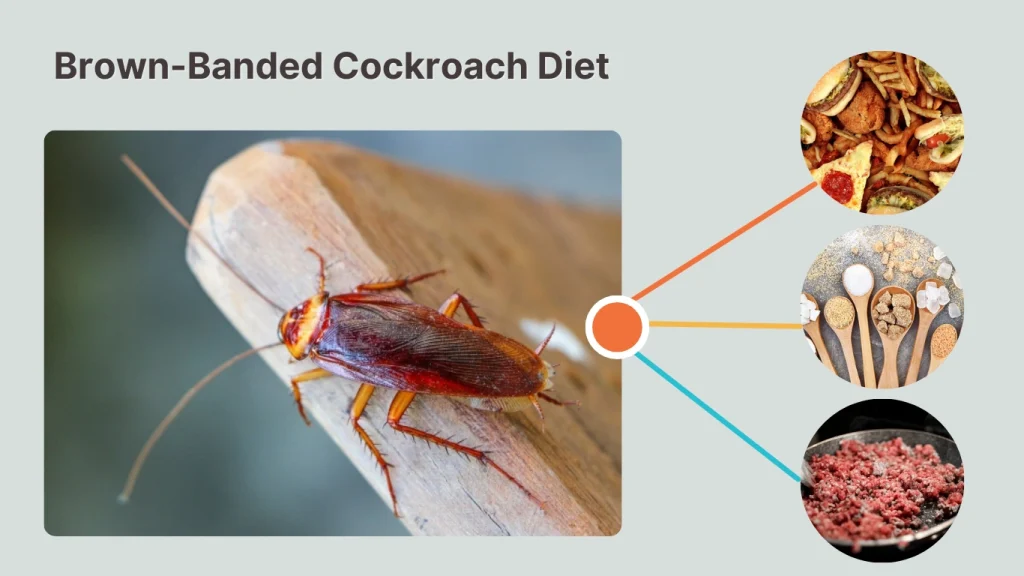
Like most cockroaches, brown-banded cockroaches are omnivorous scavengers. They will eat almost anything available, but they show a preference for foods rich in starch, sugar, and grease. Common foods include crumbs, leftovers, and stored food items left unsealed.
However, when food is scarce, they are capable of feeding on non-traditional sources. They have been recorded eating wallpaper paste, book bindings, glues, and even fabrics. This ability to survive on such unusual materials allows them to thrive in places where food supplies are minimal.
Since they are nocturnal, most of their feeding occurs at night. During the day, they hide in small, secure spaces. This makes spotting their activity difficult until the infestation grows larger.
Life Cycle of Brown-Banded Cockroach
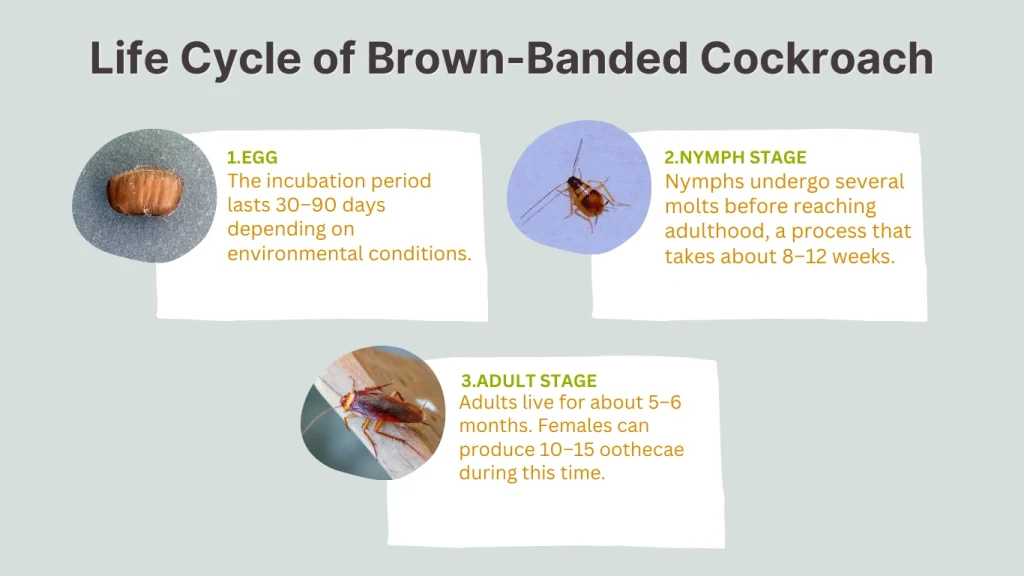
Brown-banded cockroaches undergo a three-stage life cycle: egg, nymph, and adult. Their development rate depends heavily on temperature, with warmer conditions speeding up growth.
Egg Stage
The female produces an ootheca containing 10–18 eggs. Instead of carrying it until hatching, as seen in German cockroaches, she attaches it to furniture, ceilings, or cracks in walls. The incubation period lasts 30–90 days depending on environmental conditions.
Nymph Stage
When the eggs hatch, small nymphs emerge. They are darker in color and wingless but already display faint banding. Nymphs undergo several molts before reaching adulthood, a process that takes about 8–12 weeks.
Adult Stage
Adults live for about 5–6 months. Females can produce 10–15 oothecae during this time, making them capable of producing over 200 offspring in their lifetime. The rapid reproductive cycle contributes to their ability to establish infestations quickly.
Behavior & Habitat
Brown-banded cockroaches are nocturnal, avoiding light and human activity. Unlike German cockroaches that stay close to food and water in kitchens and bathrooms, brown-banded cockroaches prefer dry, warm areas. They often infest higher locations, such as:
- Inside or on top of cabinets.
- Behind picture frames and wall hangings.
- Within upholstered furniture.
- Inside electrical appliances like televisions and radios.
- Along ceilings or in wall voids.
This difference in habitat makes them particularly troublesome. Infestations can spread to areas where food is not typically stored, such as bedrooms and living rooms, making them harder to locate and control.
Signs of Brown-Banded Cockroach Infestation
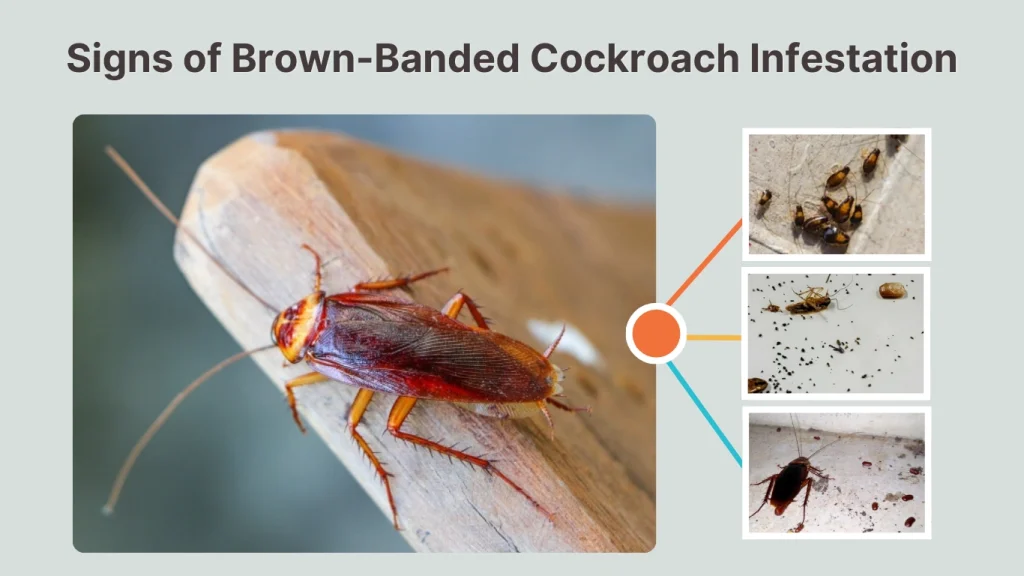
Recognizing an infestation early can prevent it from becoming severe. Some of the most common signs include:
- Sightings: Spotting small roaches with light bands across their bodies, often on walls or ceilings.
- Droppings: Tiny, dark fecal spots that resemble coffee grounds or black pepper. These are often found on walls, ceilings, and around hiding spots.
- Egg Cases: Small, glued oothecae attached to furniture, ceilings, or hidden cracks.
- Musty Odor: Larger infestations produce a foul, musty smell caused by cockroach secretions.
- Shed Skins: Nymphs shed their skins multiple times as they grow, leaving behind discarded shells.
Health Risks & Dangers
Although small, brown-banded cockroaches can cause major health issues inside homes. Their presence often goes unnoticed until the infestation grows large, but even small populations pose risks.
Spread of Bacteria and Pathogens
These cockroaches crawl across dirty surfaces such as trash bins, drains, and even bathroom areas, picking up bacteria on their bodies. When they later move across food or kitchen utensils, they transfer these pathogens. Studies have shown that cockroaches can carry E. coli and Salmonella, which cause food poisoning and gastrointestinal infections.
Allergies and Asthma
Just like German cockroaches, brown-banded cockroaches are known to worsen asthma and allergies. Their saliva, droppings, and shed skins contain allergenic proteins that trigger sneezing, skin rashes, or breathing problems in sensitive individuals. Children and people with asthma are especially vulnerable.
Food Contamination
Brown-banded cockroaches contaminate food with their feces and secretions. Unlike some cockroach species that stay near kitchens, these pests invade bedrooms and living rooms, meaning they can contaminate snacks, pet food, and storage cabinets far away from the kitchen.
Brown-Banded Cockroach vs. German Cockroach
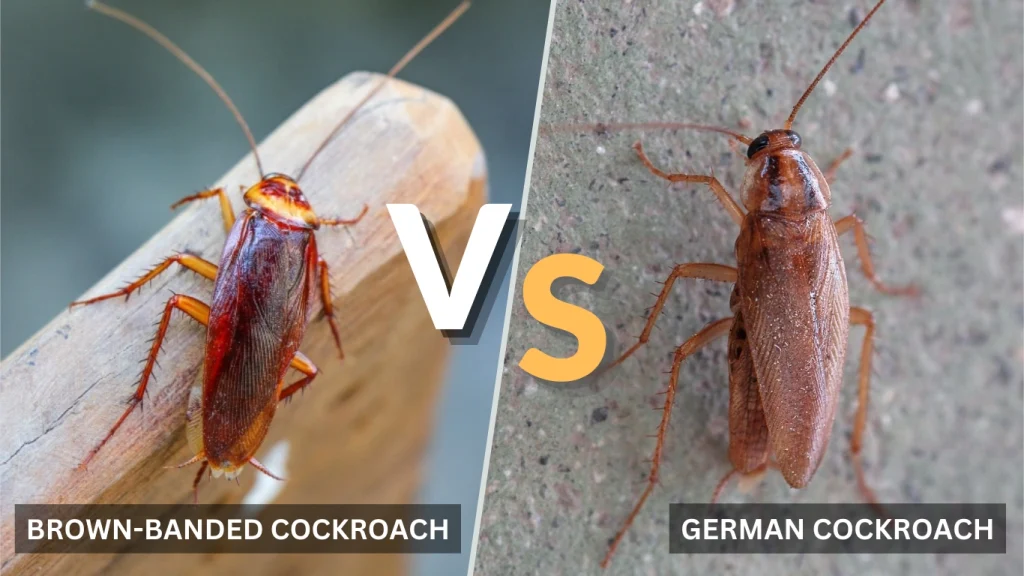
These two species are often confused because they are both small household cockroaches. However, their differences are important for identification and control.
| Feature | Brown-Banded Cockroach | German Cockroach |
| Size | 10–14 mm (smaller) | 13–16 mm |
| Color | Light brown with pale bands on wings and abdomen | Light brown with two dark stripes behind the head |
| Preferred Habitat | Dry, warm areas (furniture, ceilings, bedrooms) | Moist, humid areas (kitchens, bathrooms) |
| Egg Placement | Glues oothecae to furniture and walls | Carries ootheca until near hatching |
| Infestation Zones | Found throughout the house, including bedrooms | Concentrated in kitchens and bathrooms |
The key difference is habitat: brown-banded cockroaches spread throughout the home, while German cockroaches stick to food-rich, humid areas. This makes brown-banded infestations harder to detect early.
How to Get Rid of Brown-Banded Cockroaches
Eliminating these roaches requires a combination of sanitation, preventive measures, and targeted treatments.
Prevention Methods
- Seal Entry Points: Close cracks in walls, ceilings, and furniture joints where cockroaches may hide.
- Reduce Clutter: Remove piles of papers, cardboard boxes, and unused furniture where they may lay eggs.
- Store Food Securely: Keep food sealed in airtight containers. Do not leave snacks in bedrooms or living areas.
- Regular Cleaning: Vacuum and wipe down areas frequently, including living rooms and under furniture.
- Check Appliances: Inspect televisions, radios, and other electronics where they may nest.
Natural Remedies
- Boric Acid: Apply in hidden spots like behind furniture and wall voids. When cockroaches ingest it, they die within days.
- Diatomaceous Earth (DE): A natural powder that damages their exoskeleton, causing dehydration.
- Baking Soda and Sugar Mix: Sugar lures them, while baking soda disrupts digestion.
- Essential Oils: Peppermint or eucalyptus oils may repel cockroaches, though they work best as a short-term solution.
Chemical Treatments
- Gel Baits: Among the most effective methods. Cockroaches eat the poison and spread it to others in the colony.
- Insecticide Dusts: Useful for cracks, crevices, and wall voids.
- Sprays: Provide quick knockdown but rarely eliminate entire infestations.
- Professional Pest Control: For larger infestations, pest management experts use a combination of baits, dusts, and insect growth regulators (IGRs) to disrupt the breeding cycle.
Brown-Banded Cockroach Killer Products
Several effective products are available for homeowners to tackle infestations:
- Gel Baits (Advion, Maxforce, Combat Max): Highly effective for long-term control.
- Sticky Traps: Monitor cockroach activity and reduce numbers.
- Insect Growth Regulators (IGRs): Stop nymphs from maturing into reproductive adults.
- Aerosol Sprays: Good for immediate control of visible roaches but not a complete solution.
Using multiple methods together—such as baits for colonies and sprays for visible individuals—provides the best results.
Interesting Facts About Brown-Banded Cockroaches
- They Prefer High Locations: Unlike many cockroaches that stay near the floor, brown-banded cockroaches infest ceilings, picture frames, and tall furniture.
- Smallest Pest Roach Indoors: At just 10–14 mm, they are one of the tiniest household cockroaches.
- Dry Environment Lovers: Unlike German cockroaches, they don’t need constant moisture, making them harder to locate.
- Egg Cases Are Glued: Females attach their oothecae to furniture or ceilings, unlike German cockroaches that carry them.
- Short Lifespan, Fast Reproduction: Adults live about 5–6 months, but each female produces hundreds of offspring.
FAQs
What is the scientific name of the Brown-Banded cockroach?
The scientific name is Supella longipalpa. Despite their name, they are not related to geographic regions but are identified by the distinct bands across their bodies.
How do Brown-Banded cockroaches look different from German cockroaches?
Brown-banded cockroaches have pale horizontal bands across their wings and abdomen, while German cockroaches have two dark vertical stripes behind the head.
Where do Brown-Banded cockroaches usually hide?
They hide in dry, warm places such as ceilings, behind wall decorations, inside furniture, or electrical appliances. Unlike German cockroaches, they are not limited to kitchens and bathrooms.
How long does it take for their eggs to hatch?
Oothecae take about 30–90 days to hatch depending on environmental conditions. Each case contains 10–18 eggs.
Are Brown-Banded cockroaches dangerous to humans?
Yes. They contaminate food, spread bacteria, and trigger allergies and asthma through their saliva, feces, and shed skins.
Final Thoughts
Brown-banded cockroaches may be smaller than many other cockroach species, but they are just as troublesome. Their ability to infest drier and elevated areas of the home makes them harder to detect and control compared to German cockroaches. Recognizing their banded appearance, habits, and reproduction patterns is crucial for effective management. By combining preventive measures with targeted treatments such as baits and dusts, infestations can be reduced and eliminated over time.