
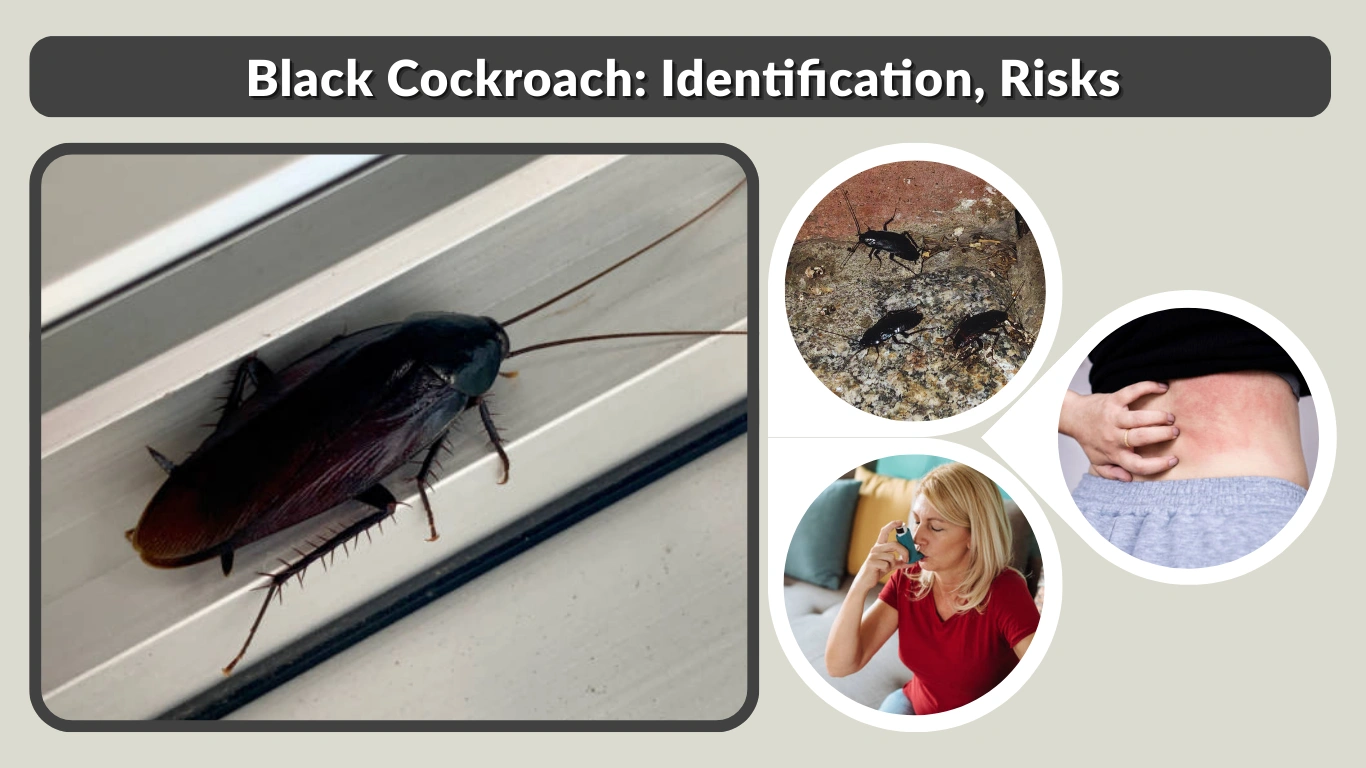
Seeing a large black cockroach in your home can be alarming. These dark, fast-moving pests are commonly found in bathrooms, basements, kitchens, and drains. Many people confuse them with beetles or assume they are more dangerous than other roach species. While black cockroaches are not typically aggressive, they can spread bacteria and trigger allergies if left untreated. Understanding what species you’re dealing with, why they entered your home, and the potential risks involved is the first step toward effective control and prevention.
What Is a Black Cockroach?
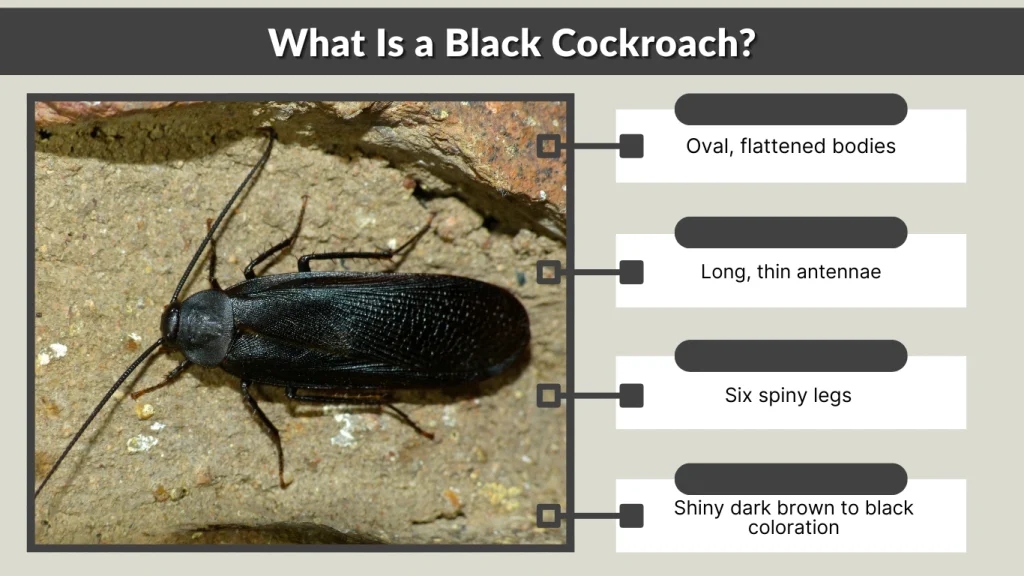
The term “black cockroach” usually refers to cockroach species that appear dark brown to jet black in color. While several species may look black at first glance, the Oriental cockroach is the most common true black variety found in homes.
Most Common Black Cockroach Species
Oriental Cockroach (Blatta orientalis)
Often called a “water bug,” this species is shiny black and prefers damp, cool areas. It is commonly found in basements, drains, and sewer systems. Adults typically grow about 1 to 1.25 inches long.
American Cockroach (Dark Variant)
Although usually reddish-brown, some American cockroaches appear very dark and may be mistaken for black roaches. They are larger—sometimes reaching 2 inches—and prefer warm, humid spaces.
Smokybrown Cockroach
This species is dark mahogany to nearly black and commonly lives outdoors in warm climates. However, it may enter homes in search of food or moisture.
Correct identification is important because treatment methods can vary depending on the species and infestation source.
Physical Characteristics
Black cockroaches share several identifying features:
- Oval, flattened bodies
- Long, thin antennae
- Six spiny legs
- Shiny dark brown to black coloration
- Wings (though not all species fly effectively)
Oriental cockroach females have underdeveloped wings, while males have wings covering about three-quarters of their bodies. Despite having wings, they are not strong fliers. Their flattened shape allows them to squeeze through very small cracks and crevices, making them difficult to detect and eliminate.
Why Are Black Cockroaches in Your House?
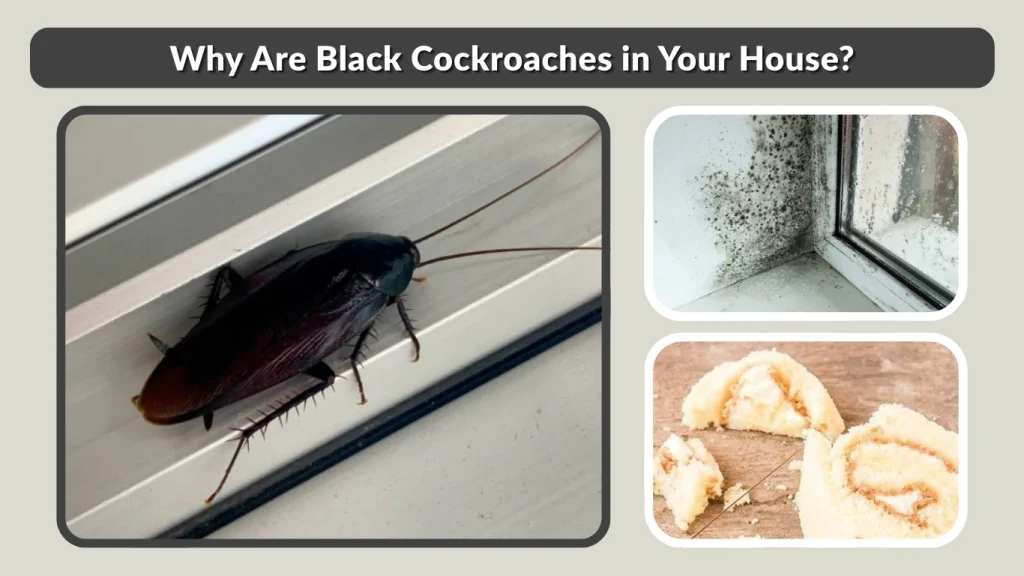
Black cockroaches don’t randomly appear indoors. Their presence usually signals that your home provides what they need: moisture, food, and shelter.
Attraction to Moisture
Moisture is the number one reason black cockroaches invade homes. Oriental cockroaches, in particular, thrive in damp environments. Common moisture sources include:
- Leaky pipes under sinks
- Bathroom drains
- Basement condensation
- Standing water near foundations
- Clogged gutters
If you frequently see black roaches in your bathroom or basement, excess humidity or plumbing issues may be attracting them.
Food Sources That Attract Them
While moisture draws them in, food keeps them there. Black cockroaches are scavengers and will eat almost anything, including:
- Crumbs and leftover food
- Grease buildup on stoves
- Pet food left overnight
- Garbage and organic waste
- Cardboard and paper products
Even small amounts of food residue can support a growing population.
Common Entry Points
Black cockroaches typically enter homes through:
- Cracks in the foundation
- Gaps around doors and windows
- Open vents
- Plumbing and sewer connections
- Drain systems
Because they are often associated with sewer systems, seeing a black cockroach may indicate they are traveling up through drains or underground pipes.
Are Black Cockroaches Dangerous?
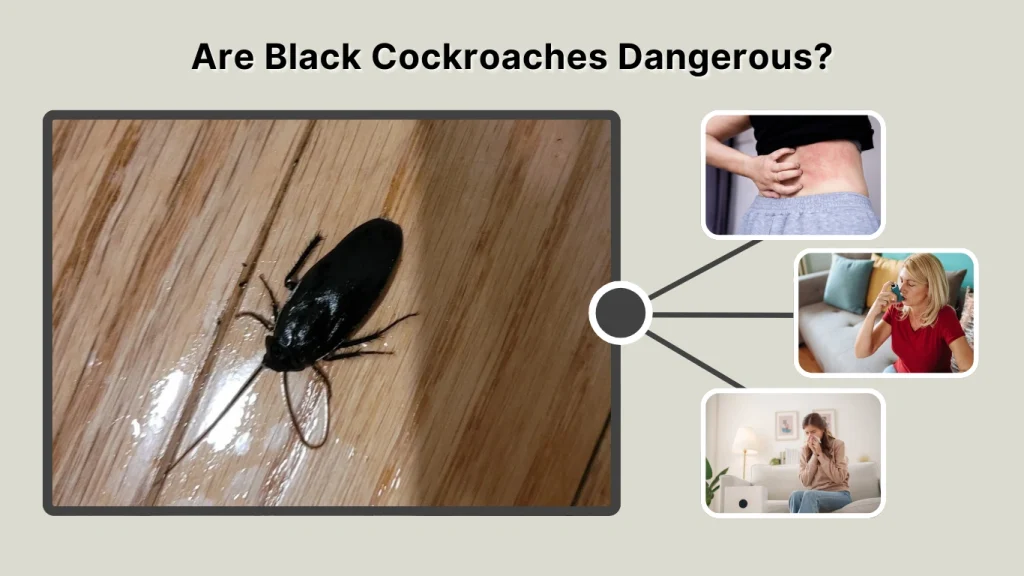
Although black cockroaches are not known to attack humans, they do pose health concerns. Their habits and habitats make them potential carriers of harmful bacteria.
Health Risks
Black cockroaches often travel through unsanitary environments such as:
- Sewers
- Garbage areas
- Drain pipes
- Decaying organic matter
As they move through these areas, they pick up bacteria and pathogens on their bodies and legs. When they crawl across kitchen counters, food, or utensils, they can contaminate surfaces with organisms like Salmonella and E. coli.
This contamination may increase the risk of foodborne illness, especially in households with children, elderly individuals, or people with weakened immune systems.
Allergies and Asthma
Cockroach droppings, saliva, and shed skins contain allergenic proteins. In some individuals, especially children, these allergens can trigger asthma symptoms and allergic reactions. Prolonged infestations may worsen respiratory issues in sensitive individuals.
Do Black Cockroaches Bite?
Cockroach bites are extremely rare and usually occur only in severe infestations where food sources are limited. Even then, bites are uncommon and generally not dangerous. The primary concern with black cockroaches is contamination—not aggression.
Black Cockroach vs Beetle: How to Tell the Difference
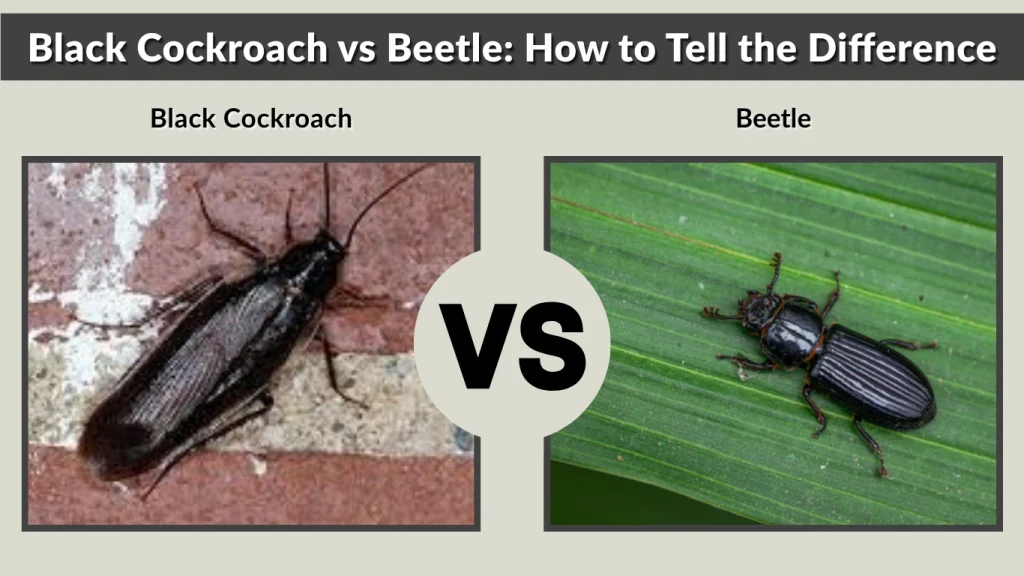
Many homeowners mistake black cockroaches for beetles, especially when spotting one quickly at night. While they may look similar at first glance, there are clear differences.
Cockroaches have a flattened, oval-shaped body, allowing them to squeeze into tight spaces. Beetles typically have a more rounded or dome-shaped body. Another key difference is the antennae. Cockroaches have long, thin antennae that are often as long as their bodies, while beetles usually have shorter, thicker antennae.
Movement is also a giveaway. Black cockroaches move quickly and dart away when exposed to light. Beetles tend to crawl more slowly. Additionally, cockroaches have a shield-like structure (pronotum) behind the head, which beetles do not have in the same form.
Correct identification is important because beetles and cockroaches require different control strategies.
Signs of a Black Cockroach Infestation
Seeing one black cockroach does not always mean you have a major infestation—but it should not be ignored. These pests are nocturnal and skilled at hiding, so visible activity often indicates more are present.
Visible Droppings
Black cockroach droppings resemble:
- Small black pepper-like specks
- Coffee ground–like particles
- Dark smear marks in damp areas
Droppings are commonly found along baseboards, under sinks, inside cabinets, and near drains.
Egg Cases (Oothecae)
Cockroach egg cases are called oothecae. They are small, oval-shaped capsules that contain multiple eggs. Oriental cockroach egg cases are dark reddish-brown to black and may be found in hidden, moist locations.
Finding egg cases is a strong sign that reproduction is occurring inside your home.
Musty Odor
A heavy infestation can produce a strong, musty smell. This odor comes from cockroach pheromones and waste buildup. If you notice an unusual persistent odor in basements or cabinets, it may signal a hidden colony.
Nighttime Sightings
Black cockroaches are nocturnal. If you turn on a kitchen or bathroom light at night and see one scurry away, it often means others are hiding nearby. Frequent nighttime sightings usually indicate an established infestation.
How to Get Rid of Black Cockroaches
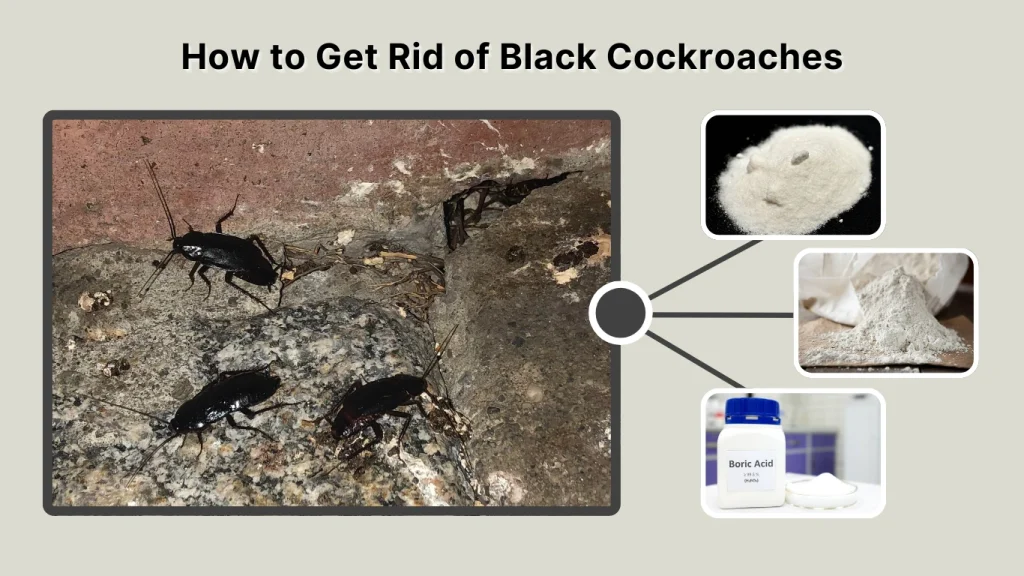
Effective removal requires a combination of sanitation, targeted treatment, and moisture control.
Natural Remedies
Some homeowners prefer starting with natural or low-toxicity solutions:
- Baking soda and sugar: The sugar attracts roaches, while baking soda disrupts their digestive system.
- Diatomaceous earth: This fine powder damages their exoskeleton, causing dehydration. Apply in dry areas only.
- Boric acid: A highly effective powder that poisons cockroaches when ingested. Light, thin applications work best.
While natural remedies can reduce populations, they may not eliminate large infestations on their own.
Store-Bought Treatments
For more reliable control, consider:
- Gel baits: Often the most effective solution. Roaches consume the bait and spread it to others.
- Insecticide sprays: Useful for immediate knockdown but less effective long term.
- Roach traps: Helpful for monitoring activity levels.
Consistency is key. Treatments must be applied strategically and maintained over time.
When to Call a Professional
Professional pest control may be necessary if:
- You see roaches daily
- Infestations persist despite DIY efforts
- Roaches are emerging from drains or sewer lines
- You detect strong odors or frequent egg cases
Professionals can identify nesting sites, apply targeted treatments, and address underlying moisture issues.
How to Prevent Black Cockroaches
Prevention is just as important as removal. Once eliminated, reducing attractants will help keep them from returning.
- Fix leaking pipes and reduce humidity
- Use dehumidifiers in damp basements
- Seal cracks and entry points around foundations
- Install door sweeps and window seals
- Store food in airtight containers
- Clean kitchen surfaces nightly
- Take trash out regularly
- Maintain and clean drains
Moisture control is especially critical for black cockroach species like the Oriental cockroach.
FAQs
What does it mean if I see one black cockroach?
Seeing one black cockroach may indicate more are hiding nearby. Because they are nocturnal and prefer staying out of sight, visible daytime activity can sometimes signal a growing infestation, especially if moisture sources are present.
Are black cockroaches worse than brown ones?
Black cockroaches are not necessarily more dangerous than brown species, but they are often associated with damp, unsanitary areas like drains and sewers. This increases their potential to spread bacteria compared to species that prefer drier environments.
Why do they come out at night?
Black cockroaches are nocturnal and avoid light. They emerge at night to search for food and water when human activity is minimal, reducing their risk of being detected or disturbed.
Can black cockroaches fly?
Most black cockroach species are poor fliers. Oriental cockroaches rarely fly, even though males have wings. Some related dark species may glide short distances, but sustained flight is uncommon.
How fast do black cockroaches reproduce?
Reproduction speed depends on species and environmental conditions. Under ideal conditions, a single female can produce multiple egg cases, each containing numerous eggs. Without control measures, populations can grow quickly within a few months.
Conclusion
Black cockroaches are more than just an unpleasant sight—they can signal moisture problems, sanitation issues, or hidden infestations. While they are not aggressive, their ability to spread bacteria and trigger allergies makes early action important. Proper identification, moisture control, sanitation, and targeted treatments are key to eliminating them effectively. If the problem persists or worsens, professional pest control can provide long-term relief. Acting quickly not only protects your home but also reduces the health risks associated with these resilient pests.