
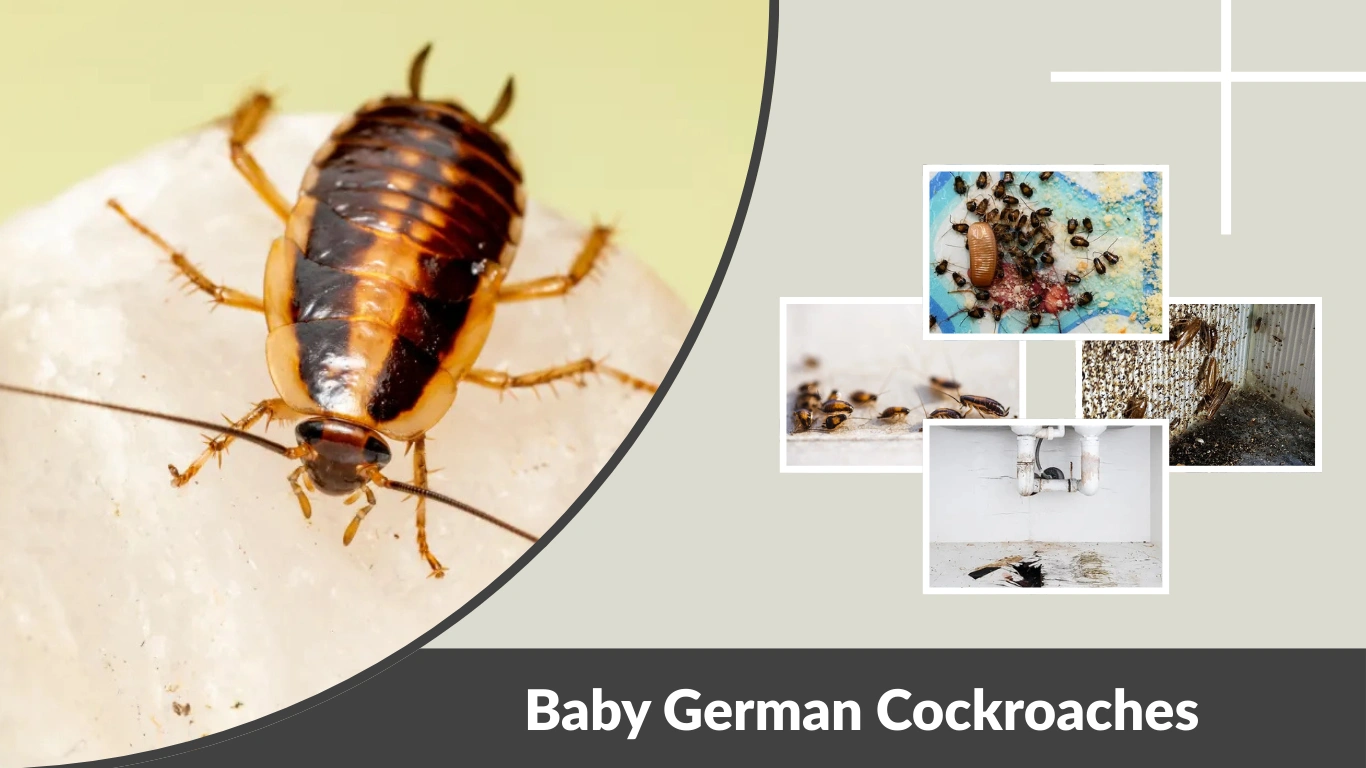
Baby German cockroaches—also known as nymphs—are one of the most common signs of an active indoor infestation. These tiny, fast-moving insects often go unnoticed because of their size, speed, and ability to hide in cracks as thin as a credit card. Despite their small appearance, seeing even a few baby German cockroaches can indicate a rapidly growing colony. Understanding what they look like, how big they are, and why they appear in homes is essential for early detection and effective pest control.
General Identification & Terminology
A “baby German cockroach” is not a miniature adult—it’s a nymph, an early developmental stage between hatching and adulthood. Nymphs hatch from an egg case called an ootheca, carried by the female until it’s nearly ready to open. Unlike adults, nymphs:
- Have no wings
- Are smaller and darker
- Grow through several molts
- Move extremely fast
German cockroach nymphs are especially important to identify because they multiply quickly, allowing infestations to spread faster than other household roach species.
What Baby German Cockroaches Look Like
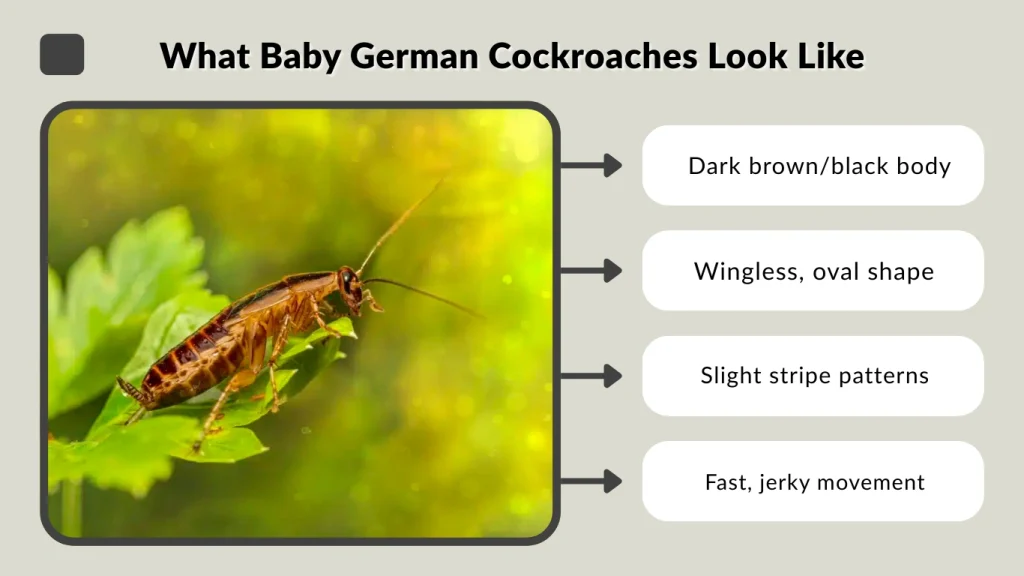
Baby German cockroaches are small and dark brown to nearly black, often mistaken for beetles or other tiny household insects. Their bodies are oval-shaped with a glossy finish, and they typically display a single light band running down their back. As they grow through each molt, their coloration becomes lighter and more patterned.
Newer nymphs appear almost black, while older ones show faint stripes behind the head. Unlike adults, they have no wings, but they are incredibly quick runners, often darting back into cracks before you can get a good look.
Typical baby appearance includes:
- Dark brown/black body
- Wingless, oval shape
- Slight stripe patterns
- Fast, jerky movement
Size: How Big Baby German Cockroaches Are
Baby German cockroaches are tiny when first hatched—often just 1/8 inch (3 mm) long. As they molt through 5–7 growth stages, they gradually increase in size until they reach adult length of around 1/2 inch.
A basic size breakdown:
- Newly hatched nymphs: 1/8 inch
- Mid-stage nymphs: 3/16–1/4 inch
- Late-stage nymphs: 1/4–3/8 inch
These sizes often cause confusion because early-stage nymphs are significantly smaller than baby American cockroaches, leading many homeowners to misidentify the species.
Life Cycle of a Baby German Cockroach (Nymph Stage)

The German cockroach life cycle is one of the fastest of all cockroach species, making infestations difficult to control once established. A female lays a long, brown ootheca containing 30–40 baby roaches. She carries this egg case until just before the nymphs emerge—offering them better survival.
After hatching, baby cockroaches move through multiple instars (growth stages), shedding their exoskeleton after each one. This process continues for about 6–10 weeks depending on temperature and food availability. Because females produce an ootheca about every month, populations can explode in a very short period.
Key life cycle facts:
- 30–40 babies per egg case
- Molt 5–7 times before adulthood
- Reach maturity in 6–10 weeks
- Can produce hundreds of offspring per female annually
Behavior & Activity Patterns of Nymphs
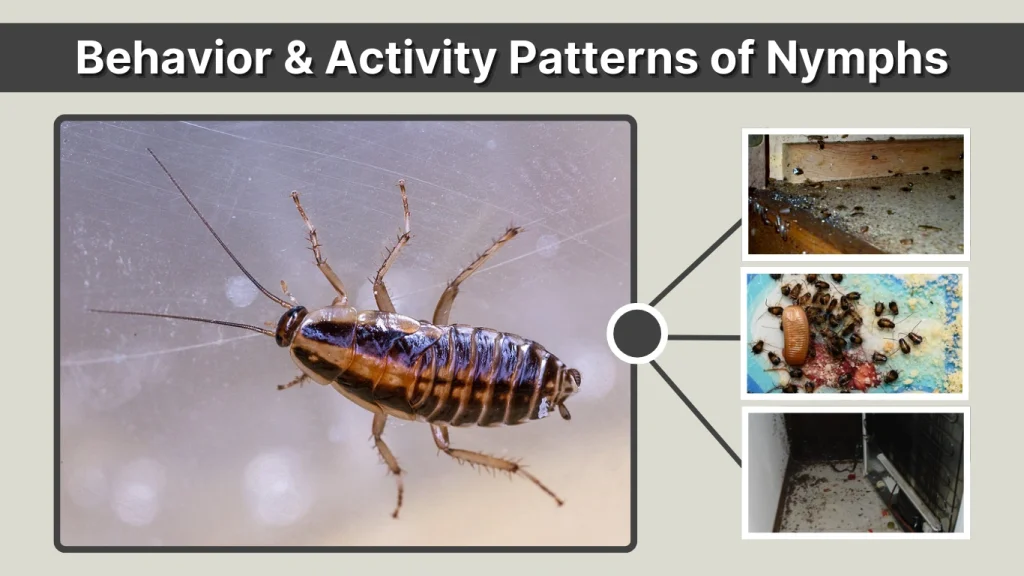
Baby German cockroaches behave similarly to adults but with greater speed and more secretive movement. They thrive in warm, humid, dark environments and typically hide in clusters close to food, moisture, and shelter. Because they require less food, they can fit into extremely tight crevices—making them harder to detect and kill.
Their most common behaviors include:
- Hiding inside cabinet hinges, wall cracks, and appliance gaps
- Emerging at night to feed on crumbs, grease, and food residue
- Gathering in warm spots like behind refrigerators and under sinks
When you begin spotting baby roaches during the day, it often means the infestation has grown large enough to push individuals out of hiding areas—an important red flag for homeowners.
Flying, Jumping & Movement Questions
Baby German cockroaches cannot fly because they do not have wings. Unlike adult German roaches, which have wings but rarely fly, nymphs are completely wingless throughout all growth stages. Their movement relies entirely on running—fast, erratic, and usually toward dark, narrow spaces.
They also cannot jump like fleas or springtails. While their quick bursts of speed may appear jump-like, it’s simply rapid acceleration. If a homeowner sees a small pest jumping, it is almost never a baby German cockroach and is more likely a springtail, flea, or tiny beetle.
Key movement facts:
- Baby German cockroaches do not fly
- They do not jump
- They run extremely fast and flatten their bodies to hide
Baby German Cockroach vs Other Baby Roaches

Baby roaches are often confused with one another, but each species has distinctive traits. German nymphs are much smaller and darker than baby American cockroaches and lack the reddish tones seen in other roach types.
Baby German vs Baby American Cockroach:
- German: tiny (⅛–¼”), black/dark, no wings
- American: larger (¼–⅜”), reddish-brown, more oval
- American roaches prefer drains & basements, Germans prefer kitchens
Baby German vs Brown-Banded Cockroach:
- Brown-banded nymphs are lighter tan
- Often found in dry, warm, high locations—ceilings, furniture
Baby German vs Wood Roach:
- Wood roach nymphs are lighter and behave outdoors
- Rarely infest homes
Confusion With Other Bugs
Many household insects resemble baby roaches, leading to frequent misidentifications. Small beetles, bed bug nymphs, booklice, and springtails are commonly mistaken for baby German cockroaches.
Differences from bed bugs:
- Bed bugs are flat and oval with no antenna curvature
- Much slower than roaches
- Usually found near mattresses
Differences from beetle larvae:
- Beetles move slowly
- Often have segmented or grub-like bodies
Differences from fleas/springtails:
- Fleas jump
- Springtails spring upward when disturbed
Recognizing these differences helps prevent unnecessary panic and ensures the correct pest is addressed.
Why Baby German Cockroaches Appear in Homes
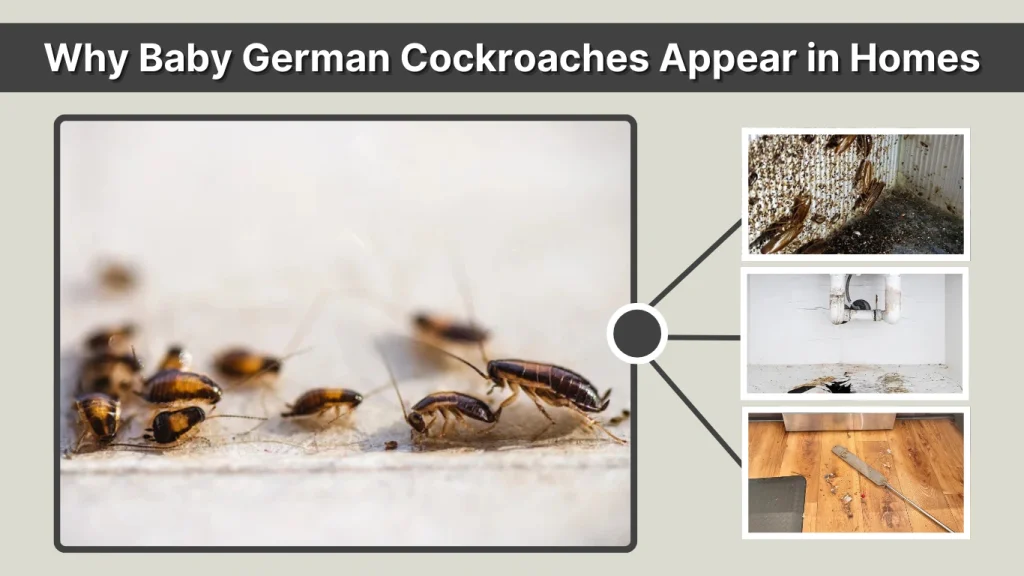
Seeing baby German cockroaches means that adults are already breeding nearby. Even a clean home can host a roach population if food, moisture, and hiding spaces are available. Apartments and multi-unit buildings are especially vulnerable since roaches easily travel through shared walls and plumbing.
Common reasons babies appear indoors:
- Hidden nest near warm appliances
- Leaky pipes or condensation under sinks
- Food crumbs behind stoves or refrigerators
- Incoming roaches from neighbors
- Grocery bags or cardboard deliveries
Because they reproduce so quickly, baby roaches are often the first visible sign of an infestation long before adults are noticed.
Baby German Cockroach Infestation Signs
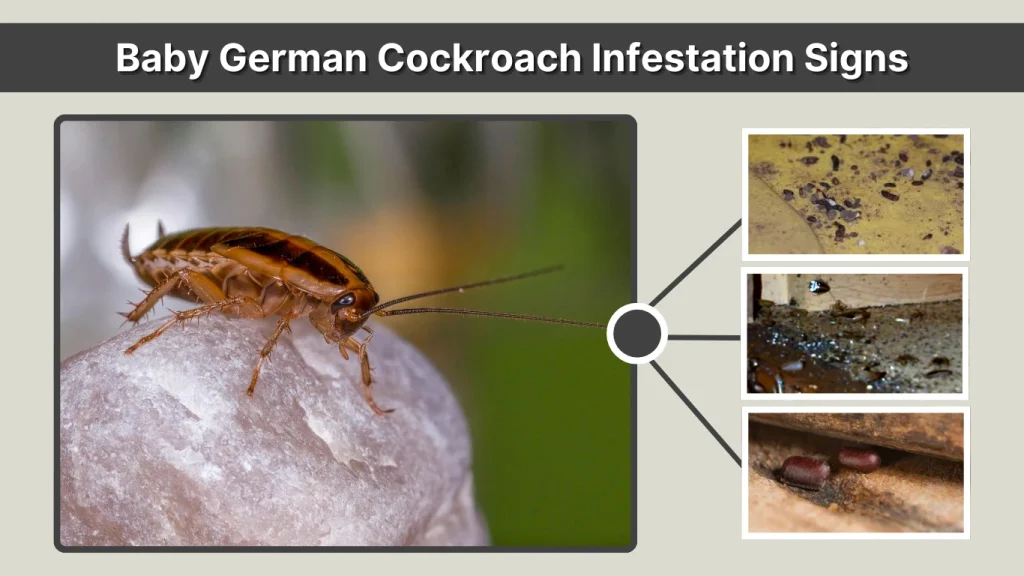
An early infestation is easier to control, but many homeowners miss the signs because babies are tiny. When multiple nymphs appear within a short period, this typically indicates a breeding colony.
Signs include:
- Clusters of tiny black droppings (pepper-like specks)
- Shed exoskeletons near warm, dark areas
- Egg cases (ootheca) along cabinet edges
- Musty, sweet odor in heavy infestations
- Roaches appearing during the day
Finding nymphs in broad daylight usually means overcrowding—one of the clearest indicators of a severe infestation.
Clean House Misconceptions
Many people panic when they see baby German cockroaches in a spotless home. However, cleanliness alone doesn’t guarantee roach-free living. German cockroaches need only minimal crumbs, grease residue, or moisture to survive. They are especially drawn to the warmth found inside appliances, which even the cleanest homes cannot eliminate.
Reasons they thrive in clean homes:
- Hidden water sources (dishwashers, fridge condensation lines)
- Access to food traces behind appliances
- Warm nesting spots that cannot be cleaned
- Entry from neighboring units or shared plumbing
- Grocery store packaging or cardboard boxes introducing roaches
Roaches prioritize warmth and moisture over visible dirt, which is why they are common even in well-maintained kitchens.
Health Concerns: Do Baby German Cockroaches Bite?
Baby German cockroaches rarely bite, but in severe infestations with little food, they may nibble on dead skin, fingernails, or open wounds. The greater danger comes not from bites but from contamination. Roaches can carry harmful bacteria on their bodies and droppings, spreading them to food, dishes, and surfaces.
They are also a leading cause of allergies and asthma, especially in children, because their shed skins and fecal particles become airborne irritants.
Images, Photos & Visual Identification Guide
Baby German cockroaches are often photographed beside coins, rulers, or common objects to show their extremely small size. Photos typically highlight their shiny dark body, long antennae, and wingless form. Newly molted nymphs appear white or pale for several hours before their exoskeleton darkens—a common cause of alarm when discovered.
Visual clues for ID:
- Oval black shape
- Long antennae
- No wings
- Rapid movement toward cracks
FAQs
What do baby German cockroaches look like?
They are small, dark brown to black, wingless insects with long antennae and an oval body. Newly hatched nymphs are about ⅛ inch long and often appear shiny or uniformly dark. As they molt, they develop faint stripe patterns behind the head.
How big are baby German cockroaches?
They typically range from ⅛ inch (newly hatched) to ¼–⅜ inch (older nymphs). Size increases gradually through several molts before reaching adult length around ½ inch.
Can baby German cockroaches fly?
No. Nymphs never develop wings and cannot fly at any stage. Adults have wings but rarely use them for true flight.
Why did I find a baby German cockroach in a clean house?
Even clean homes contain moisture, warmth, and small food traces behind appliances. Roaches also spread through shared walls, plumbing, cardboard boxes, and delivered items, making cleanliness only one factor—not a complete deterrent.
How many babies does a German cockroach have?
A single female produces an ootheca containing 30–40 nymphs. She can generate one egg case about every month, resulting in hundreds of offspring per year.