
Baby American cockroaches, or nymphs, are often mistaken for their adult counterparts due to their similar appearance, but they have distinct characteristics that make them easier to identify. These early life stages of the American cockroach are an important part of the insect’s lifecycle and can be a source of concern for homeowners dealing with infestations. This article will explore what baby American cockroaches look like, their size, and how they differ from other common cockroach species like the German cockroach.
What Does a Baby American Cockroach Look Like?
Physical Features of Baby American Cockroaches
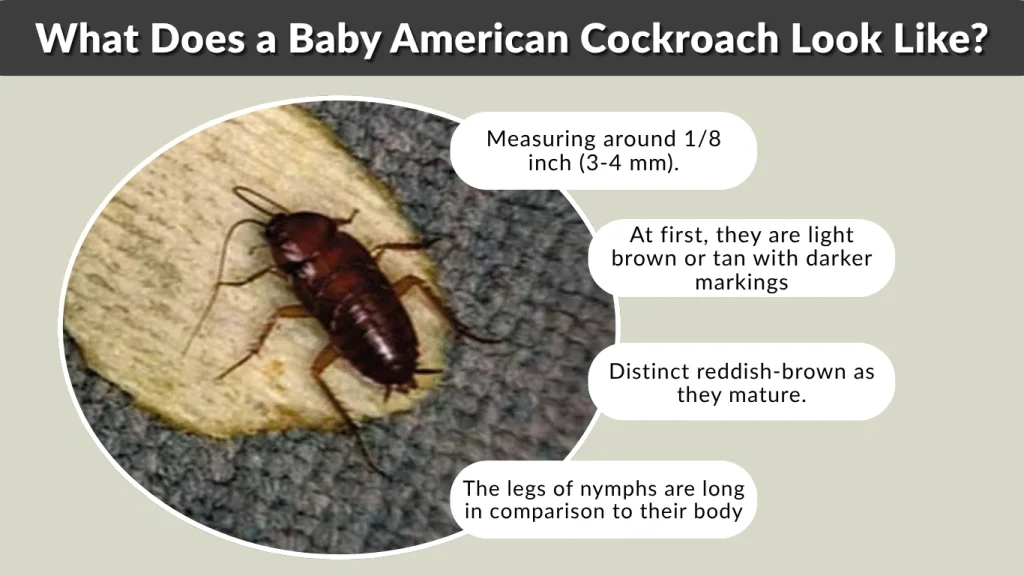
Baby American cockroaches, also known as nymphs, look similar to adult cockroaches but on a much smaller scale. Initially, they are about the size of a pinhead when they hatch, measuring around 1/8 inch (3-4 mm). As they grow, they gradually increase in size and can reach up to 1 inch (25 mm) or slightly longer by the time they approach adulthood.
The color of baby American cockroaches is another distinguishing feature. At first, they are light brown or tan with darker markings, which gradually darken to a more distinct reddish-brown as they mature. One key difference from the adults is that they lack the full set of wings; instead, they have short wing stubs that become more pronounced as they mature.
The legs of nymphs are long in comparison to their body, which is similar to the adults, and they are quick-moving. Baby American cockroaches also have long antennae, although they are proportionally smaller compared to the rest of their bodies when compared to the fully developed antennae of the adults.
Distinguishing Features from Adults
Unlike the adult American cockroaches, which are easily recognized by their larger size and fully developed wings, baby American cockroaches lack wings entirely, making them easier to identify. Adult American cockroaches are about 1.5 inches (38 mm) long and have fully developed, leathery wings, whereas the babies only develop these as they reach maturity. Additionally, nymphs have smaller bodies and lack the distinct yellowish edges that adults often sport near the pronotum (the shield-like structure behind the head).
Baby American Cockroach Size

How Big Are Baby American Cockroaches?
As nymphs grow, they undergo several molts, shedding their exoskeleton each time. The size of the baby cockroach increases with each molt, and they eventually grow to resemble adults but on a smaller scale. Baby American cockroaches grow in instars (the stages between molts), with each instar gradually increasing in size. Here’s a breakdown of how big baby American cockroaches get:
- First Instar (Newly Hatched): Baby cockroaches at this stage are tiny, about 1/8 inch (3-4 mm).
- Second Instar: The second molt brings the nymph to about 1/4 inch (6-7 mm).
- Third Instar: By this stage, the baby cockroach reaches around 1/2 inch (12-13 mm).
- Older Nymphs: As the nymphs approach adulthood, they can grow up to 1 inch (25 mm) before their final molt.
While baby American cockroaches are larger than some other species’ nymphs, such as the German cockroach, they still remain smaller than their adult counterparts at this stage. Baby cockroaches are also lighter in color, which is a notable feature distinguishing them from the darker adult American cockroaches.
Size Comparison: Baby American Cockroach vs. German Cockroach

One common question homeowners have when identifying cockroaches is how to tell the difference between the baby American cockroach and the baby German cockroach. While both species’ nymphs share a similar appearance, the baby American cockroach is typically larger than the baby German cockroach at every stage of development.
- Baby American Cockroach: The nymphs of American cockroaches grow up to 1 inch in size before becoming adults, with a reddish-brown color.
- Baby German Cockroach: The nymphs of German cockroaches are much smaller, usually reaching only 1/2 inch when fully developed, and they have two dark parallel stripes running along the back, making them easier to identify.
The size difference is one of the easiest ways to distinguish between the two species. While German cockroach nymphs may also have a similar reddish-brown color, they will remain smaller and will be marked by the distinctive stripes running down their thorax.
Lifecycle of Baby American Cockroaches
From Egg to Nymph
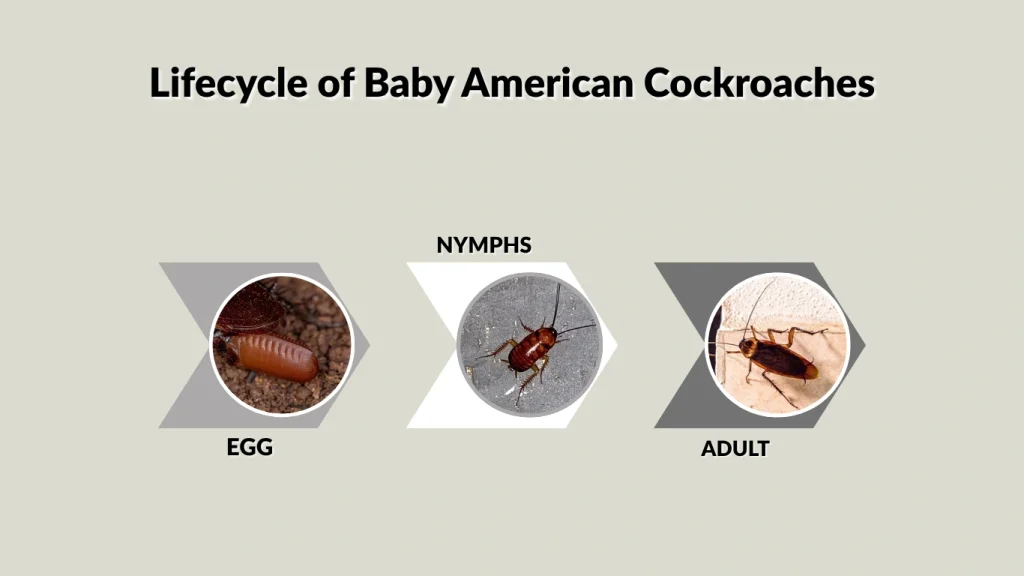
The lifecycle of an American cockroach begins with the ootheca—the egg case that the female produces. Each ootheca contains around 30-40 eggs, and the female carries these egg cases around until they hatch. Typically, it takes about 2 months for the eggs to hatch, depending on the temperature and environmental conditions. Once the baby cockroaches hatch, they are in their first instar stage, small and vulnerable.
As the nymphs grow, they molt multiple times, shedding their exoskeleton to accommodate their growing bodies. They pass through six stages before becoming adults, with each molt resulting in a larger size and more developed features.
Baby American Cockroaches vs. German Cockroaches
When comparing baby American cockroaches to baby German cockroaches, there are several distinguishing features that can help homeowners identify which species they’re dealing with. While both are common household pests, they have notable differences in size, appearance, and behavior.
Physical Differences
- Size: Baby American cockroaches are larger than baby German cockroaches. American cockroach nymphs can grow up to 1 inch (25 mm) before they become adults, while German cockroach nymphs typically max out at around 1/2 inch (12-13 mm).
- Color: Both species’ nymphs are brown to tan in color, but American cockroach nymphs tend to have a reddish-brown hue that darkens as they grow. German cockroach nymphs have a lighter brown color and may feature distinct dark stripes running down their backs, which is a key identifying feature.
- Shape and Features: American cockroaches have longer legs and a larger body frame compared to German cockroaches. Baby American cockroaches lack the pronounced dark markings that German cockroaches have, making them easier to distinguish as they mature.
Behavioral Differences
- Activity: Baby German cockroaches are typically more active and scurry around more frequently than baby American cockroaches, especially when disturbed. American cockroach nymphs tend to hide in darker, more secluded areas, such as basements or attics.
- Habitat: German cockroaches are more commonly found in kitchens and bathrooms since they prefer warmer, moist environments and are often found around food sources. American cockroaches, on the other hand, tend to thrive in basements, sewers, and drain systems, though they can occasionally be found in kitchens if the conditions are right.
Common Places to Find Baby American Cockroaches in the House
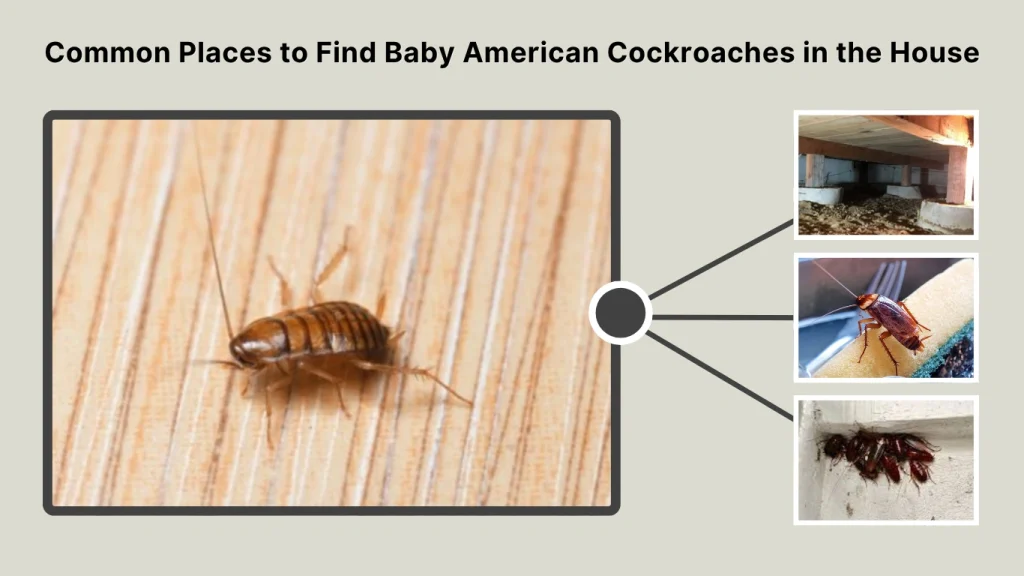
Baby American cockroaches, like their adult counterparts, are nocturnal and prefer dark, moist environments. Common places where homeowners might find baby American cockroaches include:
- Basements and Crawl Spaces: These areas are ideal for baby cockroaches as they provide plenty of hiding spots and high humidity.
- Behind Appliances: Kitchen appliances like refrigerators, stoves, and dishwashers often provide the warmth and moisture that baby cockroaches need.
- Drains and Pipes: Since American cockroaches are known to live in plumbing systems, it’s not uncommon to find them near sinks or drains.
- Attics: If your home has a damp attic, it can be an ideal hiding spot for nymphs to grow before emerging into other parts of the home.
Once baby cockroaches have hatched, they may start to venture out in search of food. This can result in visible signs of an infestation, including droppings, shed skins, or egg cases.
How Many Babies Do American Cockroaches Have?
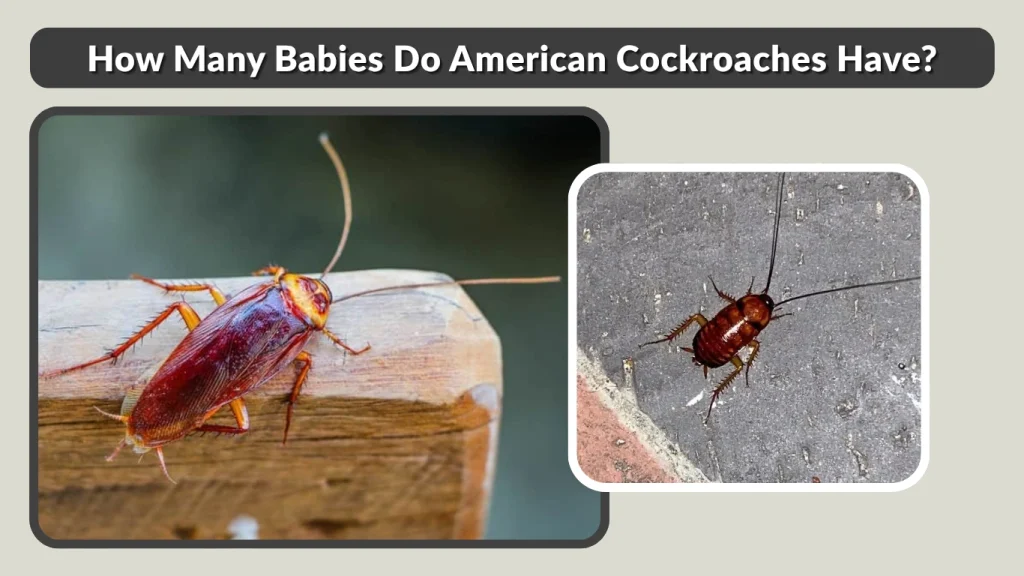
American cockroaches are prolific breeders, capable of producing several batches of offspring in their lifetime. A female American cockroach can produce several egg cases (oothecae) during her lifespan, with each egg case containing about 30 to 40 eggs. These egg cases are typically laid in dark, hidden areas, and once the eggs hatch, the baby cockroaches (nymphs) will begin to develop through various instars.
- Egg Case Production: A female American cockroach can produce up to 14 egg cases in her lifetime, leading to a significant number of offspring.
- Growth and Development: After hatching, the nymphs will mature into adults in about 6 to 12 months, depending on environmental conditions like temperature and humidity.
If left unchecked, a single female can lead to an infestation of hundreds of cockroaches over the course of a year.
How to Identify and Deal with Baby American Cockroaches
Signs of an Infestation
If you’re concerned about a baby American cockroach infestation, here are some signs to look out for:
- Visible Nymphs: Spotting baby cockroaches scurrying around at night is one of the clearest signs of an infestation.
- Egg Cases: If you find egg cases in hidden areas like under furniture or behind appliances, it’s a strong indication that a female cockroach has laid her eggs nearby.
- Shed Skins: As baby cockroaches grow, they molt and leave behind their exoskeletons. These discarded skins can be found in areas where they’ve been hiding.
What to Do If You Spot Baby American Cockroaches
If you notice baby American cockroaches or any other signs of infestation, it’s important to take immediate action to prevent the problem from escalating. Here are some steps you can take:
- Seal Cracks and Crevices: Cockroaches can enter through even the smallest openings. Inspect your home for gaps around windows, doors, and pipes, and seal them with caulk or weather stripping.
- Maintain Cleanliness: Cockroaches are drawn to food scraps, so keeping your home clean and free of food debris is essential in preventing infestations.
- Use Traps and Baits: Sticky traps and cockroach baits can help reduce the population by attracting and killing baby cockroaches.
- Pesticides: For more severe infestations, consider using insecticides. However, these should be used carefully and according to the manufacturer’s instructions.
- Professional Pest Control: If the infestation persists or is overwhelming, calling a pest control professional may be the best course of action. They can help eliminate the problem and offer advice on preventing future issues.
FAQs
What do baby American cockroaches look like?
Baby American cockroaches resemble their adult form but are much smaller, typically around 1/8 inch in their early stages. They lack wings and are a light brown or tan color, gradually darkening as they grow.
How big do baby American cockroaches get?
Baby American cockroaches can grow up to 1 inch before they reach adulthood, which is larger than many other cockroach species’ nymphs.
How many babies does an American cockroach have at once?
A female American cockroach can produce up to 30-40 babies per egg case, with several egg cases laid throughout her lifespan.
How can you tell baby American cockroaches apart from other species?
Baby American cockroaches are larger and have a reddish-brown hue, unlike the smaller, tan-colored German cockroach nymphs that often feature dark stripes on their backs.
What should I do if I find a baby American cockroach in my house?
If you find a baby American cockroach, it’s important to check for other signs of infestation and take steps to seal your home and eliminate food sources. You may need to use traps, baits, or contact a pest control professional for larger infestations.