The Australian cockroach is one of the most recognized cockroach species, not only in Australia but in many other countries where it has spread. Known scientifically as Periplaneta australasiae, this insect is often confused with the American cockroach because of its large size and similar appearance. However, it has unique traits that make it easy to identify. In this guide, we’ll explore everything about Australian cockroaches—from size, species variations, and risks to humans, to how they are controlled in homes across Australia.
What Are Australian Cockroaches?
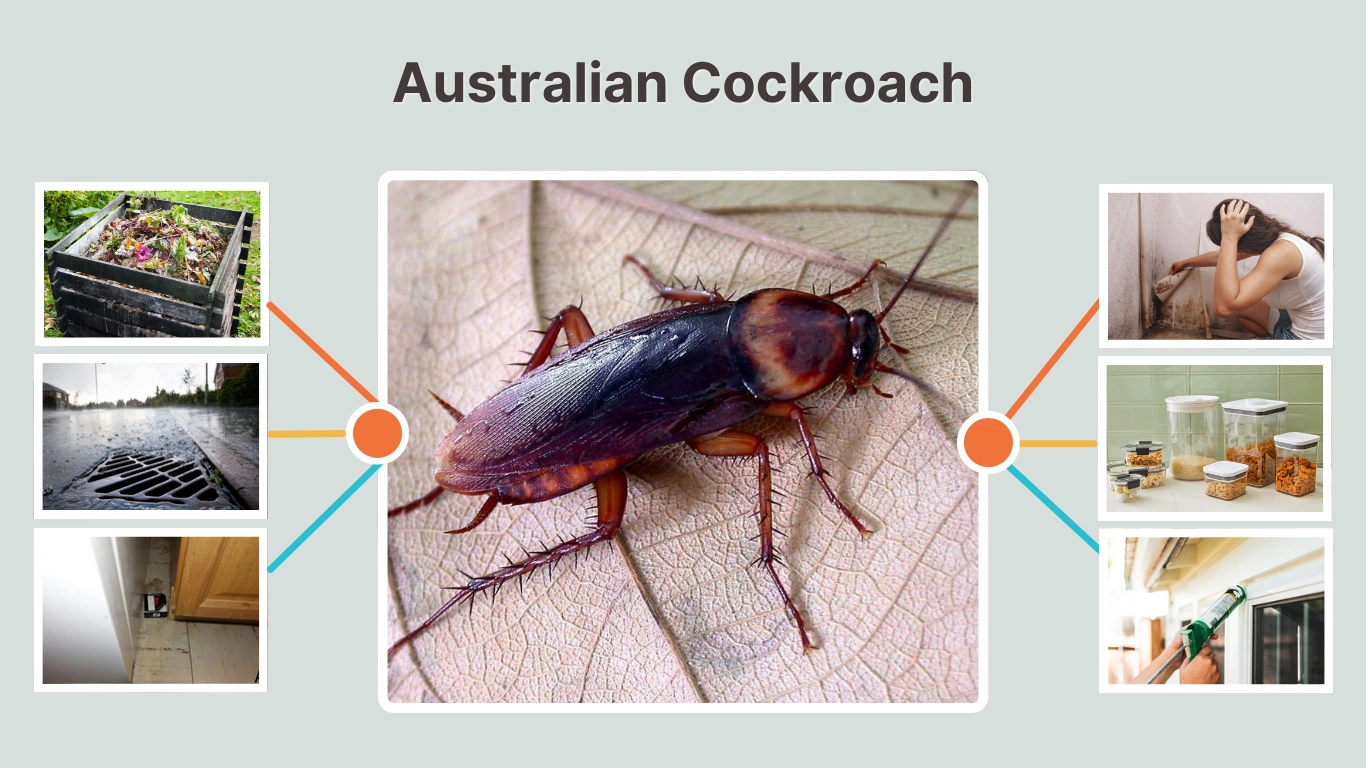
The Australian cockroach is a large, reddish-brown cockroach with a distinct yellow band around its thorax and yellow streaks along its wing edges. Despite the name, it is not native to Australia alone. It is believed to have originated in Africa or Asia, but it is now common in tropical and subtropical regions worldwide. In Australia, they are widespread in warmer states such as Queensland, New South Wales, and Victoria, where they often find their way into homes and gardens.
Identification and Appearance
Size and Shape
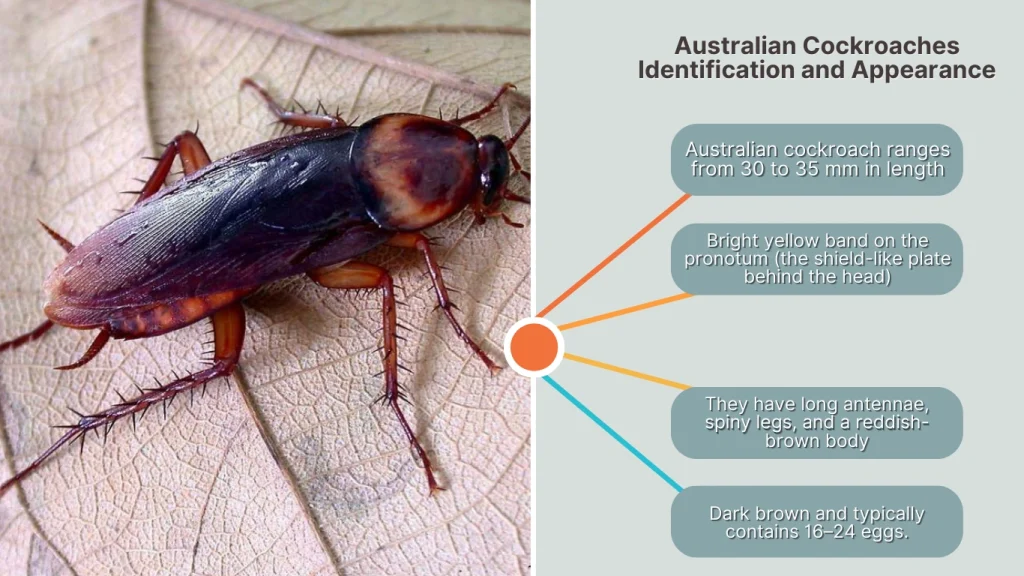
- The average size of an adult Australian cockroach ranges from 30 to 35 mm in length, making it slightly smaller than the American cockroach.
- They have long antennae, spiny legs, and a reddish-brown body.
- Distinguishing marks: bright yellow band on the pronotum (the shield-like plate behind the head) and yellow markings on the wing margins.
Nymphs and Eggs
- Nymphs are smaller, wingless, and darker brown, sometimes with pale edges.
- The egg case (ootheca) is dark brown and typically contains 16–24 eggs.
- Female cockroaches carry the case for a few days before depositing it in a hidden, sheltered spot.
- Nymphs take about 6–12 months to mature, depending on climate conditions.
Australian Cockroach vs American Cockroach
- Australian cockroach: 30–35 mm, yellow wing edges, more common in warm outdoor areas.
- American cockroach: 35–40 mm, uniform reddish-brown, often found in sewers and basements.
- Both species can fly, but Australian cockroaches are more likely to enter homes from outside gardens, while American cockroaches thrive in drains and dark interiors.
Types and Species Found in Australia
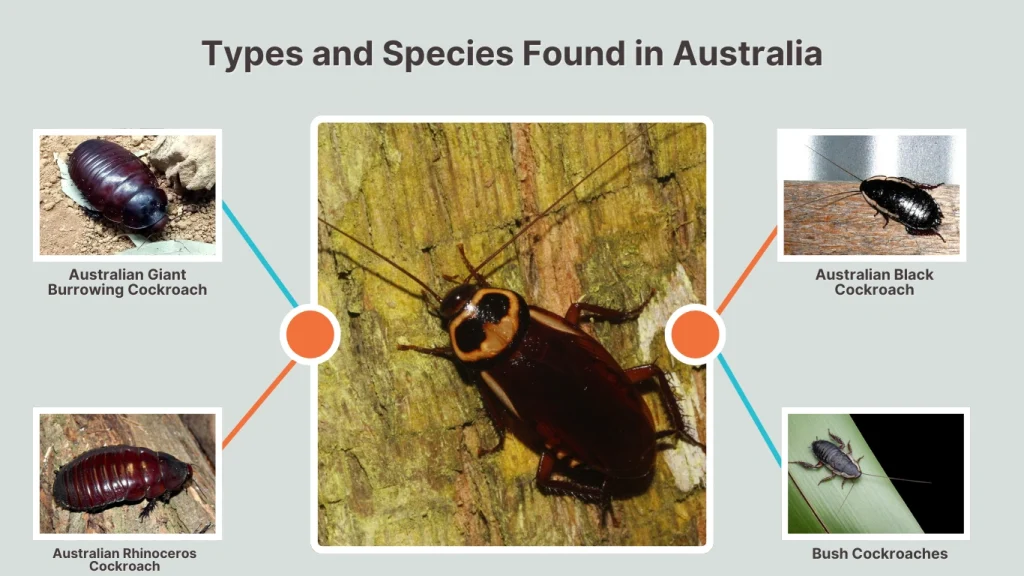
Australia is home to several cockroach species, some of which are native and others introduced. Not all are considered pests.
Australian Cockroach (Periplaneta australasiae)
The main pest species, found in houses, apartments, and gardens.
Australian Giant Burrowing Cockroach (Macropanesthia rhinoceros)
- The heaviest cockroach in the world, reaching up to 80 mm long and weighing 30+ grams.
- Unlike common cockroaches, it does not infest homes. It lives underground in burrows and feeds on dry eucalyptus leaves.
Australian Rhinoceros Cockroach
A close relation to the giant burrowing species, sometimes used in education and even kept as unusual pets.
Australian Black Cockroach (Platyzosteria spp.)
- A native species found in gardens, leaf litter, and under bark.
- Unlike pest cockroaches, it does not typically infest homes.
Bush Cockroaches
- Small to medium-sized native cockroaches.
- Found in outdoor environments and not considered harmful to humans.
Size: How Big Are Australian Cockroaches?
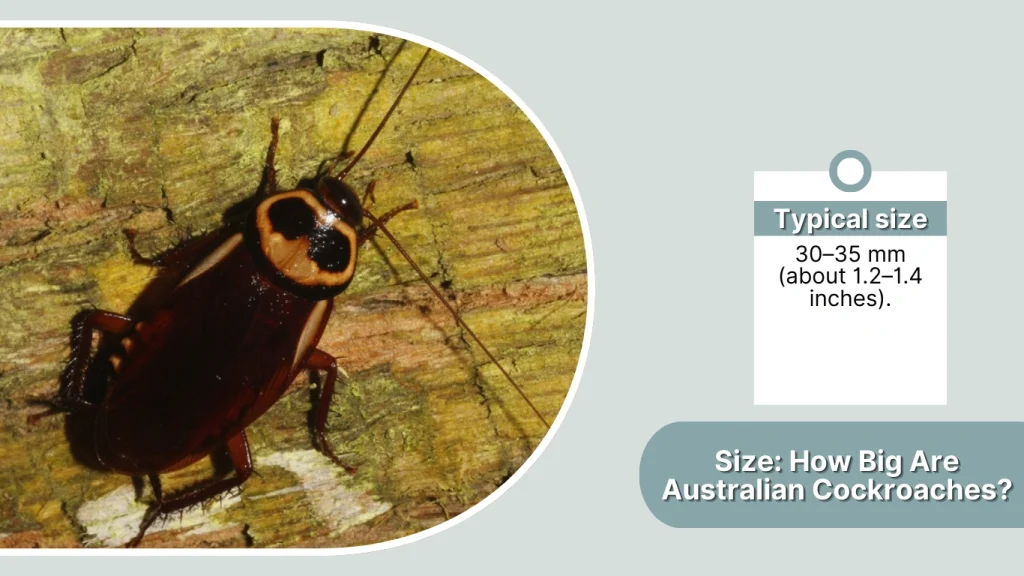
Australian cockroaches are among the larger household cockroach species, but their size can vary depending on species.
- Typical size: 30–35 mm (about 1.2–1.4 inches).
- Huge specimens: The giant burrowing cockroach can grow up to 80 mm (3 inches) and is the heaviest cockroach species in the world.
- Comparison: They are slightly smaller than American cockroaches but are still considered large household pests.
Their size often shocks people who encounter them indoors, especially when they take flight at night. Many residents in Australia consider them a nuisance due to their large, noticeable appearance.
Behavior and Habitat
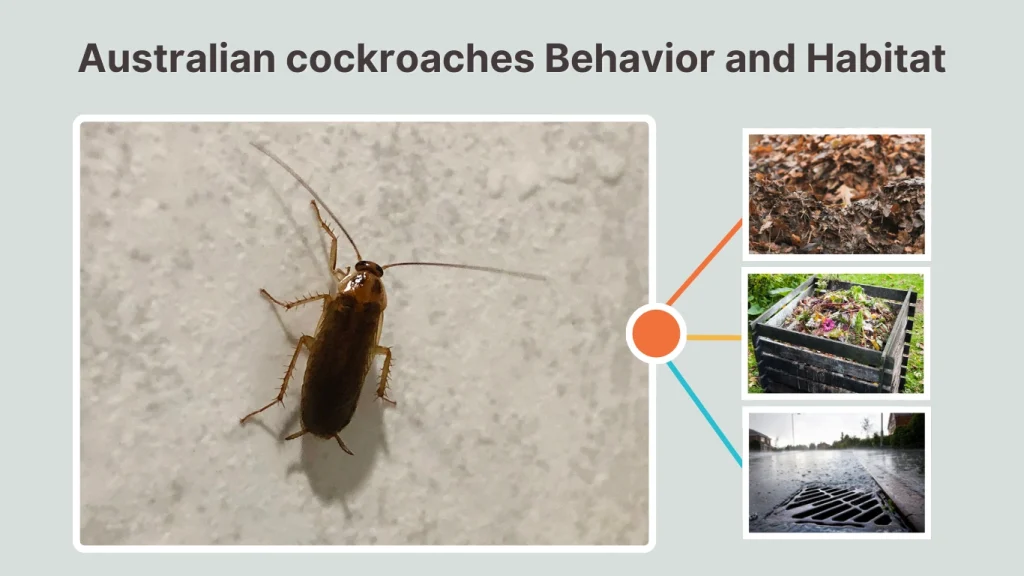
Where Do They Live?
Australian cockroaches are highly adaptable. Outdoors, they thrive in warm and moist areas such as:
- Gardens and mulched flower beds
- Under bark, logs, and leaf litter
- Around compost piles
- Near water sources like drains and gutters
Indoors, they prefer damp and dark areas. You may find them in:
- Kitchens and bathrooms
- Behind refrigerators and dishwashers
- Cupboards, especially where food is stored
- Basements, garages, and laundry rooms
They are mostly nocturnal and avoid light, which is why they’re often seen scurrying when a light is switched on at night.
Flying Ability
Unlike some cockroach species, Australian cockroaches are capable fliers. Their wings cover the entire body, and in warm conditions, they can fly short distances. Flying is mainly used to move from gardens or outdoor spaces into houses, especially during hot and humid evenings.
Seasonal Activity
Cockroach populations in Australia peak during spring and summer, when the weather is hot and humid. These conditions speed up their breeding cycles, leading to larger infestations. In cooler months, their activity slows down, but they continue to survive indoors where warmth is available.
Cockroaches in Australia: Common Species in Homes
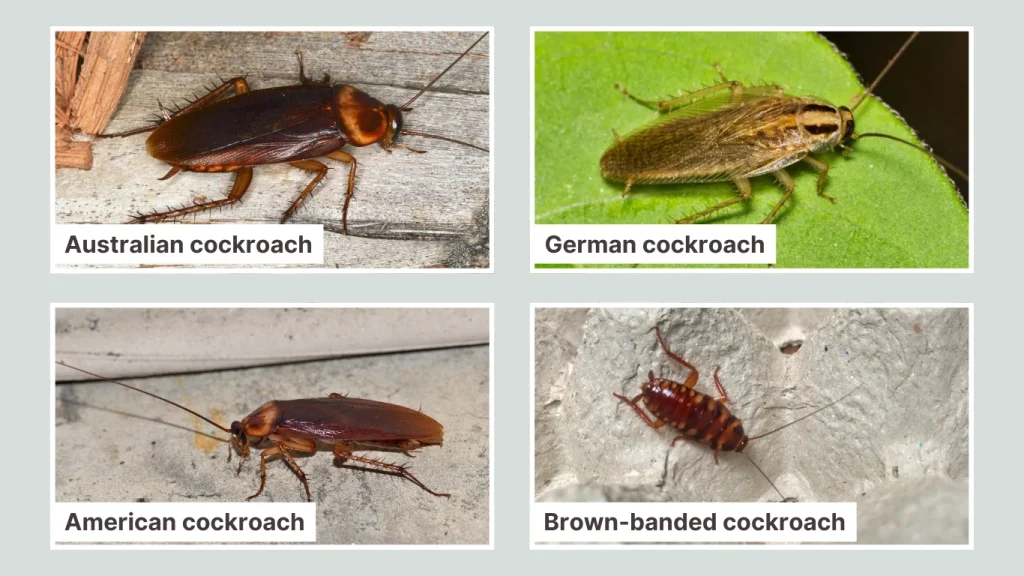
Australia has more than 400 native cockroach species, but only a handful infest homes. The main pest cockroaches include:
- Australian cockroach (Periplaneta australasiae) – Found both indoors and outdoors.
- German cockroach (Blattella germanica) – Smaller, fast-breeding, and often found in kitchens.
- American cockroach (Periplaneta americana) – Large, reddish-brown, often in sewers, basements, and damp areas.
- Brown-banded cockroach (Supella longipalpa) – Smaller species that prefers warm, dry environments.
- Black/bush cockroaches – Less of a household pest, usually outdoors.
Understanding the species is important because control methods differ. For example, German cockroaches reproduce faster than Australian cockroaches, making infestations harder to manage.
Are Australian Cockroaches Harmful?
Risks to Humans
Australian cockroaches don’t sting or bite humans in a dangerous way, but they are still considered harmful because:
- They spread bacteria such as Salmonella and E. coli by walking on food surfaces.
- They contaminate food and utensils with droppings and shed skins.
- Their saliva and feces can trigger asthma and allergies, especially in children.
What Do They Do to Humans?
- Direct contact is rare, but they may crawl over food or personal items.
- Their presence causes stress and discomfort in households.
- They leave behind a musty odor when infestations are large.
Overall, Australian cockroaches are not directly venomous or aggressive, but their indirect effects on human health make them a serious household pest.
Infestation Signs and Facts
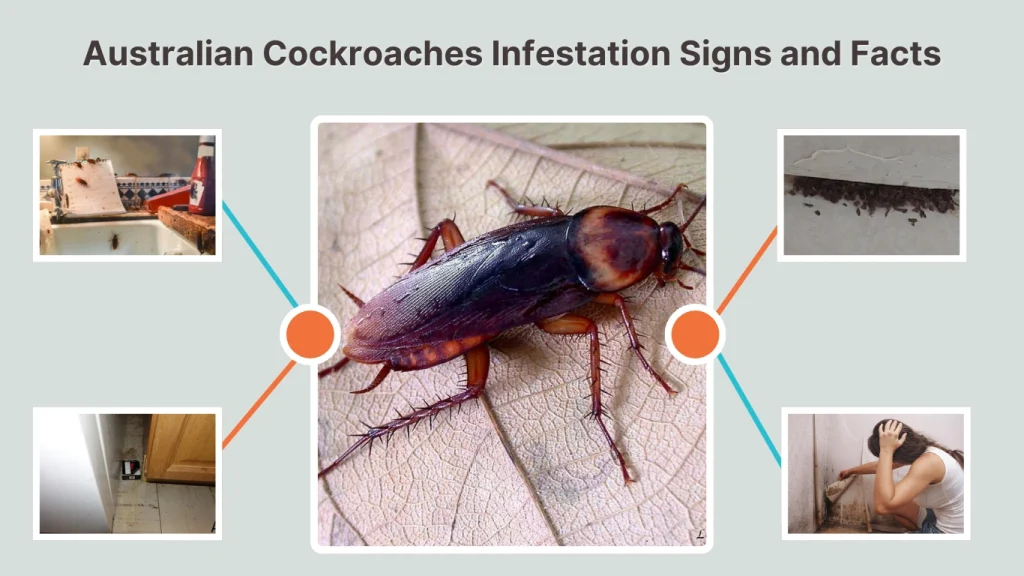
Signs of an Infestation
- Seeing large cockroaches at night around kitchens or bathrooms.
- Droppings that resemble small, dark grains of pepper.
- Egg cases (ootheca) hidden in cupboards, cracks, or under appliances.
- Shed skins from molting nymphs.
- A strong, musty odor in heavily infested areas.
Facts About Australian Cockroaches
- They can live up to 6–12 months depending on conditions.
- A single female produces 20+ egg cases in her lifetime.
- They prefer warmer climates, which is why they are common in Queensland and Sydney.
- They are excellent climbers, often found on walls, ceilings, and cupboards.
Control and Prevention
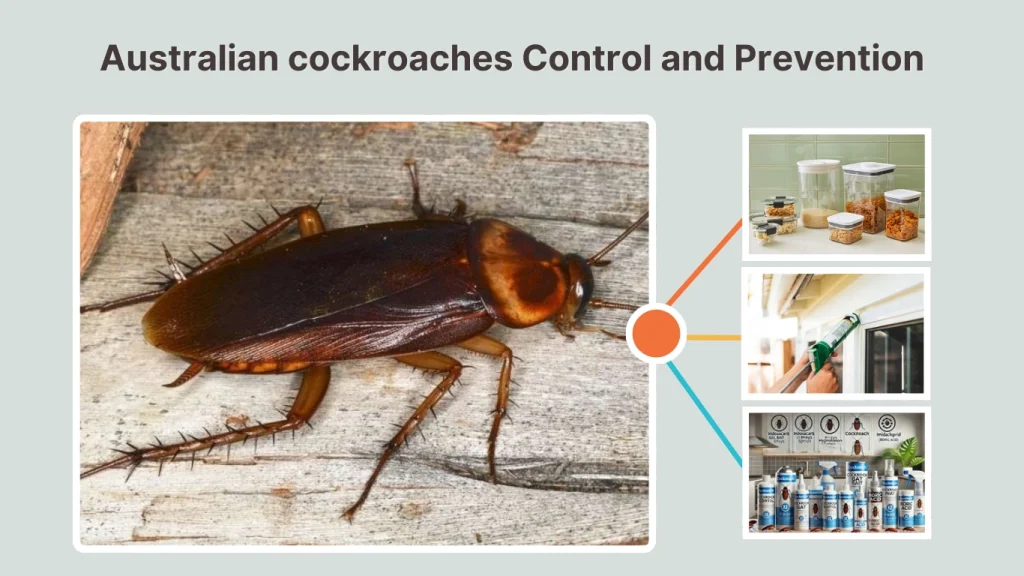
How to Get Rid of Australian Cockroaches
Controlling Australian cockroaches requires a mix of sanitation, exclusion, and pest control treatments.
Step 1: Sanitation
- Keep food sealed in airtight containers.
- Clean crumbs and spills immediately.
- Empty trash bins daily and keep them sealed.
- Wash dishes promptly to avoid attracting roaches.
Step 2: Exclusion
- Seal cracks, gaps, and crevices around doors, windows, and skirting boards.
- Install door sweeps and mesh screens on vents.
- Fix leaks in pipes, taps, and drains to remove moisture sources.
Step 3: Treatment
- Use gel baits containing hydramethylnon or fipronil in hidden areas.
- Apply cockroach traps to monitor activity.
- In cases of heavy infestations, professional pest control is recommended, as they use residual sprays and insect growth regulators.
Natural Remedies
For homeowners who prefer chemical-free methods:
- Diatomaceous earth: A fine powder that dehydrates cockroaches.
- Boric acid: When placed in crevices, it kills cockroaches that groom themselves.
- Essential oils like peppermint or eucalyptus may repel cockroaches, though results vary.
- Sticky traps: Useful for monitoring, though less effective for eradication.
Cockroach Control in Australia
Pest management in Australia is a professional industry because of the country’s warm climate and high cockroach populations. Licensed pest control companies often provide:
- Whole-home barrier sprays.
- Regular maintenance programs for apartments, restaurants, and commercial spaces.
- Eco-friendly pest control solutions for families and pets.
Legal and Cultural Aspects
Is It Illegal to Kill Cockroaches in Australia?
This is one of the most searched myths. The truth:
- Household pest cockroaches (Australian, American, German, etc.) are not protected. You can kill them without legal issues.
- Native species, however, such as the giant burrowing cockroach (Macropanesthia rhinoceros), are sometimes protected by state wildlife laws. They are harmless, live underground, and do not infest homes. Because of their ecological role in recycling leaf litter, they are not to be harmed in the wild.
So while killing pest cockroaches is legal, destroying native cockroaches may be restricted in certain regions.
Cockroach Racing in Australia
Believe it or not, cockroaches play a role in Australian entertainment. Cockroach racing is a quirky tradition, especially popular in Queensland, where pubs and hotels host races with live cockroaches. These events are treated with humor and draw large crowds, making cockroaches part of local culture rather than just a pest.
Cockroach in Pop Culture
In the 1980s, there was an Australian rock band named “The Cockroaches”. While the band later evolved into the famous children’s group The Wiggles, their original name shows how cockroaches have influenced Australian pop culture in unexpected ways.
Lifespan and Reproduction
Australian Cockroach Life Cycle
- Egg stage: Encased in a protective ootheca, which may contain up to 24 eggs.
- Nymph stage: Wingless and darker than adults, requiring multiple molts.
- Adult stage: Fully winged, capable of flight, and ready to reproduce.
- Lifespan: Adults live 6–12 months, depending on food, temperature, and humidity.
Their reproductive rate, combined with resilience, explains why infestations grow quickly if not managed early.
FAQs
How big is an Australian cockroach?
They typically grow between 30–35 mm long. However, the giant burrowing cockroach, a native species, can reach 80 mm and is the heaviest cockroach in the world.
Are Australian cockroaches dangerous?
They do not bite or sting humans, but they spread bacteria, contaminate food, and trigger asthma and allergies. For this reason, they are considered a health risk.
Can you kill cockroaches in Australia?
Yes, pest cockroaches can be killed. The myth about it being illegal comes from the protection of some native species like the giant burrowing cockroach, which does not infest homes.
Why is it illegal to kill some cockroaches?
Certain native species play an important role in the environment and may be protected under conservation laws. These cockroaches recycle organic material and do not pose a risk to humans.
How to get rid of Australian cockroaches naturally?
You can use diatomaceous earth, boric acid, sticky traps, and essential oils. Good sanitation and sealing entry points are equally important for prevention.