
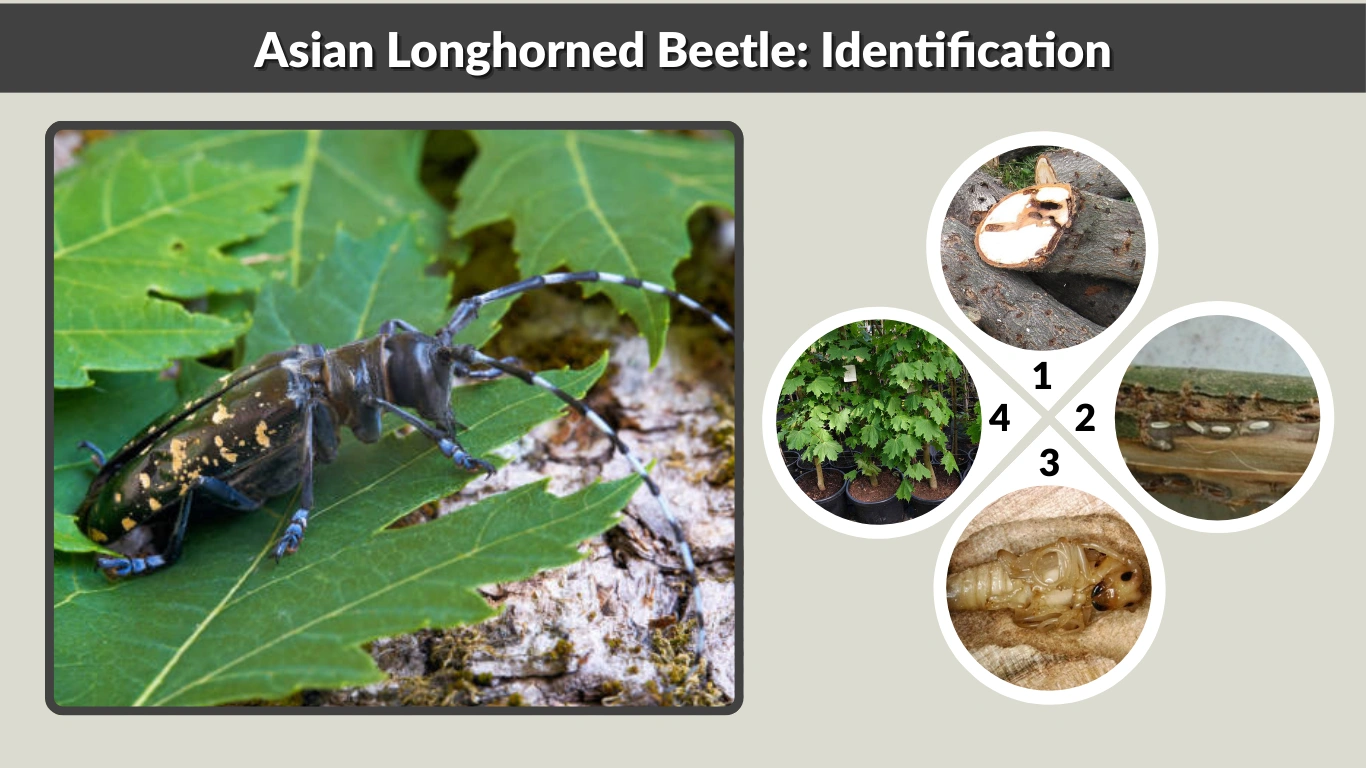
The Asian longhorned beetle (Anoplophora glabripennis) is one of the most destructive invasive tree pests in the world. Known for attacking healthy hardwood trees, this wood-boring insect has caused serious environmental and economic damage in North America and Europe. Because infestations often begin deep inside trees, early detection can be difficult. Understanding how to identify the beetle, recognize infestation signs, and respond quickly is essential to protecting forests, neighborhoods, and valuable landscape trees.
What Is the Asian Longhorned Beetle?
The Asian longhorned beetle (ALB) is an invasive insect native to China and Korea. It was accidentally introduced into other countries through solid wood packing materials such as shipping crates and pallets. Since its discovery outside its native range, the beetle has triggered large-scale eradication programs due to its ability to kill healthy hardwood trees.
Unlike many native insects that target stressed or dying trees, ALB attacks strong, living trees. Once established, infestations can spread through urban neighborhoods and forested areas, causing widespread tree loss. Maple trees are especially vulnerable, making the beetle a serious threat to fall foliage tourism, maple syrup production, and shade tree canopies in cities.
Because of its destructive potential, the Asian longhorned beetle is regulated by agricultural authorities, and quarantine zones are often established in affected regions to prevent further spread.
What Does the Asian Longhorned Beetle Look Like?
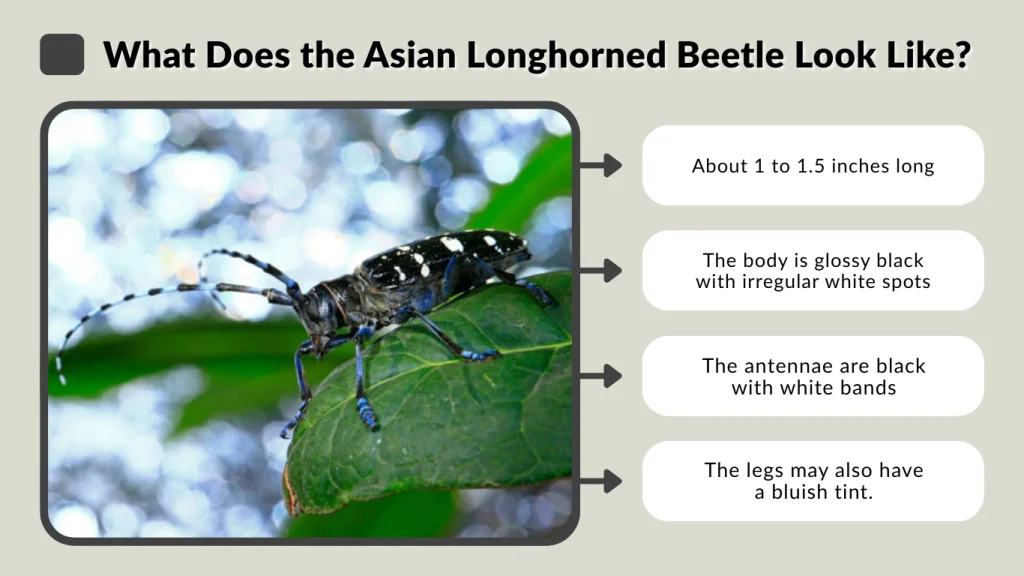
Correct identification is critical, as early reporting can help stop an infestation before it spreads.
Adult Beetle Identification
The adult Asian longhorned beetle is large and visually striking. It measures about 1 to 1.5 inches long, not including its antennae. The body is glossy black with irregular white spots scattered across the wing covers.
One of its most distinctive features is its extremely long antennae. The antennae are black with white bands and can be up to twice the length of the beetle’s body, especially in males. The legs may also have a bluish tint.
Because of its size and markings, the beetle is often mistaken for native longhorned beetle species. However, the bold white spots and banded antennae are key identification clues.
Larvae and Egg Stage
The larval stage causes the most damage. Larvae are cream-colored, legless grubs that live inside tree trunks and branches. After hatching, they bore deep into the wood, feeding on living tissue.
Females lay eggs in small oval pits they chew into the bark. These egg-laying sites may appear as shallow depressions or scars on the tree surface. Once the eggs hatch, the larvae tunnel inward, making detection difficult until visible damage appears.
Asian Longhorned Beetle Life Cycle
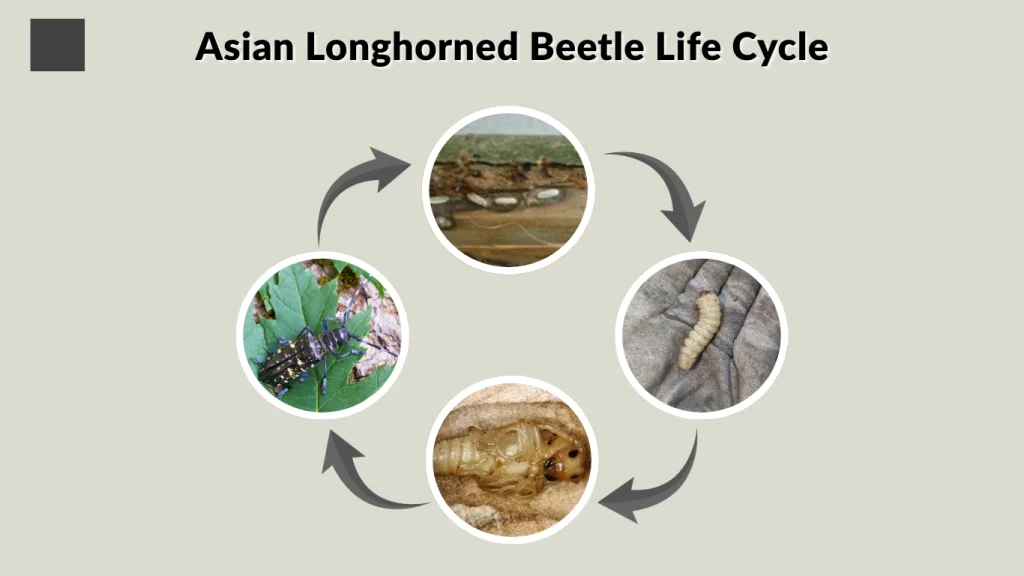
The Asian longhorned beetle has four life stages: egg, larva, pupa, and adult. Its life cycle typically takes one to two years to complete, depending on climate conditions.
After eggs are laid in bark pits, larvae hatch and begin feeding beneath the bark. As they grow, they tunnel deeper into the tree’s heartwood. This larval stage is the longest and most destructive part of the cycle.
Eventually, larvae transform into pupae inside the tree. Adult beetles emerge by chewing perfectly round exit holes through the bark. Adults are most active during the summer months, when they feed, mate, and lay eggs on host trees.
Because much of the life cycle occurs hidden within the tree, infestations often go unnoticed until significant internal damage has occurred.
Trees Affected by Asian Longhorned Beetle
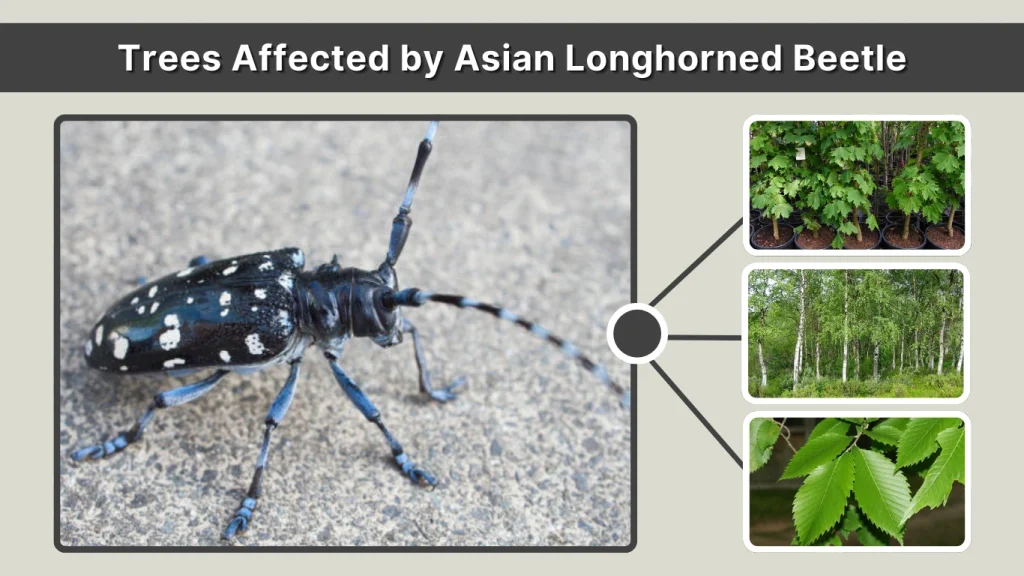
The Asian longhorned beetle primarily targets hardwood trees. It does not attack pine or other conifer species.
Most Common Host Trees
Some of the most commonly affected trees include:
- Maple (the preferred host)
- Birch
- Elm
- Willow
- Poplar
- Horse chestnut
Maple trees are especially vulnerable, which is concerning in regions where maples dominate urban landscapes and natural forests.
Why Hardwood Trees Are at Risk
ALB prefers healthy hardwood trees because they provide suitable living tissue for larval development. As larvae tunnel through the trunk and branches, they disrupt the tree’s ability to transport water and nutrients.
Over time, repeated infestations weaken the tree structurally and physiologically. Even large, mature trees can eventually die if the infestation is not addressed.
Signs of Asian Longhorned Beetle Infestation
Detecting an infestation early can help limit the spread of this invasive beetle. Several visible warning signs may indicate the presence of Asian longhorned beetles.
One of the most noticeable signs is perfectly round exit holes in the bark. These holes are about 3/8 of an inch in diameter—roughly the size of a pencil. They are created when adult beetles chew their way out of the tree.
Another common indicator is frass, a sawdust-like material that collects at the base of the tree or in branch crotches. This material is produced as larvae tunnel through the wood.
You may also notice sap oozing from egg-laying sites or cracks in the bark. As damage progresses, the tree canopy may thin, and branches may begin to die back. Increased woodpecker activity can also signal the presence of larvae beneath the bark.
Recognizing these symptoms quickly and reporting them to local authorities is essential for preventing further spread.
Damage Caused by Asian Longhorned Beetles
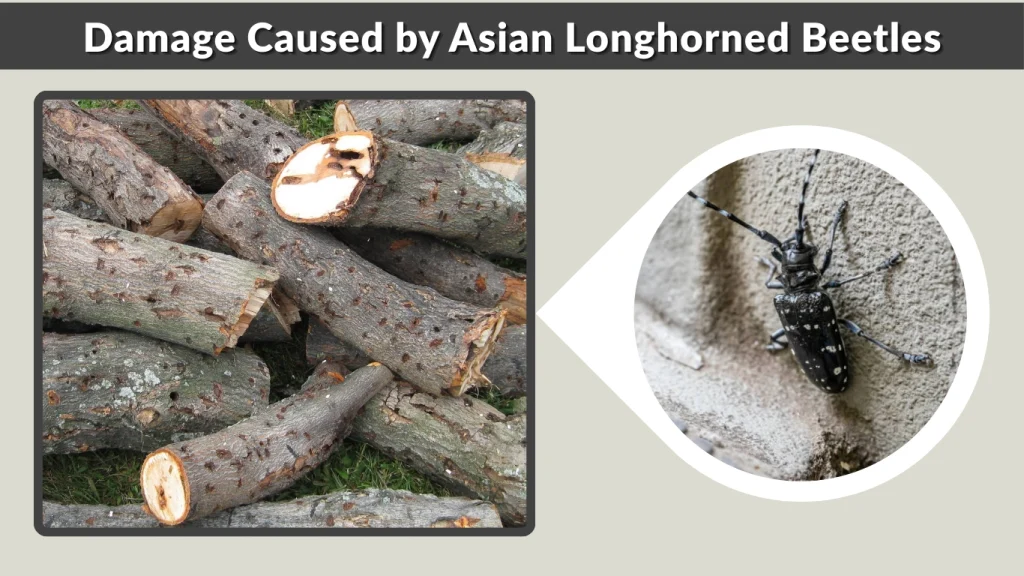
The Asian longhorned beetle causes severe internal damage that often leads to tree death. As larvae tunnel through the trunk and large branches, they create extensive galleries inside the wood. These tunnels disrupt the tree’s vascular system, which is responsible for transporting water and nutrients from roots to leaves.
Over time, this internal feeding weakens the tree’s structure. Branches may become brittle and prone to breaking, especially during storms or high winds. As more larvae develop within the same tree, the cumulative damage accelerates decline.
Unlike some pests that only weaken trees, ALB infestations frequently result in complete tree mortality. Dead and dying trees not only reduce property value and shade coverage but also increase safety risks in residential and public areas.
On a larger scale, widespread infestations can significantly alter forest ecosystems. The loss of dominant hardwood species—especially maples—affects wildlife habitats, biodiversity, and even local industries such as tourism and maple syrup production.
Asian Longhorned Beetle vs. Similar Beetles
The Asian longhorned beetle is sometimes confused with other longhorned beetle species, including the citrus longhorned beetle and several native North American species.
The citrus longhorned beetle looks similar but tends to have a more granular body texture and slightly different spot patterns. It also attacks a broader range of host plants, including some fruit trees. Proper identification is important because management strategies and regulatory responses may differ.
Native longhorned beetles are often less glossy and typically infest weakened or dead trees rather than healthy ones. In contrast, ALB aggressively attacks living hardwoods, which is one reason it is considered such a serious invasive threat.
If there is uncertainty about identification, it is best to photograph the insect and consult local agricultural or forestry authorities rather than attempting removal yourself.
How to Prevent and Control Asian Longhorned Beetle
Preventing the spread of the Asian longhorned beetle is far more effective than trying to manage an established infestation.
Prevention Tips
One of the most important prevention strategies is to avoid moving firewood. Transporting firewood from one area to another can unknowingly spread larvae hidden inside the wood. Always buy and burn firewood locally.
Purchasing certified heat-treated wood products is another important step. International regulations now require many wood packaging materials to be treated to reduce the risk of transporting invasive pests.
Regularly inspecting trees—especially maples and other hardwoods—can help catch early warning signs. Pay close attention to round exit holes, frass, and canopy thinning during the summer months when adults are active.
Control Measures
Once an infestation is confirmed, control options are limited. Insecticides may be used in certain cases by licensed professionals, but treatments are not always effective for heavily infested trees.
In many outbreak areas, the primary control method is tree removal. Infested trees are cut down, chipped, and destroyed to eliminate developing larvae. Surrounding host trees may also be removed as a precautionary measure.
Government agencies often establish quarantine zones to restrict the movement of firewood, nursery stock, and other wood materials. These measures are essential for containing outbreaks and preventing the beetle from spreading to new regions.
What to Do If You Spot an Asian Longhorned Beetle
If you believe you have seen an Asian longhorned beetle or signs of infestation, take action immediately but do not disturb the tree.
First, take clear photos of the insect or the damage, including close-up images of exit holes or egg sites. Record the exact location, noting the type of tree if possible.
Next, report your findings to your local agriculture department, forestry service, or the USDA Animal and Plant Health Inspection Service (APHIS) if you are in the United States. Many agencies provide online reporting tools or hotlines for invasive species sightings.
Avoid cutting, pruning, or moving wood from the suspected tree. Disturbing infested material can unintentionally help spread the beetle.
Early reporting plays a critical role in protecting forests and urban landscapes from further damage.
FAQs
Is the Asian longhorned beetle dangerous to humans?
The Asian longhorned beetle is not harmful to humans or pets. It does not bite or sting. However, it poses a serious threat to hardwood trees, which can lead to environmental damage and safety hazards from falling branches or dead trees.
Can an infected tree be saved?
In most cases, heavily infested trees cannot be saved. Because larvae tunnel deep inside the wood, damage is often extensive before symptoms appear. Early detection may allow limited treatment in some situations, but removal is commonly required to prevent spread.
How fast does the Asian longhorned beetle spread?
The beetle spreads naturally when adults fly to nearby host trees during the summer. However, long-distance spread typically occurs when infested firewood or wood products are transported to new areas.
Why are maple trees especially vulnerable?
Maple trees are a preferred host for the Asian longhorned beetle. Their widespread presence in urban and forested areas makes them particularly at risk, increasing the potential impact on ecosystems, property values, and industries like maple syrup production.