
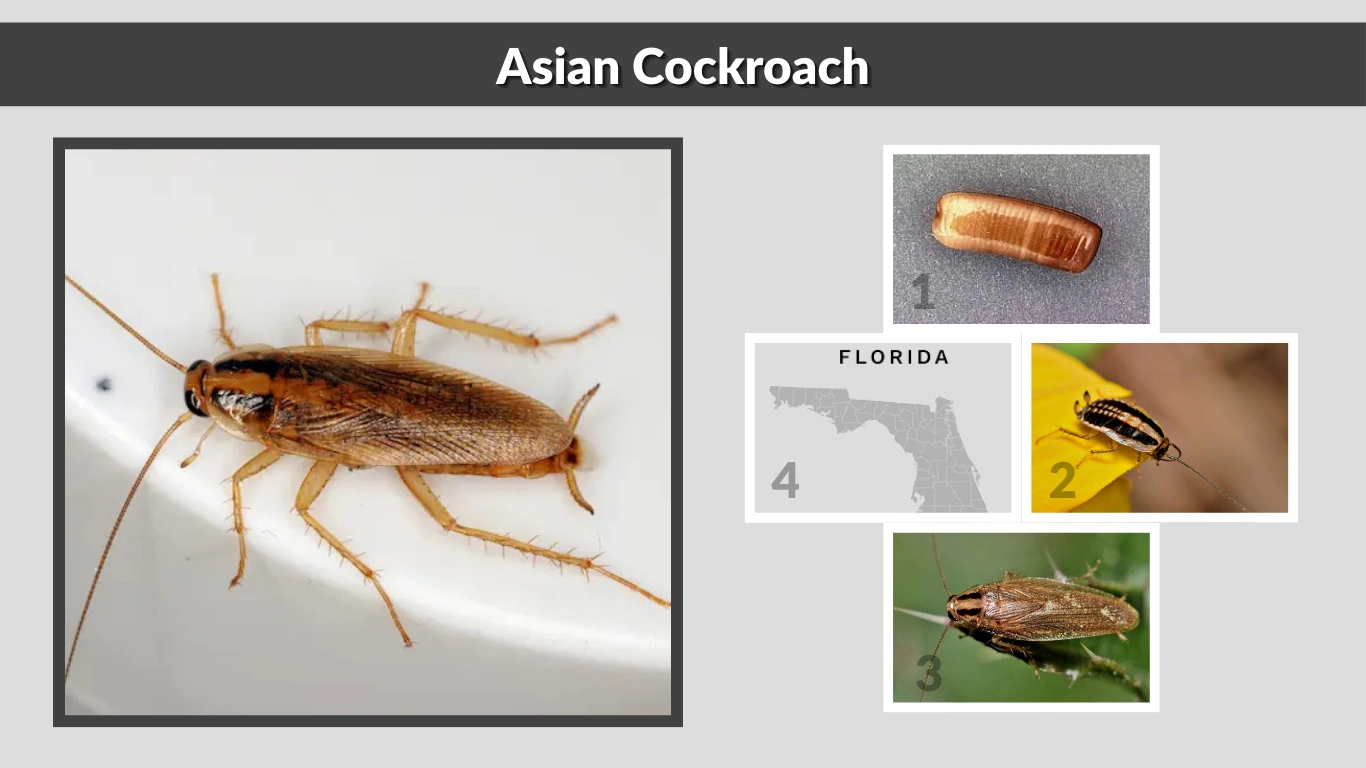
The Asian cockroach (Blattella asahinai) is a fast-spreading pest often mistaken for the German cockroach due to their similar appearance. Unlike its relative, the Asian cockroach is a strong flyer, highly attracted to light, and primarily found outdoors. Common in warm regions like Florida, Texas, and parts of California, this species can invade homes, causing nuisance and health concerns. Understanding its behavior, reproduction, and control methods is essential for effective management and prevention.
Identification and Characteristics
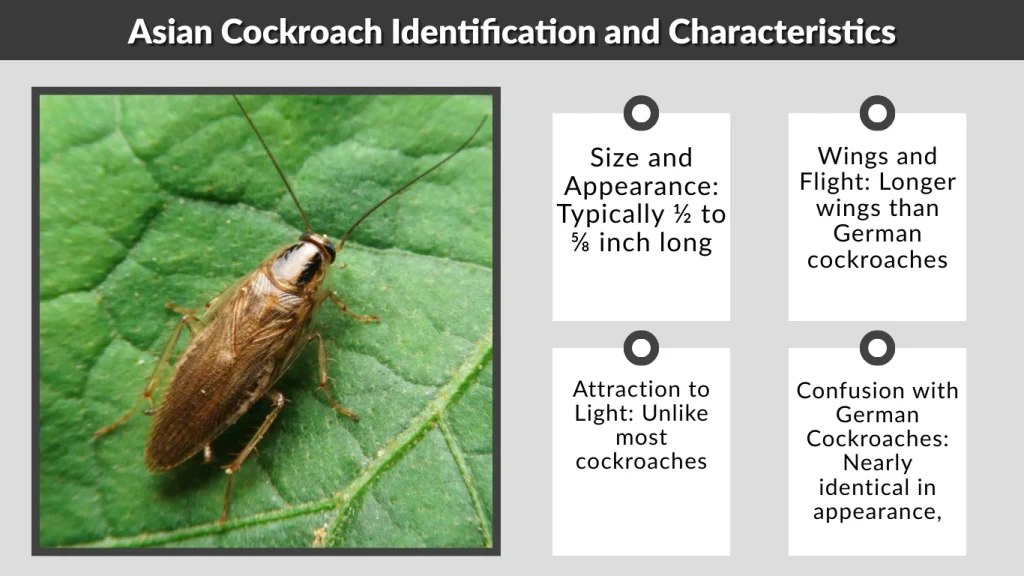
- Size and Appearance: Typically ½ to ⅝ inch long, light brown with two dark parallel stripes on the pronotum.
- Wings and Flight: Longer wings than German cockroaches, allowing them to fly easily and actively at dusk.
- Attraction to Light: Unlike most cockroaches, they are drawn to outdoor lighting and bright interiors.
- Confusion with German Cockroaches: Nearly identical in appearance, but behavior and habitat are key differences.
Asian Cockroach vs. German Cockroach
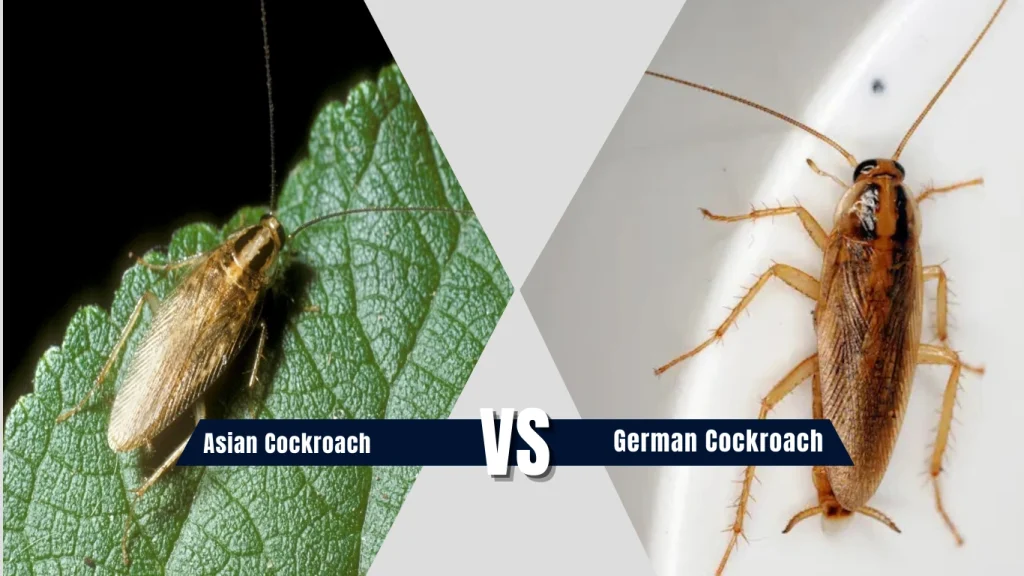
The Asian cockroach and German cockroach look almost identical, but their habits set them apart. German cockroaches prefer living indoors, thrive in kitchens and bathrooms, and rarely fly. In contrast, Asian cockroaches live outdoors, fly frequently, and are attracted to light. Misidentifying them can lead to ineffective treatments, since control methods differ depending on the species involved.
Do Asian Cockroaches Fly?
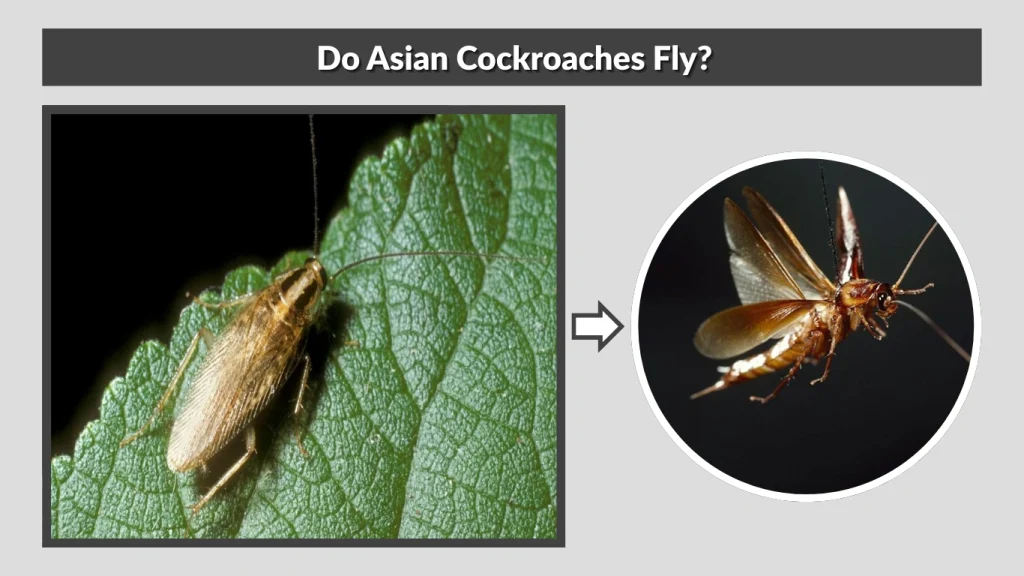
Yes, Asian cockroaches are excellent fliers, unlike most household cockroach species. They often take flight at dusk, traveling short distances toward light sources such as porch lamps, televisions, or indoor bulbs. This ability increases the chances of them entering homes, making infestations harder to manage. Their flight behavior is one of the main traits that distinguish them from German cockroaches.
5. Habitat and Distribution
5.1 Native Range and Global Spread
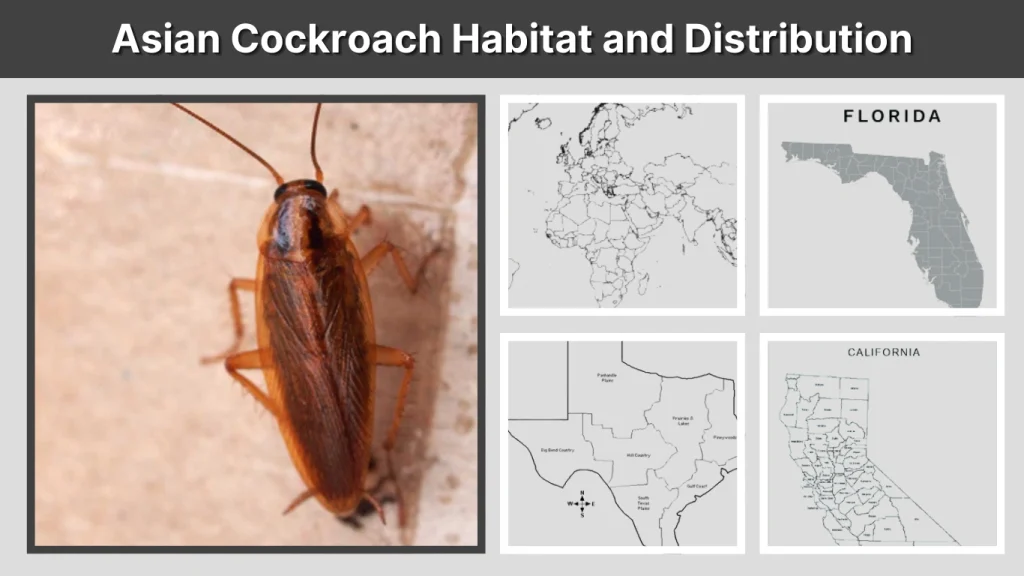
The Asian cockroach originated in Asia but has spread widely since its discovery in the United States during the 1980s. Today, it thrives in warm, humid environments where outdoor vegetation and organic matter are abundant.
5.2 Asian Cockroach in Florida
Florida provides ideal conditions for this species, making it one of the most affected states. They commonly breed in leaf litter, mulch, and shaded lawns.
5.3 Asian Cockroach in Texas
Populations are also strong in Texas, particularly in southern and central areas. Warm summers and mild winters allow infestations to persist year-round.
5.4 Asian Cockroach in California
Although less common, sightings in California have raised concerns. With a suitable climate in some regions, experts warn the pest could establish and spread if not controlled early.
6. Behavior and Lifestyle
6.1 Outdoor vs. Indoor Presence
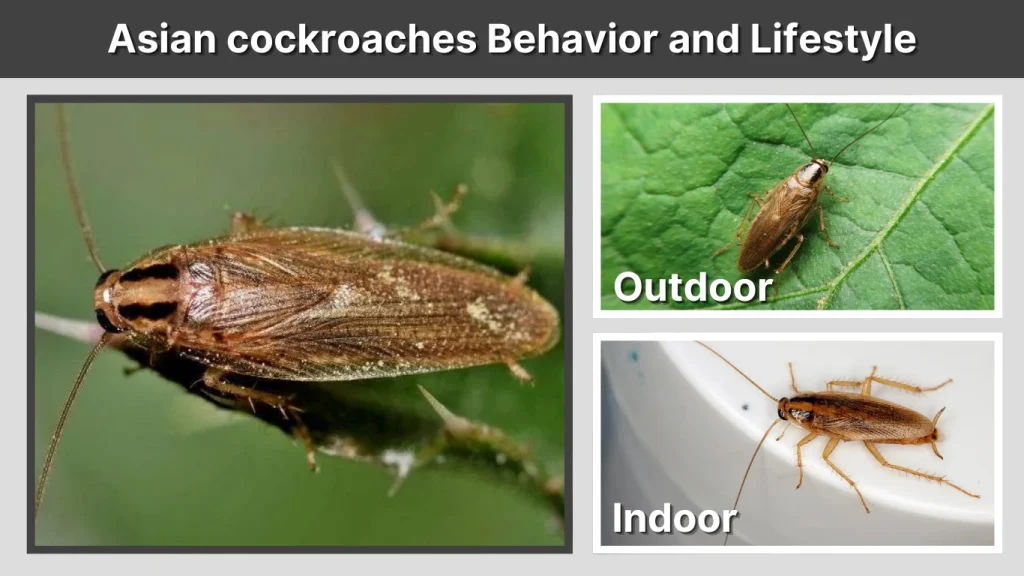
Asian cockroaches prefer outdoor environments such as gardens, mulched flower beds, and grassy areas. However, their strong attraction to light often draws them indoors, especially during the evening. Unlike German cockroaches, they do not thrive well inside homes long-term.
6.2 Asian Cockroach in the House
When indoors, they are usually accidental invaders, flying through open doors or windows toward bright lights. Though they don’t breed heavily indoors, their presence can be alarming. If ignored, repeated entry may still lead to nuisance infestations and potential contamination risks.
7. Reproduction and Lifecycle
7.1 Eggs and Ootheca
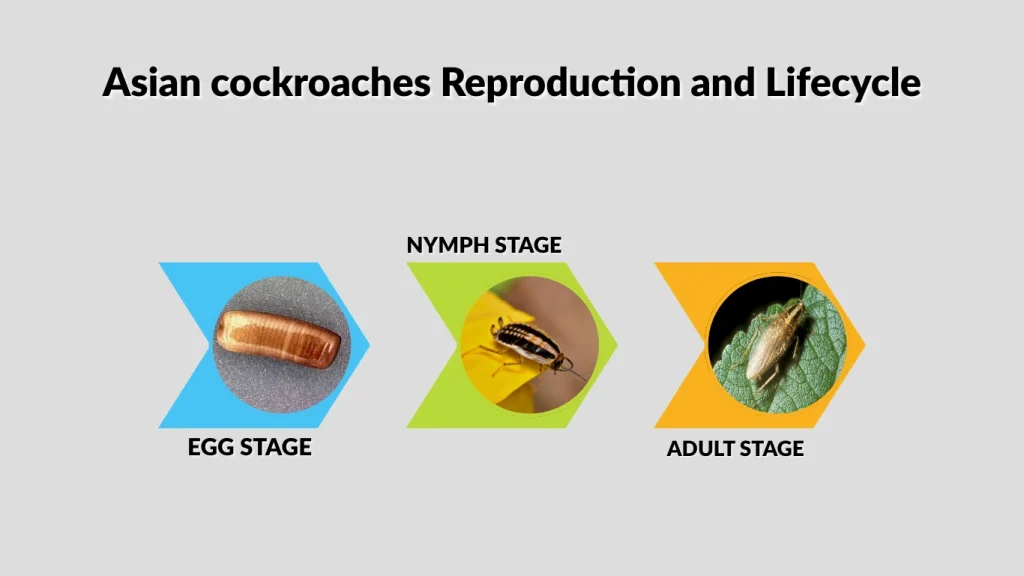
Female Asian cockroaches produce oothecae (egg cases), each containing around 30–40 eggs. They deposit these in moist soil, mulch, or leaf litter, where conditions favor hatching.
7.2 Rapid Development
Eggs hatch within a few weeks, and nymphs grow quickly, reaching adulthood in about two months. Warm climates accelerate this cycle, allowing populations to explode during peak seasons.
7.3 Infestation Risk Factors
Environments with dense vegetation, organic debris, and high humidity support rapid reproduction. During warm months, their numbers surge, increasing the likelihood of infestations around homes and gardens.
8. Control and Prevention
8.1 Asian Cockroach Killer Options
Chemical treatments can be effective when targeted outdoors where the cockroaches breed. Insecticidal baits containing hydramethylnon, fipronil, or indoxacarb are often recommended. Residual sprays may provide temporary relief, but they must be applied carefully to outdoor habitats rather than indoors to avoid unnecessary exposure.
8.2 Natural and Integrated Pest Management
Non-chemical methods help reduce populations without harming the environment. Maintaining a clean yard, trimming vegetation, and reducing leaf litter limits breeding sites. Natural predators such as birds, lizards, and ants may also help keep populations in check. Some homeowners also use diatomaceous earth as a low-toxicity treatment in outdoor areas.
8.3 Preventing Infestations
- Reduce Lighting: Replace bright white outdoor bulbs with yellow or sodium vapor lights to minimize attraction.
- Seal Entry Points: Close gaps around doors, windows, and vents to limit indoor access.
- Manage Outdoor Debris: Regularly rake leaves, remove mulch buildup, and keep grass trimmed.
- Use Screens and Barriers: Ensure window and door screens are intact to block flying adults.
- Professional Help: In cases of heavy infestations, pest control specialists can design targeted treatment plans for long-term results.
Effective prevention relies on combining outdoor habitat management with light control and exclusion methods, making homes less attractive and accessible to these pests.
FAQs
1. What attracts Asian cockroaches to homes?
Asian cockroaches are strongly attracted to light, especially bright indoor bulbs, televisions, and outdoor porch lights. They usually fly into houses during the evening through open doors or windows. Unlike German cockroaches, they do not prefer dark, hidden spaces, but instead follow light sources inside.
2. Are Asian cockroaches harmful to humans?
While Asian cockroaches do not bite or sting, they can spread bacteria and contaminants when they land on food or surfaces. Their presence in homes is primarily a nuisance, but large populations increase the risk of contamination and may cause stress for homeowners concerned about hygiene.
3. How can I tell Asian cockroaches apart from German cockroaches?
Visually, they look nearly identical with light-brown bodies and dark stripes. However, Asian cockroaches fly readily, are drawn to light, and prefer outdoor habitats. German cockroaches rarely fly, thrive indoors, and are more commonly found in kitchens and bathrooms. Observing behavior is the easiest way to distinguish them.
4. Where do Asian cockroaches usually live?
They primarily live outdoors in moist, shaded environments such as mulch, compost piles, gardens, and grassy areas. They are common in warm, humid regions like Florida and Texas. Although they may enter homes at night, they do not usually breed or survive long indoors.
5. What is the best way to get rid of Asian cockroaches?
The most effective control combines outdoor insecticidal baits with environmental management. Reducing leaf litter, trimming plants, and minimizing outdoor lighting significantly lowers their presence. Sealing entry points also prevents accidental indoor invasions. In heavy infestations, contacting professional pest control ensures targeted and long-term solutions.