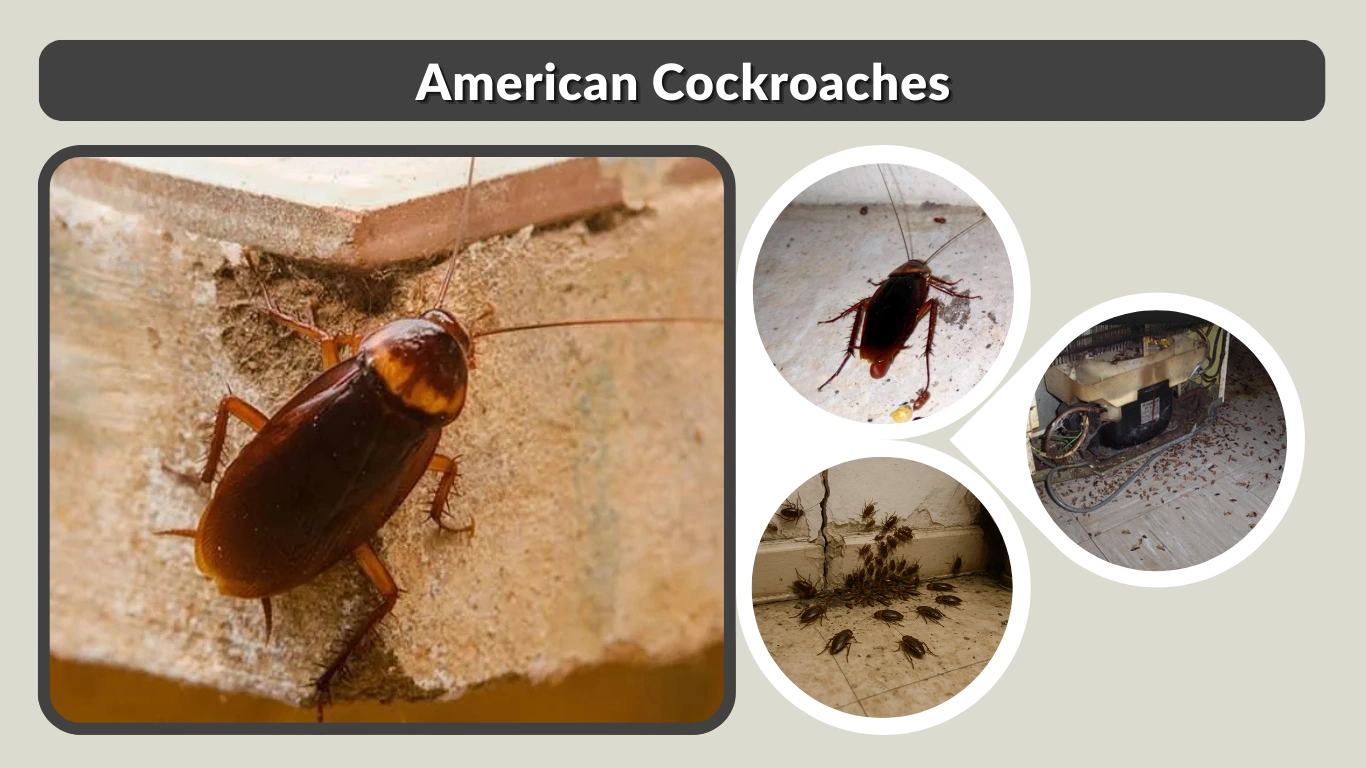
American cockroaches are among the most common and widely recognized household pests. Known for their large size, fast movement, and ability to survive both indoors and outdoors, they can become a major concern when they invade homes. Understanding how they look, where they live, what they eat, and how they differ from other cockroach species helps homeowners correctly identify infestations and choose the most effective removal methods. This guide covers everything from biology to behavior and early signs of an American cockroach problem.
What Is the American Cockroach?
The American cockroach (Periplaneta americana) is a reddish-brown insect measuring between 1.5 and 2 inches long. Despite its name, it is believed to have originated in Africa and spread through global trade. Today, it is widespread across the United States, thriving in warm environments, especially in southern states like Texas, Arizona, Florida, and Georgia, as well as urban areas like NYC.
Often called palmetto bugs or waterbugs, American cockroaches frequently live outdoors but enter homes for food, water, or warmth. They are highly adaptable, capable of surviving in sewers, basements, crawl spaces, and tree bark.
What Do American Cockroaches Look Like?
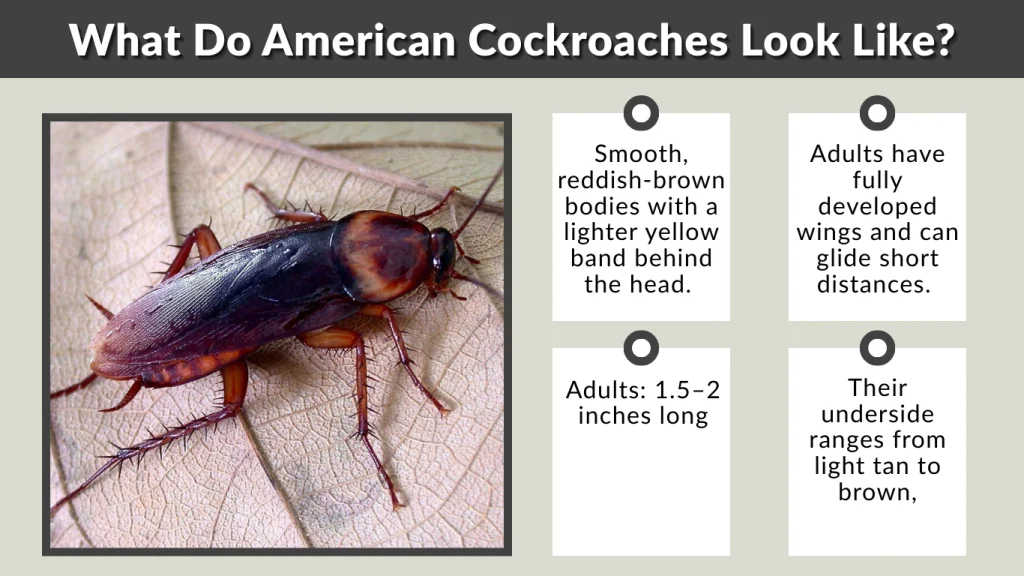
American cockroaches have smooth, reddish-brown bodies with a lighter yellow band behind the head. Adults have fully developed wings and can glide short distances. Their underside ranges from light tan to brown, and nymphs (juvenile cockroaches) appear darker or even black before developing their distinctive coloration.
Size Comparison
- Nymphs: ⅛–1 inch long
- Adults: 1.5–2 inches long
- Females: broader bodies
- Males: slightly longer wings extending past the abdomen
This makes them noticeably larger than German cockroaches and slightly larger than Oriental cockroaches.
Life Cycle & Development Stages

American cockroaches undergo three major developmental stages: egg → nymph → adult.
Egg Case (Ootheca / Egg Capsule)
The female produces oothecae containing up to 16 eggs. Each egg case is dark brown and often glued to surfaces near moisture—inside cabinets, behind appliances, or near pipe openings.
Nymph Stage
Nymphs hatch without wings and molt multiple times as they grow. They may appear black or very dark brown early on. Juvenile American cockroaches are fast, elusive, and often found near food and water.
Adult Stage
Adults develop wings, full coloration, and reproductive capability. Males and females differ slightly in appearance:
- Males have longer wings and a slimmer body.
- Females are broader with shorter wings.
Adults are capable of gliding, reproducing, and living several months under ideal conditions.
Nesting Behavior
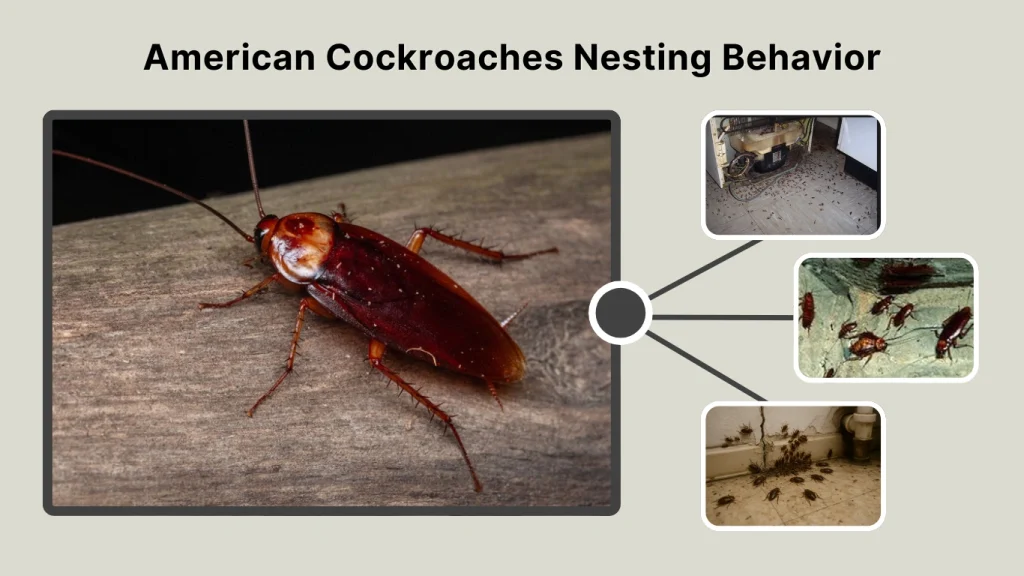
American cockroaches do not build structured nests like ants but gather in warm, humid hiding spots. Their nest clusters typically form:
- Behind refrigerators
- Under sinks
- In boiler rooms
- Inside wall voids
- In garage corners
- Near sewage or drain openings
Finding multiple roaches or oothecae in one area suggests a developing population.
American Cockroach Reproduction
Females reproduce quickly, creating 6–14 oothecae throughout their lifetime. Each capsule contains multiple eggs, allowing populations to grow fast if untreated. Females also tend to live longer than males, giving them more opportunities to lay eggs.
Both sexes reach sexual maturity within 7–14 days after their final molt. Warm, humid environments accelerate maturity and increase reproductive activity.
Behavior & Habitat
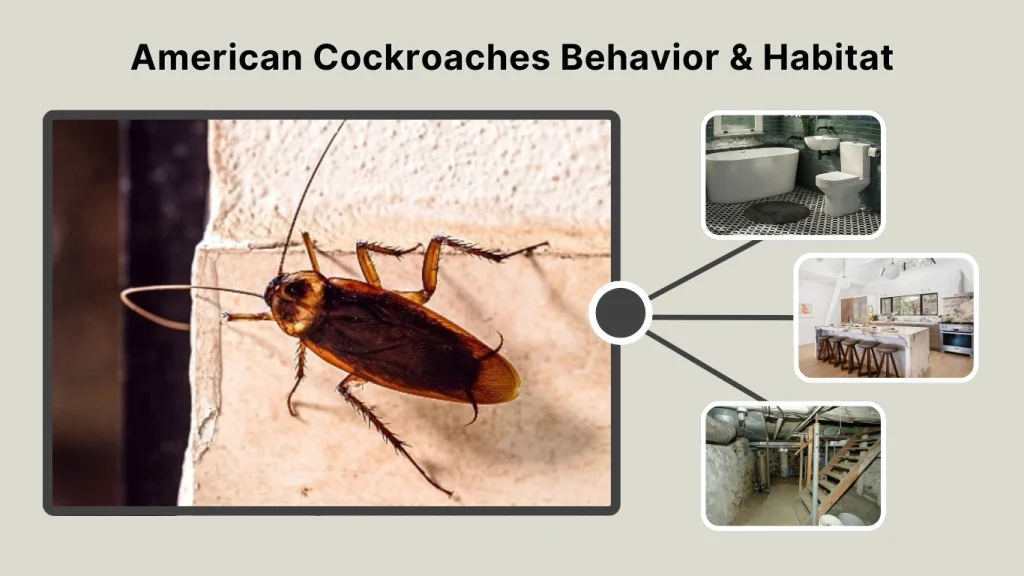
Where Do American Cockroaches Live?
Outdoors, they favor mulch beds, wood piles, tree bark, gutters, and sewer systems. Indoors, they seek moisture and warmth, thriving in:
- Bathrooms
- Kitchens
- Laundry rooms
- Basements
- Garages
If you’ve “found two dead American cockroaches,” it often indicates more are nearby, as they rarely exist alone.
Do American Cockroaches Live Outside?
Yes. American cockroaches naturally thrive outdoors, particularly in warm, damp areas. They hide beneath mulch, logs, tree bark, trash bins, and landscaping debris. Outdoor populations often surge after rain or during heatwaves, pushing them into homes through cracks, vents, and drains. Because they can live both indoors and outdoors, infestations can return if outdoor sources aren’t addressed.
Do American Cockroaches Fly or Make Noise?

Adult American cockroaches can glide or fly short distances, especially in warm weather. Males are more likely to fly because their wings extend past their abdomen, giving them more lift. Females rarely take flight.
While they don’t chirp or squeak, American cockroaches can make rustling or clicking sounds when they brush against objects, flap their wings, or move through paper and plastic bags.
What Do American Cockroaches Eat?
American cockroaches are omnivores and opportunistic scavengers. They feed on:
- Food crumbs
- Grease, sugar, and starches
- Meat scraps
- Pet food
- Decaying plant matter
- Paper, cardboard glue, and fabrics
Their broad diet is a major reason they adapt easily to both homes and outdoor environments.
Are American Cockroaches Harmful?
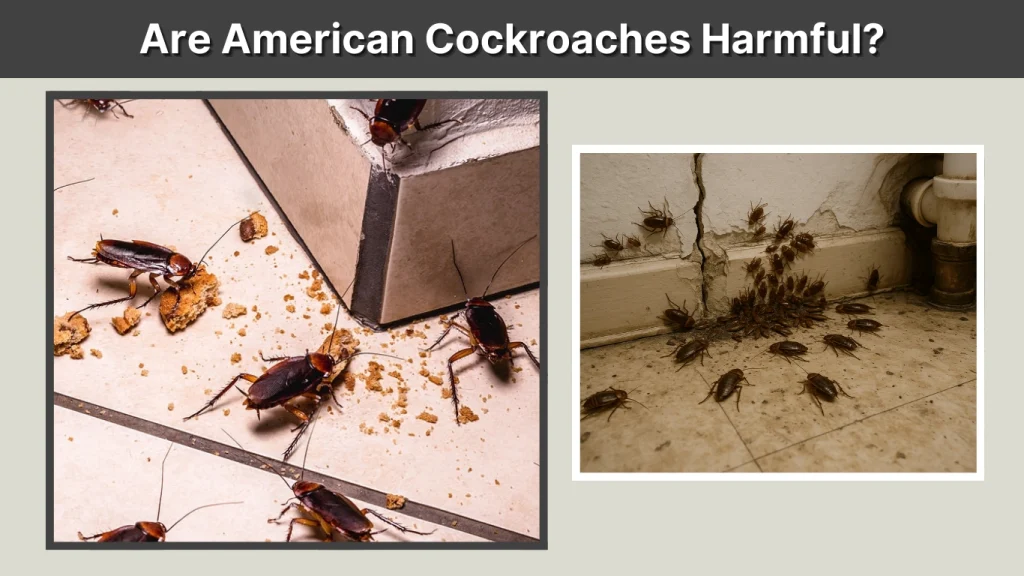
Do American Cockroaches Bite?
Bites are rare but possible. American cockroaches may nip human skin if food residues are present or populations are overcrowded. Their bite is not dangerous but can irritate the skin.
Health Risks
American cockroaches carry bacteria on their bodies and legs. They spread germs by contaminating:
- Food
- Countertops
- Dishes
- Pet bowls
They also produce allergens that can trigger asthma, especially in children. For these reasons, they are considered harmful household pests even if they don’t attack humans.
Signs of an American Cockroach Infestation
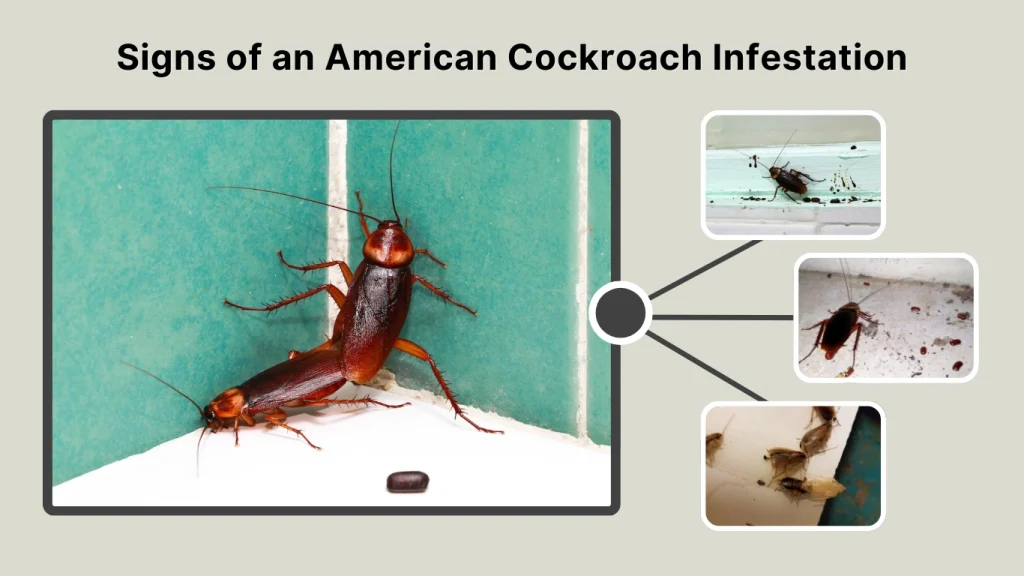
Common indicators include:
- Droppings: Small, dark, gritty pellets, often found in cabinets or along walls
- Egg Cases: Brown oothecae hidden behind appliances
- Shed Skins: From growing nymphs
- Foul Odor: A musty scent from large populations
- Seeing Nymphs: Indicates active breeding
- Finding Dead Cockroaches: Often a sign of a larger unseen population
If you discover two dead roaches indoors, more are likely hiding in nearby moisture zones.
American Cockroaches vs Other Species

American vs German Cockroach
- German cockroaches reproduce faster and are more difficult to eliminate
- American cockroaches are larger and often come from outdoors or sewers
- German infestations grow rapidly indoors
- American roaches are easier to control but may reinvade from outside
American vs Oriental Cockroach
- Oriental roaches prefer very moist, cool areas
- American roaches are more versatile and move indoors frequently
- Oriental roaches are darker and slower
American vs Smoky Brown Cockroach
- Smoky Browns are fully dark brown with uniform coloring
- American roaches have a yellowish pattern behind the head
- Smoky Browns fly more readily
American vs Turkestan Cockroach
- Turkestan roaches dominate outdoor environments
- American roaches are larger and more likely to enter homes
Are American Cockroaches Hard to Get Rid Of?
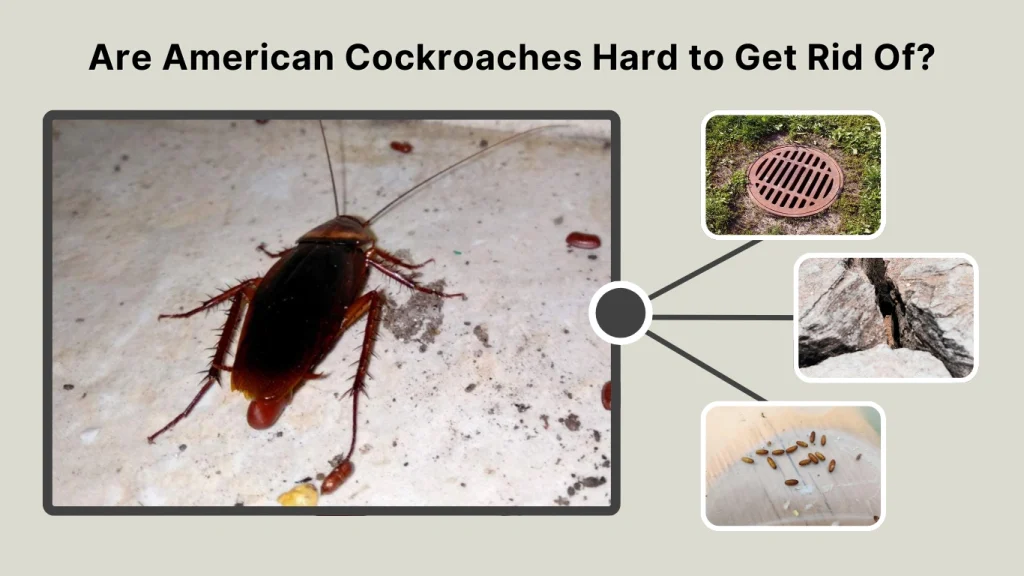
They can be challenging because:
- They travel from outdoors, drains, and sewers
- They hide deep in crevices
- Females produce multiple egg cases
- They survive on minimal food
However, with proper baiting, sanitation, and sealing of entry points, American cockroaches can be eliminated efficiently.
Best Ways to Get Rid of American Cockroaches
1. Use Gel Bait (Most Effective Method)
Gel bait is the best killer for American cockroaches because they eat it and spread the poison through the colony. Apply gel:
- Under sinks
- Behind appliances
- In cabinets
- Along baseboards
2. Bait Stations
Useful in kitchens, garages, and entry points.
3. Residual Insecticide Sprays
Spray around baseboards, plumbing lines, and outdoor perimeters.
4. Dust Insecticides (Boric Acid / DE)
Apply in thin layers in cracks and behind appliances.
5. Natural Remedies
- Diatomaceous earth
- Essential oils
- Baking soda + sugar bait
- Vinegar cleaning
These help reduce populations but work best when combined with baiting.
Step-by-Step Removal Plan
- Identify the species
- Clean and remove food/water sources
- Seal cracks, gaps, and drain openings
- Apply gel bait throughout key zones
- Use residual sprays and dusts
- Add sticky traps to monitor
- Treat outdoor areas to prevent reinvasion
American Cockroaches in Different Regions
They are especially common in:
- Texas: warm climate, sewer systems
- Arizona: monsoon season increases activity
- NYC: high-rise buildings, humid basements
- Southeast U.S.: year-round warmth
FAQs
Which is worse: American or German cockroaches?
German cockroaches reproduce faster, spread more quickly, and are harder to eliminate.
Do American cockroaches infest homes?
Yes—particularly kitchens, bathrooms, and basements.
What kills American cockroaches instantly?
Direct insecticide sprays and certain fast-acting gel baits.
How big do American cockroaches get?
Adults grow up to 2 inches, making them one of the largest household roaches.
Is an American cockroach the same as a palmetto bug?
Yes. “Palmetto bug” is a common nickname for the American cockroach.