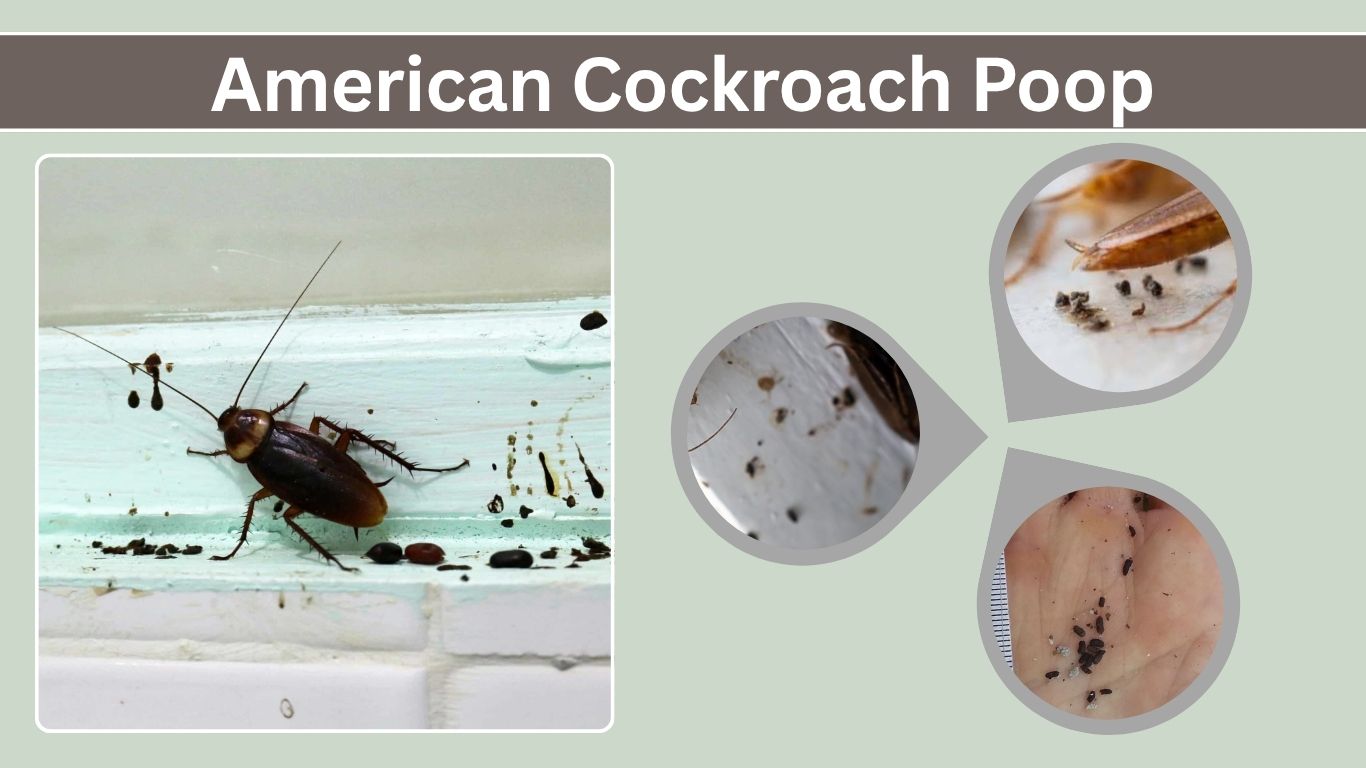
American cockroach poop is one of the most obvious signs of an infestation, yet many homeowners mistake it for dirt or mouse droppings. Recognizing these droppings is essential because they not only indicate cockroach activity but also carry health risks. By learning how to identify, clean, and prevent American cockroach feces, you can protect your home and reduce exposure to harmful allergens and bacteria.
What is American Cockroach Poop?
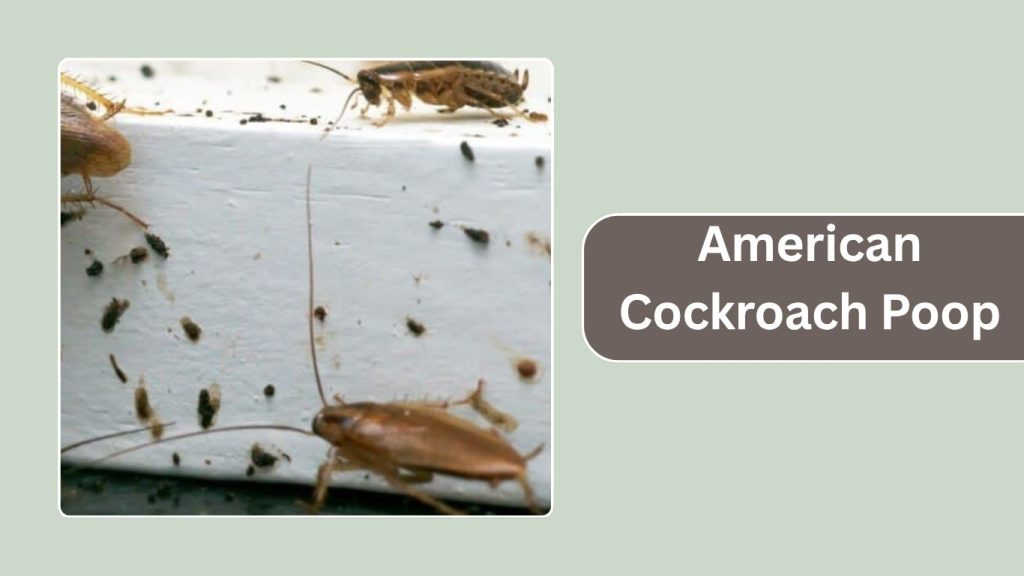
American cockroach droppings are the waste products left behind by this large and common pest. These insects feed on a wide variety of materials, including food scraps, grease, and organic matter, so their feces reflect their diet. Unlike dust or random debris, cockroach poop has a distinct size, shape, and texture that makes it identifiable once you know what to look for.
For homeowners, being able to distinguish cockroach feces from mouse or other insect droppings is an important first step in confirming the presence of an infestation.
Appearance and Identification
American cockroach poop has a characteristic appearance:
- Shape: Small, cylindrical pellets with blunt ends.
- Color: Dark brown to black.
- Texture: Often rough, with ridges or grooves running along the surface.
- Size: Similar in length to a grain of rice but shorter and thicker.
A common source of confusion comes from mistaking these droppings for mouse feces. However, mouse droppings are smoother, slightly larger, and tend to have pointed ends, while cockroach feces are ridged and blunt. Once you become familiar with the difference, it’s much easier to distinguish between the two.
Where to Find American Cockroach Droppings
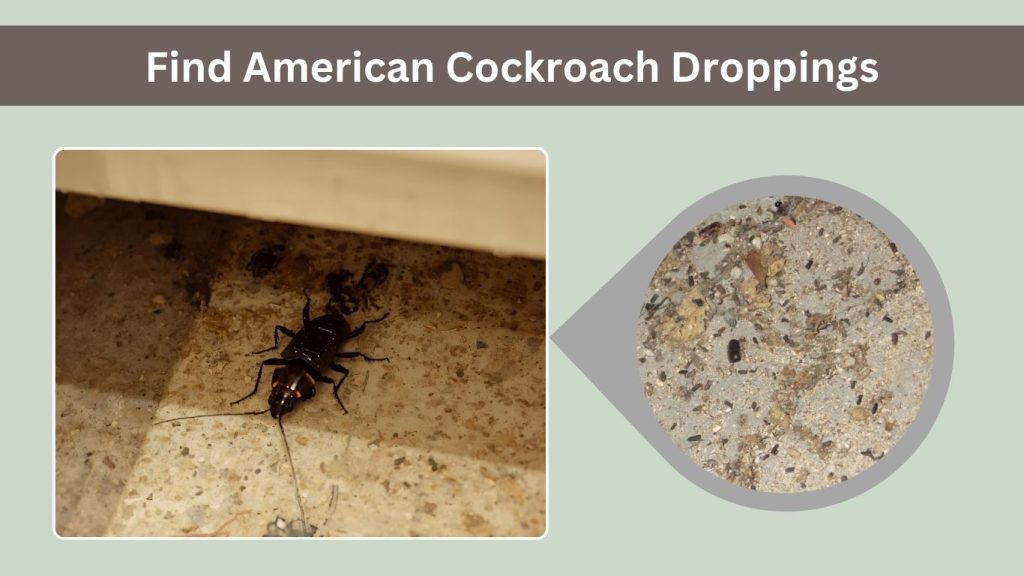
Cockroaches are nocturnal and prefer dark, moist environments. As a result, their droppings are most commonly found in hidden areas close to food and water sources. Common locations include:
- Behind kitchen appliances such as stoves and refrigerators.
- In cabinets, especially near stored food or trash bins.
- Around sinks, drains, and pipes.
- In basements, bathrooms, and laundry areas where moisture levels are higher.
When infestations are heavy, droppings can build up in corners, cracks, and crevices, leaving dark accumulations that resemble ground coffee. Seeing such deposits is often a sign that the infestation has been ongoing for some time.
Health Risks of Cockroach Droppings
Beyond being unpleasant, American cockroach poop poses real health hazards. The droppings contain allergens that can trigger asthma attacks and respiratory problems, particularly in children and sensitive individuals. They may also carry bacteria such as salmonella and E. coli, which can contaminate food and surfaces, leading to stomach illnesses.
Additionally, the odor released from droppings, combined with cockroach secretions, produces a strong, musty smell that can permeate the home. Ignoring these warning signs increases the risk of long-term infestations and greater health concerns.
Difference Between Cockroach Poop and Other Pests
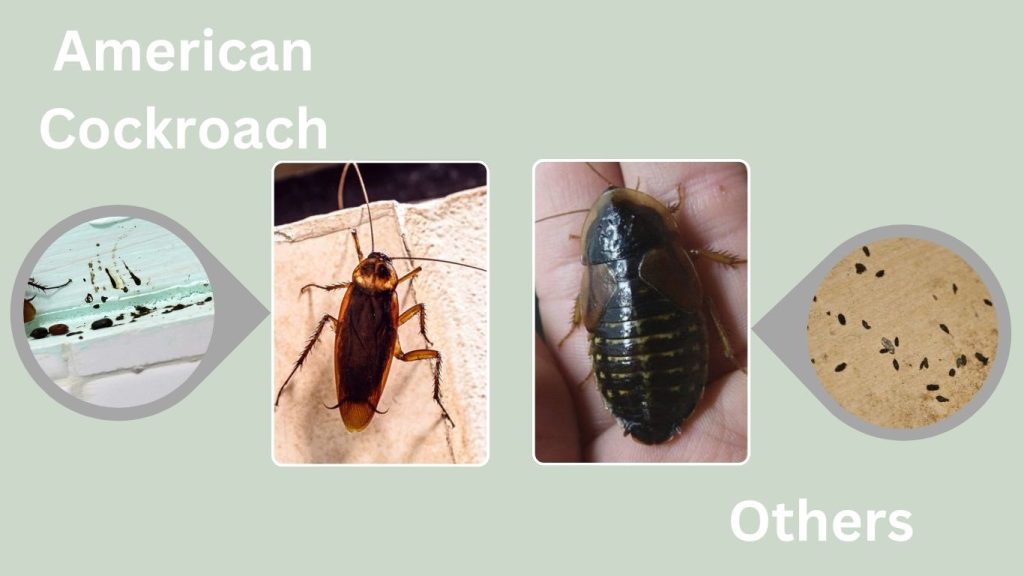
Cockroach droppings are often confused with other pest waste, which can make identification tricky.
- Cockroach vs. mouse droppings: Mouse feces are larger, smooth, and pointed at both ends, whereas cockroach poop is smaller with blunt edges and ridged sides.
- Cockroach feces vs. termite frass: Termite droppings resemble fine wood-colored pellets, often found near wooden structures. Cockroach poop is darker and coarser.
- Cockroach feces vs. bed bug feces: Bed bug droppings appear as tiny dark stains or smears on fabric, while cockroach poop forms solid pellets.
Recognizing these differences helps confirm the exact pest problem before taking action.
How to Safely Clean Cockroach Poop
Cleaning cockroach droppings should be done carefully to avoid spreading allergens or bacteria.
- Wear protection – Use gloves and a mask to prevent contact or inhalation.
- Moisten droppings – Lightly spray with disinfectant to reduce dust particles.
- Vacuum with HEPA filter – A vacuum designed to trap fine particles prevents allergens from spreading.
- Scrub and disinfect – Wipe surfaces with strong disinfectants to kill bacteria.
- Dispose properly – Seal vacuum bags or cleaning materials in a plastic bag before throwing away.
Avoid dry sweeping or dusting, as this can release harmful particles into the air.
Preventing Cockroach Poop Buildup
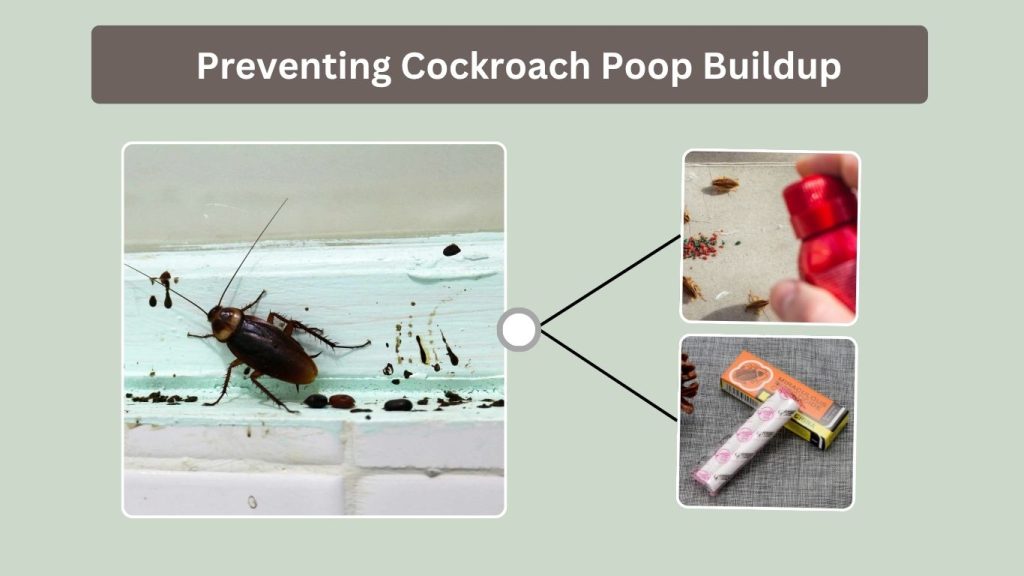
The most effective way to control droppings is by stopping cockroaches from infesting in the first place. Key prevention tips include:
- Seal cracks and entry points – Block gaps in walls, floors, and around pipes.
- Eliminate food sources – Store food in airtight containers and clean crumbs immediately.
- Manage waste – Empty trash regularly and keep bins covered.
- Reduce moisture – Fix leaky pipes and eliminate standing water.
Routine cleaning, combined with preventive maintenance, reduces the chances of cockroaches leaving droppings in your living spaces.
When to Call Pest Control
If droppings continue to appear despite cleaning and prevention efforts, professional pest control is the best solution. Experts can:
- Conduct thorough inspections to locate nests.
- Apply targeted treatments, including gels, sprays, or baits.
- Provide long-term monitoring to prevent reinfestation.
Calling professionals ensures both the cockroaches and their droppings are eliminated effectively, safeguarding your home from recurring health hazards.
Conclusion
American cockroach poop may look like small dark pellets, but it signals a serious problem if found indoors. These droppings not only confirm cockroach activity but also expose families to allergens, bacteria, and foul odors. By learning to identify the waste, cleaning it properly, and preventing future infestations, homeowners can maintain a safer and healthier environment. If droppings persist, pest control specialists are the most reliable way to fully resolve the issue.
FAQs
What does American cockroach poop look like?
American cockroach poop appears as small, dark brown to black cylindrical pellets with blunt ends. The surface often has ridges or grooves, making it distinct from smoother mouse droppings. It is usually similar in size to a grain of rice but shorter and thicker, often found near food and water sources.
Is cockroach poop harmful to humans?
Yes, cockroach poop poses health risks. It contains allergens that can trigger asthma or respiratory issues, especially in children and sensitive individuals. The droppings may also carry harmful bacteria like salmonella and E. coli, which can contaminate food and surfaces, leading to stomach illnesses if not properly cleaned and removed.
Where am I most likely to find cockroach droppings?
Cockroach droppings are commonly found in kitchens, basements, and bathrooms where moisture and food are present. Look behind stoves, refrigerators, inside cabinets, and near sinks or drains. Large accumulations of droppings in dark corners often signal a heavy infestation, making professional inspection and treatment necessary for complete elimination.
How do I safely clean cockroach poop?
To clean cockroach poop, always wear gloves and a mask. Lightly spray disinfectant on droppings before wiping to avoid airborne allergens. Use a HEPA filter vacuum for larger areas and scrub surfaces with strong disinfectants. Avoid sweeping or dusting, as this spreads particles. Dispose of all cleaning materials in sealed plastic bags.
When should I call a pest control expert?
If you continue to notice droppings despite cleaning and preventive measures, it’s time to call pest control. Persistent feces usually indicate an established infestation. Professionals can identify nesting areas, apply targeted treatments, and provide long-term solutions to keep your home cockroach-free. This ensures both health protection and peace of mind.