
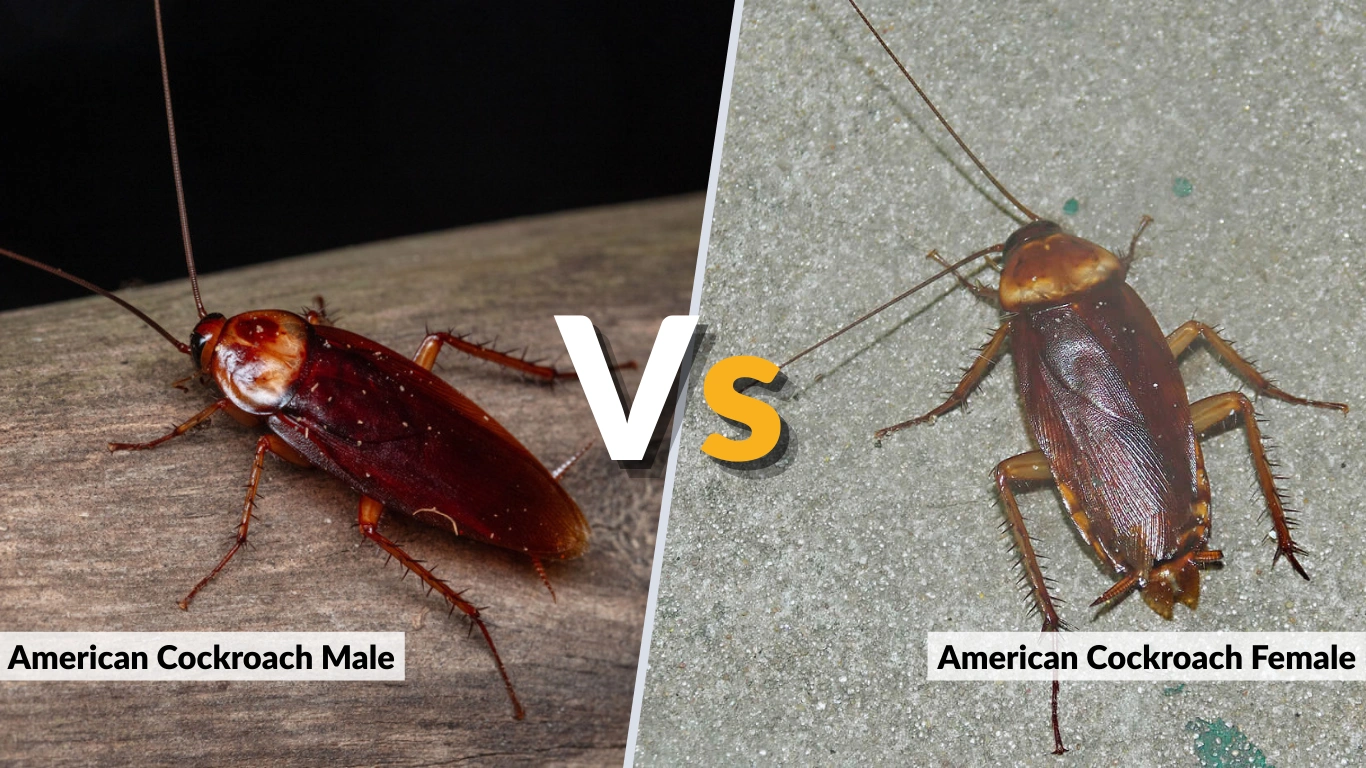
American cockroaches are one of the largest and most recognizable household pests. While most people never stop to consider the differences between males and females, understanding these distinctions can help with identification, infestation assessment, and control strategies. Males and females vary in appearance, lifespan, maturity timing, and behavior. This guide explains how to tell them apart, when each becomes sexually mature, and how their roles contribute to infestation growth.
Key Differences Between Male and Female American Cockroaches
Appearance Differences
Male and female American cockroaches share the same general coloration but differ noticeably in body structure.
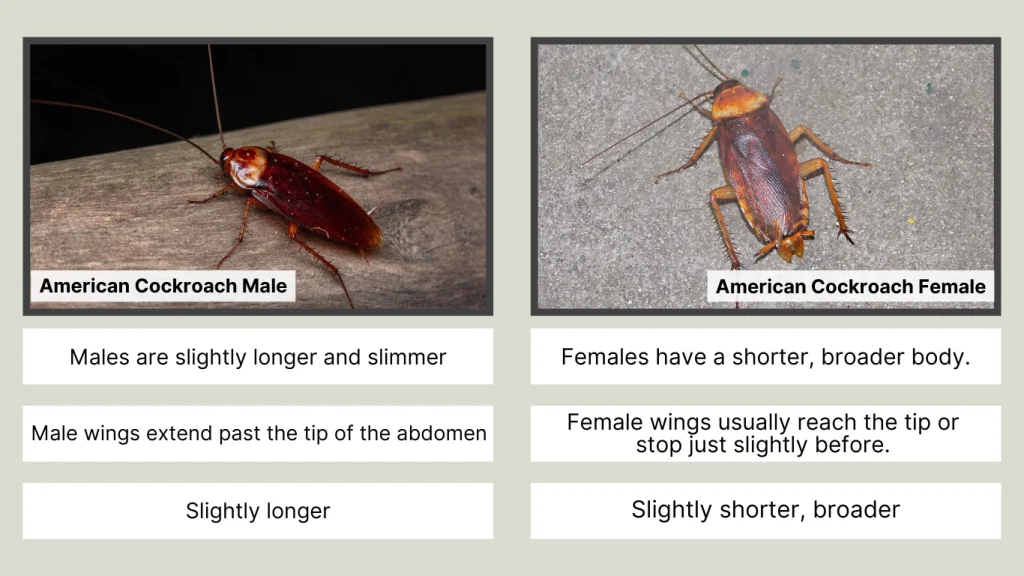
- Body Size: Males are slightly longer and slimmer, while females have a shorter, broader body.
- Wing Length: Male wings extend past the tip of the abdomen, while female wings usually reach the tip or stop just slightly before.
- Abdomen Shape: Males have a tapered abdomen; females have a more rounded and robust abdominal shape.
- Styli: One of the clearest differences—males have a pair of small, spine-like structures (styli) near the last abdominal segment. Females do not.
- Cerci: Both sexes have cerci (tail-like appendages), but male cerci are slightly more pointed.
These differences become most visible when the roach is fully mature and its wings are fully developed.
Table: Male vs Female Characteristics
| Feature | Male | Female |
| Body Length | Slightly longer | Slightly shorter, broader |
| Wing Length | Extends past abdomen | Equal to or slightly shorter |
| Abdomen Shape | Narrow, tapered | Rounder, thicker |
| Styli | Present | Absent |
| Flight Likelihood | More likely to glide | Rare or minimal flight |
How to Identify Male and Female American Cockroaches
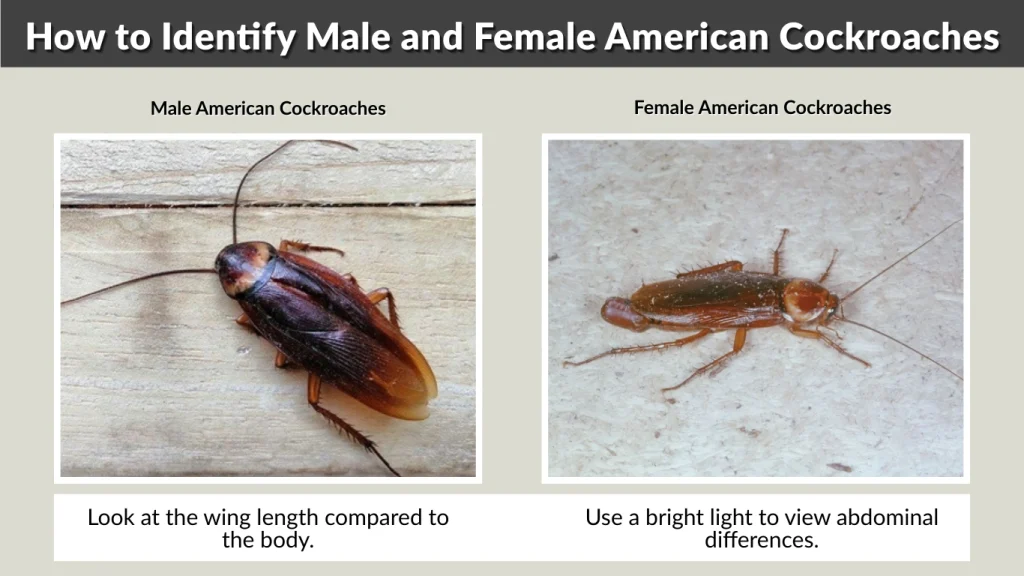
Identifying the sex of an American cockroach is easiest when examining the wings and the underside of the abdomen.
Visual Checklist
- Look at the wing length compared to the body.
- Tilt the roach to inspect the underside for styli.
- Check whether the abdomen tapers (male) or appears rounded (female).
- Observe overall body proportions—males are generally leaner.
Field Identification Tips
- Use a bright light to view abdominal differences.
- If the roach is damaged, wing length can still reveal the sex.
- Nymphs cannot be sexed by eye because they lack developed wings and external reproductive structures.
Sexual Maturity in American Cockroaches
Reproduction plays a major role in how quickly infestations develop, making maturity timelines important.
When Do Males Become Sexually Mature?
Male American cockroaches become sexually mature shortly after their final molt (eclosion). This typically happens within 7–10 days, depending on temperature and nutrition. During this period, the male completes physiological changes such as development of functional reproductive organs and full wing hardening.
Signs of male sexual maturity include:
- Increased mobility and exploration
- A greater response to female pheromones
- More active flight or gliding behavior in warm conditions
Male roaches generally reach maturity slightly sooner than females, enabling them to begin mate-seeking as soon as females become ready.
When Do Females Become Sexually Mature?
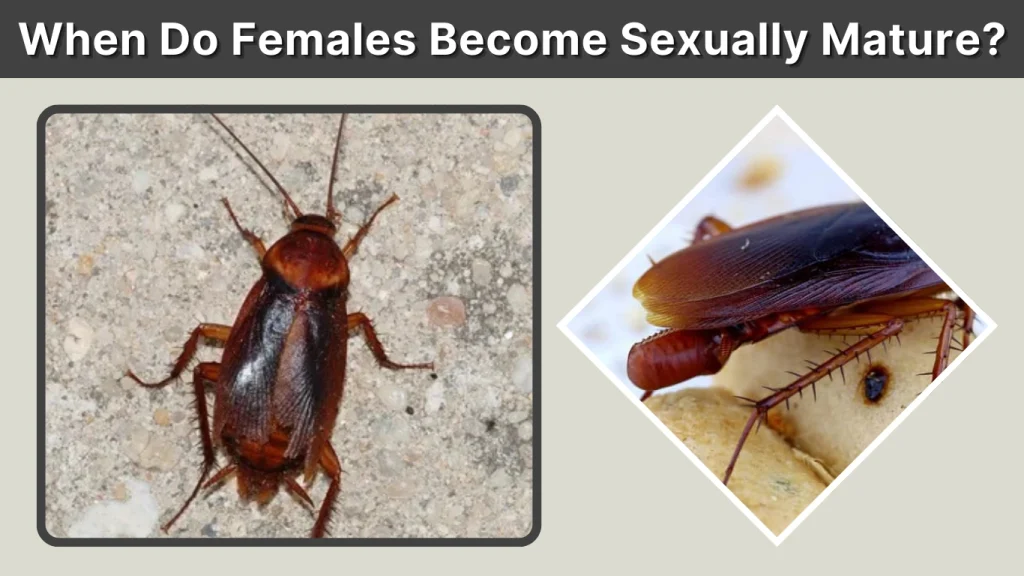
Female American cockroaches typically reach sexual maturity 8–14 days after their final molt, slightly later than males. During this time, their reproductive organs fully develop and they begin forming their first ootheca (egg case). Once mature, females release pheromones that attract males, triggering mating behavior.
Signs of female maturity include:
- Formation of the first ootheca
- Increased feeding to support egg development
- Nesting or hiding behavior in protected locations
Environmental conditions such as warmth, moisture, and access to food can speed up or slow down this process for both sexes.
Lifespan of Male vs Female American Cockroaches
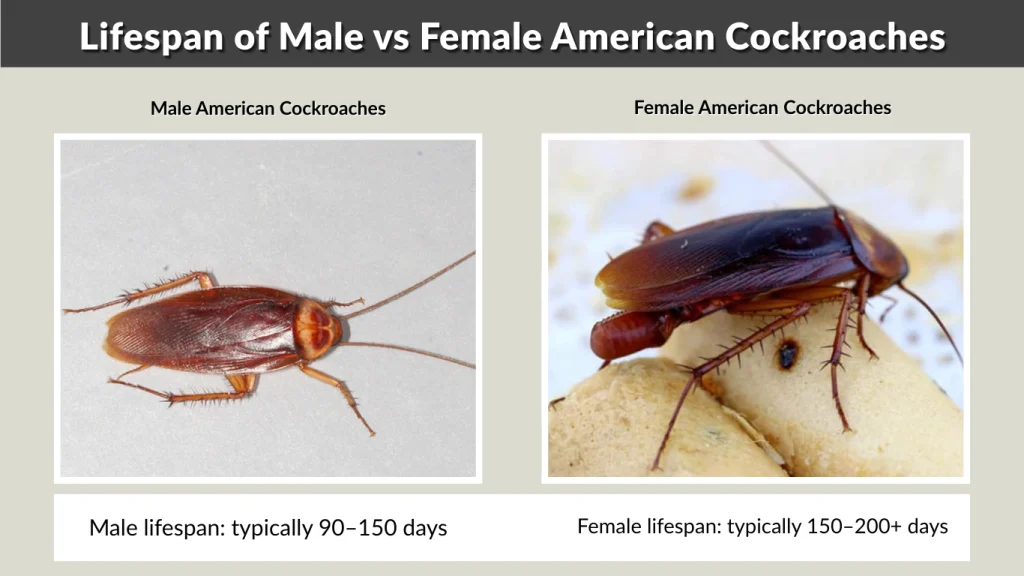
The adult lifespan of American cockroaches varies depending on climate, nutrition, and shelter conditions. However, females generally outlive males.
Average Adult Lifespan
- Male lifespan: typically 90–150 days
- Female lifespan: typically 150–200+ days
Females live longer because they invest more energy into reproduction and often occupy safer, hidden areas. Males expend more energy on movement, mate-seeking, and competition, which shortens their lifespan.
Do Males and Females Live the Same Amount of Time?
No. Females consistently live longer in both controlled and natural environments. Stressors such as predator exposure, lack of food, overcrowding, and pesticide exposure shorten the male lifespan more rapidly because males are more mobile and risk-taking.
Table: Lifespan Comparison
| Category | Male Lifespan | Female Lifespan |
| Average Adult | 3–5 months | 5–7 months |
| Poor Conditions | 1–2 months | 2–4 months |
| Laboratory Ideal | 6+ months | 8–12 months |
Behavioral Differences Between Males and Females
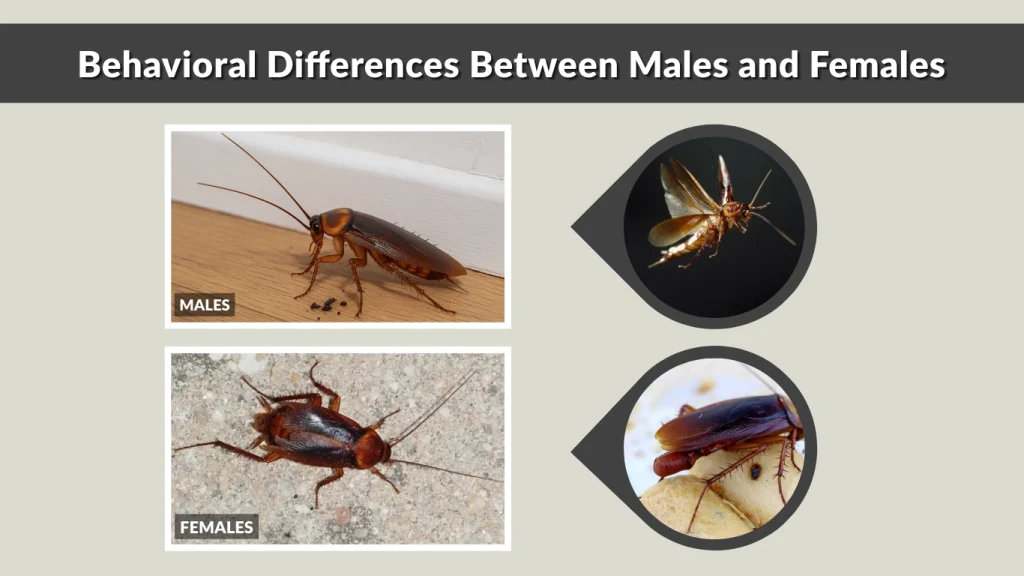
Flight Behavior
A common question is: Do male American cockroaches fly?
Yes—males are more likely to glide or take short flights, especially in warm temperatures. Their longer wings make flight easier and more common.
Females rarely fly. Their wings are shorter, and their heavier body mass limits lift. Females tend to run rather than glide when threatened.
Movement & Activity
- Males:
- More active and exploratory
- Cover more ground when searching for mates
- Travel between rooms and floors more often
- More active and exploratory
- Females:
- More likely to stay hidden
- Prefer stable nesting sites
- Spend more time producing and protecting oothecae
- More likely to stay hidden
Reproductive Behavior
Males engage in courtship movement, antenna tapping, and pheromone tracking. Females release pheromones when ready to mate. After mating, a female can produce multiple oothecae without further mating, which amplifies infestation growth.
Male vs Female Roles in Infestation Growth
Both sexes contribute to infestation development, but females have the greatest impact.
Why Females Play the Bigger Role
- One female can produce 6–14 oothecae, each containing up to 16 eggs.
- Females protect their oothecae in hidden, humid areas.
- Females live longer and produce multiple generations.
Why Males Matter Too
- Males help expand the range of the infestation by traveling farther.
- Their early maturity allows reproduction to begin quickly.
- High male presence often signals a widespread population.
Recognizing which sex dominates an infestation can reveal how long it has been present and how fast it may grow.
FAQs
How do I quickly identify male and female American cockroaches?
Check the wing length and underside: males have wings that extend past the abdomen and possess styli, while females have shorter wings and lack styli. Females also have a rounder, broader body.
Do male American cockroaches live longer than females?
No. Females generally live several weeks or months longer than males because they are less mobile and spend more time in protected nesting areas.
When do male American cockroaches become sexually mature after eclosion?
Most males reach sexual maturity 7–10 days after their final molt. They begin exploring actively, responding to pheromones, and seeking mates shortly thereafter.
Can female American cockroaches fly?
Females can glide short distances but seldom do. Their wing length and body weight make sustained flight unlikely, unlike males who glide more frequently.
Which gender contributes more to infestation growth?
Females. Their egg production drives population expansion. Eliminating mature females is crucial for stopping the reproductive cycle.