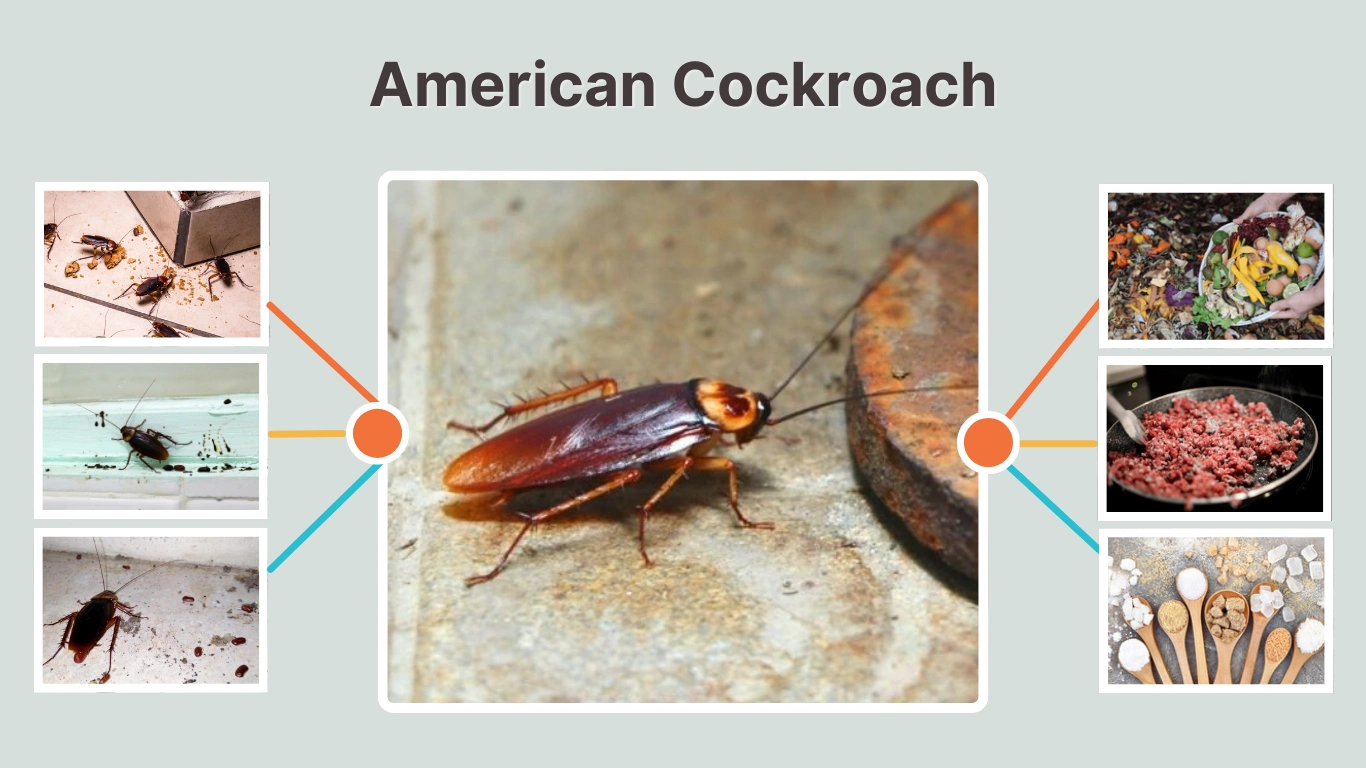
The American cockroach (Periplaneta americana) is the largest and one of the most recognizable cockroach species commonly found in human environments. Known for its reddish-brown color, large size, and fast movements, this insect often thrives in dark, damp places such as sewers, basements, and crawl spaces. Although native to Africa and the Middle East, it has spread worldwide and adapted well to urban living. Because of its ability to contaminate food and carry pathogens, the American cockroach is considered a significant household pest.
What is an American Cockroach?
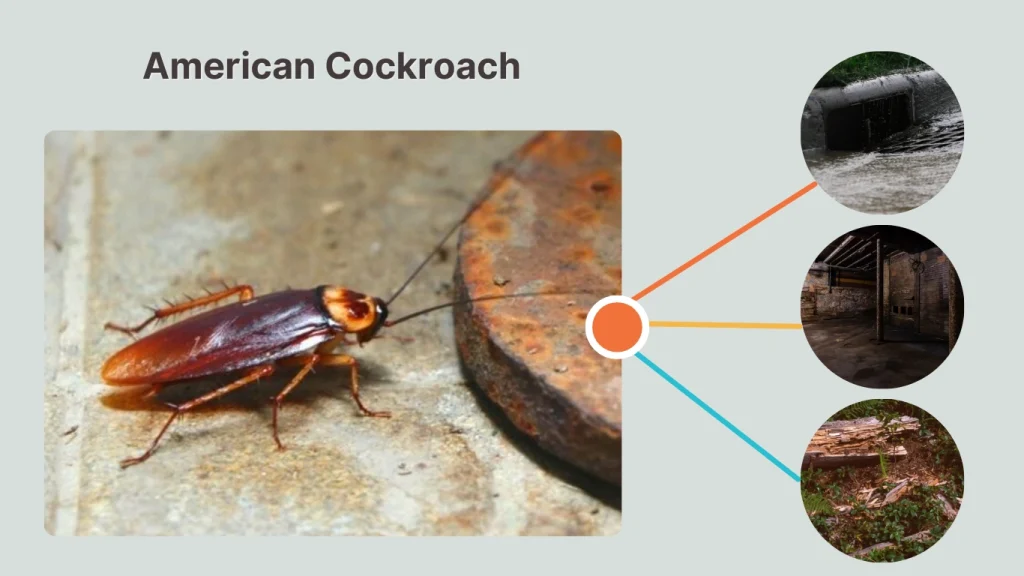
The American cockroach is a large cockroach species often mistaken for other insects such as palmetto bugs or water bugs. Despite its name, it is not native to North America—it likely arrived from Africa centuries ago through trade routes. Today, it is found on nearly every continent.
These cockroaches prefer warm, moist environments and are commonly associated with sewer systems, food storage facilities, and garbage disposal areas. Unlike the smaller German cockroach, the American cockroach is less likely to infest kitchens directly but can enter homes through drains, pipes, or poorly sealed cracks.
Identification of American Cockroach
Physical Appearance
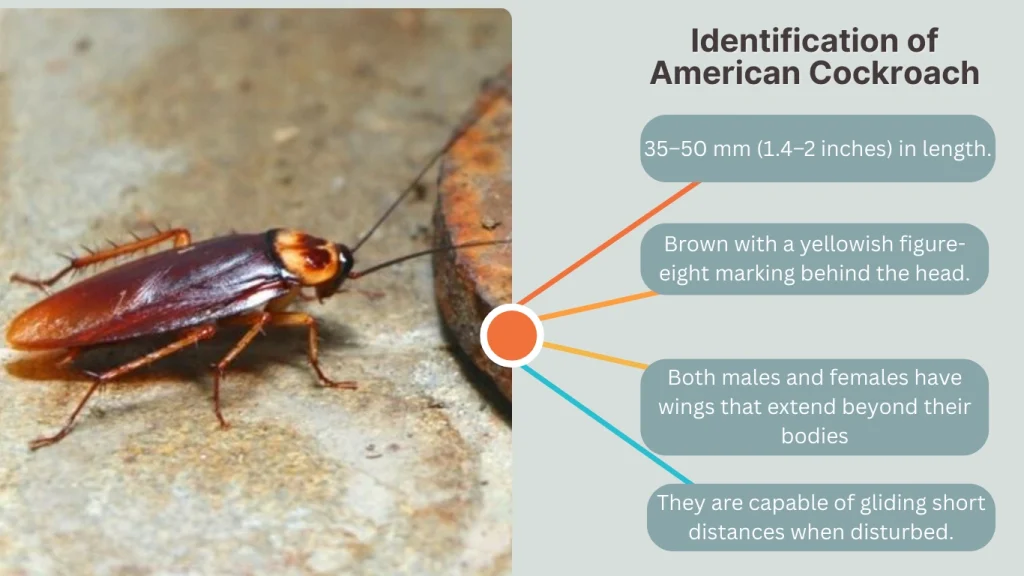
The American cockroach is the largest of the common household cockroaches. Adults typically measure between 35–50 mm (1.4–2 inches) in length. Their bodies are reddish-brown with a yellowish figure-eight marking behind the head. Both males and females have wings that extend beyond their bodies, and while they rarely engage in long-distance flight, they are capable of gliding short distances when disturbed.
Nymphs
Nymphs are smaller and wingless but resemble adults in body shape. They are initially grayish-brown, turning reddish-brown as they molt and grow. Nymphs undergo 10–13 molts before reaching adulthood, and this developmental stage can last anywhere from 6 months to over a year depending on environmental conditions.
Eggs (Ootheca)
The female American cockroach produces egg cases known as oothecae, each about 8–10 mm long and dark brown in color. Each capsule typically contains 14–16 eggs. Unlike the German cockroach, which carries her ootheca until hatching, the American cockroach deposits it in a safe, hidden location such as cracks, wood piles, or near food sources.
Size of American Cockroach
The American cockroach’s size is one of its most distinguishing features. Adults range from 35–50 mm (1.4–2 inches), making them much larger than German cockroaches (13–16 mm) or Oriental cockroaches (20–25 mm).
Males are slightly slimmer, with longer wings that may extend past the tip of the abdomen, while females have shorter, more rounded abdomens. Their large size allows them to be easily noticed, often causing alarm when encountered indoors.
American Cockroach Diet
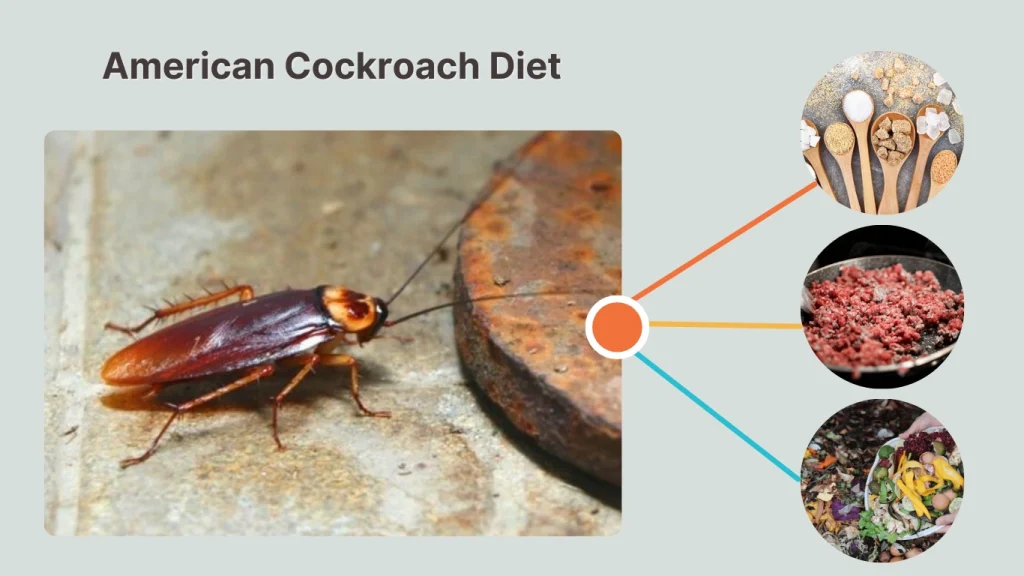
The American cockroach is an omnivore with a highly adaptable diet. In the wild, they feed on decaying organic matter, plants, and fungi. In urban environments, they thrive on human food and garbage. Their preferred foods include:
- Starches, sugars, and crumbs.
- Meats, grease, and fatty foods.
- Decaying organic matter.
- Starchy non-food items such as book bindings, paper, fabric, and soap.
Because of their scavenging habits, American cockroaches often forage in unsanitary areas like garbage bins and sewers before moving into kitchens or pantries. This behavior increases the risk of food contamination and disease transmission.
Life Cycle of American Cockroach
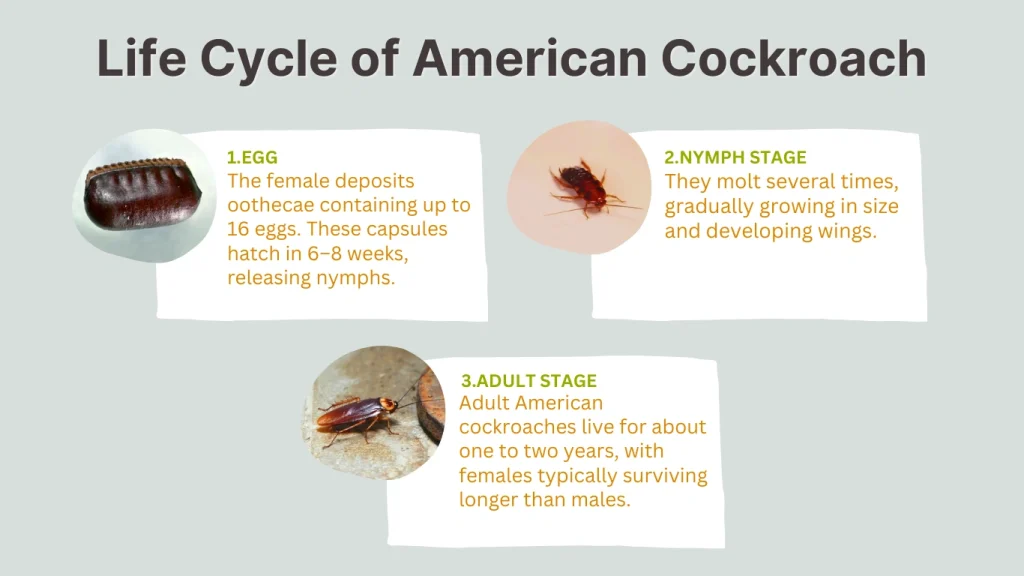
Like other cockroach species, the American cockroach undergoes incomplete metamorphosis, which includes three stages: egg, nymph, and adult.
Egg Stage
The female deposits oothecae containing up to 16 eggs. These capsules hatch in 6–8 weeks, releasing nymphs. A single female can produce up to 90 oothecae in her lifetime, leading to a large population over time.
Nymph Stage
Nymphs are smaller, wingless versions of adults. They molt several times, gradually growing in size and developing wings. Depending on temperature and environment, the nymph stage lasts from 6 months to over a year.
Adult Stage
Adult American cockroaches live for about one to two years, with females typically surviving longer than males. During this time, they continue reproducing, allowing infestations to expand.
Behavior & Habitat
The American cockroach is highly adaptable but prefers warm, damp environments. Common hiding places include:
- Sewers and storm drains.
- Basements and crawl spaces.
- Boiler rooms and utility areas.
- Storage areas with clutter and cardboard.
They are nocturnal and usually active at night when they search for food and water. During the day, they remain hidden in dark, moist places. Unlike the German cockroach, which thrives in kitchens, the American cockroach is more often found in basements and large, damp spaces.
Though not strong fliers, they can glide short distances, especially when disturbed. They are also excellent runners, moving quickly to escape predators or human threats.
Signs of an American Cockroach Infestation
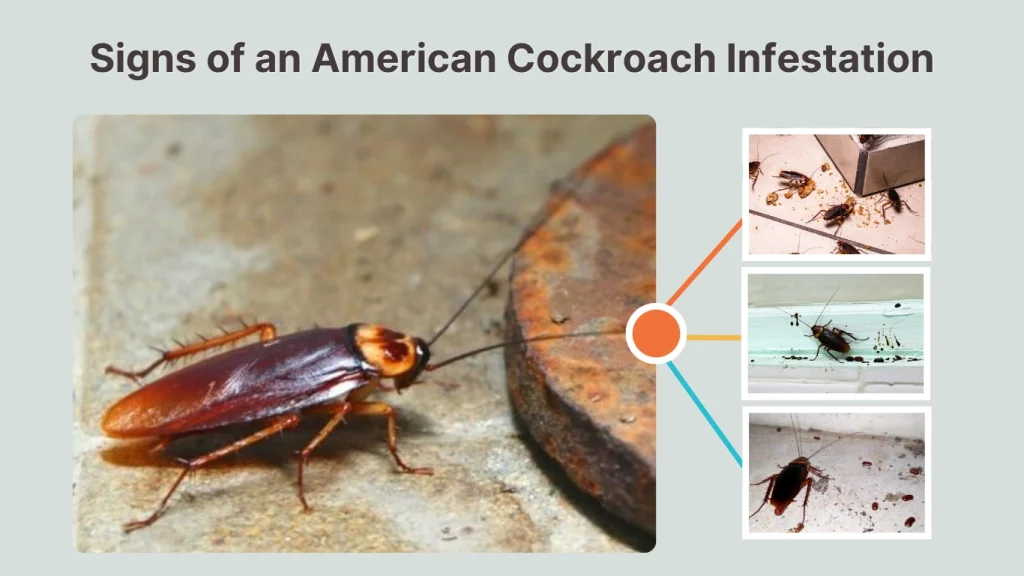
Recognizing an infestation early can help prevent it from spreading. Common signs include:
- Sightings: Seeing large cockroaches, especially in basements, sewers, or bathrooms. Daytime sightings often suggest a large population.
- Droppings: Their droppings resemble small, dark pellets with ridged sides, often found near baseboards or hidden corners.
- Egg Cases (Oothecae): Finding oothecae attached to surfaces or in hidden areas is a strong indication of reproduction.
- Shed Skins: Nymphs molt multiple times, leaving behind discarded exoskeletons.
- Odor: A musty, strong odor may be noticeable in heavily infested areas.
Health Risks & Dangers
American cockroaches are not just unpleasant pests; they also present real health concerns. Because they move between unsanitary areas like sewers, garbage bins, and drains before entering human spaces, they act as carriers of disease-causing organisms.
Spread of Bacteria and Pathogens
Studies have shown that American cockroaches can carry bacteria such as E. coli, Salmonella, and Staphylococcus. When they crawl across food, cooking utensils, or food preparation surfaces, these pathogens can transfer to humans, leading to food poisoning, diarrhea, and other intestinal infections.
Allergies and Asthma
The saliva, feces, and shed skins of American cockroaches contain allergens that can trigger allergic reactions and asthma. People living in infested homes often report worsened respiratory symptoms. Children are particularly vulnerable to cockroach-related asthma triggers.
Contamination of Food and Water
American cockroaches often infest water storage areas, pantries, and kitchens in search of food. Even brief contact with food items can contaminate them, making infestations a serious concern in restaurants, hospitals, and food production facilities.
American Cockroach vs. Other Cockroach Species
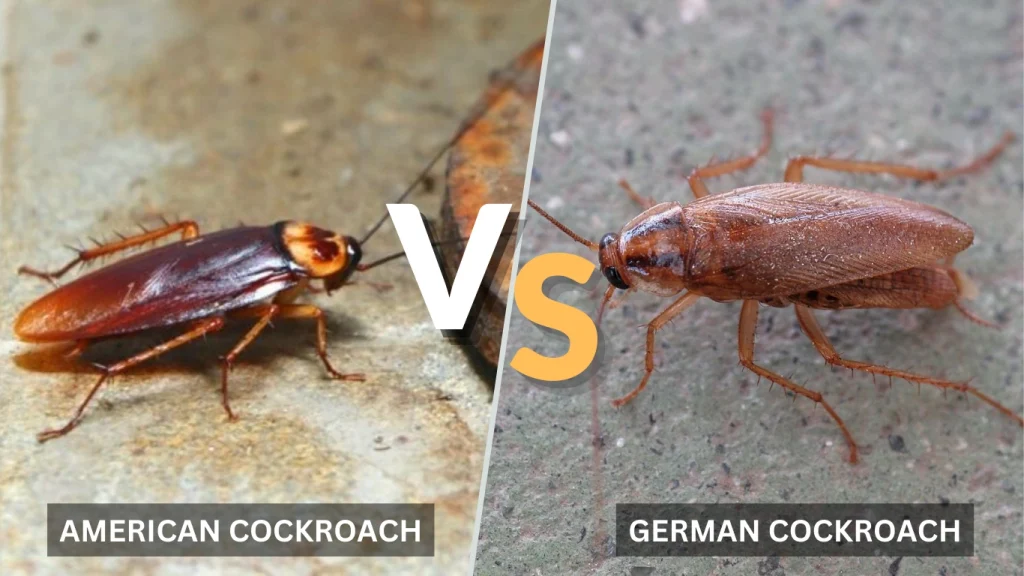
It’s easy to confuse the American cockroach with other species, but proper identification is important for effective control.
| Feature | American Cockroach | German Cockroach | Oriental Cockroach |
| Size | 35–50 mm (largest common species) | 13–16 mm (small) | 20–25 mm (medium) |
| Color | Reddish-brown with yellow figure-eight mark | Light brown with two dark stripes | Dark brown to black |
| Habitat | Sewers, basements, damp spaces | Kitchens, bathrooms, warm areas | Cool, damp areas (cellars, drains) |
| Reproduction | Moderate, up to 90 oothecae per female | Very fast, hundreds of offspring yearly | Slower than German but steady |
| Flight Ability | Can glide short distances | Rarely fly | Cannot fly |
From this comparison, it’s clear that while American cockroaches are large and intimidating, the German cockroach is often harder to eliminate due to its faster reproduction rate.
How to Get Rid of American Cockroaches
American cockroaches can be persistent once they establish themselves, but with the right strategies, infestations can be controlled.
Prevention Methods
- Sanitation: Clean floors, remove crumbs, and avoid leaving dirty dishes overnight.
- Seal Entry Points: Close cracks in walls, seal around doors and windows, and install drain covers.
- Moisture Control: Fix leaky pipes, reduce humidity with dehumidifiers, and ventilate damp spaces.
- Proper Storage: Keep food in sealed containers and avoid cardboard storage, which they love to hide in.
Natural Remedies
- Boric Acid: A powdered insecticide that dehydrates cockroaches when ingested. Sprinkle lightly in corners and behind appliances.
- Diatomaceous Earth (DE): A non-toxic powder that cuts through their exoskeletons, causing death by dehydration.
- Essential Oils: Peppermint, eucalyptus, and catnip oils may repel cockroaches, though they are more useful as prevention than elimination.
Chemical Treatments
- Gel Baits: Among the most effective methods. Cockroaches consume the bait and spread poison to others in the colony.
- Insecticide Sprays: Useful for killing on contact but less effective for long-term infestation control.
- Cockroach Dusts: Products containing silica or boric acid can be applied in crevices.
- Professional Pest Control: For large infestations, professional exterminators use integrated pest management (IPM) with baits, sprays, and insect growth regulators.
American Cockroach Killer Products
Several commercial products specifically target American cockroaches:
- Advion Cockroach Gel Bait – Popular for its effectiveness against large cockroaches.
- Combat Max Baits – Useful for long-term elimination.
- Glue Traps – Good for monitoring and reducing small populations.
- IGRs (Insect Growth Regulators) – Prevent nymphs from maturing into reproductive adults.
Combining these products with proper sanitation provides the best long-term control.
Interesting Facts About American Cockroaches
- Longest-Living Household Cockroach: While German cockroaches live only a few months, American cockroaches can live up to two years.
- Excellent Runners: They can sprint up to three miles per hour, one of the fastest speeds among insects.
- Survival Without a Head: Like other cockroaches, they can survive for about a week without their head before dying of dehydration.
- Adaptability: American cockroaches have been found thriving in sewers, ships, and even in extreme environments like greenhouses.
- Palmetto Bug Confusion: In some southern U.S. states, people call them “palmetto bugs,” although the term also applies to other insects.
FAQs
What is the scientific name of the American cockroach?
The American cockroach is scientifically known as Periplaneta americana. Despite its name, it did not originate in America but is believed to have come from Africa. Over time, it spread worldwide through trade and shipping, becoming one of the most common large cockroach species in urban environments.
How big do American cockroaches get?
Adult American cockroaches typically measure between 35–50 mm (1.4–2 inches) in length, making them the largest of the common household cockroach species. Their large size makes them easy to spot compared to smaller species like the German cockroach, which rarely grows beyond 16 mm in length.
Do American cockroaches fly?
Yes, American cockroaches have fully developed wings and are capable of gliding short distances. However, they are not strong or frequent fliers. Instead, they rely more on running, which they do very quickly. Flight usually occurs when they are disturbed or in warm, humid conditions.
How long do American cockroaches live?
The lifespan of an American cockroach is relatively long compared to other cockroach species. Adults can live for 1.5 to 2 years under favorable conditions. During this time, females can produce dozens of egg cases, each containing multiple eggs, making them capable of sustaining large infestations.
Are American cockroaches dangerous to humans?
Yes, American cockroaches pose health risks to humans. They carry bacteria such as Salmonella and E. coli from unsanitary environments, contaminating food and surfaces. In addition, their droppings and shed skins release allergens that can trigger asthma and allergies, especially in children and sensitive individuals.